ArticleGameDev Reports
Weekly Gaming Reports Recap: July 13 - July 17, 2026
17 Jul 20261 pages~14 min full read
The global gaming industry in mid-2026 is defined by a profound divergence in platform performance and investment sentiment. While Steam achieved a record-breaking $11.1 billion in revenue for the first half of the year, the mobile sector struggled, recording its weakest quarterly performance since 2023 with $19.4 billion in in-app purchase revenue and a five-year low in new installs. Console markets similarly faced volatility, as Sony and Microsoft reported revenue declines, contrasting sharply with Nintendo’s 90% revenue surge fueled by the successful launch of the Switch 2.
Despite underperforming public gaming stocks, the broader financial landscape remains resilient. Private investment reached a two-year high of $3.1 billion, heavily concentrated in artificial intelligence initiatives, while merger and acquisition activity climbed to its highest deal count since 2022. This influx of capital suggests that investors are prioritizing long-term technological integration and strategic consolidation over immediate public market returns.
Structural challenges persist within creator-led ecosystems and regional markets. On platforms like Roblox, a significant earnings disparity remains, with top-tier developers generating millions while the median annual payout stays below $1,500. Meanwhile, the Gulf region has emerged as a critical growth area characterized by high average revenue per user. These trends, coupled with the lingering market impact of the absence of major titles like GTA VI in 2025, indicate an industry in transition. Steam’s increasing reliance on back-catalog sales further underscores a shift in consumer behavior, where established libraries are currently driving growth more effectively than new releases.
GameDev Reports · 2026
GameDev Reports · 2026
GameDev Reports · 2026

GameDev Reports · 2026
GameDev Reports · 2026
GameDev Reports · 2026

GameDev Reports · 2026
GameDev Reports · 2026
GameDev Reports · 2026
GameDev Reports · 2026
GameDev Reports · 2026
GameDev Reports · 2026
Drake Star · 2025
The Games Fund · 2025
Konvoy · 2024
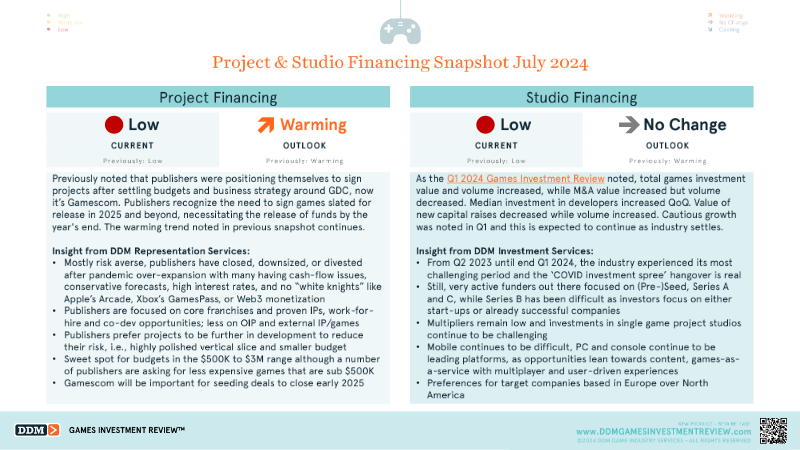
DDM · 2024
Konvoy · 2024
PitchBook · 2024
InvestGame · 2024

InvestGame · 2024
PitchBook · 2024
InvestGame · 2024
Konvoy · 2024
Konvoy · 2023