1 free read left. Create a free account for unlimited reading + AI research.
Create free account
Using trackable and optimisable TV campaigns to drive large scale mobile game user acquisition
Key insights
6 takeaways- 01This data-driven model provides the financial accountability required by international publishers to justify marketing spend when entering competitive Western mobile gaming markets.
- 02Campaign budgets are not locked into rigid plans but are reallocated in real-time based on cost-per-install (CPI) data to prioritize high-performing stations and creative variations.
- 03Media planning is structured into three tiers: efficient channels for direct response, mid-tier volume drivers, and premium channels for broad awareness.
- 04TV campaigns are measured by integrating airtime data with mobile attribution partners such as AppsFlyer, Adjust, and Tune to correlate specific TV spots with organic download spikes.
- 05Proprietary attribution tools filter out baseline organic noise to isolate the impact of specific TV channels and creative assets, accounting for the longer user journey typical of app downloads.
- 06Mobile game publishers can treat television as a performance-based acquisition channel by applying digital marketing principles like real-time tracking and iterative optimization.
Ask AI about this video
Transcript
[Music] morning everyone just about morning still so yeah my name is Richard Downey and I am director of global new business an advertising agency called the specialist works i'm here today to talk about how a publishers can use TV to drive large scale up acquisition in a way and it really hasn't been done before and in a way that's trackable optimized abell and all those are the things which mobile marketers love to do before i get into our methodology and it's you know it's a methodology that's been built with the mobile games market in mind i will spend a minute or two just a little introduction to our
business so we're based in london we are a what we call a full-service advertising agency which means we are we have media buying department across what you would call all of the core channels i run the the yellow bit there the digital mobile bit so i've got a team of mobile user acquisition specialists and that help companies promote their apps across all verticals games gambling dating travel etc etc and my background is very firmly in mobile you a I've been working in mobile media agencies for the last five or six years and the one thing that it always kind of annoyed me is to see so much marketing and advertising budget go into TV for app publishers without them really having a feel for whether it's working or not without really having an idea about how to optimize their TV campaigns and
basically you know being in a situation whereby everything that they've ever kind of learned about testing and optimizing and tracking and attributing kind of being left at the door when it comes to TV because people have told them time and time again that TVs for branding and it can't be tracked so that's a bit of a background as to as to how we got to the situation we're in now I'll skip past this because I'm sure every agency you have ever seen has got a slide full of awards but we we do okay on that front in terms of global reach as I said earlier we're based in London but we have offices in Stockholm in Germany and Ireland we've just launched in New York which is really really exciting for us and we also have a number of really close partnerships actually with agencies around the world whereby if we cannot and fulfill the TV or media buying generally in a country we will find an agency that's thinks and
works the same way as we do to help do that in terms of our client list here's a bit of a cross-section I'm not sure how many of these you guys would be in Treme Leah where's the one thing that most of these have in common is that they are predominantly digital focused and that's because the way that we work even in channels outside of digital is very kind of digitally focused as well as I'll go on to talk about okay so let's get to the core of it we have we are working really hard on developing a way of using television that feels as close to the digital experience as people are familiar with so what I found in the past is the best way to describe how we work the difference makes is to kind of do a bit of a contrast between what I called the traditional TV agency how it works
normally what the process is where the levels of feedback are and exactly where the results are and then I'll go on to talk about how we do it slightly differently okay so if you are familiar with how TV buying works then this will be a that you know about already and the TV industry and TV media is is you know still enormous you know linear TV although people say it's under threat through catch up and throw on demand services cetera et cetera in terms of the money that gets paid into linear TV the numbers are still absolutely staggering and the reason that it's such one of the reasons it's such a successful and profitable media channel is because for years and years and years this kind of approach has gone kind of unchallenged so the TV agencies will say it works on the same work in the certain way the TV stations will say it works in a certain way and companies for whom direct response and performance and
attribution and optimization will just get told if you want to use TV you have to do it this way if you're not comfortable with this maybe TV isn't for you so what we have here at the bottom which has energy expenditure this is basically this is the agent TV agency's role in things okay so let's say for example you have a game that very very broadly targets 18 to 30 year old men okay so you'll sit down with your TV agency they will say not a problem we know how to reach 18 to 30 year old men we will do all the research we will put together a TV plan that might have some sport and some comedy and some music and all this type of stuff they'll come back to you and present it and say right you want to reach 18 to 30 year old man if you put your ads your TV ads in this if we if we fulfill this plan for you then every 18 to 30 year old man in this country will see the ad three times okay
opportunity to see that's our metric as long as we've done that we've our job so the advertiser the in this in this situation the app publisher will be given this list of TV ads and this strategy they sign it off the TV advertising gets booked there's typically a four to six-week gap between the advertising being booked and the TV campaign actually going live six weeks later the TV campaign goes live it runs across you know however long it is four or five six weeks and the agency that's bought the media will be reporting in good news this program that we said would be good has got X number of viewers therefore your target audience has been reached then at the end of the campaign at the end everybody sits down normally over some nice lunch and they at that point kind of have a discussion about whether it worked or not and as a outcome of that discussion they decide whether to do some more okay that's the
typical TV agency you want to reach 18 to 30 year old men here's a list of programs that will enable you to do it off we go see you in a few weeks our approach is very very different so like I said earlier my background is in mobile user acquisition and I work with clients who for whom every single cent of their budget has to be justified right it has to be justified from a cost per install point of view from a cost per acquisition retention whatever it is and you know and I don't really see why TV or any media should be treated any differently so we've come up with a very very different way of doing this so rather than was using the metric of you want to reach this demographic and we will make sure that those people see this we we kind of started thinking about how do we actually genuinely and realistically attributes performance back to TV okay
because as far as I'm concerned unless your machines own or super Zell or king or all those huge guys if you've got some money that's going into TV for you to scale that for there to be more money and bigger campaigns you kind of have to get a feel for whether it's worked or not so our way of working is at the some hair so we we take the same brief what our brief is not or rkp ours or not we will make sure your ad is seen by these people are kpi's are we will make sure your game is downloaded by these people and the way that we do that is we we carry out the same planning that the other agencies would do we book our ads a lot later which means that there's a lot more flexibility in terms of the situations that we can use and then and here's the crucial bit in terms of the buying side of it once the campaign is live to our tracking an optimization and attribution which I'll talk about in a second we're able to see in practically real time whether our
strategy is working or not right so no marketer in the mobile world would ever think that the strategy that you start with is going to be the strategy that you Edward right that's what optimization is all about whereas in the traditional TV agency world that's what happens you sign up a plan the plan happens and it's only at the end where you decide whether it works or not toros it's about in campaign optimization it's about looking at the results and the data that come on a daily basis and analyzing every single choice that we make the TV station that we spend with today the length of the creative where the morning is better than afternoon etc etc and then as we go along we optimize ok so there is a flexibility and TV buying that the traditional TV agencies will not tell you about there is a flexibility about moving stuff around the way that we buy off our media and this works across all countries not just a UK although these are UK TV stations we split the TV stations into three categories at the bottom we call
efficient stars so these are the small satellite channels smallish viewing figures but very concentrated audiences so for example the good food channel ok you know the people who are watching a good food channel all going to be of a certain they're going to be into food right it's not going to be anything else there the engagement levels of these channels are quite low now the reason that's important is if you have a TV ad that says download the game now and you put it in Game of Thrones people are not going to break away from Game of Thrones two down load that game right it's not going to happen where is me smaller cheaper channels the level of engagement is less and therefore the opportunity for people to break away from their TV viewing to actually act on a prom that you give them is greater then we have what we call volume drivers these are kind of getting bigger so these are channels like to use a British examples like comedy central again you kind of know the demographic although the the programming type is a little bit wider and then at
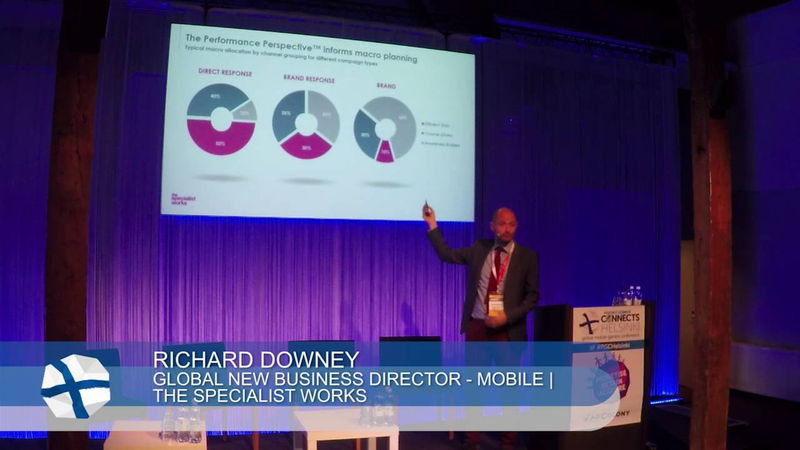
the top you get the big guns right so these are expensive they're inflexible if you want to get are alive you want to get genuine and you know low cost for installs these are probably not the places to go but these play a really big role in what they call awareness building right in making sure that the game is well known enough so that when they do what see that ad again when they're watching something like the Good Food Channel they're more likely to react to that these are a really good job in raising awareness and building that level of Fame and how we use these channels depends on what the what the brief is so we have direct response brand response and brands so most games I suppose depending on budget are we even going to be direct response or brand response and with the attribution I'm about to go on and talk about we can report back on all of these things so if brand is your if you're you know if you've got huge huge budgets and it's about making the game famous so that that level of recognition will improve
your mobile user acquisition or that level of a quiz level of recognition will improve your other efforts then maybe it's more of a brand campaign okay so there's two parts to what we do I've talked about our flexible and optimized herbal approach to buying now let's talk about the tracking I suppose this is the most interesting bit for the people in this room we've developed a solution which we call TV for apps and the reason we call it that is because it's very very focused on the kind of performance metrics that you guys are live your life by so a couple of little quotes here we work really closely with the attribution partners that have been mentioned a few times already like apps flyer and adjust because it's the data that comes out of though things that enable us to report optimize and improve on the TV performance that we have so little quote from Paul who's the UK country manager here specialist works redefining how TV is bought and making it a more app friendly acquisition channel than ever before add eliza is our TV optimization
tool I'll talk a little bit more about that in a second thanks to our pioneering partnership with the specialist works we've launched an integration program with leading app analytics platforms to enable attribution of installs and then about expansions what that means is if your app has uses either apps flyer tune or just as your attribution partner if you work with us and we've run your TV campaigns you will be able to see the performance of each TV station in your attribution solution dashboard alongside your mobile you a partners so you know put in a simple example alongside Twitter Facebook and Google you will see em TV Sky Sports 1 channel 4 ok and the way that we do it is that we says shine a light on organic installs and in up actions there's been a lot of conversation so far today about time stamping we we interrogate and we look
really closely at these organic time-stamped installs we then match them back to TV spots taking into account things like baselines taken into account things like organic uplift chart position etc etc advances our integration tool which I'll be happy to talk to you about separately I don't really have time for it at the moment but it allows this information to be easily ingested and integrated we can then attribute in-app purchases back to organic downloads as well so put simply if we can attribute to download to a TV media source then obviously we have that user for their lifetime value and we can we can look to report on your TV in exactly the same way as you would report on your mobile acquisition and what this does is it yields a cost per install the cost per insight so we can report like I said earlier you know we can give you MTV's cost per install against comedy central's we can you are Ganges UK turn Sky Sports cost per install agates bt sport and not only is
this really interesting from a reporting perspective obviously because you can then compare it to other things you're spending your money on but from an optimization point of view we have real actionable data with which to make our decisions if we think that sky sports at the beginning of the campaign is better than bt sport and halfway through the campaign and the organic data as told us differently than we make the switch we can our flexible approach to buying enables us to optimize as we go so just a little bit more on the attribution and advanced is a tool which was built to to track web response to TV tracking web response to TVs pretty easy because somebody sees an ad they go to the URL within three or four seconds you know whether that's whether that's a hit that's come as a result of TV or not obviously when you're using apps it's a little bit trickier because the user journey is longer can I go to the App Store read the up download page download the app point for the up to load etc etc so being able to attribute an organic
app install back to the TV spot is is more difficult than a web visit but the tools that we have and the algorithm that advance has enables us to see this a lot more clearly than than before advanced machine learns response fingerprints for cleaner attributions so it begins to learn what a response bike looks like so again you know it will be able to recognize a MTV size spike as opposed to a comedy central spike the reason that's important is typically fifty percent of all TV ads do not go out when they're meant to so if your pre populating your attribution windows if you're saying in advance this is when our TV ads are going to go out in the month of September here's my attribution windows and any download that falls in those windows I will claim for TV then half of them are going to be in the wrong place so in order to get this information in real time it's important that the attribution solution that you use knows when the others gone
out without you having to tell it and then we can attribute sales sales value etc etc to the initial response back to the of individual spots so the the response spike at the top is more typical of a web one whereby all of a sudden people are seen an ad and racing towards a website which sees a very steep curve the secondary attribution curve at the bottom there is more like an app download attribution curve which is kind of the attribution window is longer because the journey from seeing an ad to installing an app is longer I'm a lot flatter I rather than the pronounced spike that comes from web and as I said all our forecasting comes with a cost per functionality so I'm gonna give you a little example of this process in action really so one of our clients is is Alex so I spend a lot of time in China working with Chinese games publishers trying to help them to
increase the acquisition activity in the West as with most of our clients the mobile user acquisition is very well catered for in house as good as my team are we can't really add anything to what those guys are doing but our TV for apps proposition is really really interesting to them so we've been working with them for over a year now we started by running really small scale mobile acquisition campaigns almost approve our prove our value i suppose and that we kind of knew what we were talking about the client is very interested but wary of using TV for acquisitions for this this is a situation that we see across a lot of games publishers they kind of they like the scale of TV they they they are excited by what it can do but the whole branding piece of it is a bit scary for them and they need to see a bit more and the concerns I had about tracking an attribution so how would we know whether it worked or not so it's conversations at least that kind of leaders into the idea of TV for ups our approach gave them the confidence
that they needed and from that came a multi-channel campaign I have a video if we can play that with some sound that would be great thank you very much [Music] play like a king but above all fight like a king [Music]
[Music] [Music] [Music] mommy to Victor we will fight together as one [Music] hey
[Music] [Music] [Music] [Music] so obviously that was a large multi-channel campaign I'm out of time now but I'll be hanging around for the rest of that I'd love to
have a conversation with any of you that might be interested to hear and a bit more about our process thank you very much [Music] you
Summary
The Specialist Works advocates for a performance-driven approach to television advertising, specifically designed to help mobile game publishers achieve large-scale user acquisition. The core thesis challenges the traditional industry view that television is exclusively a branding tool that cannot be measured. By applying digital marketing principles—such as real-time tracking, attribution, and iterative optimization—to TV media buying, publishers can treat television as a measurable acquisition channel comparable to digital platforms like Facebook or Google.
The methodology centers on integrating TV campaign data with mobile attribution partners such as AppsFlyer, Adjust, and Tune. By analyzing organic download spikes and time-stamping them against specific TV spot airtimes, the agency can attribute installs and in-app purchases directly to television sources. This process utilizes proprietary tools to account for the longer user journey associated with app downloads compared to web traffic, effectively filtering out baseline organic noise to isolate the impact of specific TV channels and creative assets.
The agency categorizes TV stations into three tiers: efficient, low-engagement channels for direct response; mid-tier volume drivers; and high-reach, premium channels for broad awareness. Unlike traditional agencies that lock in rigid, long-term media plans, this approach emphasizes flexibility. Campaigns are optimized in real-time based on cost-per-install (CPI) data, allowing for the reallocation of budgets toward higher-performing stations or creative variations throughout the campaign lifecycle.
This strategy has been successfully applied to international mobile game publishers, including those entering Western markets, who require rigorous justification for every marketing dollar spent. By providing actionable, data-backed insights, the model bridges the gap between traditional broadcast media and the performance-oriented requirements of the mobile gaming industry, ultimately enabling publishers to scale their user base with greater confidence and financial accountability.

















Comments