Transcript
[Music] welcome to the novit gaming podcast where it is our mission to explore the business and future of video games we bring together the industry's brightest Builders investors and thinkers to keep a pulse on current events dissect emerging Trends and games share Lessons Learned and have a great time this podcast is also part of novic growing ecosystem which ranges from free and premium research to Consulting and advice services for more information visit [Music] www.nic.edu zeid provides a plug- Inplay API and SDK for seamless integration of instant borderless and low fee payments using the Bitcoin lightning network with fees less than 1 cent zeidy Powers over 4,000 developers across section s processing
millions of transactions monthly you too can unlock the potential of borderless transactions to better engage and monetize your Global user base including the unbanked and simplify the way you handle payments start for free at z.o integrate with just a few steps and monetize your experiences again that's z.i or check out the link in the show notes and with that let's jump into the episode welcome everybody to another episode of the navic gaming podcast today we're talking about a topic that has caught my Fascination a lot in the recent past content creator programs these are dedicated programs designed to incentivize and reward the creators in one's community so as to drive growth it isn't the newest of growth strategies but a quick Google search will showcase their growing popularity especially with companies like Ubisoft scopi mihoyo EA Bandai Namco my games and the list kind of goes on and all of these companies
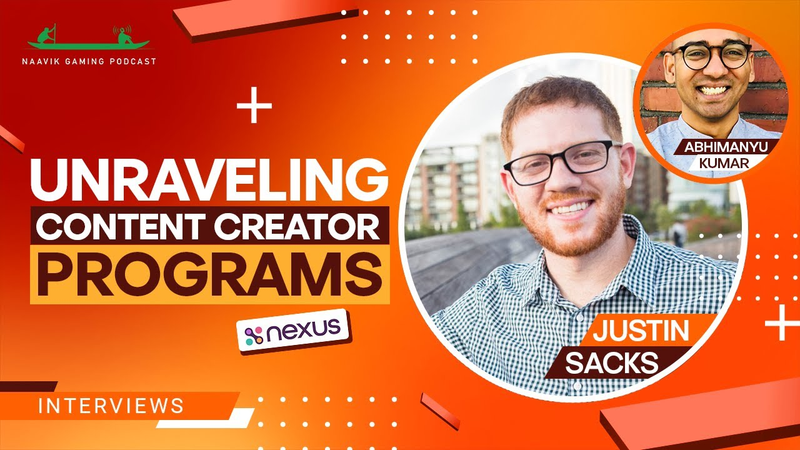
are hosting their own programs to drive growth across their product portfolios at navic we've looked into a few uh of these programs through our public writings and Consulting projects and I personally and also the broader team were constantly amazed at how effective this growth strategy can be when done right of course uh so today we're going to focus on breaking down the current state and potentially the future of content creator programs and to do this we're joined by Justin saxs who is the CEO of Nexus a turnkey solution to building managing and growing content creative programs also Nexus is one of our open gaming research initiative Partners so thank you Justin for making it here today I appreciate it awesome so yeah my intro is very brief about you but I'd love the listeners to you know get to know you a little bit better maybe you could briefly tell us about your journey into games your path to CE
of Nexus and also what Nexus does sure yeah I have a probably a weird entry into the industry but I've been in games about 15 years um I actually got started as a competitive gamer so this is before Esports was really a word much less a whole industry but I played a few different games competitively and then I became a content creator myself that meant writing blogs and making videos for YouTube and that sort of thing um when I was at University I built a little coaching website for League of leg I knew most of the top streamers and the top players and then I ended up joining a media company out of school that was called curse curse owned and operated most of the large PC gaming communities and websites and tools I worked with them from when they were like 30 people up until CSE was acquired by Twitch in 2016 at the time I was running business development for the media side of the business and then during the acquisition processes when I left to start building Nexus and basically I had a strong belief this is now more than half a decade ago so now
it'll sound obvious but I had a belief back then that the way Discovery happened in gaming how people learned about games got excited about games ended up buying things inside of games had really changed and a lot of it was being driven by players favorite personalities on platforms like YouTube or twitch or now the Discord servers and communities that they're a part of but that attribution was really challenging for game Publishers it's hard for them to know well who's driving that discovery which individual content creators to work with and then if you are a content creator it's really tough for you to get the credit and the monetization you deserve for driving that Discovery and engagement and so we wanted to build a platform that really is the infrastructure that sits between those content creators or influencers and the game Publishers and so a lot of product Discovery along the way but now Nexus we call ourselves a Creator program in a boach awesome awesome that's great so I guess yeah with that you know we can jump into today's uh discussion um I guess uh maybe starting
with like some more Baseline setting questions you know now this has happened to me a few times where uh the terms influencer marketing and content creator programs are used almost uh interchangeably in conversations um but my belief is they can't be any more you know different from each other given the business model relationship management metric impacts success criteria and like so much more so maybe you could kind of Kick this discussion off and level Set uh with maybe just telling us the difference between you know um content creator programs and influencer marketing campaigns yeah it's a great question and I think frankly a content creator program hasn't been fully defined and so I think it means a lot of different things depending on who you ask and who you're talking to whether on the content creator side or the game publisher side influencer marketing is a little bit more concrete I think influencer marketing um at least traditional influencer marketing you can think of it as taking budget marketing budget and saying hey influencer if you make
content for my game I'll give you some of this budget um often for YouTube it's like paying a flat amount per video and then for twitch and streaming it's some amount per hour of of playing the game the The Challenge for influence marketing is all in attribution it's really almost always purely awareness marketing it's saying Hey I want you to tell your audience that my game exists but we don't really know how many new players you receive you got for the game we don't know if those players took any actions engaged in monetization all that stuff is really challenging to do with traditional influence marketing especially for PC and console in Mobile there's a little bit more that you can do with deep links but usually the friction is the influencer they don't want to have their audience have to go through a bunch of steps to to follow that tracking process and really in my opinion one of the big challenges of influence marketing is one of um
how genuine it is um the most the most like strong results that you'll find from influence marketing is when the influencer is playing a game they already love that they're already familiar with that they're already excited about but usually if you're a game publisher the influencers you target for influence marketing are people that have never played your game because you're trying to get a new audience that you know hasn't isn't already participating and that is the big difference with a Creator program because a Creator program is the way not just to get very clear attribution to see the value that those inflence are providing for the game but a way to reward the influencers for staying in your game and continuing to make content and then those players to keep engaged with the title and that's why we with our creative programs are really focused on live service titles because they're a really great fit for that sort of Creator program because you can work with to retain and reactivate the influencers that already love the title and all the players who used to play or are still playing got it and I guess yeah maybe it'll follow up on kind of the authenticity point do you find
um kind of the relationship between uh the content creator and Their audience then to be a little bit more authentic in a program setup versus like an influencer setup where maybe they have to you know I don't know act excited about about something they're getting paid to do yeah I mean it so the the core of a creative program at least the way that we think about it is revenue share meaning that the content creator the influencer they only get money so it's pure you know Pure Performance Based they only get paid if they're actually driving sales or specific engagement or you know um actions of players within the game and that can only happen if they actually like it and if Their audience actually likes it and so like a Creator program really is a few different things one is that core sort of uh Revenue sharing piece of hey how do you reward the Creator for driving certain incentives and driving certain actions but it's also management so how do you get the creators to join your program and know that it exists how do you communicate to them about new
activations or opportunities and then how do you actually have that sort of financial relationship of how do you send money to them how do you handle taxes at the end of the year all of that to us is what is like a holistic creative program versus influence marketing which can be like a one-off brand event of hey tell your thing tell your audience that we exist which could be similar to like an energy drink or you know a new keyboard company it doesn't really have to be a product that they actually care about and that's usually the problem of influencer marketing is you're sort of disincentivizing the influencer to keep playing your game because if they've never played before and you come to them and you say hey here's $10,000 to play it well why are they going to keep playing the game unless you give them another $10,000 versus a Creator program where they only get value if they're driving value for the publisher and so we really look at that sort of ecosystem as as more of a win-win right got it um yeah I guess maybe that maybe dve Tails a little bit into you know the next question um I guess there are you know advantages and disadvantages is of either approach uh
or either strategy um maybe you could more clearly outline you know more strategic advantages and disadvantages of content creator programs versus uh influencer uh marketing programs and also you know when should developers think about using which approach yeah it's not uh perfectly clean but I think it is helpful to think of influencer mar marketing as more helpful for UA and cre programs as more helpful for growth and that's both for influencers and players meaning in influencer marketing let's say your your game is super new no influencers know that it exists and none of them have really played it well doing traditional influen marketing where you say hey I'm giving you this money come play my game you're more likely to be successful than saying hey if you play my game and drive new players and sales you'll get a reward because that's more of a risk for the influencer and so if you're really only focused on UA if you're really only focused on uh new influencer acquisition in a vacuum
outside of you know those people converting and turning into long-term players traditional influencer marketing might be a better Fit versus a Creator program if your game has been out if you maybe used to have influencers but they've turned and you'd like to reactivate them or you have them now but you really want to retain them a creative program is the best possible system you can add in the game and that's not even thinking about the downstream impacts it has on player Behavior where growth really comes into play and and it can be really impactful to have a creative program to to support all of the sort of things that fit into the growth bucket for players right okay makes sense yeah I think I think yeah that that that that's pretty clear and that makes sense um I guess yeah I mean whatever we've kind of discussed until now should also kind of set a more solid foundation for just understanding you know what uh the these content creator programs uh even are but you know maybe now we can get more into why A Game's business should even have uh one of these so maybe you could uh
start with telling us more about you know what metrics uh do content creator programs uh what what like what metrics are they focused on driving um you know is it player volume player LTV is it a mix of both um yeah so one of the one of the most obvious things around a Creator program is that okay if I have a Creator program creators will more creators will play my game and those creators will make more content that's kind of like a squishy vague you know marketing value that you can't put like clear data behind but what we've seen with our creative programs that we we've run and other ones in the space in the industry is again that impact on player behavior and where it's particularly like where I feel if I find the right sort of game that fits the right metrics I can almost guarantee success is in metrics around um retention reactivation moving players along the monetization curve increasing you know engagement of players and one
of the things to understand that is like not as obvious if you're not really deep into the space is the feedback loop between a player and Creator is really profound meaning the player desperately wants to support their favorite content creator they want to be able you know this person that they watch all the time that they get all this value from their content they want to give back to them and if they can do so in a way that is near frictionless they're absolutely going to do it and then when they see if that player sees hey my engagement in this game me buying the new battle pass whatever it might be supported my favorite content creator they're going to end up playing the game more and they're going to stay in the game longer buy more things engage with other systems inside of the game and so those are some of the metrics we see and again that's really around growth so you know in short that's things like retention of players reactiv reactivation of players and then having them engage with more systems and buy more stuff got it yeah that makes sense uh do do you have any you know benchmarks in terms of um what kind of uplift like a a content creator
program would generally bring you know in terms of either detention or engagement metrics or even better Revenue uplifts any benchmarks uh on on these metrics so it does depend on the game and we can talk about like which games are better suited for Creator programs but some of the things that we've seen that we've been really proud of with our own Partnerships are um players that interact with a Creator program end up retaining tce as long so whether you measure D7 D30 d180 whatever it is about twice as many players will still be playing if they've interacted with a Creator program um we've seen players move along that monetization curve so usually when we're showing our data and testimonials to to prospective Partners they're like okay but these metrics are of like the best cohort of the game aren't you just measuring the best players and some of that is true like yes your best players will end up interacting with the Creator program but also they become your best players
partly because they're interacting with a Creator program and so we see things like um you know people will change their spending and buy multiple times you know more purchases per month than what they were doing before interacting with the Creator program one of the biggest things is on reactivation so we've seen um if a player reactivates through a content creator versus any other source they like they have a 5x retention versus a 2X of just like the normal interaction and so you know there's when you're thinking of channels in order to reactivate CH players one of if not by far the best Channel you can think of is through content creators get the Creator to tell the player of hey maybe you haven't played in two months six months a year there's all these new systems in the game come and check it out and those folks will stick around longer because now they're engaging outside of the game with that content maybe one like last follow up on this before kind of jumping to you know how like how best to build a program but um have you is there kind of like a more uh dark side to this a little bit where you know if a a content creator who you know
used to love a game um you know now maybe doesn't love it given like certain updates that happen to it certain gameplay changes and he drops off or he or she drops off and basically also kind of takes uh his or her following uh with them does that has has have you seen like any kind of negative impacts on that side or is it mostly muted well yeah I mean retention of the content creators is really amount um it it also depends on the life cycle of the game the more mature a game is the more important any individual influencer or content creator is going to be for that title um I don't NE I don't it's not necessarily true that they bring all of their audience with them to whatever game they move to but the players that that engage with that content that audience they become much less engaged with the game and they are likely to to turn out as well um right but but I don't know if it's it's going to be a balance of like the incentive versus the
interest meaning like if the influencer no longer enjoys the game because the game has fundamentally changed or some system that they loved is no longer inside of it I don't think you can like keep them by offering them money it's more about the like positive cyclical nature of if they do love the game and there is a creative program on top of it then it really creates profound effects but um influence like traditional influence marketing is a better route if it's more just like hey I need you to play this thing to bring this audience um the problem is it's a lot more short term because they're then they're only going to engage with the game when you're paying them the money right yeah I guess like the other side benefit of uh a content creator program is you know if the content creator itself is not interested in the game anymore but maybe there's a good portion of the of his or her audience that is then uh you know the audience could basically also play a role in convincing the content creator to you know continue playing a little bit uh so I guess that's like an anill
retention benefit for you know the content creators that that's a very real thing of players encouraging their creators to join programs of players encouraging the publisher to launch a program but it also has to do with the sort of program that you're running because it's not it doesn't have to be just a fire and forget thing where you launch it and then never think about it a lot of basically all of our partners run activations nearly monthly if not bi-weekly of hey there's some special thing a player can get if they're supporting a Creator or there's some new exclusive skew or some additional currency or whatever it might be and and that can really keep the creators engaged and the players engaged but also that sort of activity helps that if a Creator does churn for some reason that players find another influencer content creator and then keep within the system and keep being that sort of really engaged player nice yeah very very very very interesting so um so yeah kind of knowing that you know content creator programs have the potential to drive those kinds of metrics and the upside that you mentioned uh let's get into you
know more on the how so knowing that content creator programs have the potential to drive those kinds of metric upsides that you mentioned what do you think are the key ingredients or building blocks to a successful content creator program yeah so there's some foundational and fundamental pieces and so um we think of those in three buckets and and we actually have seen some creative programs go without some of these pieces which which I can get into but the first three pieces are you need um the onboarding page like how does a Creator know that this program exists how do they join it and then you as the publisher how do you determine who should be a fit or not a fit and that might be based on followership or type of audience or amount of content created whatever it might be so that onboarding piece is the first bucket the second piece that we think is really important but frankly some folks haven't had and we think could really Elevate their program is dashboarding and it's both for the publisher but also the Creator so the Creator having a dashboard means
in real time they know when they've driven value and so having that really tight feedback loop of when the Creator gets Their audience to buy something or engage with a system they know that that happened and they're get the creators getting rewarded by that we think that's really important but also for the publisher to be able to At a Glance see which creators are performing for which SKS over what time all that stuff can be really helpful and then the third part of it is payouts and taxes um and this can be and often is the biggest challenge for game Publishers is okay let's say you've done an great job and you have dozens or hundreds of creators in your program that are all driving different amounts of money every month that all need to get paid well now your Finance team needs to be like find a way to pay out dozens or hundreds of new individual contractors every single month that are in dozens of different countries and then at the end of the year pay taxes for all of them um so we think those are like the fundamental pieces of having a creater program there's some really important things like I mentioned around activations you can can do activations around uh
discounts so a player can get a discount if they're supporting a Creator around additional content so you get more currency if you're using a Creator code or exclusive content like you get some special stuff um we think that's really helpful as well as other incentives for the creators like hey we just launched season two you can get 10% more for the next 48 hours those things are really helpful um but it's really hard to do some of those um like bells and whistles if you're not like a platform dedicated to creative programs if you're just building at first party but those are some of like the the needs to have in order to make it happen um I think I think there's a bunch we can talk about on top of that that can be really helpful but in like yeah those are the fundamentals to making it possible got it makes sense yeah I guess yeah one uh other angle that would be good to hear about is more on the product side itself like you know the games how should basically how how how the game should uh be kind of designed or created in such a way that they're enabling you know or fostering a pretty rich content creator
program but we can get to that question uh in a bit you know talk about the more um product side of it um but maybe slightly related to you know um kind of the key building blocks uh how how or in your opinion how does one kind of measure the success of a content creator program how do you know it's kind of working or and when do you know it's not working and you should probably shut it down yeah so I mentioned in the beginning I the one almost table Stakes piece is the creator activity so having a Creator program should get more people making content and then the creators that are already making content to make more of that content um so you can measure that that sort of thing of like okay well how many creators are streaming the game are they are they growing in viewership that sort of stuff but also I really like and I'm very biased of course but I like have a strong belief and we have a bunch of data showing that the impact on player behavior is significant too and so you should be measuring that sort of thing which is anything from hey um you had a
player in the game and then they you know you introduce a Creator program what was their activity before and then what is it after are they now playing more are they spending more are they becoming a better player measuring all that sort of stuff also around player acquisition are creators bringing in new players or one of the biggest metrics that we see is creators have a significant impact on uh Creator on player conversion meaning converting a free-to-play player into a monetized player um and so you measure stuff like that and then you can see the impact that it's having relative to the cost and there is a real cost to having a Creator program namely the revenue that you're sharing with a Creator and then with a platform that is developing and building it for you and so you need to be able to see that data and those attributions around okay what was the player behavior before interacting with a Creator program what is it after did they drive meaningful incremental revenue and then all this squishy stuff around like the marketing side is are we getting more content and are we getting more viewership those sort of things I
think that's where like the value of a pure performance-based program is really helpful because there's no upfront cost like it's not like you're putting $200,000 in marketing budget and then hoping to see some Roi down the line no you you only actually spend money if sales are really happening if if the player used a Creator code to make a purchase that's the only time the Creator gets credit and gets you know money for making that possible makes sense yeah I guess that also dovetails pretty well into the next question since you mentioned cost you know all this juicy upside in terms of retention engagement and potentially monetization all of it has a cost a pretty real cost like you said attached to it uh maybe you could uh shed some light on you know what kinds of resources are required to set up you know one's first attempt uh at a content creator program and also is there you know is there kind of a Bild versus partner versus buy decision to be made over here yeah so I I'll talk around the
first party costs um first like if you want to build it yourself um there's a few things that you need to do um one is the actual user experience inside of the game so you're going to need to make it like how does the player choose which Creator they're going to support you're going to have to make that like frontend part possible second is the attribution and then hopefully the dashboarding which is at least you as the publisher need to know when a Player supports a Creator by buying something you need to know um what was bought so the skew information how much was spent on it and which player it's supporting so that you can do the payouts for the Creator hopefully you also build the dashboarding for creators but again that's a pretty big engineering uplift to to make all that stuff happen and then there's the Evergreen financial side of you're going to now have your accounting team have to pay out a different number but in the dozens or hundreds of individuals every single month um some different amount and they're all going to be in a bunch of different countries you're gonna have to do taxes for them at the end of the year and all that sort of stuff and it has nothing to do with a the also Evergreen part of influencer management if you're
going to have to be working with these people you know you should run activations for them monthly you should be communicating with them when they have questions or they have problems um and all of that is a big uplift that frankly has nothing to do with building a game which is why again we're very biased but we recommend partnering with folks that this is all that they do and even if you get those fundamental pieces done usually what we've seen for first-party um Creator programs is it's really like a one-time build and then they like just kind of leave it and hope that it continues to be successful and what that means is that you're missing a bunch of things that can make a creative program really impactful so for example if you launch that thing I just mentioned probably what's going to happen is whichever creators you onboard in the first wave will probably be the only creators you're ever going to add because your accounting team will get really mad at you if you try to add any more to they're all going to have the exact same Revenue share so every Creator regardless of size or audience or type of content will all be getting the same amount of money per sale and
also every skew will have the same Revenue share when it's really important to change that you like what we've seen is you want to offer more Revenue share for things like battle passes but maybe less for hard currency so that you can engage you can incentivize the exact sort of behavior that you're looking for um and that you know that's all like the actual in-house stuff not even talking about how you engage with the creators and bring in new ones and communicate with them and all that sort of stuff um versus partnering so folks like us uh you know that kind of all all of those pieces I mentioned come TurnKey and the only part that is duplicated that the publisher still has to do is that user that like ux part inside of the game we can't you know like when the player is choosing which Creator to support in the account flow or in the purchase flow the publisher is going to have to make that now folks like us have built sdks with unity and unreal and SDK generators to make that really easy and you know drag and drop uh UI and and code and stuff to to make that more simple but um that is
something that always has to be done in order to have a creative program there needs to be a way for the player to choose which Creator to right plus also I guess the relationship management with the different creators is is that more on the studio side or is that more on nexus's side then it depends it depends on the publisher and what they want usually if there's a really really tight so we offer three different types of structures of programs one is an open progr program meaning any Creator can can join they just hit a button they become a content creator inside of that Creator program the second one is an application based program where the Creator will attach their socials so their YouTube and twitch and Twitter and whatever it might be or their fill out forms then basically the publisher can approve or reject creators to join the program and the third is a closed program where you invite you know a dozen creators and those are the only people as part of it that's another part of the onboarding flow is like having those different systems in place so anyways that's one of the things that that that we offer um so it depends on the publisher So based on those structures that I went
through we've found Publishers start with the invite only program where they're like hey these we have these 20 content creators that have been in our Discord for the past year and a half that we work closely with that we talk about upcoming content and get their feedback but we want to build like a full system for them maybe if they start with those folks they can manage those relationships and then we can jump into help when they want help but as they grow the program usually we're we're supporting and so we'll do things like we'll create assets for creators in the program so you know you can put something on your Twitch panel or in your YouTube that'll you know be either a quick video link or a static asset to say hey this is my Creator code here's the process this is how you can support me or we'll run webinars for for the creators in in a given program saying hey here's best practices here's how you can you know grow and do better and make you know content that makes more sense for your audience here's what we've seen work really well so th those are some of the things that we'll do all the way up to who you know will be the ones prospecting potential creators reaching
out onboarding them running the activations managing the whole relationship so it depends on the publisher and what they're looking for um and we're happy to support them in the way that they want to be supported right yeah I guess yeah they just like V varying degrees also depending on you know the studi uh uh available time and resources to manage you know hundreds of creators and um and yeah kind of keep the program flourishing but but yeah okay all all of that makes sense um I think yeah all of that should also you know um kind of roughly cover many of the business angles uh but I would like to shift gears and talk more about the product side and the teams themselves so uh maybe kind of starting with the with the product side first I might be wrong of course but it does feel a little bit utopian to me to think that you know every game product portfolio company can have a successful content creator program uh uh maybe you can tell me if I'm wrong or not but yeah you know first
can every game actually have a successful content creative program or are there you know certain kinds of games that you know maybe lend themselves better to this growth strategy um can any game have a creative program I mean the the risk of doing so is so low that I would say you might as well and then see if it can work for you and we're still F we're still finding out monthly like new games that we wouldn't expect to to perform very well to do really great with their creator program but we have seen games that we're more confident and you know can almost guarantee that there's going to have a really successful Creator program and there's really two um two metrics to think about um one is the more core a game is um so the more that there's like a significant depth of strategy the more that someone spends a lot of time thinking about and playing in a game the better a Creator program is going to be because the more likely there's going to be Creator content it makes more sense for content creator to make that sort of content if there's more things to talk
about if they have to break down all the different strategies and characters and systems and all that sort of stuff right you're going to get more content creators and you know then a program is going to make more sense but also the deeper monetization is we've also seen the program do really well so like where a creative program over indexes is with like the the really engaged players in a game so like moving a player from you know someone who maybe buys a you know one or two things a month to someone that's buying like 5 to 20 is when they start engaging with a Creator program and so if you have really deep monetization and you're a really core game it's a no-brainer to have a Creator program the opposite of that which is like the Super Hyper casual games that have light to no monetization where it's like really just ad driven gonna be really tough for a Creator program to be super effective because it doesn't make a lot of sense for creators to make consistent content and they're not going to be able to really Drive much purchase behavior and so they might be able to drive ref referrals or you know engagement in other systems but you know
not the the core that you're looking for the other part is um premium games have a tough time as well so if you're a one-time purchase game you should have creators like having a Creator strategy is really critical but I don't know if it makes sense to have a full holistic Creator program if you can get the right creators around launch and pre-order that's awesome and that's going to be really useful um but you know it's unlikely if you're a premium game that the Creator is going to stick around after they've done a playthrough it doesn't make a lot of sense for them to keep playing that game months later if Their audience has already seen you know the full experience and frankly if Their audience you know can only buy the game one time then a Creator program isn't going to make a ton of sense for you right yeah that that makes a lot of sense um maybe on the hyper casual side of it um like I mean you're absolutely right right like these are pretty short experiences and um you can't yeah there's not enough of content inside one of these games to actually talk about
repeatedly so like would you how would these uh but also like a lot of you know big hyper casual or you know the hybrid casual Publishers they also have like huge game portfolios so when if they're thinking about a content creator program would you recommend that they think about it more at like a portfolio level or does that not make any sense I would think if I was uh working with one of those sort of Publishers I would think of it more like like I mentioned early on that Creator programs are like one of if not the best system you can add for things like for things on the growth side for retention reactivation monetization Etc um but there are things that you can do with a Creator program for UA and so that's a that's a referral program so like how do you get creators to bring in new audience and then reward those creators and that can be with in-game Rewards or out of game rewards this is also stuff that we offer or there can be other sort of bounties of like hey if you can get a player to engage you know by playing 20 games or joining a clan or building a castle or
whatever it is and then you reward the player but also the Creator for those actions that can be powerful too um and then yes I think if you have a large portfolio and there is some D duplication of like a similar experience for the player then it might make sense to engage with the Creator across your portfolio versus if you have a portfolio that is like totally different genres and totally different experiences creators really stick to a just a couple of core typ and core experiences and so getting them to do a crossover when there's really different genres is going to be tough right yeah that that makes a lot of sense all right um so I guess yeah maybe we can move more onto the team portion of it you know once um once you know that you have the right game uh for a content creator program the next question is you know whether you have the right team to kind of execute uh on managing it growing it uh and also starting with creating it uh and you know since Nexus has kind of been in the trenches over here could you maybe outline what kind of skill set is
required by a Creator program lead for example to kind of maximize uh the chances of success within Studios yeah so um to just have a Creator program you're going to either need additional headcount or have the certain sort of expertise internal to the publisher on three pieces and then managing as an expert but on the three sides is engineering because you're going to need to build the uh attribution part in the ux part inside of the game and then potentially any dashboards which might be on the web or wherever it is um to the financial SES that you can do payouts and taxes for all for all the content creators and then three is that influencer Community part and so if you're looking for someone to manage and grow a Creator program so you've already built one or have someone help uh guide on the structure of a Creator program someone that would be really excellent is usually they come from the community side of games so they're really they they understand why people care about the game why they
talk about the game why they keep playing or coming back to the game but also they understand the Creator side and and each game is different and so we've seen games where 95% of the content creators the platform they use is Twitch we've seen other games where their platform is YouTube we have a game where it's actually just Tik Tok content creators and so understanding which sort of creators are the right fit for your game and your community is really important and so finding that EXP expertise is useful but the challenge with that is all of those are really more on the soft skills that's on the community and some of the the marketing side and the influencer side but the core part of Creator programs is actually that data driven metrics is the player Behavior impact because this is a revenue this is like a margin touching activity that when a Creator drives a sale they get a portion of your margin and so you have to know that this is incremental that they're driving meaningful player behavior that is something that's positive for the game that you want to have and so you also really want to have that data um
sort of expertise and and knowledge of knowing knowing the sort of things that you should be measuring around like hey I need to know when a Creator gets a player to use a Creator code and make a purchase was that player already playing the game were they already purchasing stuff what was their behavior afterwards all of those pieces are really important and so as you're building out your creator program make sure that you're Gathering that sort of data as well anytime you know that flag is checked of a player using a Creator code because we've seen you know we've had programs where 40% of the players that interact with a Creator code had never monetized before and a big chunk of those were players but they just were freet to-play players and they became monetized because of the content creator we've seen activations where um you know a skew went on discount inside of a game and the players using Creator codes engaged with it like 12 times more than the players not using Creator codes because the Creator was able to say hey go and check out you know there's a new discount like
make sure that you go and check it out and and and participate in it um and and so if you're looking for the right person to run a creative program it's unfortunately a really challenging person to find because they both need that community and influencer background which you can find but they also need that data background which you can find but finding someone that can do both is really tough um and it's such a new practice where there's literally a handful of first party Creator programs then we work with a few dozen you know through our platform of additional creative programs that finding people that have built or managed really successful ones um you know there's only a few of those those folks on the planet today right so yeah I guess it sounds like maybe um maybe someone even coming from more the performance marketing side someone who's uh been pretty close to you know the data analysis ROI analysis side of things would also be a good fit um maybe it's a twers team you know one with the more data bent and one with the more soft skills uh bent um but if you
had to if you had to pick one which one which one would you prioritize the data bent or the soft skills I would prioritize the data one but the you but it's someone that just authentically loves the game if you can find someone you know someone from the performance side who just really likes the game they play it all the time and they engage with creators maybe they don't have a background in influencer marketing they don't have a background in Community Management but they just engage with that naturally they're going to be able to do a good job got it yep that makes sense cool all right um well we're coming up on time slowly so you know last two questions um first um where do you think the future of content creator programs is headed given where it is today and kind of the traction that it's picking up today if you have a Creator program you have a competitive Advantage uh if you have a Creator program it's really really powerful because it gets content creators to join your game and stick with your game um but in the future it will be table stakes in
literally three or four years every single live service game will have to have a Creator program in order to compete it it reminds me of influence marketing like when I was at a curse on the media side this is you know eight years ago people weren't doing influencer marketing but if you started do it it was really valuable fast forward to today if you don't have a Creator strategy for most games again maybe not the hyper casual but for most games you're you're basically Dead on Arrival and it's going to be the same thing Creator programs and so if and and most Publishers are you know creat a program is a word that's thrown around a lot and people are thinking about it it's just hard to know how do you build it how much resources is it going to take you know what sort of program should you put in a place but the next few years it will become expected in table stakes and this will become sort of a a a naturally growing phenomenon as well like once it becomes ubiquitous like once it becomes expected that a Creator can have a meaningful amount of revenue from the game that they love then they're
going to be playing the games that have creative programs and not playing the games that don't and then the Publishers then will have to compete to get the creators to join their program instead of their program instead of other ones um right that's where I see the next few years I think it'll become like just the expected uh nature for any live service game you're going to have to have some sort of holistic Creator program it kind of need to be part of the growth stack uh for for games and Studios and and it should be because like when you look at the impact a creative program can have it's not it's not a marketing or influence or Community activity it is a a revenue opportunity like Creator program gets more players to stay in your game and buy more things like this directly touches monetization and so yeah it should be it should just be a natural part of the growth stack for sure right before I ask my last question I have maybe one more tangential one um you know more related to kind of the Genesis of uh content creator program so
you know when when you kind of talk about it and explain what these programs are right now and just the relationship between um the content creators themselves and the studios and how everything is you know incentivized in this almost perfect way why do you think it's actually taken so much time for Content create content creator programs to you know kind of gain traction was it is it more as a result of uh you know people kind of starting with influencer marketing but then kind of realizing the more you know perverse nature of it given you know okay people just do it for the money and then you know it's not really authentic and such and therefore we need to find a different way or was there like another kind of Genesis point for content creator programs I think it's three things one it's actually hard to build um like it's a meaningful amount of work on the engineering side but also on like the the accounting and then the the marketing side in order to have a Creator program and so it's not a thing that you can just like if you're doing
it first party and building it yourself you're not just like hey hey team let's go and launch a creat a program next month and see what happens and so it's not a really easy thing to test it's really a meaningful Focus unless you have you know the perfect mix of team members that just love it and know exactly what they're doing um the the the second thing I think is the data I don't think it was known the impact that a Creator program can have until really quite recently um even influencers you know it's it's been like suspected that they have a lot of value in user acquisition and awareness for a while but it wasn't really known there wasn't a lot of data or real uh knowledge around that but now you know as our partners start to share some of their understanding and some of the really large you know games that have done first-party creative programs release more of the the data and results I think it's becoming more of like an oh my God this can have a huge impact um and I think the the third thing is just Behavior like this is a meaningful Behavior change um across all parts so like one it can be really scary to do any sort of margin
dilutive activities in a game um especially without that data and that that's and case studies that have only recently come out but even think about it from the Creator and then the player perspective as well the Creator sort of has to adopt a new habit of telling Their audience consistently hey use my Creator code here's the way that you use a Creator code and it's really meaningful when you do it and so there's things that games can do to help encourage the creators and make it easier for them to do so that's one of the frictions but then also for the player they now have to understand that part of their their their play and payment flow is using Creator codes and supporting their favorite Creator and also you know this is all pretty new like there wasn't a ton of creators playing a ton of live service games even a decade ago and so a lot of this thing is just developing kind of as it's as it's being built but I think we're going to see a really really rapid um adoption of Creator programs over the next literally in the next year or two I think in the next uh in the next 12 to
24 months you're going to see many triaa Publishers launch Creator programs through third parties and some of them also first party and then we're going to see just huge adoption across the industry yep I definitely agree with that and uh I think your company is also named appropriately for capturing on on that uh on that point you know when it hits uh but great uh I guess yeah we'll end with uh our last question then um if there is one Creator program you'd recommend everyone to study which one would it be and why okay I'm gonna mention five because I and I'll go really fast but all right so the the one that really was the Genesis and started everything in my opinion was the fortnite supported Creator program so like amongst the Zeitgeist of fortnite Battle Royale was their suppored creator codes and I'm I'm sure many of people saw hey use code ninja like everywhere and and to this day fortnite creators still talk about their Sporter Creator code pretty consistently um um secondly
one of maybe the best one that I can point to that has done like an incredible incredible job that is also really out there is supercell um supercell has done an amazing job with their creative program they built and they're fully first-party they've developed and built all of it internally and they've done such a wonderful job and they've dedicated really meaningful resources and really incredible people behind it and they've had a lot of success with them um and that's for for for games like Clash Royale and brawl stars and and I think their creative programs have been a really big driver of of the success behind those titles and right they have a whole like now they have a whole education program for the creators to help the creators get better it's they supercell's done a really great job um another one that I'll mention uh that is um that is mostly because the team behind it is absolutely amazing but is also first party is stumble guys from scopely their team um has done such an absurdly great
job with their creator program without a ton of dedicated resources so they show that you can build at least the beginnings of a creative program without having to invest a ton of time or resources behind it um and then the last two I'll talk about our partners of ours that I think have done really really great the first is HZ um particularly with a game called Smite that what I think they've done so well is the um the focus they've had on really investing energy into the program so the amount that they've invested of saying hey these creators matter we want to reward them they've reaped so much results and rewards because of that like they've supported the creators they run activations almost by-weekly they've done really cool things where like you know creators were immortalized in- game with a voice pack if you know they want a contest of people using their creator code they've done special exclusive content they've done just such a great job of thinking through how do we really support these creators and they've seen really amazing benefits because of that and then the last one I'll mention is
ninjak kiwi they make a game called Bloons td6 and their creator program has been enormously successful and I particularly love them because their goal when they launched the Creator program was not to make money it wasn't a a revenue opportunity and it wasn't a marketing opportunity it was hey these content creators have been loyal supporters of us for years and years and we want to be able to give back to them and needed a way to do it and we launched a Creator program and the creators have benefited a ton but it's also been really really impactful for the game itself so that's that's just been one that I that I love to see nice yeah I actually did not know Bloons has a content creator program but I mean yeah the motivation to start it you know nothing better than that because if you're able to deliver on that motivation you know things like money and growth and all the business metrics will follow uh so yeah that's super interesting to hear uh about Bloons especially but but yeah I also think that's like a great way to maybe end it for today uh thank you again Justin for
coming on and kind of sharing your you know valuable experience with everyone if uh listeners want to get in touch with you uh maybe learn more about Nexus potentially partner with you to build out their first uh content creator program how should they do so so you can always email me Justin nexus. um you can you can go to our website nexus. and learn all about what we do who we work with case studies testimony knows all that sort of stuff but happy to chat with anyone whether you you're thinking about building your own creative program or you just want to learn more about it I'm happy to share that information and I really appreciate you letting me be here today awesome yeah and you can also uh catch Nexus uh on our newsletter and podcast since we also kind of put up a lot of their uh shout outs uh on on our content uh but yeah again you know thanks again Justin for coming on and thank you listener for tuning in uh I guess I'll see you again in a couple of weeks uh with the next interview but until then take
care if you enjoyed today's episode whether on YouTube or your favorite podcast app make sure to like subscribe comment or give a fstar review and if you want to reach out or provide feedback shoot us a note at podcast nov. or find us on Twitter and Linkedin plus if you want to learn more about what novic has to offer make sure to check out our website www.nic.edu the number one games industry newsletter novic digest or contact us to learn about our wide- ranging Consulting and advisory Services again that is www.nic.edu [Music]
Auto-generated captions from YouTube — names and numbers may be misheard.




















Comments