1 free read left. Create a free account for unlimited reading + AI research.
Create free accountWhitepaper International Journal of Serious Games
1 free read left. Create a free account for unlimited reading + AI research.
Create free accountWhitepaperInternational Journal of Serious Games
These games increase academic interest and serve as a potent pedagogical tool for English language acquisition among high school students in Colombia.
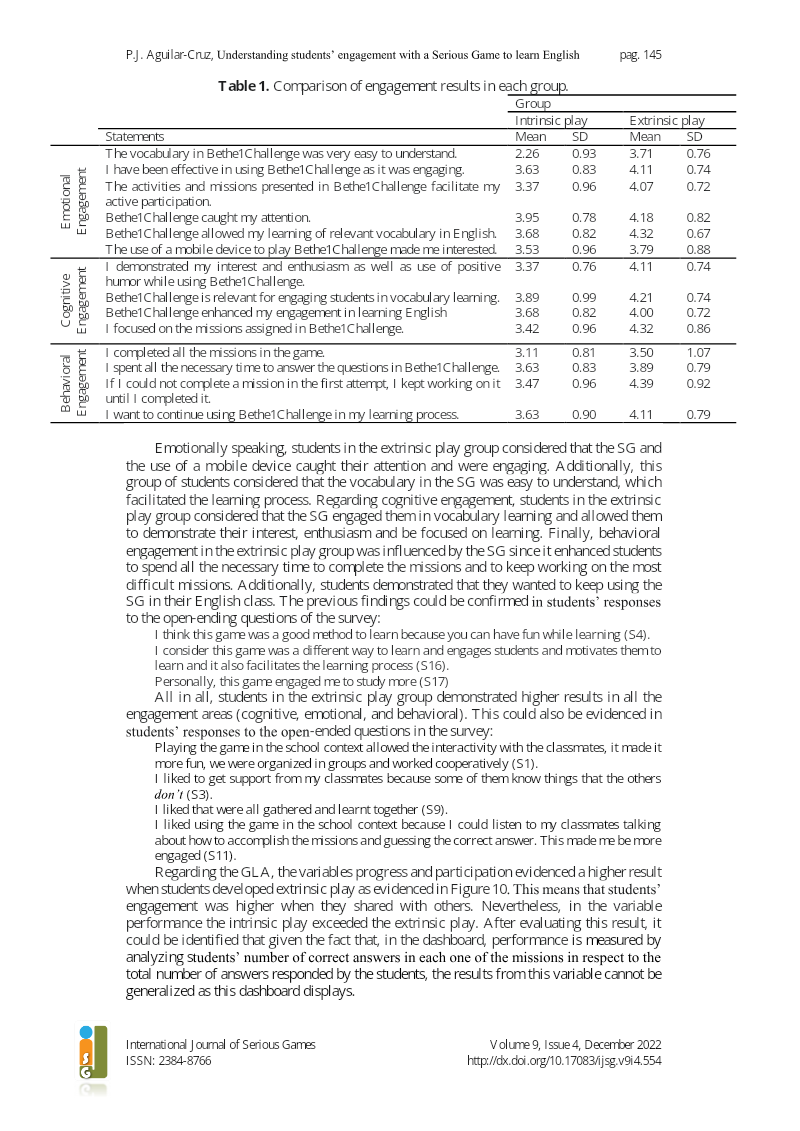
Serious games serve as a potent pedagogical tool for English language acquisition among high school students in marginalized regions of Colombia. By shifting from individual, intrinsic play to collaborative, group-based interaction, educators can significantly enhance cognitive, emotional, and behavioral engagement. This social approach to gameplay fosters a sense of community and peer guidance, which proves essential for knowledge building in environments where traditional educational methods have historically underperformed.
The research validates the efficacy of the Reflective Play Activity Model, specifically when adapted to account for social agency in face-to-face, resource-limited settings. By prioritizing collaborative play, students demonstrate superior performance metrics and increased persistence in vocabulary acquisition. Furthermore, the integration of Game Learning Analytics provides a robust framework for teachers to monitor and predict student commitment levels. While these analytical dashboards offer critical insights into the learning process, they remain most effective when paired with manual verification to ensure data accuracy and contextual relevance.
Ultimately, the findings underscore that game-based learning is a viable strategy for bridging educational gaps in underserved communities. The positive reception from participants, characterized by a strong desire to incorporate these digital tools into their long-term curriculum, suggests that serious games can successfully transform the classroom experience. By leveraging collaborative dynamics and data-driven monitoring, educators can create inclusive, high-engagement environments that facilitate meaningful language development and sustained academic interest.
International Journal of Serious Games · 2026
International Journal of Serious Games · 2026
International Journal of Serious Games · 2026
International Journal of Serious Games · 2026
International Journal of Serious Games · 2026
International Journal of Serious Games · 2026
International Journal of Serious Games · 2026
International Journal of Serious Games · 2025
International Journal of Serious Games · 2025
International Journal of Serious Games · 2025
Serious Games Society · 2025
International Journal of Serious Games · 2025
Uppsala University · 2025