VideoDeconstructor of Fun
TWIG #352 EU Regulations, Epic Shops, and the AI Slop Machine Is this goof?
9 Oct 202562 min video

Dude, that that Xbox hoodie might be a collector's item. You might want to keep on hold on to that one. I can remember with nostalgia when Xbox was actually a real company that made video games.
Oh wow. [Music]
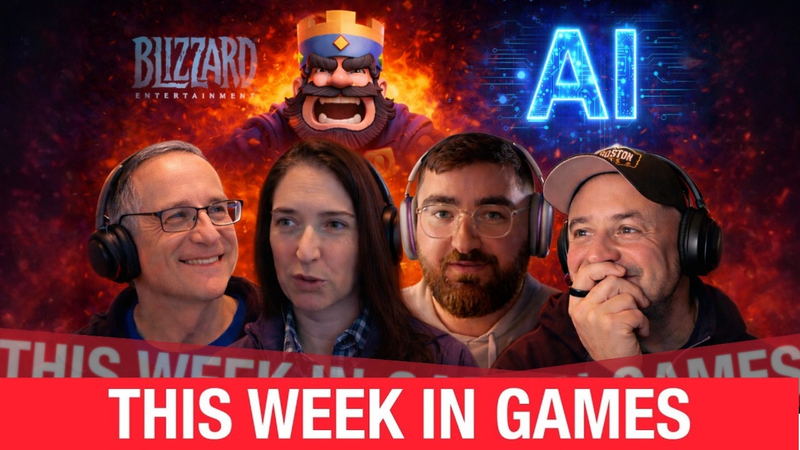
Welcome everybody to this week in games episode 352. We got the whole crew. But before we talk about the crew, let me talk about the topics that we have today. Number one, EU wants Supercell dead. No, not really. They just want all free-to-play games dead. Supercell is collateral damage. So, we're going to talk about that. Apploving, which Josh talked about in the last episode, goes from hero to a zero real quick. Istanbul gets another mega funded gaming studio. Epic gets into web shop business. And we're going to cap it off with AI slop, which is not this episode, but what AI is doing to content creation and productivity. The host of the show first
and foremost, Eric Crest, strategy investing.
Am I number two?
You're you're number two, lady.
Let's do this. Oh, yeah. So, it's Laura Toranto, puzzle product queen, returning for action just for a little bit. Gonna talk I'm super excited to talk about Match Squad today. And we got returning guest star due to popular demand.
Josh Chandley, Performance Marketing.
All right. Well, since we have two returners, let's talk about the long gone puzzle queen. Laura, what have you been up to lately?
Yeah. So, what these just so everyone's aware, I like Joy and I'm so happy to be back. I even have my, you know, signature tea and then I showed them my, as you can see, I tilted my screen. And I'm like, I picked up golf. And then I got ragged on a little bit. But that's okay. I'm getting much better. It's one of the one of the ha uh habits I or hobbies I've I've taken on. I'm shooting nine holes at my local chorus. I'm almost at par. I'm a couple shots above par for each of the holes. Getting better. Went on some holidays. I
went to Greece. I waved to Mishka. I was like, "Hey, it's really nice over here. I'm not surprised you moved." And then and then yeah, as I said last time I was on, I'm I'm working for Minecraft. It's keeping me busy. As you can see, I'm in full swag. I have my Mo Yang shirt and my Xbox hoodie. I've like fully adapted. It's great,
dude. That that Xbox hoodie might be a collector's item. You might want to keep hold on to that one.
Oh, I love it. It's so It's It's a collector's item. And it's comfortable. So, it's like two for one.
Wait, I might need one of those. Yeah. Actually, you might I need to I need to get
sure. I'll get you one off the company store. I can remember with nostalgia when Xbox was actually a real company that made video games.
Oh wow.
We just started the episode. I just came back. Of course Xbox is a real company.
What do What do you think about Laura starting golfing? Chris,
I can come up with all kinds of sexist comments, but I'm going to I'm going to hold my hold myself
that women play golf better.
We like
Yeah, the women golf. Look, my wife is Korean and there's like supposedly some Korean gene
for golf and that's why all the Korean golfers are so amazing. So, we'll stick with that. Like golf is a great sport. Congrats on get it. Hopefully uh you uh crush it.
I hope so. This Friday, I'm playing in my first charity tournament with Minecraft. So, wow. See how it goes.
Oh, so that's why you're preparing. All right. Talking about Jen. So, Jen wanted me to show some stuff, which is nice cuz normally I want Jen to shill some stuff. So, Jen is hosting a DOF supper club on October 14th. That's really soon with a powerful app charge team in Santa Monica during LA Tech Week. Apparently to Jen, it's an amazing guest list of amazing people in amazing LA. So, you should join this amazing event. Other shows are for me. So, we got Bellatro in the newsletter, in the podcast, in the article. This week I had the CEO of Playstack which is the indie publisher that published Bilatro that is the hit game that sold 7 million units. So we
dive very deep into how do you find these indie games? How did they scale Bolatro which is a game made by a single person? What should you be looking for from indie? So really trying to understand what makes a good publisher and what makes a good indie hit. And also one more event October 22nd this month bus brunch in Istanbul for founders it is full at the moment but I got the sponsors all agree to growing the space by additional 20%. So we can bring in couple of more people. So if you haven't signed up check out the newsletter check out deconstructive fun slack events page and then there is the link amazing crew joining the event. So that's it for the show.
I got quick update on Microsoft and not to beat a dead horse because this thing is dead dead. Cecilia from Bloomberg wrote a big piece on Microsoft in which she did a lot of research, talked to a lot of people about what was happening over the last few years at Microsoft and
kind of the headline or the big takeaway is that Call of Duty lost despite an amazing launch last year, they lost $300 million for the company according to inside sources by inclusion in the day one subscription. And then amongst a litany of other [ __ ] [ __ ] that was going on at that company and like how much they've failed so miserably in everything that they've done with this day one subscription thing. So finally, I mean the vitrial hate that we saw on the internet about this was so insane. Like even those that were still holding water for Microsoft after all these years on this [ __ ] day one subscription finally had to like capitulate to some degree. So, I'm not going to relegulate this again, but I just I'm going to say the same thing I said when this thing first started and when they were acquiring Activision. Day one subscriptions are the dumbest idea besides Stadia in gaming. Um, well, and arcade, Apple Arcade, sorry. There's like three big ones. And all the vitual hate on the Xbox is welld deserved. They
really have just kind of screwed the pooch. and they really need to spin out and create a separate own entity and and build their own [ __ ] and do their own thing and compete direct directly against Sony. So that's that. So hopefully we won't have to cover this for much longer because yeah, I I I can't imagine there's even more news coming out on this one. Sorry Laura. All right, moving on. In the game of Growth, everyone is looking for that power up. Vibes is exactly that. It's built by industry people, so they actually get the challenges you're dealing with. As a result, they become the fastest growing gamified rewards platform out there. And the results are kind of nuts. With their AI powered targeting, you're not just buying installs, you're bringing in the right players. And now they've got this new roass optimization engine, so your campaigns basically level up automatically. Vibes is built different. It's designed for growth and I guess you could say it's powered by good vibes.
Check out their DOF exclusive case studies by following the link in the description and go to vbs.co. That's v ybs.co. Share your email and join the waitress list. [Music] Game devs. Here at Heroic Labs, we know that great gameplay is what players love. But integrating metagame features like challenges, progression, and rewards is crucial for retention and monetization. But coding them is a tedious and timeconuming process. That's why top studios have turned to Hero from Heroic Claps. Hero provides a complete suite of battle tested metagame features that are quick to implement, letting you spend more time on the core gameplay experience. Ready to ship fully featured engaging games? Check out heroto today at heroiclabs.com. [Music]
All right, move moving on. So today's big news was that Supercell CEO railed
against the digital fairness act. Now for everybody who's been following Twig, we discussed in Twig episode 346, less than 10 episodes away, how EA wants to ban free-to-play games. And today, Supercell Coio released his open letter to the nameless and faceless deep state regulators of European Union. And the letter from Supercell Co is a rallying cry to save Europe's gaming industry from self-inflicted damage through overreaching regulation. And if you haven't read the letter, in essence, it's this. So what the CEO Kapanan is saying is that he warns the upcoming EU policy moves, the digital fairness act and the consumer protection cooperation guidelines all sound very nice. That these two things could break the fundamental mechanics on how games work,
particularly in-game currencies and microtransactions, meaning free-to-play games. So in-game currency according to this act would be treated as a financial transaction in the same way as virtual currencies such as bitcoin. So that means that every transaction would thus become a purchase that requires parental approval and is processed via extra popup windows because EU loves pop-ups. This would indeed be a massive disrupt to a flow of today's game. So, it's not when you're buying something from the store, it's I'm spending soft currency and it would come up and tell me what the euro price for that would be. So, if this goes through, the Europe's 27 billion gaming industry in terms of valuation is in trouble. There's three things that going to happen. One, it will force studios to rebuild their monetization models that are not around freeto play. That's of course not very nice. It pushes companies towards ad-driven games, which is even worse.
And most importantly, it drives investment and talent out of Europe. And the call to action that the CEO had with his post for policy makers was number one to engage directly with the industry before legislation, which is interesting that he's suggesting that the policy makers should actually listen to the ones they're about to regulate. Number two is to keep the in-game currencies classified as digital content, not as digital money, which makes sense because you can't move around this. And number three is base any future rules on data, not assumptions. That's seems pretty reasonable. Eric Crest, we've been talking about proprietary monetization on this podcast for about 5 years and apparently EU is listening to you. What What do you say about this one? I don't know. I am so torn on this subject. I have kind of talked on both sides of my mouth like over the years on this. First, I I will applaud Ilka for coming out and talking
about this. I think, you know, this is something he should be doing with given his position in the industry. I think ultimately likely this is going to get watered down when it passes next year. I still believe that they really want to target under 18, which I I I still think is a valid goal on their behalf. and over 18, I don't think these regulations will stick. But then again, I could be wrong, right? Because they keep referring in the legislation to vulnerable consumers, right, which are the under 18 crowd. You know, I would love to get into a debate about the predatory nature of freeto play and the aberant behavior that it normalizes. But, you know, Phil's not here, so I I got to wait for Phil to get back and maybe we'll talk about that. on a personal level, like just from me anecdotally, I don't really see the damage free to play is to the kids, like in my experience, right? I see far more damage from Tik Tok and other social media than I do free to play.
Yeah, I agree.
And I and I I think fundamentally free
to play is kind of like a training ground for predatory modernization. You know what I'm saying? You're you're preparing the children for the trappings of gambling.
It's not a gateway. It's not a gateway drug. Get out of Get out of town. Get out of town.
I'm not done. Sorry.
This is preparing them for the trappings of gambling. Desensitizing them from the dopamine rush caused by real like gambling. Like it's a training ground, right, for them to prepare for a life of exposure to DraftKings and and all that crap that's getting prize picks.
Seriously.
Yeah. Seriously. I'm just joking. Not really. I honestly think that freeto play is far more easier for parents to enforce and monitor and restrict because you can track it from a [ __ ] spending perspective, right? Versus things like social media which they're engaging willy-nilly and you may be able to hinder the amount of time that they interface with it, but you have no idea what they're actually seeing on a regular basis. So, it's so far much harder to manage as a parent that sort
of thing. And but again, you have to take this with a grain of salt from a parent who's like one kid is like hopelessly addicted to [ __ ] social media and the other one who could give a [ __ ] right? So anyway, that's on a personal level. Netnet, I think cooler heads will bail. This will be targeted to 18 and under and they won't destroy the industry, but we do need voices out there getting engaged and getting input into this legislation.
How far reaching is this going to be? I look at like apps like touch tunes which is a jukebox here. It uses social it uses a soft currency. So is that also going to have the same regulations? So it's everything. So Reddit the Reddit little like doodads that you can award to people. Same thing. You're going to spend 50 cents on awarding this post a little h high five. So then Tik Tok I think also has some sort of currency in it. All of this is going to be effective as long as it's if they want to do blanket.
Okay. But yeah, maybe. But Tik Tok is primarily ad driven, right? So it's not like
you can award stuff. I need to check. I'm pretty sure at one point.
Okay. Anything where you can buy little like doohickeys to give to people that would be included then as well.
Yeah. Subscriptions will likely not be
It's funny what they call unfair and what they what they are concerned about. I think Eric's right. If the EU really cared about harm, they'd focus on Tik Tok, not Supercell.
I agree.
Yeah. It it feels like the the oversight that we're seeing has very little correlation with actual harm, which makes you kind of question why this is happening. It's like you like everyone's saying like so far like Tik Tok is rewiring your brain on behalf of the CCP. Influencers are selling detox tea as wellness and gambling apps as a way to get rich quick like to kids, but games are the focal point cuz it's like easy. Go ahead.
Yeah. No, I mean I'm with you. I made the same art price pick. Sorry guys. Like Price Pix is catering towards children, right? Like they are advertising on places where children can go and they are bringing them into the fold of what gambling looks like for reals, right?
And I guess my flippant point and I'm joking is that like you know freeto play actually does tr is a training ground, right? You know it can teach people how to like gamble responsibly potentially, right?
Well yeah but the same is true for like the Monopoly board game.
Yeah. should be banned and tax monopoly currency, too.
Dude, Phil,
yeah, but I always win, so I'm okay with it.
Phil is absolutely losing his mind listening to this. I just can't wait till next week. He's going to just go on a big fat rant on this. But I
I will say though that like one of the reasons that games are a great focal point is cuz it's easy, right? Like addicted children are making microtransactions. Your kids are spending real money on fake stuff. This is this is great sound bites. It's also it's also $30 billion in the EU, right? Like it's a big market.
I feel like this argument initially kicked off in like this is like a 2019 2020 argument that's just kind of hitting the ground now. Do you know what I mean? So your point Josh made me think
of this the I feel like yeah the the Tik Tok to me I agree is more of a time suck. It I think it's more damaging for people to for especially for younger kids like growing up on that seeing what they think perfection should be and it's just an absolute lie. But if everything moved as fast as it should, that should be the pivot now. But it's not. We move very slowly. So maybe then in 5 years then it'll be them going after Tik Tok. But where this is like playing catch-up to practices that were investigated however many years ago that are finally hitting the floor. I don't know.
I think you're totally right. Like if you look at how ad techch works, especially like a tech in general, Google just had an antitrust ruling in September of this year and it's for stuff they've been doing since like the mid 2000s. like
it's such a lag
and and so yeah, of course these companies are going to be hyperaggressive because they know they get 10 15 20 years of like reaping the benefits.
It's like a logical move to this kind of level of slowness.
Yeah, there's two sides to it as as all of you have said like on one hand the
EU's motivation is by no means misguided like free-to-play games for all their accessibility and the behavioral design and monetization psychology. Like I was a product manager that's how I started my career. I was studying on how to get money from nothing from you know players. So that kind of blurs the line between fun and financial transaction especially when they're kids being involved. When we start talking about the you know the latest ground of monetization techniques from loot boxes to different currencies like how many currencies there are in an RPG game. you know, these limited time offers, these personalized offers driven by AI LTV platforms, they exploit known cognitive biases and the regulators are reacting to a decade, as you mentioned, this has been going on to a decade of this growing unease with the model. So, their goal, if you're a regulator, is transparency, it's consent, it's control, and the proposed rule may be really, really clunky and overbearing,
but the intent is sound. You have to give them that. And then you go to other side, our side. So games for sure aren't banks. They're entertainment products that depend on frictionless interaction and that emotional flow when you get deep into a game and really get sucked into it. And this EU proposal treats every tab and in-game button like you're signing a mortgage and it requires separate authorization euro denominated breakdown of the cost of the freaking soft currency in a game and then withdrawal rights probably to it. So this EU's bureaucratic sledgehammer that they keep hitting everything with doesn't just target this predatory monetization that Cres has been talking about. targets entire free-to-play business model that allows games to reach billions for free. And when it comes to this letter, I think as Chris said, it's really great that Ilka in his powerful position is not afraid to put
his name forward, his authority forward and speak on behalf of the industry. I think the way the letter was written is very clever because on the first sentence he talks about Clash of Clans which is his game, Candy Crush, which is you know the friendly game on the other side of the bay and then he kind of puts yeah your game Microsoft game but he also puts Minecraft which is another Eur game and Witcher in kind of in the same sentence as European games but the way I understand it the regulation is targeting freeto play. So, Clash of Clans and Candy Crush, not Minecraft or Witcher that are outside of of this conversation as premium titles. It's weird that there's no other founders who are talking about this topic. Like Ricardo is nowhere to be seen. Marcen Mikall from uh CD Project Red. They're, you know, thrown to the wolves as franchise creators. They're not saying anything. So, it's kind of Ilka. And then the official governmental body of European gaming industries. I don't even
know who's in charge of that. And yeah, sad there's nothing democratic about this. There's no vote. There's nobody defending this case. It's just bureaucrats doing their thing. And even the call to action in this letter is not for the people. It's, "Hey regulators, if you happen to be looking at this, it would be really great that you would make your decision based on data, not what somebody printed out out of Reddit for you." And yes, I also respect the irony in this one because for for at least a year, Ilka and other prominent investors in Europe such as Harry Stebings, who has a major VC and runs runs a 20-minute VC podcast, they've been h pushing this project Europe as the next big thing and talking about how Europe is really the continent as a hotbed for innovation and startups. And today Ilka post this letter and Harry post a letter where the CEO of Revolute is piecing out of Europe and going to
Dubai because of because of like I think it was taxation of unced gains. So you know irony that's not a good thing I live in Europe but it was funny. I have to say maybe this is a good segue into the next topic but you know what I would do? I would take this proposal, whatever the EU thing, and they just attached the the CPI numbers for free to play games, and I feel like that's just enough. Like, we're going to make it. There's no money here. Like, look how expensive this is. You can't tax us anymore. You can't get rid of us.
I don't think bureaucrats care about that. They they just they definitely do not care. They do not care,
which is which is sad. Let's move on and talk about Apploving. So, Josh, last episode you kind of gave the rundown on Apple, lost me halfway through. I came back asking like is this stock overpriced and you were I you know kind of gave a nod and boom the stock is down. Talk us through it.
As seems to happen all the time Applovin is under like immense fire again. Their shares plummeted on Monday after Bloomberg reported that the SEC has been
probing them over the data collection practices. Yeah, Apple 11 stock has been booming. The company is continually being targeted by short sellers. So I mean my take you know two messy businesses are colliding again at tech and shortselling. There's no saints here but there's definitely a lot of volatility. The timing of this article feels really deliberate. Days after app's major e-commerce launch all of a sudden this short seller bull trait gets brought up again. It's like perfect timing. So Apple 11, you know, dropped, I think, 14% on a headline that said like basically nothing. And then the next day on Tuesday, regretted most of that when people realize what it actually meant, which is like nothing. I'm pretty sure the SEC is like legally required to investigate whistleblower reports. So that's a great outcome if you're shorting the stock. And that's kind of what happened. You know, the the reason
this is possible is because like adtech has always lived in the gray. It's not corrupt, but it is built on loopholes that everyone pretends not to see. You know, a lot a lot like finance and these short sellers. Applan plays the game better and more aggressively than anybody else. Their tech is so integrated and dense that nobody outside of the company really knows how it works. Like, it's totally opaque. And so when there's a scary headline and you don't understand what's going on, sometimes you panic. And that's what I I think happened this week because, you know, everybody is talking about App Leven. Everybody kind of wants to see App Leven fall. That's the tax that you pay for being the benchmark, but to actually take Appven down a peg, someone has to execute. You know, you can't kill the apex predator with with headlines. You have to actually execute. And so that's why the bounceback happened. So quickly I I'll take another crack at
this one. So look, adtech is a [ __ ] filthy business. Like sorry Mr. Josh. Like it is gross, right? That's like the nature of advertising just in general. It's just [ __ ] gross. Like tracking and praying on weak consumers and all that other stuff, right? And for something like app loving, it's like asking water not to be wet. Like it just is filthy and they're going to be filthy no matter what, right? Like that's just the way it works. But at the end of the day, these this is not about like the government coming after the wrongdoing. The fact is the SEC and the US government really has little or no teeth when it comes to these type of regulatory things. Right? So it would be the Europeans that would have far more weight on this because they are far more able to bring these type of actions to these companies. So, if it was a European Commission coming after them, that'd be kind of a different story. But the US ain't going to do [ __ ] basically is what it comes down to, right? But
having said that, like I don't even think this is really an SEC investigation anyway, right? I I I honestly think that this is some kind of like short sellers like, you know, rumor mill thing to help like trade the stock, right? As I've said a gajillion times on this podcast, Unity and Apploven are hedge fund hotels. These are not real businesses. These stock movements are not kind of real in that sense and they buyer beware about, you know, getting involved in these stocks, right? Because these guys are being traded by absolutely massive massive hedge funds that have billions of dollars, you know, to to invest. And by the way, even with this latest move, the stock is up 335% in a year, right? So it's like this is a freaking blip, right? So I'm not even too worried about it. Anyway, there's a lot of money chasing these stocks. I'm not too worried about it. Objectively they are overvalued but there there is a lot of upside for them if they can actually compete directly against Facebook and Google. So yeah we'll see what happens.
I have a question. How much of these
type of whistleblower things are from short sellers or induced by their competitors?
I don't think it has anything to do with competitors. I don't think like Unity or anybody else is trying Facebook they don't give a [ __ ] right? Like they're doing their own thing, you know? I think this is just all stock traders, hedge fund primarily that have the resources in order to make, you know, make these kind of
the articles have never been clear on what the potential violation is.
Yeah.
But it certainly sounds like fingerprinting. And if that's the case, everyone's doing that.
Everyone's guilty. And everyone is guilty, mother. That's the thing. Everyone's guilty, dude. Everyone. Well, and and if we stopped doing it, there'd be like a US recession.
This is where I lose my mind, right? Because at the end of the day, if you care about consumer privacy, you wouldn't allow fingerprinting. Similarly, you wouldn't allow IDFA, right? Like if privacy was a concern of Apple, Google or any of these other
platforms, then you would not allow it, right? Regardless of how much it would impact industries, right? And so Apple has continually communicated to this to the user that they have the most private network ever. But they are allowing fingerprinting every ad tech company in the [ __ ] free world. And that's [ __ ] right?
Yeah. But they've also given themselves an exemption. They've exempted one ad network and they still got the IDFA,
Apple Search. This is all [ __ ] They don't care about privacy. Why would they? They're exploiting the lack of privacy with their own ad network.
You're literally like proving my point. It's like the ad tech business is [ __ ] right? It is completely filthy, right? And like they promised something to consumer that they did not deliver and now they're actually even getting more, you know, predatory in how they practice at Apple, right? Which is even more crazy, right? My main point of this thing is that like the US can do [ __ ] all against this kind of thing, right? They can do [ __ ] all. They have no teeth whatsoever. It's the Europeans that are actually coming at them and have actual
the ability to restrict these type of behaviors as filthy as they are. Right. But I don't think they'll ever do it. I don't think it'll ever happen. You know, we don't we want Josh to have a job next week. You know what I'm saying? So like let's let's not do that, right? I'll give a little inside baseball. I'm asking this because the most stories that we've gotten kind of like slipped in, at least I have gotten is about apploving because people want me to say some horrendous [ __ ] Either they would be personal attacks or it would be about whistleblowers talking. Now, we haven't published most of them, but I remember in 2018, our biggest juiciest story was again by another at network wanting to talk bad about Apploving. And so, they gave us all the material about Matchington Mansion and Apploving running these Chinese studios. I would like to take the credit of being this amazing journalist and going through, but it was another AT network. I'm not going to give a shout out to which one.
Uh they're very much alive still and they just wanted us to talk about what Applo was doing. So I feel like most of the competitors hate Apploving because they're doing so well.
No, that's true. They're so locked in.
Yeah.
All right, let's move on.
So shout out to Apploving. All right. Uh web shops.
So Epic Games just launched Webops, another directtoplayer commerce system for mobile and PC. Their first partner, Idol Champions, is is live, so we know it works. The key perk that's I think pretty unique is that it's free for the first million dollars in revenue per year. Another one that's really interesting is cross-platform sync through Epic accounts. So when you buy, for instance, a skin, you can own it on PC and mobile. That is a little bit unique for web shops. The positioning is that they're providing a a neutral scaled backbone built by a name that we that we know and we trust. You know, Epic's been fighting for game studios
now forever. I'm glad that we continue to see more entrance into the web shop space. You know, the the reason these tools are necessary is because of monopolies. It'd be a damn shame if web shops themselves became one. I'm hearing these stores moving LTV 10 15% for some games. Now, if you believe some of the cynics, you know, web shops are basically an app stimulus program. But wait, wait, what cynics are you referring to? To be clear, I wasn't on the podcast at the time.
Maybe that makes sense in theory, but in practice, we're seeing real gains. Now, looking at the the Epic web shop, you know, their move is fine for indies, but it's a it's a tougher sell for the big publishers. And from my point of view, I have two concerns. One is despite their free first million dollar offer, it's pretty expensive for a web shop. They want to take 12% after that first million. Well, app charge,
they only take five. Why would you pay almost two and a halfx? And second, I actually don't fully buy that Epic is a neutral party here. As much as we all love Epic, you know, they are a competitor. Scopely and Activision probably shouldn't want a competitor sitting between them and their whales. You know, why would they be okay with them having that data? So, yeah. Overall, I'm happy they did it. We want more options in that space. Just I'm not particularly bullish on that product.
This is kind of like becoming a little bit of a commodity. There are new web shops coming in. Like other companies are putting in web shops as well, but overall it's not easy and there's still the question of build or buy. So, I've been in conversations with some of the biggest publishers in games and they always approach it from the perspective of like we are a major publisher generating billions in revenue a year. We should be building our own web shop. And the thing that people don't
understand is there's one is building that your central tech team will always say they would build no matter what. But the other one is maintaining and evolving and it in the end always becomes more expensive if you build it rather than get a third party especially if you're a big publisher you can pump up that price really low as your volumes are so high but it is interesting that Epic is entering this space because I remember they were one of the biggest clients of Exola if I'm not wrong and I understand if you're a platform building your own web shop probably makes sense but if you're a big publisher probably better to like make a really good third party deal but overall I think the price of web shops is going to go down and it's going to be a pretty much a commodity going forward like in a few years like this seems bad for like this Exola app charge kod and stash but on the other hand it seems to validate their business first of all because it's a big player that's coming into it and two it kind of helps them differentiate their offerings
versus epic right so an epic branded store kind of almost defeats the purpose of circumventing the app store. The goal is to establish a direct relationship with the customer. Why would you want to need an intermediary at all? Right? I mean, you're going to use Epic mobile store UI, Epic account services, you know, and purchases might be actually integrated with Epic Rewards. Dude, [ __ ] that, dude. I don't want that. I want to do this on my own, right? That's the whole point, right, of of of circumventing the app store. I don't want some intermediary in between. Now, I can understand why Epic wants to do this, right? They want to be the benevolent team that actually brings direct distribution and they want to build their own distribution brand. I'm just not really sure why publishers would want to do that. But anyway, I I I feel like again, it validates the model at least and it gives another player in there pushing for changes at at the platform level to make it easier and smoother for for the consumer. But I think it'll push publishers more to like
the white label solutions like apps charge where worldclass payments meets the best of DTC monetization. Sell directly to players and grow revenue. Empower your game studio with branded web stores, global payments, and full financial operations.
Visit Appch charge today. Anyway, no, I'm just kidding. I I I I do think that it is pushing people more towards these third parties. I don't know why people would use Epic unless you're small, I suppose. Yeah, Laura,
if you're big enough like Epic, why not? It's not tied to having you don't need your game. You don't need to have a game. You can just use the web shop. If I was Epic and they had the resources to do this and they could maintain it, why not? They get a cut. It's additional revenue stream for them. And the only other thing kind of jumping back to my previous joke about the EU cutting out, you know, wanting to get rid of freeto play, but like for a game from the studio side, like that first year of revenue for reinvestment, it's nothing to be snuffed at, right? So when I think back to all these games in soft launch, those are the hardest months. Games are in soft launch between 4 and 12 months
and you're not making much money. You're doing a lot of UA. You're trying to figure out your metrics. That's that's fluff and expensive. So I actually thought, yeah, in the end the math might not math. But in the beginning, I actually thought having that kind of like grace period seemed seemed actually kind of nice and makes sense from my perspective if I was going to be thinking about launching a game because that's where you discover your numbers are not quite right. you're not ROI positive and that's when a lot of companies and studios just kind of have to throw in the towel. So those are my two thoughts.
It makes total sense if you're a platform to have your own web shop. The conversation that I've been hearing about web shops is with big publishers. They always are thinking that whether they should be building something on their own. I'm talking about big that generate hundreds of millions a year or whether they should take a third party option. And I think for the publishers, it makes sense to use third-party platforms because one, there's going to be more and more competitors. So, the prices are going down. Two, if you're a big publisher, you can probably negotiate a very good deal with a
third-party platform. And three, even if you can build it, it's not going to be as evolved as the option that third party makes. And plus, you're not taking into account the cost of maintaining your own tool. third party publishers, third party platforms just have so many clients that they have to cater to. So their costs are going to be smaller and their velocity of development is going to be higher. So that's just for those build or buy. Anyways, let's move on from web shocks. I was kidding about the commercial and app charge and now you're just like actually doing it for reals.
I've been in those conversations with the third party and I was clearly and I was actually taking it more from back end as a service. So shout out to heroic who we've talked to a lot of CTO's but anyways it applies to web shops as well. So
Mishka, you are the show master, dude. You are the mister that
before that that that little app charge uh jingle is gonna become a clip. Eric, just FYI, [Music]
guessing where your users come from, that's so 2010. Absly is like having a cheat code for mobile marketing. Pinpoint attribution, real-time insights, and analytics that actually make sense. Stop flying blind and start flying smart. Appsflyer because your data is your best co-op partner. Web stores, you've seen what good looks like, but have you experience great? App charge is the direct to consumer platform that powers over half a billion dollars in transactions each year for top studios. They're not just another vendor. They're backed by Supercell and built by monetization veterans from Moonactive, Plague Tikica, and other industry giants who understand the difference between merely functional and the truly exceptional. What sets them apart? Deeply personalized web stores with custom design offers, industry-leading monetization features, seamless in-game payment integration, and a robust SDK. While 70% of top
grossing games already have web stores, the ones scaling the fastest are doing it with Appcharge. Ready to transform good into great? Learn more at appcharge.com. Stay ahead of the competition with Sensor Tower, the trusted source for mobile marketing intelligence. Whether you're tracking trends, benchmarking performance, or scouting the next big hit, Sensor Tower delivers the data that drives strategy. dominate the charts with Sensor Tower.
If I'm going to talk [ __ ] about Microsoft, I got to talk [ __ ] about Ubisoft, right? So, here we go. Ubisoft just announced, for all those that are listening, Vantage Studio, the latest sign of an apocalypse. Oh, killing myself over here. An apocalypse. Get it? Nepotism meets apocalypse. Okay. All right. Charlie Gilamont, who shouldn't be managing the making of a ham sandwich, is now in charge of the three biggest franchises
at Ubisoft, Assassin's Creed, Far Cry, and Rainbow 6. The majority of these studios are all based outside of Paris. Thank [ __ ] god, right? They're in Montreal and Toronto, which are absolutely amazing hubs for studios, and likely the impact of all this [ __ ] that's going on in Ubisoft will not hurt any of those studios. However, however, we have to ask our question, what the hell is going to happen to the rest of the company, right? You know, like, dude, there's nothing left. Like, they they pulled out all the value out of the company in these three things managed by some child, right? And now what is left, right? So, you should be really worried about what's going to happen to Ubisoft in France, right? That's what you should be really worried about. Particularly the 5,000 overhead people in Paris, right? How many there is? I don't know. 3,000 5,000 doesn't matter. Like if I were to hazard to guess if I were hazard to guess that Eve is already like likely petitioning the Dre the director of
regional economy employment blah blah blah blah blah right like these terrible acronism what they need to do is to petition these guys so that they can authorize the cutting of of people in France right I imagine that that has got to be in play at this point in order to make make this thing whole right so I would be really worried if I was working at Ubisoft in Paris just to be The challenge here though from my understanding is that they haven't been able to go down this road because they have accepted millions and millions and millions of euros of public aid over the years from France, right? Primarily through what's known as the CIVV, which is video game tax credit. And there's like lots of other R&D subsidies evidently, but the CIGV was like 40 million in fiscal 24 alone, right? So imagine over the like last decade how much money they've taken from the government. So he's going to have a lot of explaining to do with the government when he starts asking for huge riffs in the Paris group. Meanwhile, the [ __ ] people in Canada are all foot loose and
fancy free, right? They're like sticking around. So anyway, my last thing is that we should not see any major product from Ubisoft until like late 2026 and maybe not till 2027 as all these products have been delayed and because of all the tumultuous [ __ ] that's been happening with the Gilmont family. So we won't really know until this things plans out and I still contend that most likely they will fail and uh Tenset will just take them over for pennies, right? And finally the Gilamont family will be unseated. My comment is France is a wonderful country. Paris is a beautiful city. There are amazing Parisian gaming companies and Ubisoft Paris. It has been always a pleasure to visit and I don't agree with anything that Crest said. This is his opinion. So, but let's talk about Istanbul. So, Istanbul had another crazy funding round and they've had quite a few grand games, Good Job games, Spike just out of my memories, but now Cipher games. So, oh, Bigger Games also
launched. Uh, so Cipher Games is a Turkey based mobile games developer and they've secured a $30 million in series A funding round led by the Rain Group and of course Play Ventures. Their game Match Squad is company's debut title currently in test launch stage in Philippines, Indonesia, and UK. The company has previously raised 13.2 2 million across through two rounds which puts the total funding of this startup at 43 million. It was I think established in 2022. Now there are metrics in Philippines, Indonesia, UK and the UK metrics. I'm only looking at those because the other two are assume presumably tech launch countries. According to Sensor Tower, 92,000 downloads and $900 in net revenue since January. Uh these numbers of course are not very accurate at these stages, but you basically understand the ballpark and you can kind of assume that this is not a funding based on ROAS which
typically goes in series A unless you're in Turkey. But Laura, what is Match Squad?
Okay, so rolling up my sleeves here. This was fun. I haven't done this in a while. So I I started playing the game. I've been heads down in Minecraft making Minecraft great or continuously great. Anyway, so I started playing this game and I was just like, "Ah, this is another match three, you know, royal match clone. This is lame. I don't want to be playing this." But take that feedback because not you, Mishka, but I hope they listen because actually I was wrong. And the problem is their differentiation just falls a little bit too late into the session, the first session. So this game actually offers quite a bit of differentiation and actually hits on kind of an area that I think is very interesting to explore, which is match three meet slots. not true slots because it's a die roll, but my guess is that a lot of companies have tried to do this to try to fully integrate a match three engine into a game loop that includes this element of randomness and I have not seen it done in ways that work and I think they actually have something here, but they do need to make a couple tweaks. So, I
can't remember some of like the in the preamble or the the document there was a comparison to coin master and then I got I got on my high horse and was like I actually think this is closer to Monopoly Go. So, I'm going to share some of the pre-work just a quick visuals. So, a comparison between the building visuals of the three games, Match, Squad, Monopoly Go, and Coin Master, and then the slot/roll visuals. And they actually took a lot of inspiration from Monopoly Go. The UI and visual flows are definitely Monopoly Go. They have the same thing that all the games kind of in this style have. You roll, you have the different You have the different modes. You have attack, you have jackpot, shield, stealer, or heist. But what's super interesting about this that I have not seen is that in this True Match 3 game, they tap into loss aversion at the when you lose a level by that endgame purchase, right? You're so close if you don't pay for the level. If you lose the level, you're going to lose your win streak. You're going to lose your progression in live ops. Well, you know what they did? They actually integrated a layer into the roll mechanic that has separate live ops. So now you have like
doubleduty loss aversion. And so it I thought this was brilliant. Not only are you trying to go for win streaks with your normal level progression, you're now trying to go for like any sort of progression kind of hyping that up for your die rolls, too. So, they are tapping into now different cohorts of player types and the different types of player motivations. So, I thought this was brilliant. Now, my advice to them if they want to see this take off is you got to introduce this mechanic earlier. I'm not saying level one, but the fact that the immediate reaction is like, oh, it's another match three game. I feel like they're going to lose too many players in the early that they could capture because it's actually a really interesting game. Anyway, that was my two cents.
All right. Well, thank you for the quick breakdown. Let me do an uneducated breakdown of what's going on. So, Mad Squad game looks like every game coming out of Istanbul. And this is with with all due respect because games out of Istanbul are [ __ ] amazing. It has the dream art style and it has puzzle. And
if you are an investor, you're connecting the two and two together. You're putting in Wait a minute. It's Istanbul and it's puzzle. Fund it. That's it. It's a fund returner right right away. Due diligence is done. And then of course the hook in this is the the coin master style attacking. You set more monopoly go, but you would kind of put it into a coin looter category. Yeah, the game has a pig. Just to make sure that you understand that this is like coin master. The question is always is like how in the hell are you raising so much without the right KPIs to justify the raise and I'm putting it the right KPIs in terms of usually in series A you would expect there to be rorowass metric against which you'd be raising money to scale your game right Josh
that's nice to have yeah that certainly helps
exactly but in in this case presumably there are no example I mean there could be but again it's a small amount of
revenue.
It's going to be horrible. Yeah.
Yeah. Yeah. So mainly we're talking about probably retention metrics at this stage. And so I'm thinking that there's three reason why a Turkish company in this case and this is not the only one fifth this year is raising tens of millions in series A. And I think that the three powerful reasons is first of all it's reference when we think about Istanbul we think about Graham that sparked the interest towards the uh the whole ecosystem. Then peak kind of showed the scale. Then Rolley came in and showed the repeatability. And then Dream opened up all the floodgates with $5.5 billion exits for VCs. And through that, essentially the heat is on. And when we're talking about location, Istanbul really redot. And you're seeing series A investors like Rain, like Menllo, like Goodwater Capital, they need a piece of this action. They need they need a piece of of Istanbul. And so these early stage investors like Play and Laton and others that are coming in
in that preede and seed kind of kicking off these companies, they're probably fomoing the the serious investors out of their mind, giving them updates on on every update of a game, saying now is the time to come in. Let's kick off the round. And that of course leads to these very nice big rounds which is very beneficial if you're an early stage investor because you get a markup valuation of your investment increases and of course it gives more chances for the company to succeed to scale because CPIs in puzzle are not cheap and ultimately I think the reason for big raises like these is because of the founder. So I give all the credit to the founder or the two founders of cipher games because in the end VCs interview the founders if the location is right if the references are there but in the end they have to make the gut feeling like is this the founder they're going to make it is this guy hungry enough are
they smart enough are they going to you know leave no sterns are turned are they working hard enough and the Turkish founders are just on you know top of the food chain I don't see anybody working as hard I don't see anybody being so product focused, so detail oriented, so you know, willing to break down and understand the business model on every aspect. So that's really really driving it in the end. So that's kind of my uneducated analysis on this big funding round that follows other big funding rounds. As we said, Good Job Games 60 million, Grand Games 30 million, Spike I think had a 30 million, series A, Bigger Games had a 25 million, and now a 30 million. This is like 2022 back again in Istanbul.
Seems really [ __ ] early to spend $30 million. But I guess the only thing I could say is I'm glad that you know the the registered investment advisors like A16Z and Lightseed are not on this one. So it's like let's the other real real investors, real like venture capital for gaming are involved. So go for it. I
have trouble seeing how you can make a game like this without funding in this style. My brain works in terms of return. the size and the scale, like how much data you need to build these games. Like how much tuning and balancing has to happen that you can only do with like couple hundredk users, you have to dump money in there if you're going to try to go and get that that billion dollar game.
Yeah.
In this genre. Well, honestly, like you should see another round for UA after they optimize this thing, right? I don't think they're done. Maybe they're done. I don't know. you know, like $100 million. Like some of these people are raising that kind of money just for UA.
I remember Super Play was doing a lot of UA funding. So the general catalyst who was on the podcast, they were actually UA funding Super Play at scale. And before that, there's plenty of UA funding available.
This wouldn't be an equity buy. This would be like just a a a kind of a debt financing type thing.
Yeah, you do. The hard thing with debt financing is that, you know, Gseek is
very reasonable rates and when they get into the smaller ones, it can be much harder to even achieve escape velocity. You know, when you're paying 20 30% irr, how do you cash flow enough as a business to to scale in order for them to really scale to a level which they'll be competitive with Dream and others? It's like they they're going to need more money is what I'm trying to say, right? And they'll probably get it through one of these other vehicles. All right, let's do this. Finally.
Finally. Finally. All right, let me let me dive in and then you guys take it over. So, AI generated work slop is destroying productivity, says Harvard Business Review. So, while workers are largely following the mandate to embrace the technology, few are seeing it create real value. The number of companies with fully AIled processes nearly doubled last year according to MIT Media Lab. But they also found that 95% of organizations see no measurable return on their investments in these
technologies. That's crazy because you know the stock is literally written by AI at the moment. One possible reason according to this study is that employees are using AI tools to create loweffort passible looking work that ends up creating more work for their co-workers. The some employees are using AI to polish good work which is good. Others are use it to create actual content that is unhelpful, incomplete, missing crucial context and just straight up lying. Like we've used chatpt, we know what it is. As a result, it takes time and effort to realize that the work isn't actually good and even more time to either attempt to fix it or just redo it altogether. And that's what this Harvard Business Review calls work slop. AI generated work content that masquerades as good work but lacks the substance to meaningfully advance a given task. There's a very interesting finding that the AI effects on teamwork in this report because approximately half of the people surveyed viewed
colleagues who sent work slop their way as less creative, capable, trustworthy, intelligent, and reliable than they did before receiving the output. So Josh, Laura, Crest, have you seen the effects of work? Does it make you think differently about people see them as lower quality people? No, I mean like everyone's dunking everyone's dunking on AI slop right now. But like, let's be honest, we've been choking on human slop for for decades. The internet wasn't an art gallery before AI. It was already a landfill. AI didn't invent slop. It just scaled it. The big problem with LLMs, you know, is that they they've made highquality work faster, but they've made lowquality work almost free. It kind of distracts from the fact that the dominant use case of AI is not to turn out junk. That's an edge case that doesn't really create much value. You know, every tool has
freeladers, people on the wrong side of Dunning Krueger who don't know what they're doing. And we end up with this negativity bias where uh a single bad piece of AI content is like a visible and b easy to criticize. Conversely, those hundred times savers from AI, they vanish into your workflow and then humans take all the credit. The real truth is that LLMs are a tool. It's a poor craftsman that blames this tool. If someone produces poor quality work, whether written by hand or by AI, the problem is not the tool. It's the employee who produces poor work and the manager who tolerates it. Because these LLMs, they're accelerators. You know, the CEO of Apploven last month said that the majority of their code was written by LLMs. Their code quality is pretty good. We use AI pretty heavily at Wildcard from docker review to like fullon art
production for both the the publishing side and the development side but we've deliberately held off on coding because we haven't solved how to implement it in a way that improves outcomes. And the mistake I see other in other places is leaders like reading the news and then forcing AI through as though it's like some requirement. That's not a tool failure. That's a leadership failure. The goal is to improve outcomes. You should be just chasing that. The TLDDR is like I think we're blaming the robot for the human's malfeasance.
I was actually going to disagree with you on your points and I was like no actually I kind of I think it goes back to the people problems. Everything depends on the model, right? So if you want good information, good information has to go in. But that's one side of it. like like you work at a company and you have all your own internal data that you feed into the model, you're going to get better stuff out when you ask about when you you know ask your little agent about hey what does this thing do? You're going to get higher quality stuff back because it's going to look at you know
company specific information that's going to spit back at you or analyze. But let's say you do that same thing and it outputs something that you can't use. There is no excuse for anyone that's not proofreading or editing or going back and reprompting. This is where you and I are complete agreement. it is a poor use of the tool and that is not the tool's fault. The tool is meant to help you but it's not perfect. I think I wrote in this article shitty output is likely due to shitty input. So it also has to do with like people think it's this easy thing and I I I've spent embarrassingly so a number of hours with chat GPT trying to like figure out I want to write a story blah blah blah and going through I can't tell you how many times I had to reprompt it just to get exactly what I needed. It was not a 15-minute endeavor. It was a couple hours. And so if you're going to walk away with the first thing you get, you know what? Yeah, it's probably going to be it's not going to be great. What? Now, not to [ __ ] not to, you know, be a complete hater because there's things it's really good for. So, I've had to kind of stop and do a mini retrospective with every
use case I've had. I had to, you know, put something together. I had one of the models do it and it was it was pretty bad. So, I ended up rewriting it. But then there are things it's really great for like taking notes or summarizing meetings. And then except the one thing I will say with summarizing documents, this is again you need to people need to use their brains when approaching this. I find myself having to do double duty because I will have read the summary and sometimes the summary is not accurate. It'll miss key points of what the document was meant to convey and then it's my job to then go back and determine has it done the right thing. It's almost like having another employee. So again, I'm like reading full documents and reading full summaries. It kind of sucks, but I feel like it's a necessary evil as we're in this transition space, moving from us doing 100% of the work to trying to figure out how we build a tool to help us with the work. And then there was one quote that kind of set me off a little bit. And he was like, it created a situation where I had to decide whether I would rewrite it myself. And I think this is a good example. There shouldn't be an option where it's good enough.
Like you either rewrite it or you make the agent rewrite it until it's there. And I think that it's just forcing us to use these different muscles we don't have yet. And no one like it's like as we get older that like learning golf getting up to trying to learn new like a new act now has been really hard but you got to suffer through it. Same thing. You got to learn how to prompt. You got to learn how to work these tools and some people just don't want to.
We're going to have so many of these golf analogies going forward.
It's going to be a problem. Uh it's going to be great nail girls. Anyway, uh I'll take uh the contrarian view on this. So the problem I see is that these trillion dollar companies, tech companies are pushing AI not as a solution but as a salvation and the pitch is almost intimidation like everyone uses AI. If you don't use AI, you will have your Kodak moment like your company will go extinct. We launched this new whatever video editor now everybody has to do it. And in practice these are really cool. uh
they're really buggy as you know Jos and Lauri you said you essentially have to be QA for yourself and also unreliable doesn't always work doesn't always tell the truth I prompted so many images and neither do ended up wasting more time yeah I I get it I get it but we're talking about AI here
so in the beginning of this year I made kind of the prediction that AI will not be revolutionizing the ways we're working in the short term and this article kind of makes me more confident about the prediction that I made so I think I'm going to believe Harvard Business Review here. But on the long term, of course, it's going to revolutionize and overall the questions I think that are less discussed is the net negative or net positive that comes from AI technology. Because sometimes when you listen to these tech overlords, they start talking about [ __ ] like universal basic income because, you know, everybody's going to be out of work while I'll have more money than God themselves. But that's a whole different conversation. about the effects of AI,
but this short-term effect is essentially scary given the valuation and how stock is writing on AI stocks.
The last point I want to make is one other case that is directly related to gaming. So friend of mine asked me to review his game and I was trying to use chatbt to put together a competitor landscape for mash 3. I can't tell you how wonderful I felt walking away from the utter completely wrong information it gave me because all I know is my job is safe. I asked it to bench. I was like, "Give me some games similar to Royal Match." And it was spitting out things like a merge game and toy blast. And I was like, "These are the wrong core mechanics." I was like, "Can you put look at the core mechanics?" Had no idea.
You essentially trained the AI now to take your job.
Great. I wanted to be smarter than me. I want to surround myself with things and people that are smarter than me. That's the goal. Use game refinery taxonomy, you son of a [ __ ]
All right, thank you everybody for listening to this episode. More conversations on Deconstruct Fund Slack channel, newsletter, YouTube, Spotify, in real life, in the events. Come see us. Bye. You did it. You made it to the end of the episode. As a fan of the show, it would help us out if you'd subscribe and leave us a review on the podcast service of your choice. Those stars and likes, while small action on your part, mean a lot to us and help to grow the show. More importantly, are you a member of the Deconstructor of Fund Slack group? If you have 5 years or more of games industry experience, go to deconstructorofund.com/slack and apply to join. Join the games industry best professional community filled with peers always willing to lend a hand. Or subscribe to our newsletter to get all the latest insights from the deconstructor of fun content creators. Thanks for listening.
Auto-generated captions from YouTube — names and numbers may be misheard.
The European gaming industry faces a critical regulatory crossroads as the European Union considers the Digital Fairness Act. Proposed mandates to reclassify in-game currencies as financial transactions threaten to dismantle the free-to-play business model by imposing cumbersome parental consent and notification requirements. Industry leaders argue that these measures are disproportionately punitive and fail to address actual consumer harm, potentially forcing studios to pivot toward intrusive ad-driven monetization. While regulators aim to curb predatory cognitive biases, the industry maintains that such bureaucratic oversight ignores the realities of digital entertainment commerce.
Simultaneously, the mobile gaming landscape is undergoing significant structural shifts. Epic Games has introduced a new web shop platform to provide developers with a cross-platform commerce backbone, though skepticism remains regarding its competitive viability against specialized white-label solutions. Meanwhile, the Turkish mobile development sector continues to attract substantial Series A funding, fueled by a robust local ecosystem and a track record of successful titles. However, these high valuations are increasingly driven by investor sentiment and the aggressive user acquisition costs inherent in the match-three genre, rather than purely organic growth.
Operational efficiency is also being challenged by the proliferation of low-quality, AI-generated content, often termed work slop. While AI tools offer potential for acceleration, current productivity deficits stem from a lack of human oversight and poor leadership rather than technological limitations. Strategic analysis remains heavily dependent on human expertise, as current AI models lack the nuance required to accurately map competitive landscapes or interpret complex industry mechanics. Ultimately, the industry is balancing the promise of technological automation against the risks of over-regulation and the persistent need for high-quality, human-led development.

Deconstructor of Fun · 2026

Deconstructor of Fun · 2026

Deconstructor of Fun · 2026

Deconstructor of Fun · 2026

Deconstructor of Fun · 2026

Deconstructor of Fun · 2026

Deconstructor of Fun · 2026

Deconstructor of Fun · 2026

Deconstructor of Fun · 2026

Deconstructor of Fun · 2026

Deconstructor of Fun · 2026

Deconstructor of Fun · 2026

Deconstructor of Fun · 2026

Deconstructor of Fun · 2026

Deconstructor of Fun · 2026

Sensor Tower · 2026
Deconstructor of Fun · 2026

Deconstructor of Fun · 2026
Deconstructor of Fun · 2026

Deconstructor of Fun · 2026

Deconstructor of Fun · 2026
Deconstructor of Fun · 2026

Deconstructor of Fun · 2026

Adjust · 2026
Comments