Loading the document
1 free read left. Create a free account for unlimited reading + AI research.
Create free accountWhitepaper DiGRA
1 free read left. Create a free account for unlimited reading + AI research.
Create free accountWhitepaperDiGRA
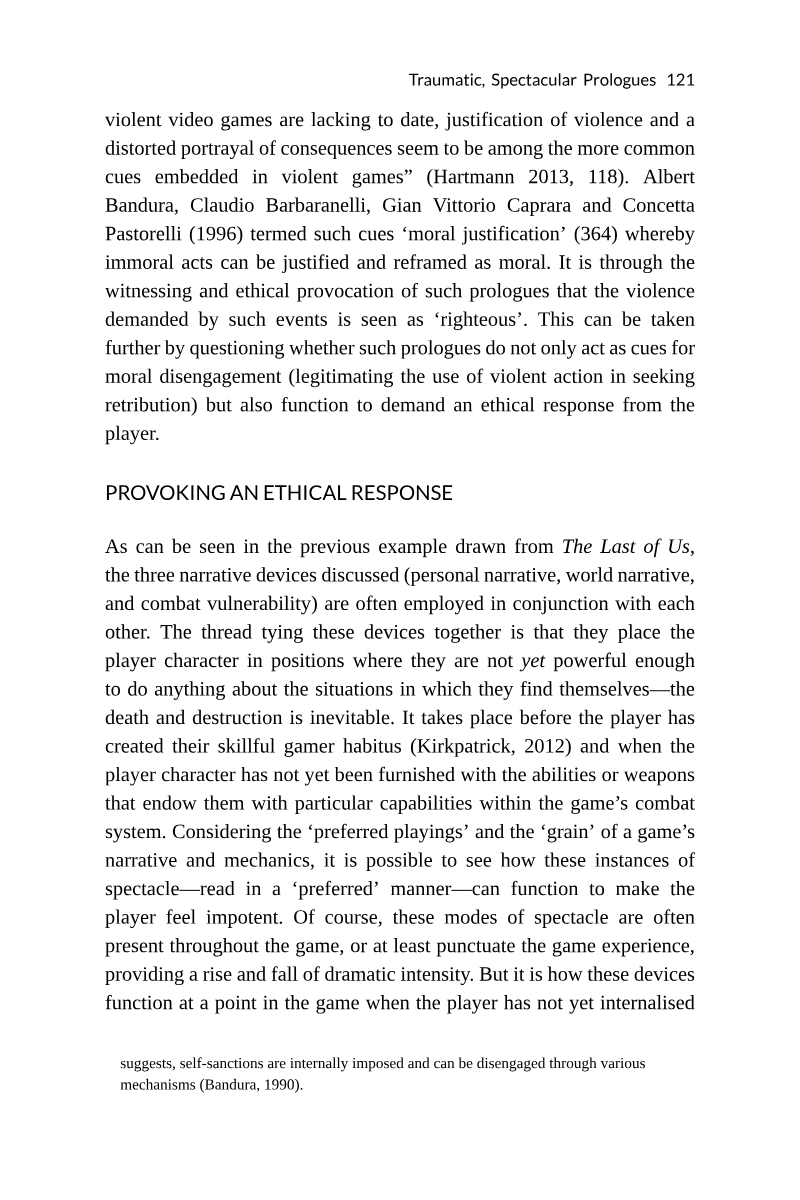
These narrative devices position subsequent in-game violence as a defensive reaction to initial suffering.
Joanna Cuttell's 2018 paper in the Transactions of the Digital Games Research Association examines violent, traumatic opening sequences in AAA videogames, asking how these affective devices attach and motivate the player. The study analyses fifteen games (thirteen titles, one of them a trilogy) released in the half decade before the research period, selected as AAA, single-player, adult, Western-developed, and original properties. Methods combined a qualitative content analysis adapted from conventional QCA and integrated textual analysis, with an immersive-participatory autoethnographic method, and the author played the games intensively over eight months, supported by a reflexive journal.
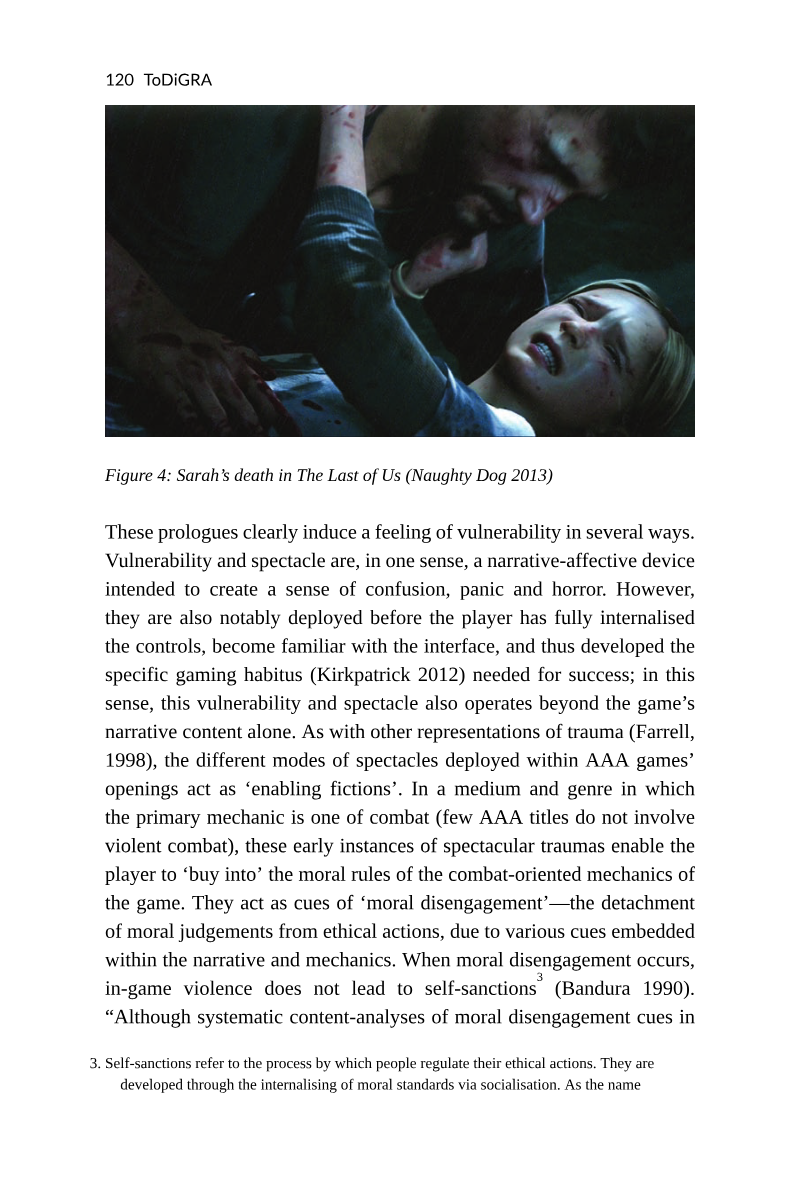
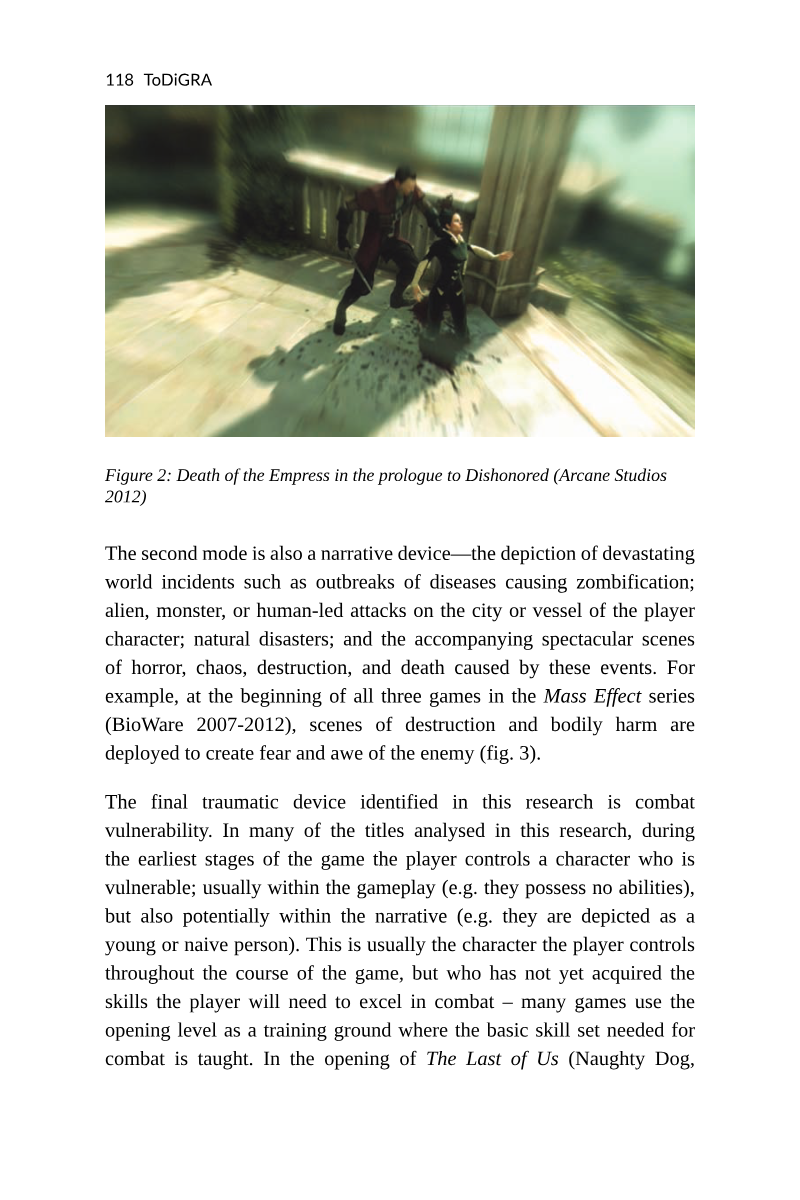
The paper maps traumatic prologues into three modes: personal trauma of the player character, depicted world-level devastation, and combat vulnerability in which the character lacks skills. Examples include the Deus Ex: Human Revolution and Dishonored openings and the opening of The Last of Us. The author argues these early spectacles act as enabling fictions and cues for moral disengagement, legitimating later 'righteous' violence.
The author also argues that because games are interreactive, players can respond to witnessed trauma, unlike the depoliticised viewers described by Berger and Debord. The journal entries record feelings of vulnerability, anger and impotence, which the author says motivated continued play.
Each row is a game or company this document names, each column a document, oldest first. A mark means that document names it. Select a row to see those documents.
DiGRA · 2026
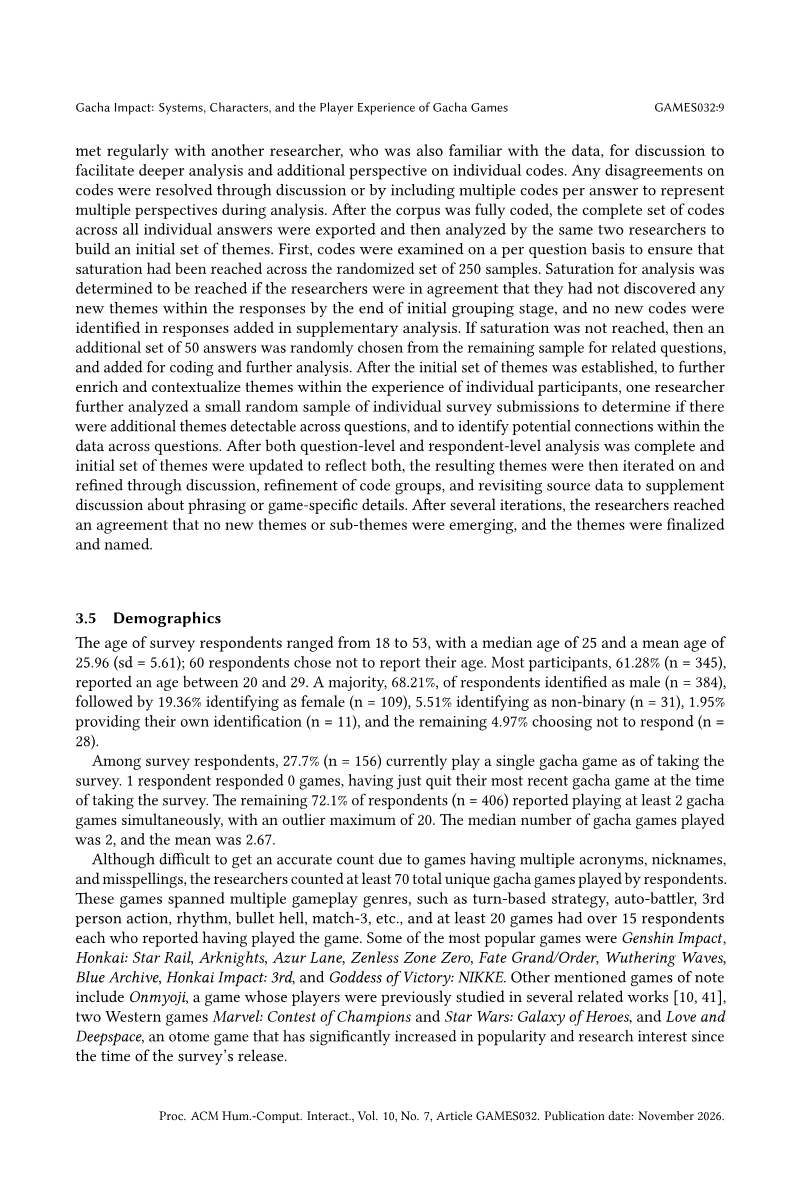
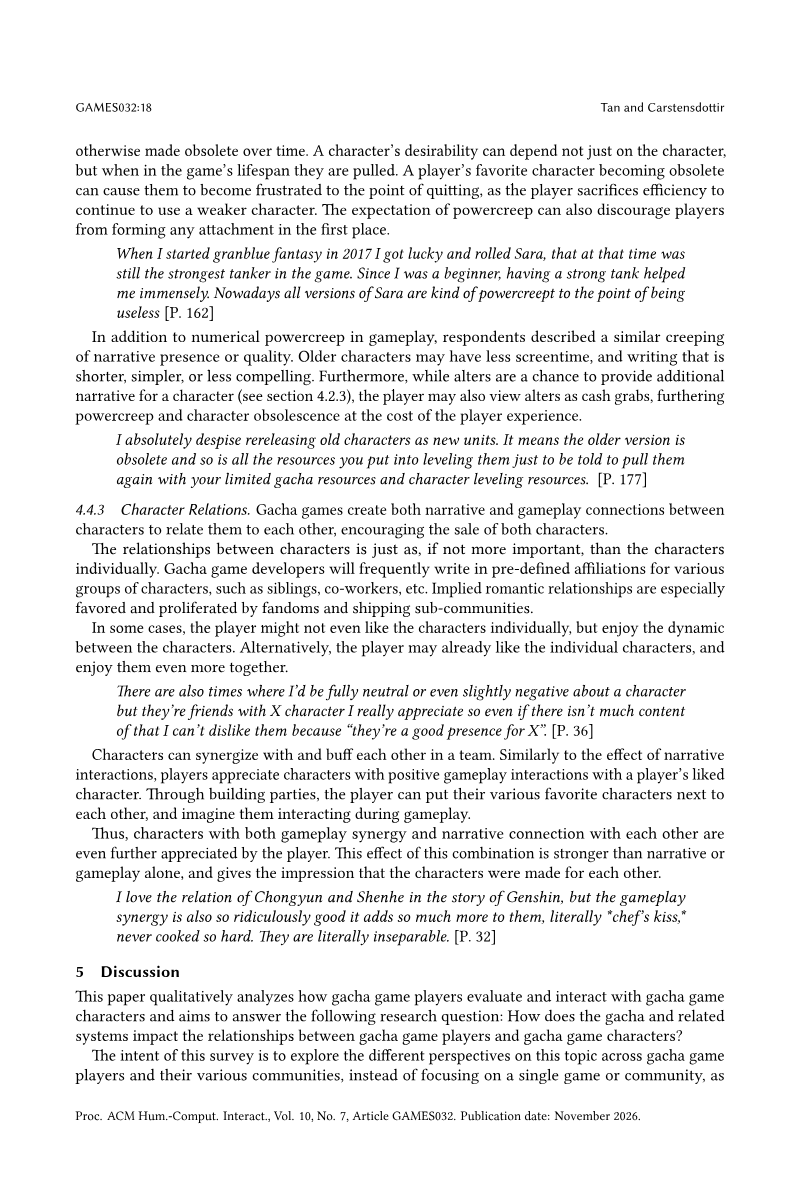
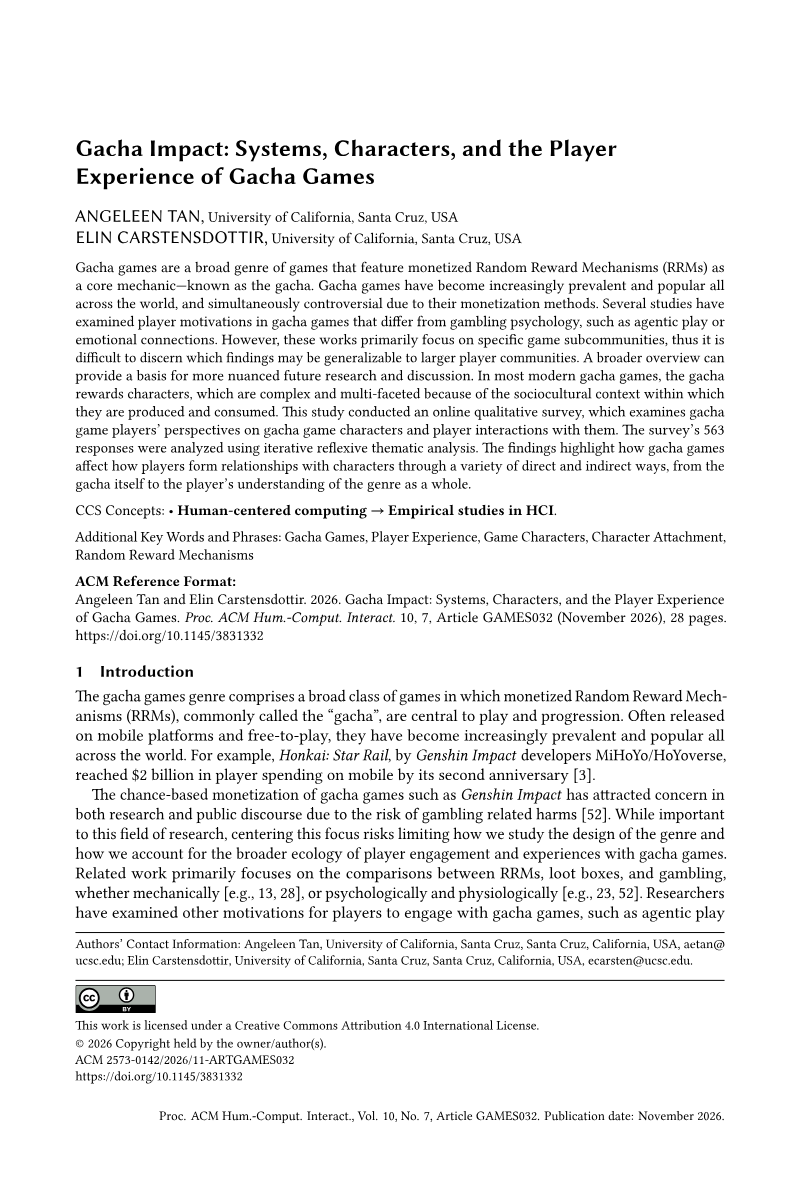
University of California Santa Cruz · 2026
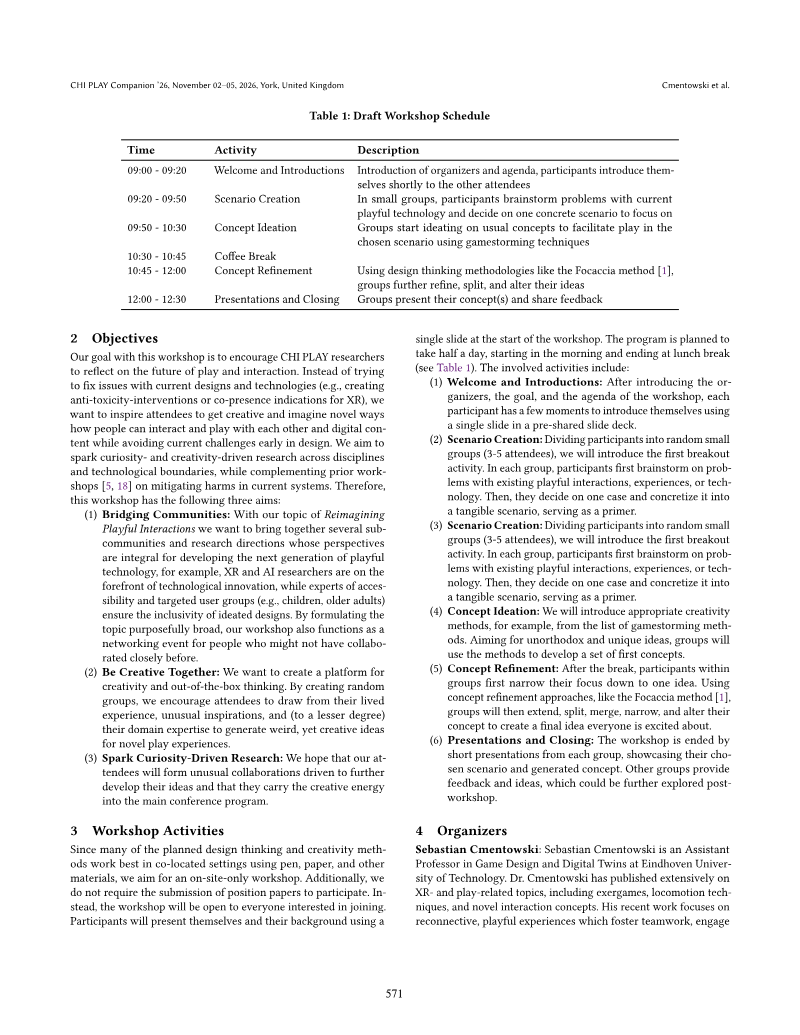
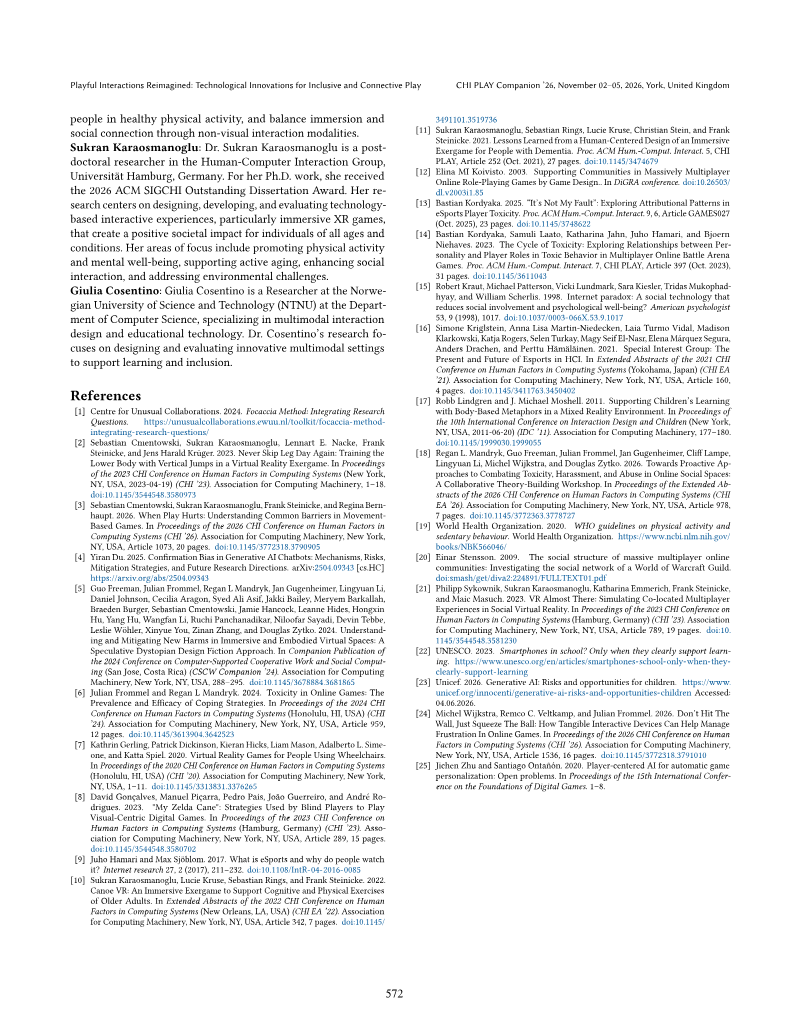
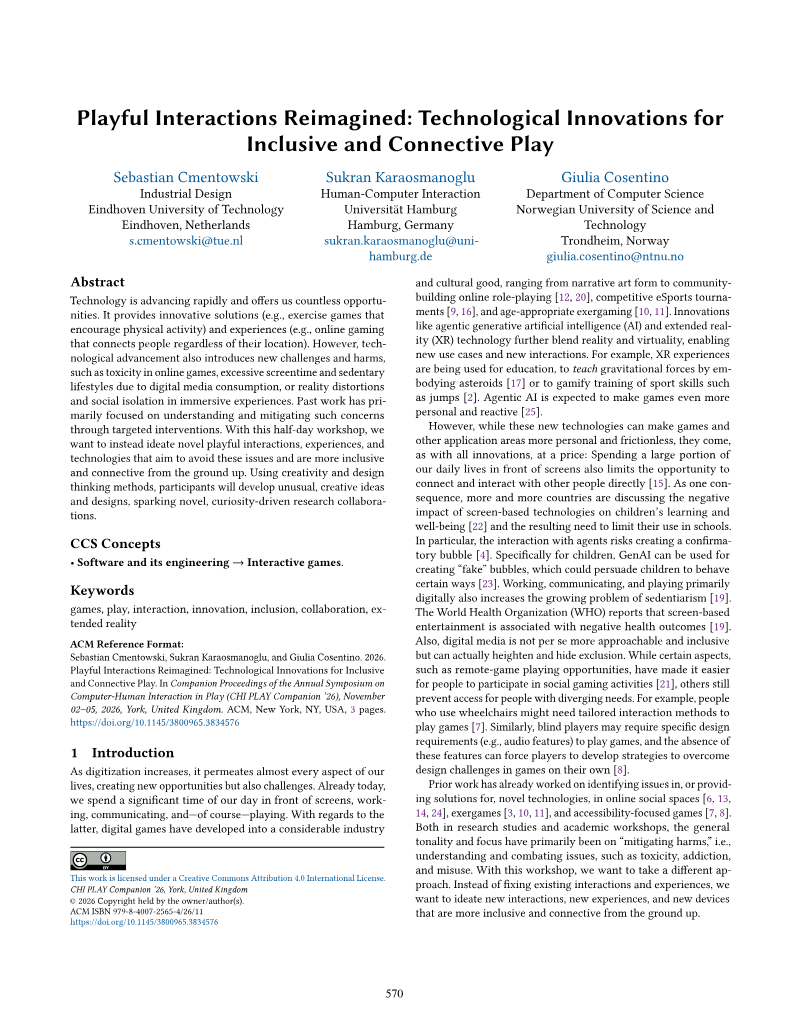
Eindhoven University of Technology · 2026
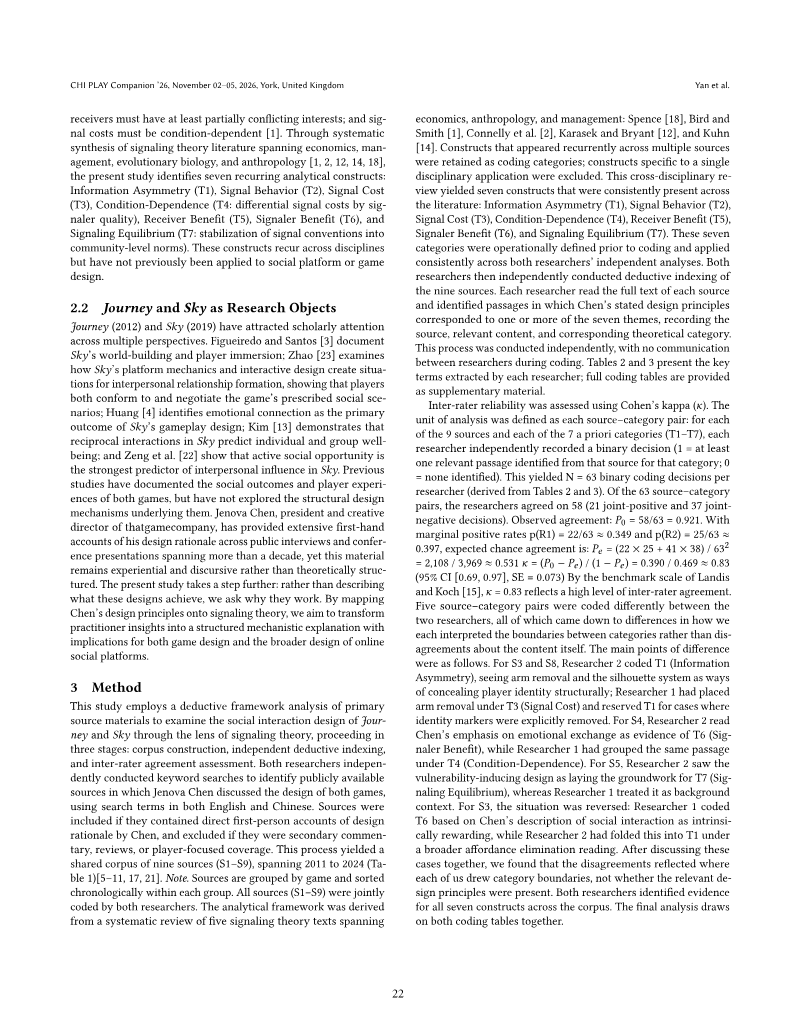
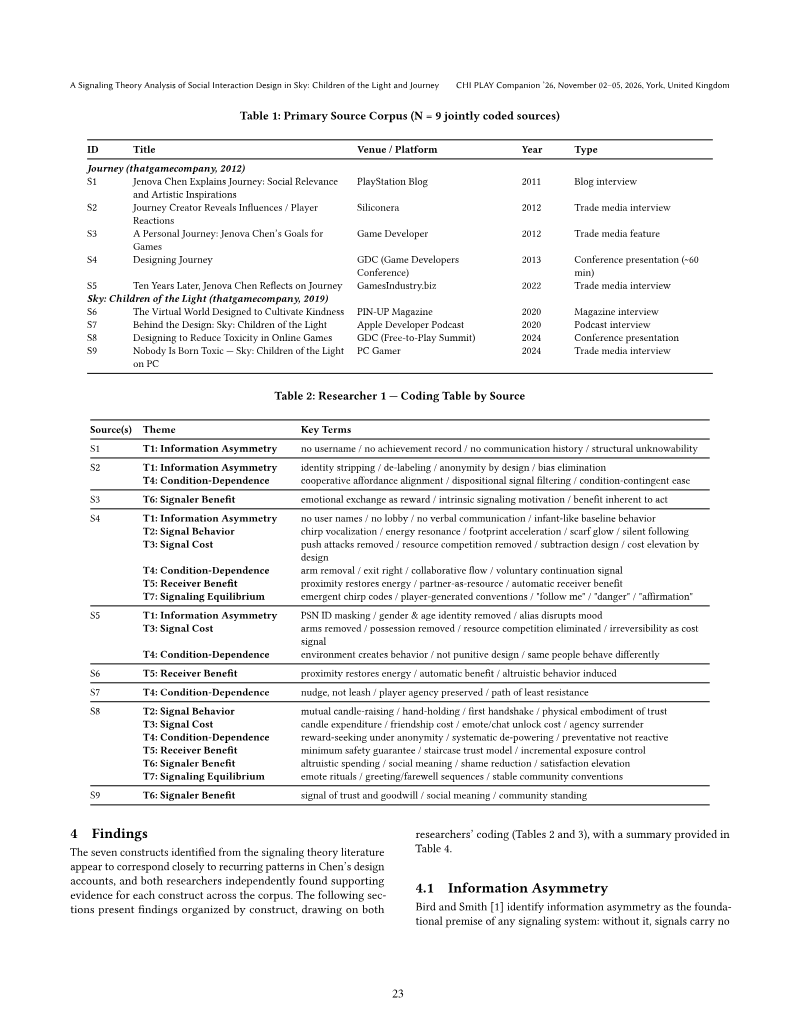
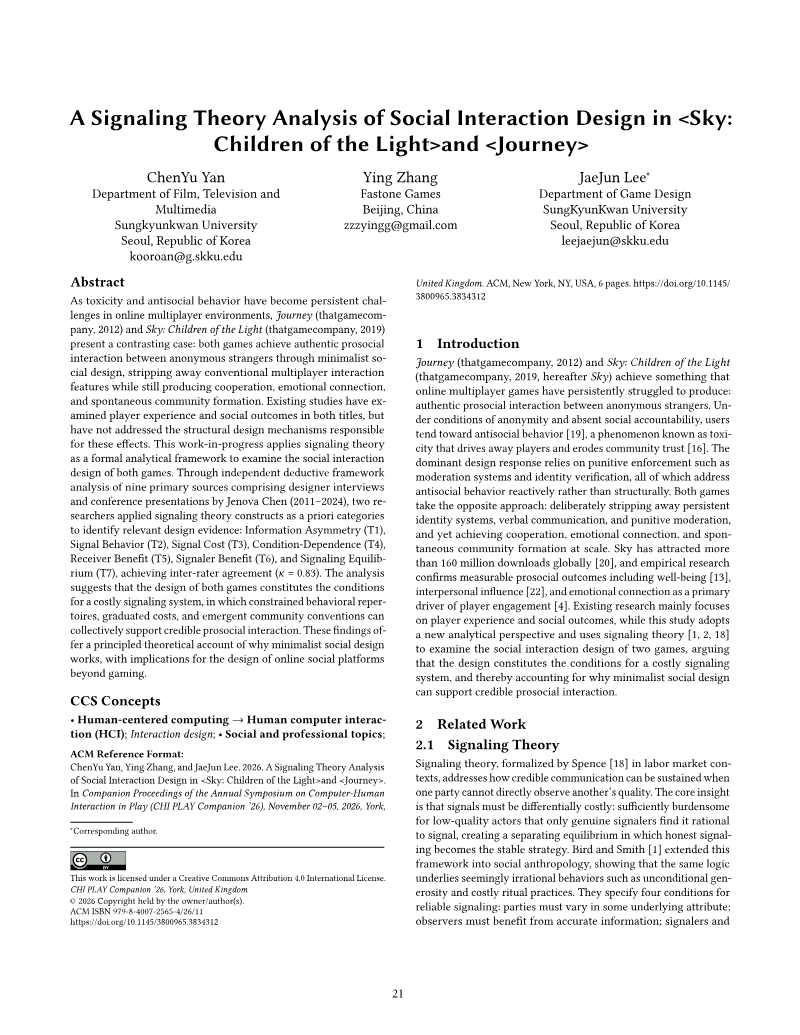
Sungkyunkwan University · 2026
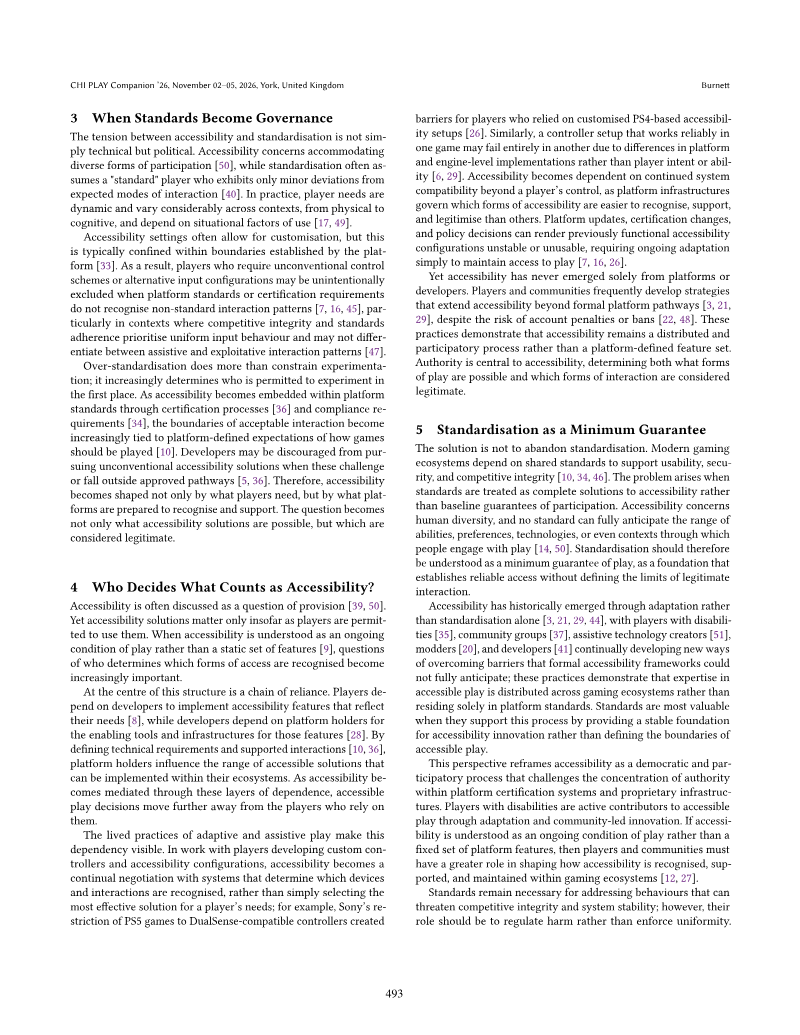
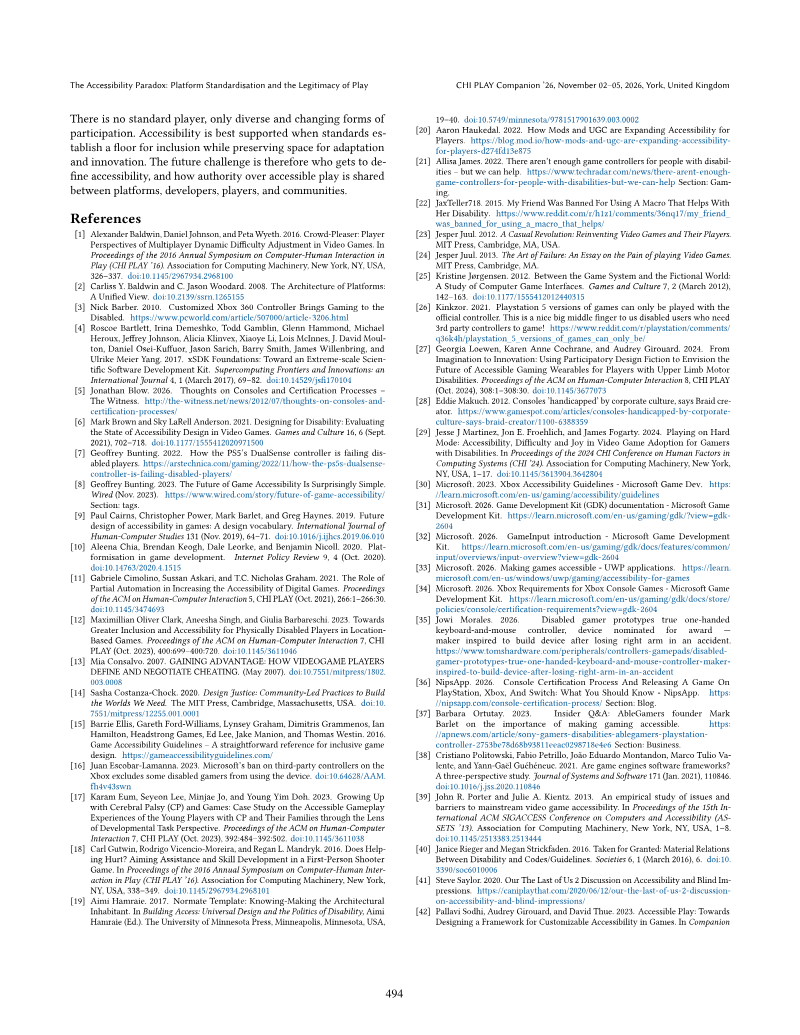
University of Bristol · 2026
University of Lincoln · 2026



DiGRA · 2026



DiGRA · 2026



DiGRA · 2026



DiGRA · 2026



DiGRA · 2026



game · 2026
DiGRA · 2025