Key insights
5 slides
Funding
Playable Worlds secured $45 million for Stars Reach.
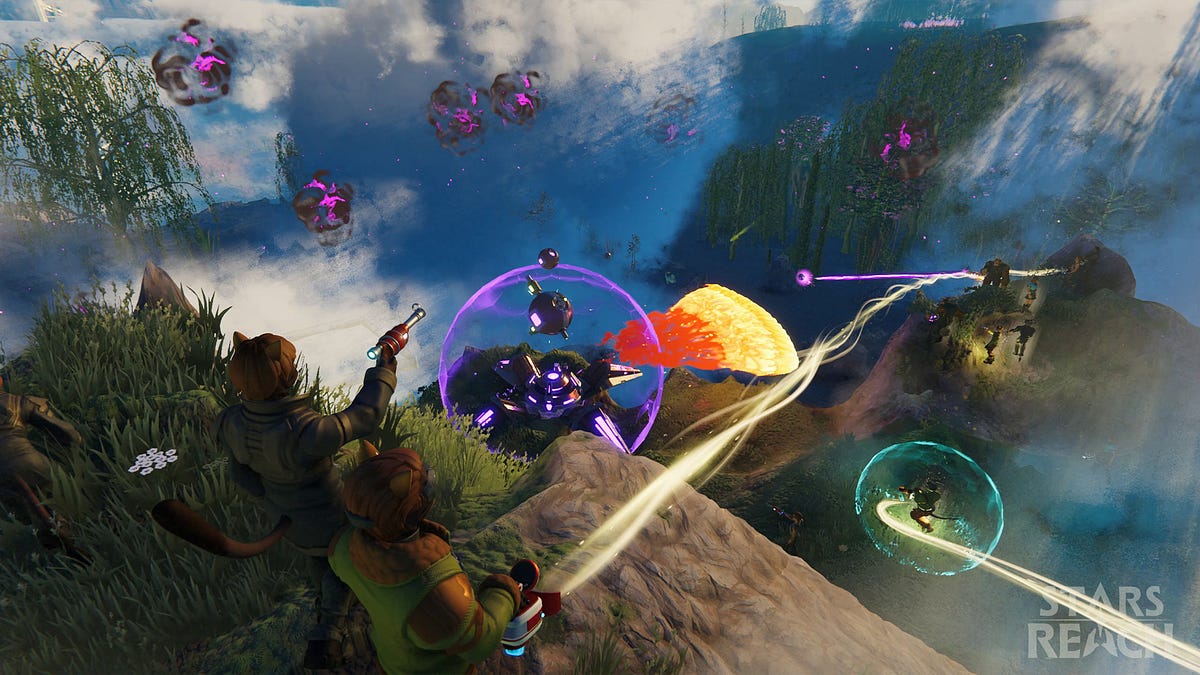
The upcoming massively multiplayer online game is led by veteran designer Raph Koster. The project focuses on creating a highly reactive, physically accurate virtual world.
Materials
The terraforming system simulates over 200 distinct materials.
These elements are designed to behave according to physical laws. Soil composition affects structural integrity, and materials can transition through states of matter.
Time control
A chronophaser tool lets players manipulate geological time.
Players can accelerate or reverse geological time.
- 01Manipulate timeUse the chronophaser tool to accelerate or reverse geological time.
- 02Trigger processesFacilitate rapid erosion or the reversal of material states.
- 03Transform materialsErode marble into sand or melt sand into glass.
Soil mechanics
Varying pH levels influence how tunnels and caves collapse.
The terrain engine includes complex soil mechanics.
Immersion
The project seeks a new standard for MMO immersion.
The team moves beyond static backdrops toward a dynamic, simulation-heavy experience.
Immersion. The development team seeks to establish a new standard for immersion in the MMO space.
1 / 5
Ask AI about this report