1 free read left. Create a free account for unlimited reading + AI research.
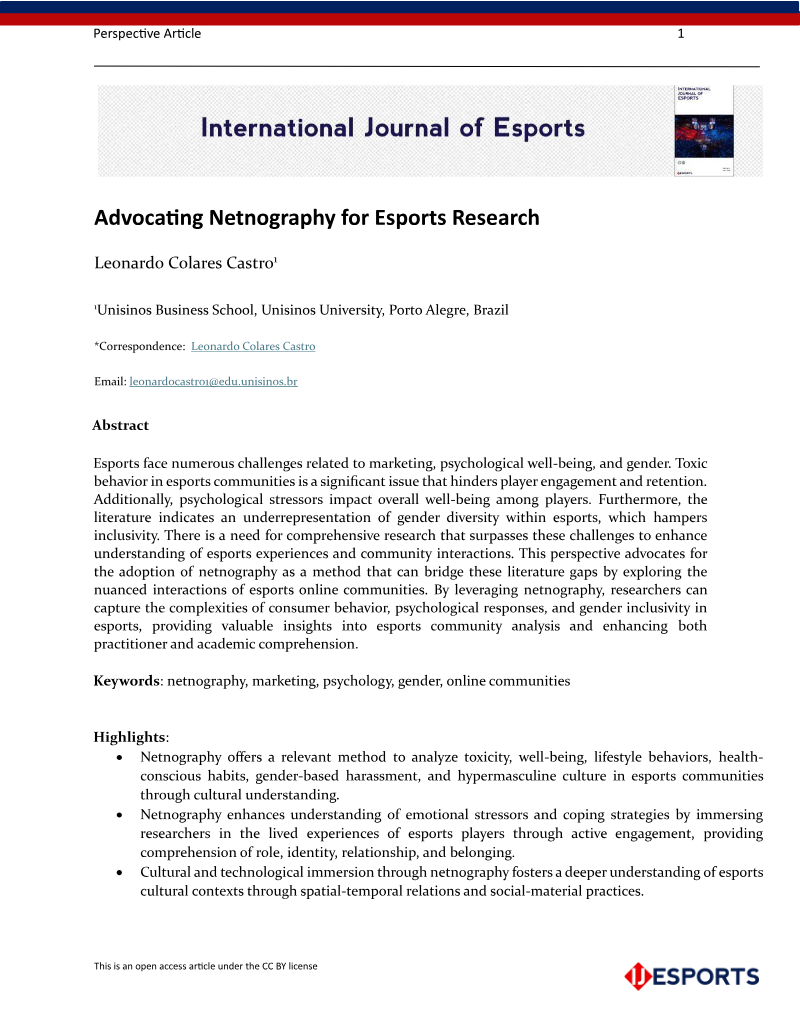
Create free accountArticle International Journal of Esports
1 free read left. Create a free account for unlimited reading + AI research.
Create free accountArticleInternational Journal of Esports
Across 120 articles, cisgender men make up 81.27% of participants, compared with 16.22% cisgender women.
Imbalance. Cisgender men account for 81.27% of participants, while transgender participants account for 0.11%.
This perspective article examines the gender diversity of participants in empirical esports research, aiming to identify and address the overrepresentation of cisgender men. The analysis included 120 publications and 85,765 participants from the Esports Research Network academic research database, covering studies from June 2005 to November 2022. The methodology involved screening titles and abstracts for inclusion criteria (esports focus, English language, primary research with participants) and extracting participant demographic data.
Key findings reveal a significant overrepresentation of cisgender men. Of the 120 studies, 65 (54.17%) included both cisgender men and women, 20 (16.67%) included only cisgender men, and only 2 (1.67%) included solely cisgender women. Fourteen studies (11.67%) included cisgender men, cisgender women, and transgender participants, while no studies focused exclusively on transgender individuals. Overall, cisgender men constituted 81.27% (69,698) of all participants, compared to 16.22% (13,907) for cisgender women and a mere 0.11% (94) for transgender participants. An additional 2.41% (2,066) of participants had unknown gender or sex.
The study concludes that the notable overrepresentation of cisgender men in esports research is problematic because results obtained from one gender may not be transferable to others, potentially leading to inappropriate applications and overlooking unique challenges faced by women and transgender individuals in esports. The report also highlights issues with unclear reporting of participant sex and gender, with terms often used interchangeably or incompletely. Recommendations include implementing comprehensive and inclusive recruitment strategies, utilizing open-ended questions for gender demographics, and ensuring clear and accurate terminology in research reports to reduce the gender data gap and enhance the generalizability of findings.
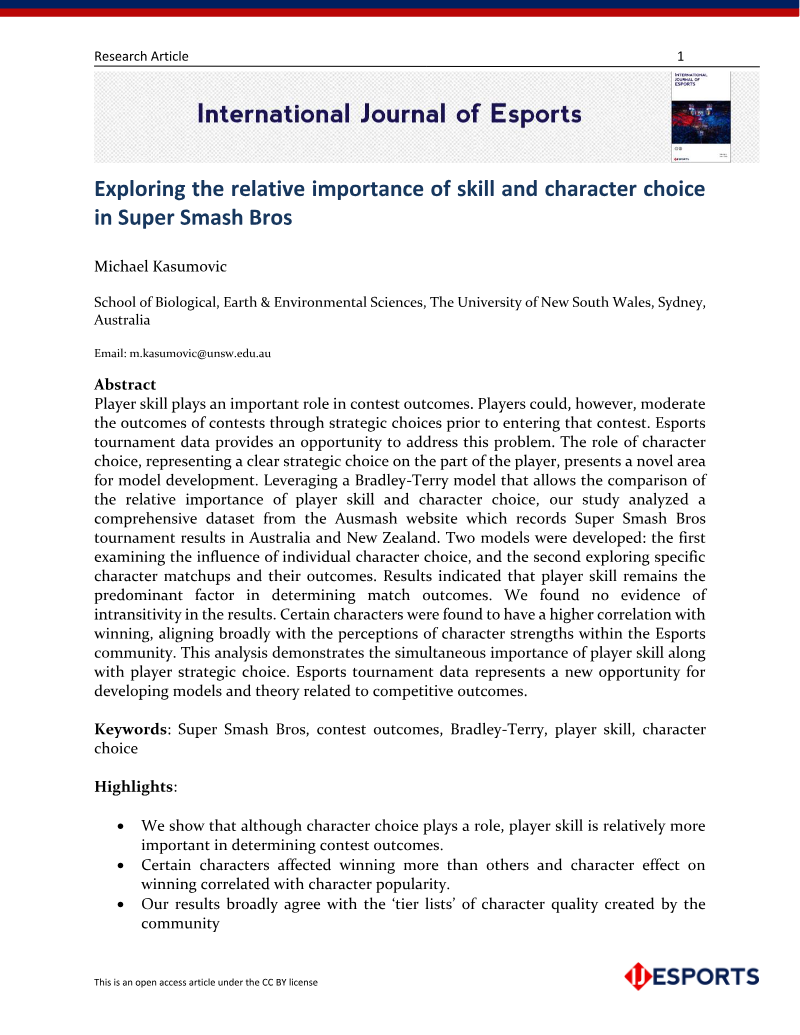
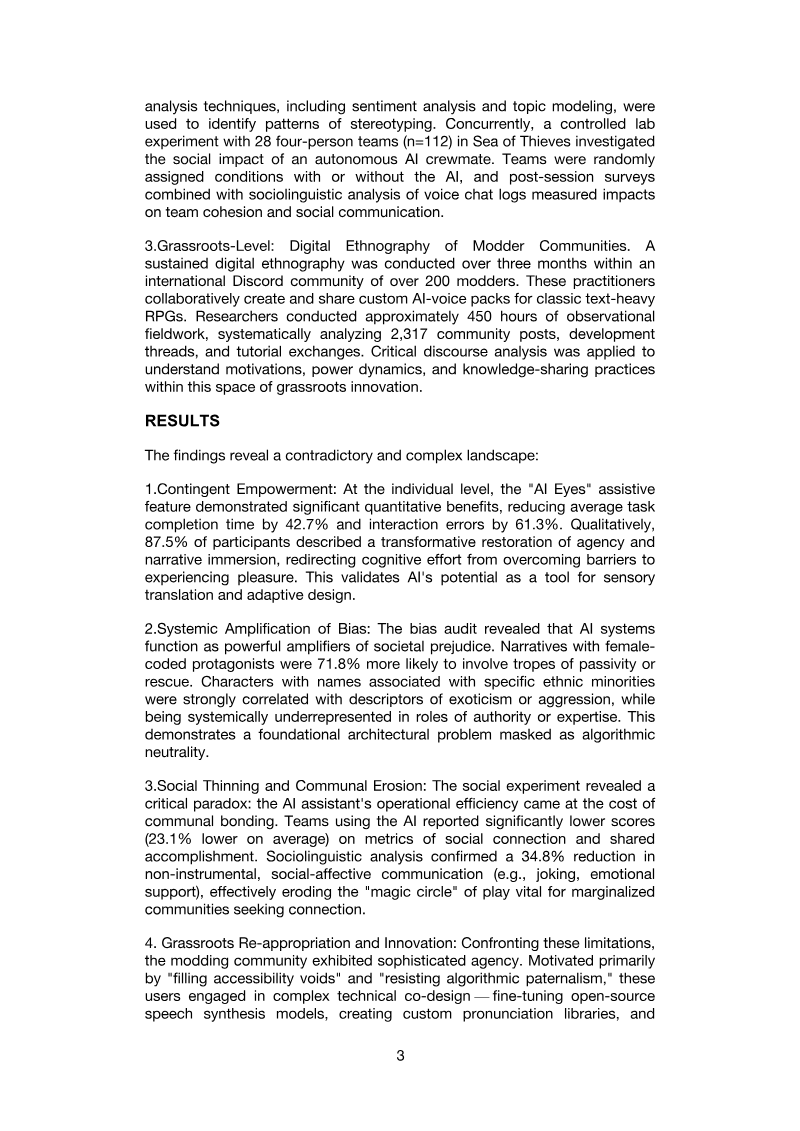
International Journal of Esports · 2026
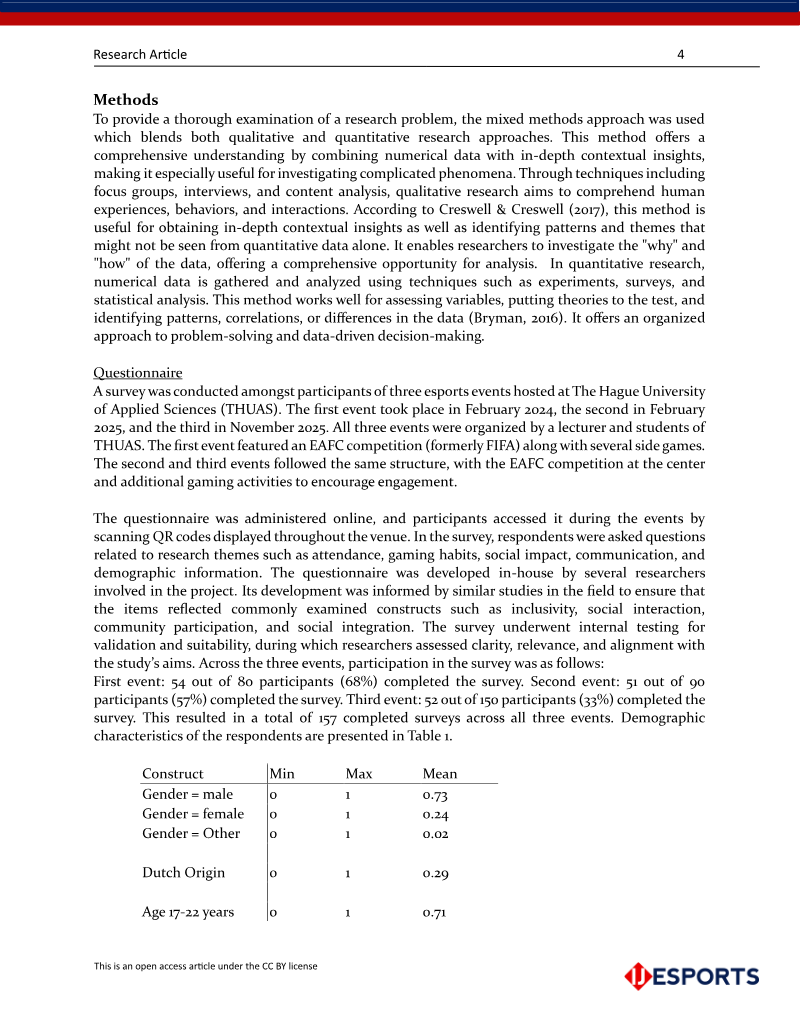
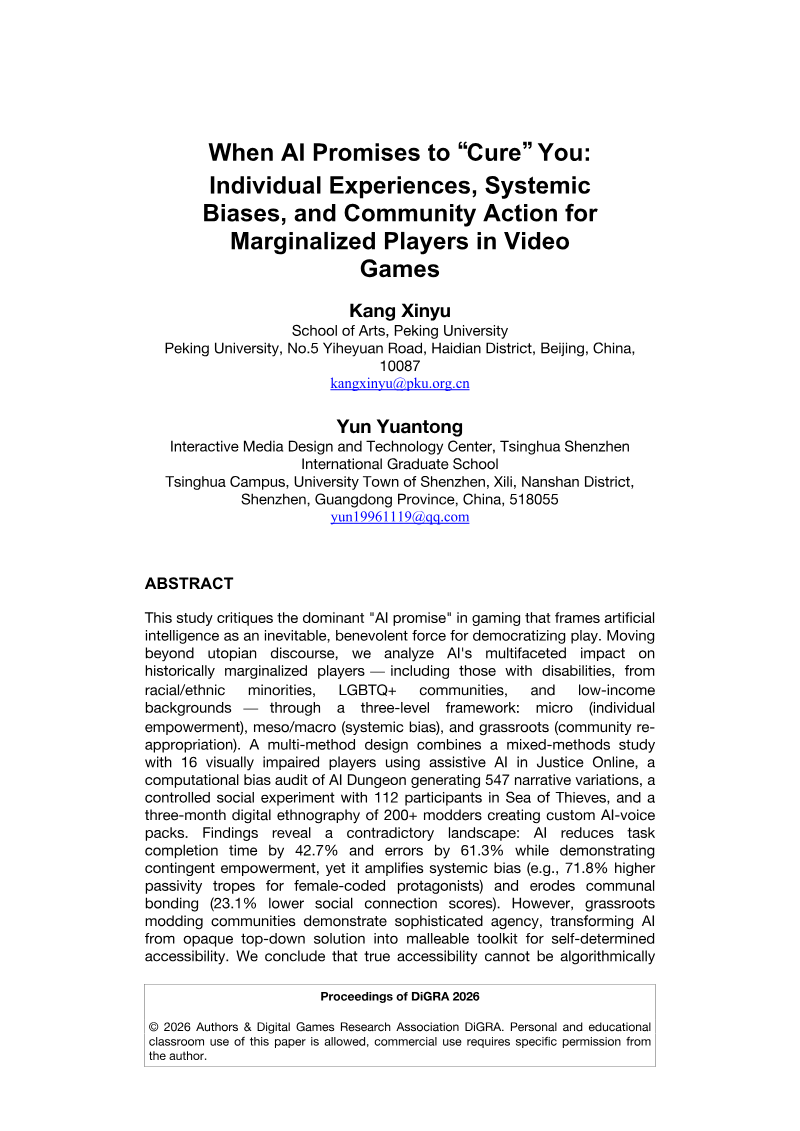
International Journal of Esports · 2026
International Journal of Esports · 2026
International Journal of Esports · 2026
International Journal of Esports · 2026
International Journal of Esports · 2026
International Journal of Esports · 2025
International Journal of Esports · 2025
International Journal of Esports · 2025
International Journal of Esports · 2025
International Journal of Esports · 2025
International Journal of Esports · 2025
DiGRA · 2020