Loading the document
1 free read left. Create a free account for unlimited reading + AI research.
Create free accountArticle DiGRA
1 free read left. Create a free account for unlimited reading + AI research.
Create free accountArticleDiGRA
Frank Fetzer's extended abstract, presented at DiGRA 2018, separates two intertwined aspects of the game avatar: the narrative otherness of the "playable character" and the technological alterity of the avatar as instrument. Drawing on post-phenomenology and the philosophy of technology, it argues that the avatar is both a protagonist with a life of its own and a hollow prosthetic that functions only when filled with the player's intentionality. The author contends it is more than the "little more than a cursor" described by Fuller and Jenkins.
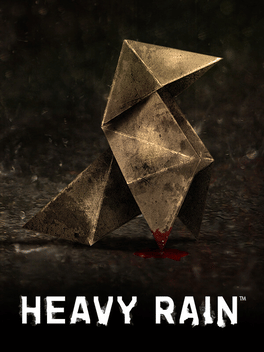
The scope is the action-adventure genre, defined broadly following Klevjer to include platformers, first-person shooters, and action-oriented RPGs. The tension between modes of avatar-player relation is considered most tangible there, because players necessarily engage the game world through a prosthetic avatar. Klevjer's distinction between the avatar as playable character, rooted in story-centered views of games, and as prosthetic vicarious embodiment, rooted in action-centered views, structures the argument. Racers and classic arcade games foreground the prosthetic, while interactive story games such as Heavy Rain foreground the character. The playable character is framed as a necessary hybrid, oscillating between subject-for-itself in cut scenes and instrument during regular play.
Short case comparisons illustrate the spectrum. Mario sits firmly on the instrumental side, since his plumbing profession has no bearing on his limited skillset and he functions as an obedient extension of the player's body. Faith in Mirror's Edge is more distinct, as her narrative identity as a parkour-trained courier shapes the capabilities available to the player, though those capabilities are conveyed through play rather than narrative alone.
The central proposal is that both instrumental and narrative properties derive from the avatar's virtual-material being-in-the-gameworld, which grounds it as a quasi-subject. Don Ihde's horse, an entity with its own subjectivity that can still be used as a tool and may occasionally disobey, serves as the analogy for alterity relations. The paper is a conceptual argument without empirical data. It suggests that clarifying these modes could help designers better merge story and gameplay, reducing the disruption between action and cut scenes, and it addresses both designers and scholars of the avatar.
Each row is a game or company this document names, each column a document, oldest first. A mark means that document names it. Select a row to see those documents.

DiGRA · 2026

DiGRA · 2026



DiGRA · 2026



DiGRA · 2026



DiGRA · 2026



DiGRA · 2026



DiGRA · 2026



DiGRA · 2026



DiGRA · 2026

DiGRA · 2026



DiGRA · 2026



DiGRA · 2026
DiGRA · 2025