1 free read left. Create a free account for unlimited reading + AI research.
Create free accountWhitepaper DiGRA
1 free read left. Create a free account for unlimited reading + AI research.
Create free accountWhitepaperDiGRA
Fiorilli applies the first of Italo Calvino's six posthumously published lectures, "Lightness", to a single video game. He argues the ideas offer games criticism a useful vocabulary.
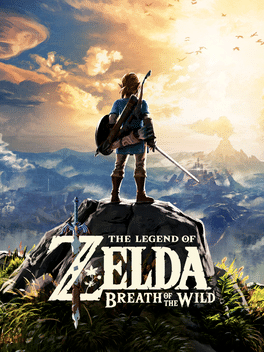
Patrick Fiorilli's paper applies Italo Calvino's first of six posthumously published lectures, "Lightness" from Six Memos for the Next Millennium, to The Legend of Zelda: Breath of the Wild (2017). Its central argument is that Calvino's ideas offer games criticism a useful vocabulary, and that the game's climbing mechanic embodies lightness in three ways: as a verb that floats broadly across the game's systems, as a highly abstracted relationship between player input and in-game action, and as a symbolic visual image. The author positions Calvino's observation that computers would reshape literature as prescient, noting that games rather than novels became the dominant form through which fiction became computational.
The analysis draws on established game studies frameworks, including Miguel Sicart's and Anna Anthropy and Naomi Clark's treatments of mechanics as verbs, and Johan Blomberg's semiotic account of controller input. The paper contrasts Breath of the Wild with earlier climbing-focused titles, Assassin's Creed (2007) and Uncharted: Drake's Fortune (2007), which the author argues model climbing naturalistically and frame it as a puzzle about the designer's intended route. Breath of the Wild instead lets Link climb nearly any surface on the player's direction, limited mainly by a depleting stamina meter.
The paper's conclusion is that the game's distinctive achievement lies in pairing maximal interactivity with minimal systematic complexity. By removing designer-imposed constraints on where the player may climb, the game shifts the question from "How do the developers want me to get up there?" to the player's own judgment of what is reachable. The work is a short, single-game case study rather than a broad empirical study, and it relies on close reading and theoretical argument rather than survey or playtest data.
DiGRA · 2026
DiGRA · 2024