1 free read left. Create a free account for unlimited reading + AI research.
Create free accountArticle Eludamos: Journal for Computer Game Culture
1 free read left. Create a free account for unlimited reading + AI research.
Create free accountArticleEludamos: Journal for Computer Game Culture
Heilmann uses Flappy Bird (2013–2014) to argue that repeated, countable actions organize play in videogames.
Heilmann's essay "Tap, Tap, Flap, Flap" uses Flappy Bird (2013–2014) as a paradigmatic case to argue that seriality, the structure of repeated, countable actions, is the fundamental organizing principle of play in videogames. Its central thesis is that the game's reduction to a single repeated operator action, tapping to flap, exposes a deeper logic linking arcade traditions, mobile design, and digital media. The author distinguishes "strongly serialized" games such as Flappy Bird and Tetris, in which play consists of sustained repetition, from "weakly serialized" games such as Heavy Rain or Flight Simulator X, and concludes that arcade-era design established serial play as the dominant model of the medium.
The analysis proceeds by treating the interface as decisive. One-to-one or one-to-many mappings between a finger tap and in-game action shape how players sustain play, and the essay situates this within a relational understanding of "digital," in which discrete elements arranged in a system underpin both numerical representation and the human fingers that historically gave rise to counting. On this view, nearly all digital interaction, including videogame play, reduces to sequences of finger movements.
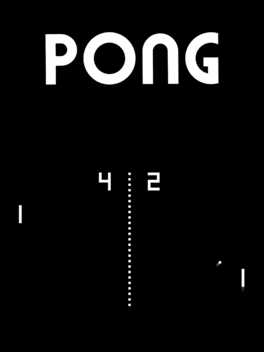
The scope is largely theoretical and centers on games from Pong to Flappy Bird, drawing on a corpus of more than forty cited titles together with media theory and the history of mathematics. Quantitative evidence is minimal, limited to the roughly $50,000 in daily advertising revenue reported for Flappy Bird, while the essay's conclusions rest on argument rather than empirical data. Its main contribution is to frame digital seriality as both a technical and an aesthetic principle.

Eludamos: Journal for Computer Game Culture · 2026
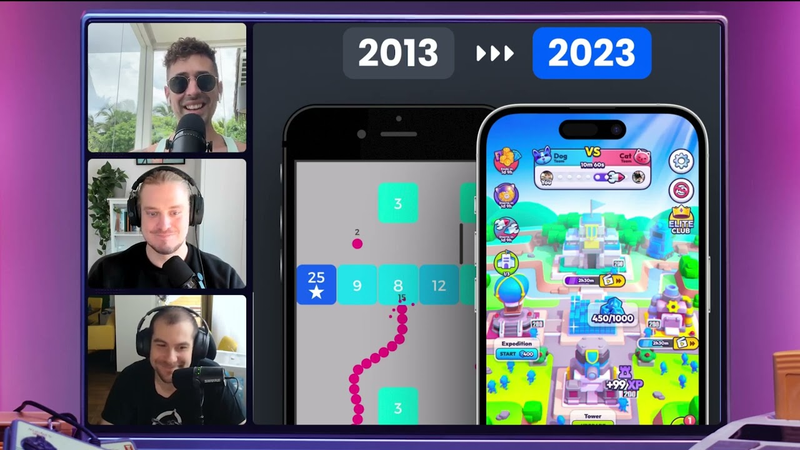
Two & a Half Gamers · 2023