1 free read left. Create a free account for unlimited reading + AI research.
Create free account
Superstar Speed Panel: Navigating Uncertainty: Apple Privacy Changes & the Impact on Ad Monetisation

Key insights
5 takeaways- 01The loss of Identifier for Advertisers (IDFA) data has forced a strategic pivot away from granular user tracking toward a model prioritized by product quality and diversified monetization.
- 02Studios are offsetting downward pressure on eCPM rates by focusing on increasing session duration and long-term retention metrics to maintain profitability.
- 03Innovation in non-traditional ad formats, such as branded in-game assets and audio advertisements, is being used to engage audiences while hedging against the decline of tracking-based revenue.
- 04Developers are reclaiming user data ownership by implementing third-party login systems and integrating in-app purchases to reduce reliance on external ad networks.
- 05To protect margins against market instability, studios are actively renegotiating revenue-share agreements with ad networks and optimizing waterfall management.
Ask AI about this video
Transcript
the first panel of the day i have to say this one's amazing because just the name of it right superstar speed panel navigating uncertainty apple privacy changes and the impact on ad monetization i don't know if it might date me but i'm tempted to raise my goblet of rock to you guys it's an amazing panel um i'll let of course the moderator introduce them himself but we have christian calderon who for me personally is sort of um more or less the synonymous is what i want to say with data-driven marketing and econometrics and we have of course boom bit top ranking gaming app game to tell us some things share their knowledge share everything
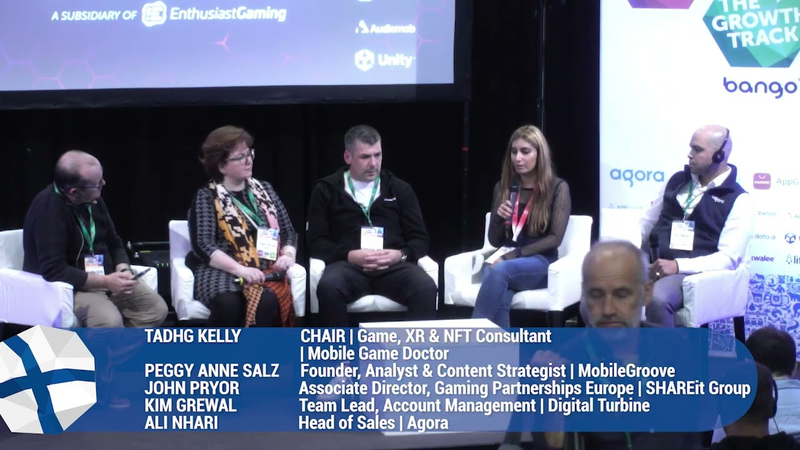
i will hand it over to our uh moderator for today dylan umali business development manager at hyper mx he's excited to moderate and learn how companies are navigating these uncertain times we're excited to learn so i'll give it over to you dylan if i had it i'd raise my goblet of rock i can't wait to hear what you're going to say i know it's going to be edgy so i'm just going to shut up get out of here you take it away thanks peggy and i appreciate the the great intro i couldn't have said it any better myself uh but as peggy alluded to today we've got a great speed panel surrounding the upcoming apple privacy changes and uh the impact on ad monetization a super hot topic to discuss obviously um before we get into it uh i'd like to introduce our panels briefly i know peggy did a great intro over there but i guess we could start with myself so i'm dylan molly i'll be moderating the panel i work as a business development manager at hypermechs a leader in bringing branded ad campaigns into mobile apps and i'm joined by some great industry leaders here
we have christian calderon of uh game jam christian say what's up hey everyone how's it going we got a gonzalo martens a head of marketing at boombit hey guys how are you and uh to close out we got uzir bazer ua manager and monetization manager of unicode studio hi everybody yeah great to have you guys on board great to share some insights uh gonzalo let's kick it off with you um as we all know the idfa is going away anytime now just a matter of when um as we we've seen and it's already making a big impact on the entire industry um being head of marketing over at boombit particularly covering you know all aspects of ua and monetization uh be interested to hear uh what's bubbling up in your world and sort of how your ad monetization team uh what are they expecting uh during these uncertain times yeah of course i mean uh of course until the the the ios 14.5 comes out it's always is
still a bit of a black box but there's several things that we can already see that are happening several of several ad networks they allow us to do for example tests on waterfalls that only target led versus non-led users and on these type of tests we can already see that the the cpms sometimes they are about 20 lower for led users showing that indeed like not having that power and that knowledge on the idf can already have an impact on your monetization and on your ecbms however i still i think that att can be even more aggressive than led so these these values can be significantly lower um but what can what we can already see is that the ad networks they are adapting to this new world of uh always having to double kind of double your efforts of led versus non-led in order for you
to take the most out of these two types of users it's going to be two new types of users you really need to to accept that and you you're always going to have this on your way on the ua front or the one stage front be aware of this and and kind of double your efforts to take the most out of the two totally absolutely it seems that segmenting between late and non-led is something that everyone's experimenting with uh christian i'll ping you in over here is that something that your team over at uh game gem is doing as well yeah i think you know a lot of people are doing that um for us what's kind of more interesting i mean with with this you need you know we it kind of comes back to trying to take more control over over the waterfall um in different segments of what you can um you know i think the the contrarian view to to that is uh having high att
adoption rate drives more idfas and you see 20 percent lift in in cpms um to me though like you know what if what if you just didn't do that uh so like i i think there's like pros and cons to both well let's see what what could happen uh there are other types of monetization that i think you can put in uh maybe that's more apple friendly um other types of ads i think that could come out of this that might be more friendly like from brand spend for example like ads from hyper mx are obviously amazing compared to a lot of the performance ads that we see radio audio ads new types of ad formats so i think there are other things that we can do outside of optimizing for a higher at a higher adoption rate and att and i'm more in that camp uh at the moment
obviously if it doesn't work out we'll optimize towards att but i i would i would rather uh not give idfas to to add networks to have them target our users personally if i can get away with that and have higher cpms and higher arp dao so that's the approach that we're going to take absolutely absolutely that's a lot of great insights i appreciate the hypermax plug there um uzir i'm going to i'm going to chime you in here as well um here to share some insights on what you guys are seeing uh um internally at unico yeah thanks dylan at unico we've been seeing actually we expect decreased ecpms after uh apple's changes uh we are kind of making some preparations for that um it will be especially difficult for the hyper casual and casual game publisher especially hyper casual game publishers you know operate on lower margins um we are trying to optimize our
waterfalls and the job of the monetization managers for the high hyper casual games uh will be very challenging of course we we are doing the basic things sdk updates or att prompt testing but i believe these are the uh the most the easier easiest part of the job um in unicode studio we are more more focused on the product improvement to increase retention rates uh session times just to compensate for the expected revenue loss from these changes absolutely absolutely i know it's a it's difficult managing all this new stuff coming in and i guess i'm taking a just backtracking here and taking a step back uh more industry-wide and and broadly speaking console let's kick it back to you um how do you think this is going to impact ad monetization not only with your guys studios but just across the entire industry
yeah of course i mean i'm not going to repeat myself about the 20 drop and everything so there's also a couple of things that sometimes uh we really don't think about until until until we are faced with these other things but for example a lot of ad networks they do uh sometimes change and have a more dynamic ref share in order to to tackle to better tackle the auctions meaning that even though sometimes you agree uh an x amount of rev share with an added or what they will try to do is that they try to fluctuate uh up and down that average value in order to to be more competitive for you on the auctions on the options however what this can have what this can bring back to you on the negative side is that with this lack of knowledge on the users with this lack of being able to be as competitive as before this fluctuation can actually start damaging a bit of your share with the networks and then
not have a direct impact on your monetization on the revenue that at the end of the month you bring home so this is something that we are trying to to understand with the networks you're trying to to to understand with the partners how impactful it will be because at the end of the day you it's not just the the ecpm value that you're going to see on your dashboard but it's also these dynamics on the back that can make your auctions be much more competitive and less and trying to understand how these algorithms work it's also very important for us at least in my opinion and also other small things like for example the building right the a lot of ad networks will not will have much less information on the attribution side they will not be able to track their installs as much as before and some networks with that trying to do they are trying to instead of billing you on the normal installed basis they will start billing you on the impression basis and this can have a very big
big role on your final roi especially on upper casual like it was said here very small margins if out of nowhere you start being charged just on impressions instead of installs we all know how many uh campaigns sometimes we run to to test a game to to test the creative and you have 5000 impressions and 10 installs just because it's really about creative so this can uh have a big impact on the final roi that of course it affects our monetization and how we do monet absolutely and that's that's a good point uh you make as well i mean it's it's hard to to say how these these companies are going to start billing out uzir you mentioned it briefly earlier but perhaps a decrease in spend what do you what do you think on that yeah exactly um dylan i agree with gonzalo especially we are kind of a combined team with the user acquisition and monetization it
will be much difficult to make a decision in terms of spend especially while scaling up the hyper casual games that will have an immediate impact on the revenue side on the monetization side for most of the games not just the hyper occasional game publishers uh with decreased visibility um because we will not have enough um enough data that we can confidently make some decisions increasing bids increasing spends it will not be easy so that will be i believe there will be an adjustment period uh we don't know how long that will take a few weeks a few months but there will be a new normal it could be worse than we expect or it could be better than we expect yeah who again who knows it's uh uncertain times for sure um and i think christian made a good point as well earlier
um just in testing different ad types uh christian if you care to elaborate on that i know you mentioned you know these brand ads audio ads what sort of results have you been seeing uh you know preparing for for these upcoming changes on the monetization side or the on user acquisition i mean both but particularly modernization side would be helpful yeah so for monetization with audio ads it's been kind of interesting we've seen an increase in uh in retention for cohorts with audio ads which which is we think that's pretty interesting the the the other part about audio ads which is nice is that you can play them between interstitials um and so you know in hyper casual where time is a big thing so we're timing how we how how we uh uh you know show interest to show ads and so you can also have time how you show the audio ads um and uh we're finding the audio ads are
working quite well obviously still early uh almost no games have them now um so it could be a a nice thing that happens uh to us and in 2021 on the on the monetization side also looking into other types of ad units that we can put in for example in in japan emeric has been a popular unit there for years so we're looking at adopting it and testing it in other countries um and trying to maybe tailor the adding experience also based on on geography optimizing more um you know doing doing these things where we can try to gain more control over cpms more work for everyone i think to try to improve uh arp dao and on the ad side yeah absolutely just seems like a bunch of testing uh seeing what sticks what doesn't especially uh you know as these changes come up uh uzia just going back to you uh for a
minute i know that you guys are doing a lot to prepare in advance for the upcoming changes um it'd be great if you could you know dive deeper into that and more so what you guys are seeing in terms of sk ad network and all that yeah thailand we are in close contact with all of our monetization partners monetization networks and also the ed networks we are making um these uh implement sk and network implementation and sdk updates um so we have we are also trying new kind of solutions like constant contextual parameters and everything like that but we believe um the the the way to compensate the revenue loss on the expected revenue loss on an ecpm decrease as christian said either you have to try new ad units or try to increase the ecpm for the existing ones we have been trying new ad units
like rewarded interstitials and things like that that admob has been working on but on the other hand we are now more focused on the product development as monetization managers how we can keep users more on our apps just inc increase the session times and retention rates and how we can increase the share of in-app purchases in our games just to be able to compensate for that uh loss and and these changes will really have significant impact on the hyper casual gaming space we will probably more and more studios um adopting in-app purchases in their games and that will be we will be seeing more additional features in the games which is not um usual right now yeah yeah totally i mean it seems i mean i've mentioned it a lot a lot of this is experimental um so gonzalo on your end as well um
sort of are you doing anything to prepare uh like these guys over at unico and and the game jump yeah uh there's there's a lot of things to do i totally agree with the new ad types it's definitely something that we're also looking into so totally agree with them trying to go uh maybe to something different and maybe a bit more niche uh something that you're also testing and and seeing if it makes sense to try or not is for example have a third party login so by this is imagine instead of just just having the normal login maybe try a google login or a facebook login what will this do of course it will give a certain ad network a bit more of advantage towards the others however at least with this type of logins we are guaranteeing that facebook google or whatever it is it has a full picture and the full knowledge of the user so at least we can guarantee that one of our ad networks will will perform to the
maximum so we'll perform to to the current standards and we still need to do this measure because of course then you're creating a bit of unfairness on the auctions but this can be something new something nichey to do um however also like something important is of course for you to define the conversion values that that apple is allowing us to pass via the sdk ad network you need to understand what you really want to target right if you want to target in-game metrics if you're not targets advertising metrics if you want to target if you want to do just like each conversion value is two cents or start with just one cent for tier two countries you really need to to adapt and this is something that we are testing a lot right now absolutely seems uh all of you are very data driven and it's just exciting to see yes sort of testing works for works for all of you guys the studios um shifting gears a little bit more into a controversial question i'll say is with the loss of idfi is there any
sort of upside to it is this actually good for the consumer and christian let's let's start with you i know i know you have a lot to say about this um so it'd be great to get your sense yeah i mean i think overall it's um you know it it there's there's good and bad things right so this could be really really bad for a lot of small businesses that are not prepared prepared for this however um you know it's kind of like you know when you're you're 18 or i don't know what country is if this happens and and but in the us when you're 18 you get kicked out of the house right and you have to like go on your own this is a kind of a similar situation where apple's like okay you guys no more idfa so like some some companies could improve the products uh from this in a way that is you know less idfa dependent um and i think companies like this could you know could could come out um but it also creates a situation where uh some developers could be
dependent on uh certain networks that have walled gardens um on their building ecosystems around are around this uh they can control more margin so what i think the one thing for us and i think for all developers that's really important because one of the there's one side of the argument whereas if there's overspend trying to learn for spending more money on the user acquisition side trying to to figure out who these users are um in theory that should increase cpms right if margins are flat so i think one recommendation to like kind of for indies and studios to prepare for this is like with all other you know contractual agreements with ad networks to make sure they have uh a rev share agreement in place uh so if they're you know so they are capturing uh a margin if there's any there's a margin shift right because that's something that could happen with the absence of idfa uh it's a little unclear where margin could shift unless you have those contracts in place um but i think there's there's a good
side and a bad side uh to this um obviously nobody is happy about it uh but you know you know there's a silver lining where as maybe like our products could improve we could have better retention focus more on iap subscription revenue um and in turn have better products absolutely i like it i like your take on that there's a silver lining to everything it seems you know this could improve studios but in the same way it could sort of uh crumble them as well uh gonzalo if you want to chime in here and uh add in some additional thoughts yeah i mean i think it's pretty much uh all said i mean at the end of the day of course we if we do think about like how social media and how like this current ecosystem can impact for example political influence political ideas how users do not trust a lot a lot of brands a lot of a lot of apps of course it's positive that apple is kind of enforcing
this privacy uh it is just giving giving the users and the consumers a bit more of trust uh however at the end of the day i think that small increase of trust will definitely not compensate what's gonna happen on a lot of companies p l uh and for example personally myself i prefer to be targeted and see ads that make kind some kind of sense to me than to just see then and ended up seeing random ads just for the sake of privacy then it depends of course on each person so yeah that's it it's always a gamble we need to we need to to accept and and that's it thank you absolutely as it is yeah absolutely that's a great point you make as well i think personally i also prefer the targeted ads but i also think it's just been around for such a long time we just get used to it and i think these exact you know upcoming changes i think everyone will navigate um moving along here i know we have a few minutes left so i'm going to close out with a few questions um uzier i'll kick this one over to you
uh i know you guys are communicating with apple pretty closely about this maybe maybe not um is there anything that they can do to make the process smoother yeah thanks dylan exactly i think um an answer to your prior question there will be an upside for the users which they will have a better control over their data but on the other hand i think apple needs to communicate better and and they should fully inform the users i i know they they are putting blog posts on their websites but none of the most of the users will not go there and uh fully read these statements they they should inform to users uh like in order to prevent false perceptions like okay these apps are not uh spying on your phone tracking means this you've been
providing this anonymous id for targeted advertising we're now um giving this control to you it wasn't used for kind of like cynical or secretive purposes that that should be a better communication or um management of this process um from from the apple side as well of course they've been informing us we've been making the implementations it's good but um while giving control to the users it is the upside we are in favor of it but at the same time maybe they should better inform the users how this has been handled so far again this was the tool idfa was the tool created by apple as well absolutely and that's that's a great point people people obviously overlook that um gonzal is is there anything to add to that i think uzir uh knocked it out of the park with that one yeah i think so
cool um i guess to close out um for all of us or i guess you three uh forward-looking now what do you expect a post idfa world to look like and that christian we could start start with you yeah i think uh on the attribution side i think these companies are going to change so i think we saw you know that app love and adjust acquisition um so i think attribution companies will evolve uh coming out of this um and uh yes i think it'll be interesting to see how products change as well uh you know in a post uh uh you know ios 14 world uh i hope that and i think products will become higher quality and better um and i also believe that apple will start to regain more control over the app store uh which which they totally lost to ad networks over the last you know decade so i think these three things are
going to be interesting to see this year absolutely those are some great points there gonzalo let's uh let's hear from you what do you what do you think a post audio fa world will look like yeah i mean uh even except everything that we already spoke today right it's going to be uh definitely harder to to to analyze the the roi of our campaigns and of our investments however i'm pretty pretty uh interested in seeing the behavior of the upper casual ecosystem and why because as you know every casual like advertises is 90 percent or 95 percent at revenue driven then out of those 95 i would say is like 90 percent other games other upper casual uh which shows and that the the the ecosystem is very similar right the the the users are wait are already aware of this they they interact uh already a lot with these with these ads which what can happen eventually is that the cvrs and the user behavior in the ecosystem itself this very
small ball and this small ecosystem will not be that affected there will not be that aggressive changes so so the algorithms will continue this type of uh performance let's say so i'm pretty pretty excited to see how application will hold versus a lot of other changes totally totally and uzir uh you have the last word as far as our questions are concerned before the q a um yeah i know you have a few hyper casual titles uh are you expecting something somewhere yeah exactly we expect a similar trend as gonzalo mentioned as i said i would recommend hyper casual publishers uh the newman upcoming ones to focus more on the product that the adding features that will keep users more on their game with idfa or without idfa uh that's what we are trying to do and it it will be challenging it's not something easy to do uh trying to increase the
ad revenue also the in-app purchases but it will be a challenging time difficult in terms of monetization decision-making and also uaua decision-making but we are trying to navigate these changes we will try to navigate these changes to the best of our ability with cooperation with our monetization and our marketing partners we have to adjust to this this new reality and um yeah yeah that's a good way to close it out i mean as the the panel is titled it's all about navigating the uncertainty so it's only a matter of time uh till all this stuff comes out and you know your guys's experimentations will be put to good use um let's hope yeah great well i saw it was here you answered a few questions in the chat peggy i'm not sure if you're gonna jump in here and direct some questions but
the one that i'm seeing at the top here um i guess this alludes to an earlier point was made um how can i i can jump in if you want um yeah go ahead okay um just making certain cause you've got some um some questions here i'll bring myself in um you got quite a few questions i don't know if you're seeing all of them you could have a few covered a few let's try one here because they bring it up a couple times in-app bidding will in-app bidding reduce the impact of idfa seems like a simple yes no question yeah i don't think so uh especially yeah i don't think so facebook has been also pretty pretty open about it how how it will they will also feel a big drop on the on these overall cpms okay i i think to this point though it's it's important to retest waterfall versus inept bidding in a post-idfa world in tests that we've done we have seen
better cpms going back to waterfall so versus so i think it's important to test um uh and uh it could be different for different games okay staying with the uh formats here we had one question i don't think you necessarily posed this one dylan did anyone here in the panel try in game ad formats from networks like admix anzu ad inmo or adverti etc not personally so far okay we are in discussions with with some of these networks to test in-game ads okay um i had one question why not at the very end um i was really interested in these audio formats christian and you said you're trying them uh they fit really well because you can place them in between so interstitial then audio etc and then
you said something like they're not available here yet or something like that that i heard so what are these audio ads and what are you doing because you're testing them so you must have some great access yeah well i mean it's not common you're not seeing them in a lot of games yeah today but we really like the audio ads um we we've been using a vendor called odio and uh based out of tel aviv and um basically we found that the quality of the of the ads are good so like the ad quality is great but in the tests that we've done we've seen an increase in retention on it on a cohorted basis um which was quite surprising to me um so i think it's still early we're still we're still testing but so far we've rolled it out to all of our games on on android um and we're going to continue to roll it out in other games i think it could be interesting as well because with new ad placements for example like hyper casual evolved as a
category based on the interstitial ad unit right we started building levels that were like 10 to 30 seconds so that we could serve interstitial ads in between these mini sessions so i think as like ad units change and evolve it could also change how we how we design our games so i think it's quite interesting to see the different ad placements and how it could affect the games in the future and the impact on game design you said it yourself correct that's gonna be very interesting because i remember hearing i mean we had hyper casual then we had hybrid casual so maybe there's some other form coming out of this not just the type of the monetization but the actual real game design itself exciting right yep i think it's interesting i think this was a great panel i hate to tell you to stop dylan um but i'm going to have to we're going to go to the next one i think you deserve a massive applause for just you know plain talk and also very positive talk i mean i expected to hear like the end of the world as we know it and uh no you know focus on
product you know focus on product look at retention um find your workarounds you know i i really like that and some great points um as well i hope everyone will continue in chat over at discord uh just a high five to all of you well done here high five there you go it's peggy absolutely well done okay thank you thanks everyone thank you bye everyone bye thank you everyone you
Summary
Apple’s implementation of stringent privacy changes and the subsequent loss of Identifier for Advertisers (IDFA) data have fundamentally altered the mobile gaming landscape, forcing developers to navigate a period of significant financial uncertainty. The primary thesis centers on the necessity of pivoting away from reliance on granular user tracking toward a model defined by product excellence and diversified monetization. As effective cost per mille (eCPM) rates face downward pressure, studios must reconcile reduced data visibility with the need to maintain profitability and sustainable user acquisition.
To mitigate these challenges, the industry is shifting its strategic focus toward internal product development. Increasing session duration and long-term retention rates have become critical metrics for offsetting the volatility of ad-based revenue. Developers are increasingly integrating in-app purchases and implementing third-party login systems to reclaim ownership of user data. Furthermore, studios are actively renegotiating revenue-share agreements with ad networks and optimizing waterfall management to protect margins against the broader market instability.
Innovation in ad formats serves as a vital component of this transition. By experimenting with non-traditional placements, such as branded in-game assets and audio advertisements, developers are discovering new ways to engage audiences without compromising the user experience. Early data suggests that these emerging formats can actually bolster retention while providing a hedge against the decline of traditional tracking-based advertising. Ultimately, the current market environment demands a disciplined, iterative approach to game design and monetization, where the long-term viability of a studio depends on its ability to adapt to a privacy-first ecosystem through superior product quality and continuous testing.














Comments