1 free read left. Create a free account for unlimited reading + AI research.
Create free account
Superstar Session: Introducing Benchmarks+ Performance Insights for 1.2bn Monthly Players
Key insights
6 takeaways- 01The analysis, based on data from 87,000 games and 1.2 billion monthly players, identifies a fundamental market shift between 2016 and 2019 that favors long-term engagement over short-term trends.
- 02High-spending players ('whales') have increased their spending by approximately 20% across the mobile gaming industry, with card and casino genres seeing growth as high as 50%.
- 03Casual and arcade games that integrate mid-core elements, such as action-oriented gameplay and player-versus-player features, are currently outperforming traditional casual segments.
- 04Industry-wide player retention for days 7 and 28 has trended downward, highlighting the need for live operations and automation to mitigate increased user churn.
- 05The average lifespan of a hit mobile game has plummeted from months to mere weeks, necessitating a shift toward 'games as a service' models to combat market oversaturation.
- 06Developers should pivot from purely ad-driven models toward incorporating in-app purchase (IAP) strategies and core-game mechanics to sustain revenue growth in a competitive landscape.
Ask AI about this video
Transcript
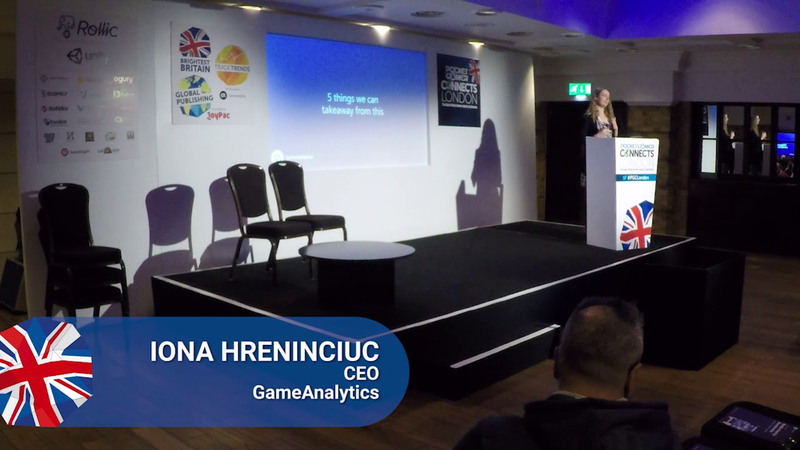
[Music] oh hi everyone I'm Jana I'm the CEO of game analytics you might have seen me do another one of these talks but this time we're gonna speak too so we tried to look at something different than we usually do and we're actually using as the basis for this benchmarks class so the tool that you just saw in the video it's actually possible for you to get all of these insights now as well some things that are good to know before we get started what you have in the brochure because the brochure is you know kind of handed out and free and so on is you'll have a look at the top 25% of games today we'll go for the top 5%
in different categories and the tool includes that the top 5% and we're adding more like the top 4 3 2 percent of games so in every category we're gonna look at the best performers for your category this is a very fresh benchmark it encompasses the whole of 2019 so literally this data is like like hot-off-the-press the absolute newest data you can possibly get and I'm gonna go right into it so you saw a bit of this in the video but if you don't know game analytics or you know it's just briefly so we have an SDK that is integrated into mobile games we collect data create reports for the studios we reach over 1.2 billion monthly players and I think over 19,000 actually games in in the mean time and then since we actually did this we are we are a free tool but we are very very widely adopted and at any one time we work with like at
30 to 60 percent of the top 100 of the App Store so there have been cases where we had like we were integrated in like six seven games in the top ten and that generally holds true so but you're gonna see the data today from from all of these all of these games that that's reflect the market and something we decided to focus on now is is revenue so the fact that whales are spending more than ever and I'm gonna show you a bit what exactly what I what we mean there so we compare data from 2019 to 2016 because sometimes it's hard to kind of tell massive trend different differences even from like within the same year but you do see a clear difference between 2016 and 2019 and what we see is that there was everybody is kind of like whales are spending more this increase is visible at the level of the entire industry it is like a 20% increase now but at
certain peaks it was it was higher and [Music] what what is interesting is that in classic games cause the games like board card casino games this spend is even more visible so here the increase as much higher it's around 50% generally well like I said you don't necessarily see like if you look at the line you will notice that it's not like very it's not going for up very abruptly or down very abruptly so sometimes it's hard to see these things and when you are planning your studio strategy it's hard to look at sometimes at the past six months and tell okay is there a trend is the market going in a certain direction or not which is why this time we wanted to look at what happens over a longer term to say that actually there are trends that it is like if you just look at a very short time frame cannot be seen and this is one of those one of those trends to kind of pinpoint that a bit more and give you an idea of what it
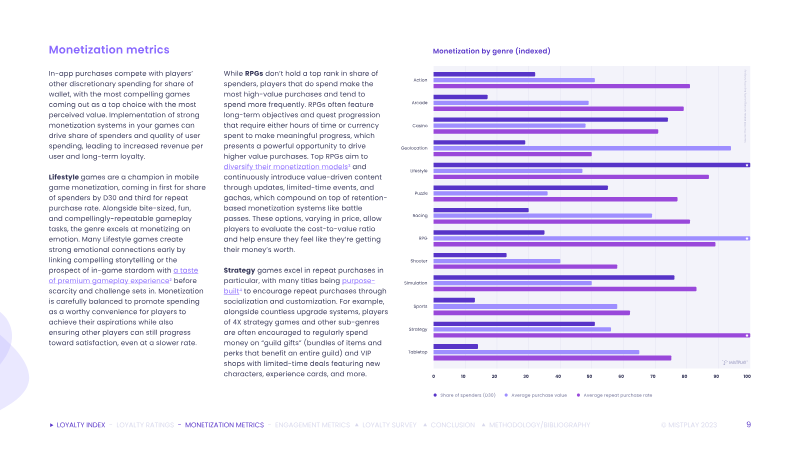
means in terms of numbers there is a massive difference between genres so like card casino games you know people talk about high ARPU being like $50 $60 current casino games have like a hundred and fifty dollars they are massive and I think the opportunity here is to consider even if you don't do kind of cards you know games if you don't do like we don't are not typically a provider associated with gambling right but there is opportunity to use these game genres or this game mechanics like social casino games right so I would consider even if you you think of yourselves as not you know not a company that does casino games that's the slots or bingo or card or whatever if there are ways that you could like phase these mechanics in because the upside can be immense even if you do it with a prototype or two you would be able to see like a massive massive increase if you capture some of the right audience right because like I said the difference here is like anything from like 3x the revenue to
like 5x the revenue so it is it is a massive thing now how does this apply to casual games just taking a breath so there has been a similar increase and kind of like overall the market is slightly going down however it is still higher than it was about three years ago it is sometimes hard to explain why this happens usually there is a downward trend in general in the summer by the way like there is like in the summer both traffic and revenue and so on tend to be down the interesting thing is we have not seen like go up this go up very highly this towards this end of the year which we sometimes normally see so sometimes you will see a downward trend for the first part of the year and that will pick back up this year we haven't necessarily seen that however I would
say the numbers are still much much higher so there is still about a 20% difference and if if we look at kind of pairs onra interestingly enough the arcade genre which is most associated with hyper casual is actually doing quite well it still reaches our Pooh's of like 40 50 $60 and they're also higher the action genre is doing amazingly well and we think that this can be attributed to the like player versus player like the first shooters things like that sometimes like really well architected runners but it is the action genre is doing amazingly well out of all the kind of casual genres it is behaves the most like a mid-course Honor probably because there is also some crossover there but that's good to know and an important thing here to remember is that I think we talked a lot about ads the growth of ads and so on but IEP still a very very legitimate strategy for casual games right it's it's a
harder strategy to implement it takes a longer time to develop but there is no reason why you shouldn't see your game as a game that can make high IEP revenue and again this has generally increased so if you have worked if you have invested in this two years ago and have been prototyping and tried to find like a good Ivy strategy you will be making proportionately more money more money now than you would have at the beginning so it is it is something that is worth doing and experimenting with the other trend which is why kind of actually brought us talking about this today is that overall yes well retention is generally stable for day one but retention for day to day 7 and 8:28 has generally been decreasing we saw a strong like I said in the summer retention decreases in general but in 2019 this was more pronounced than in other years it was a year when we liked game analytics we felt a bit of an exhaustion in the market we you know we
started talking about things like having a number one isn't what it used to be you have games that are at the top of the App Store that are not in the game analytics top 20 like they do not make it they are not one of our biggest games anymore you can have like a number one we have sometimes like number one us App Store hits that just kind of fly under the radar in the sense that they're not that biggest games anymore so there is definitely a feel like we see the lifetime of the game shortening it used to be that having a head game will take you like a game would last four to three months now we see games last four to three weeks and it's a massive decrease and that does back like back the question of okay then if my margins are like ever-shrinking if the lifetime of the game that I've invested so much money and is now so short how can I kind of make up that difference and how can I keep growing my game in my studio and that's why we decided to talk about the IEP today that perhaps it's time to introduce some of these more core classic game mechanics into your games
if not as probably your main strategy than at least it's worth something worth experimenting with because there is a certain shift that we see in the market from like very very casual games back into more in-depth content more kind of experience driven games and of course here casual games see the biggest the biggest hit I know that kind of first is your cage honor again most associated hyper casual sees a very very consistent drop here so I would say if you've been in this genre and you have seen these genres and you've seen your numbers go down a bit they the the whole industry is changing another thing that is good to know especially for you all right now because we looked at these numbers for the past two weeks the first two weeks of the year have the worst retention because you know people are in holiday and they play a bunch of games then they go back to work so if you've seen something weird in the past couple of weeks that's actually a thing like retention is like just goes down and goes back up at the beginning of the year so it's good it's
good to know ok takeaways this is not very heavy on data by the way because usually we've done that and I think that it's quite a lot so we wanted to focus on very clear things there is a lot more data in your brochures and we have a lot more information if you want to come in come and speak to us but of course like I mentioned so far focusing on your IEP model is important probably more important than than it used to be be in this kind of world where life cycles are getting very short secondly if you want experiment with new types of mechanics introducing carding casino mechanics can work very well slots mechanics social casino anything you can do in that area also I would say many games have been combined like you see multiplayer casual games you see all this because if people have generally kept kind of these casino and card mechanics and casual games is generally far apart with the exception of like Studios like Mooney who do a fairly good job of this so I'm not sure
exactly why this is probably through a general discomfort of like casino mechanics are associated with gambling but I think it's a challenge to the industry to try and combine the two in a way that is not damaging and that helps you grow your Studios [Music] secondly there are more games being released than ever one interesting thing about game analytics is we've been you know games games have a life cycle right so we we go up and we go with our games to come active and inactive we've never actually had a month when we've like lost in the overall numbers of games like the number of active games that we work with and that we see gener like is always increasing and there is very strong competition moreso than ever before and I would say that the Futurist casual games we have gone towards very mass very basic approach and now we see a going more in the getting back to
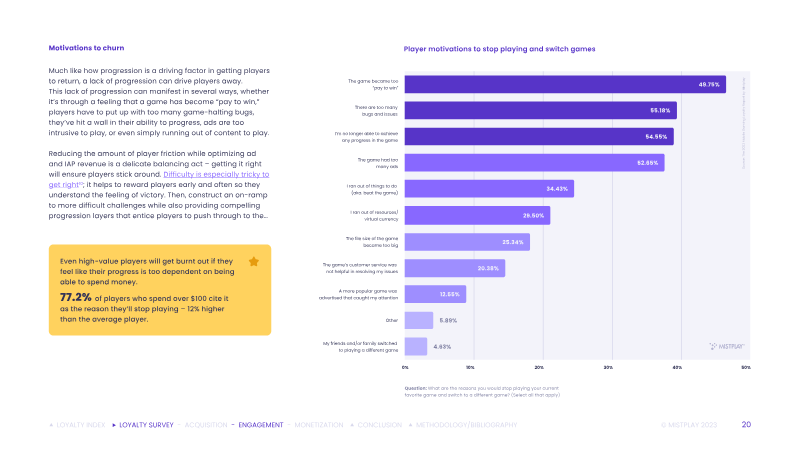
content getting back to better experiences getting back to live ops automation game as a service maintaining the game for a longer period of time because we do see that the users spend less and less time in the game they're churning they are out of patience and everything as you all know has become very similar and finally I think we do not focus on it like it's very tempting to just focus on the short term what is at the top of the App Store now what is working right now but sometimes there is there are long term trends that you are perhaps not seeing that you could be benefiting from that may change your decisions and it's worthwhile especially as studio heads as investors but also as developers who maybe like have a bit of extra time on your hands to try something new it's worth considering that there is another kind of meta layer other than what you're seeing right now which is where the industry is going over the long term we have access to that we're actually happy to share what
we know with you you can always ask us you can always reach out to us and of course benchmarks Plus this product that we released is a great way to look at this because it's physically like gives you all of the reports for the past 3-4 years so you can see in all of these metrics what has happened what's trending what's on rizzardo a better and so on so it's a way to get these kinds of insights like I'm giving you right now on your own ok I think that's it oh here we go questions can we fix it school do we have any questions there's a lot of data in there cuz everything's very quiet okay wow there's a lot I was trying write it down let's try to take pictures so there's I know you've simplified your takeaways and you've the key things I took away there's always more games even though some games gets more competitive it was interesting you highlight it's kind of casual there because earlier on today we saw a presentation talking
about how hardcore couple core games only have a 18% of the downloads but 55 percent of revenues I'm not so that's you know I'm not going to say which ones right with what data source lead differently looking but what you saying casual is where you're pinning your suggestions or your I think it depends right so I went to the talk and I think it was a very interesting talk we definitely see games that are more - much more in the top 200 rather than like grossing right one insight that I would give that actually I think was also given at the time was that roblox is absolutely killing it I don't think many many mobile developers really take it seriously as a platform they absolutely we've had books talking all of our events um we're always going like this this is a huge thing where they get kids and there's getting older and older audience as well so yeah yeah yeah and developers using that platform and taking it seriously they are making a lot of money but I think there is a
general sense that yes you know core games are making most of the money I think what we're trying to argue is that doesn't have to be true yeah it's just a matter of how people choose to monetize and casual games can make a large amount of money from my EP as well it's just a matter of committing to that strategy okay fantastic okay can come around applause please game analytics you can grab them for more day sir thank you my share another fabulous you [Music]
Summary
This analysis of the mobile gaming industry, based on data from 87,000 games and 1.2 billion monthly players, identifies a significant shift in market dynamics between 2016 and 2019. The primary thesis suggests that as game lifecycles shorten and market competition intensifies, developers should pivot from purely casual, ad-driven models toward incorporating in-app purchase (IAP) strategies and deeper, core-game mechanics to sustain revenue growth.
Key findings indicate that while overall player retention for days 7 and 28 has trended downward, revenue from high-spending players, or "whales," has increased by approximately 20% across the industry. This growth is particularly pronounced in classic genres like card and casino games, where spending has risen by as much as 50%. Even within casual and arcade genres, which are traditionally associated with hyper-casual mechanics, there is significant potential for IAP-driven revenue. The data shows that action-oriented games, often featuring player-versus-player elements, are currently outperforming other casual segments by behaving more like mid-core titles.
The industry is currently characterized by an oversaturated market where the number of active games continues to rise, yet the average lifespan of a hit game has plummeted from months to mere weeks. To combat this, the analysis advocates for a transition toward "games as a service" models, emphasizing live operations, automation, and the integration of sophisticated mechanics—such as those found in social casino games—into broader casual experiences. Ultimately, the findings suggest that developers who look beyond short-term trends and invest in long-term engagement strategies are better positioned to navigate the current climate of shrinking margins and increased user churn.















Comments