1 free read left. Create a free account for unlimited reading + AI research.
Create free account
Superstar Fireside Chat: The Importance of Culture & Values When Building a Free-to-play Studio
Key insights
7 takeaways- 01Leadership in high-performing studios functions as a support system for game teams, maintaining an inverted hierarchy to preserve the entrepreneurial spirit required for innovation.
- 02Trust and autonomy are only effective when paired with high levels of professional discipline, competence, and experience within the development team.
- 03Cultural fit must serve as the primary filter for mergers and acquisitions, as the current industry trend of M&A is driven by the need for competitive advantages in user acquisition and monetization.
- 04Successful free-to-play studio management relies on a decentralized model that empowers autonomous, veteran-led teams rather than top-down corporate structures.
- 05The most effective growth strategy for the creative gaming industry is to foster a collective of independent studios that share knowledge and best practices while retaining their unique identities.
- 06While the COVID-19 pandemic caused minimal operational disruption as of February 2021, there is a long-term risk that the erosion of social capital could negatively impact team cohesion.
- 07Organizational culture cannot be artificially imposed and must instead grow organically from the founding team's core values and shared experiences of success and failure.
Ask AI about this video
Transcript
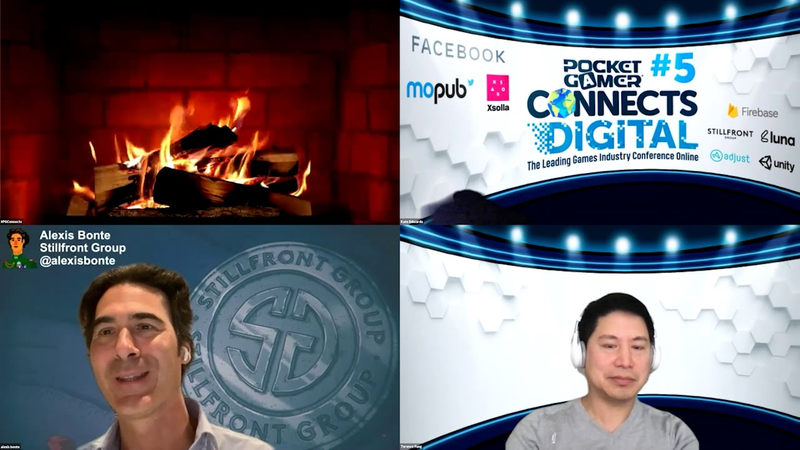
um we are ready to introduce our next uh group so um i would like to uh welcome uh alexis bonte from still front group and terence fung from storm 8 who will be talking about um this is a fireside chat about the importance of culture and values when building a free to play studio so thank you hi kate how are you doing good thank you good well done well done on winging that one yeah thank you yeah that was uh not easy not easy and chris was very worried he was texting me where are you alexis where are you like he's like don't worry i'm here and he told me but uh i told the team that you're very professional and i said yes most of the time i am the one who's
really very professional is terrence which is great well take it away it's all yours thank you so uh very quickly i'll i'll start with a quick introduction so i'm alexis boltz i'm the group chief updating officer of the steel front group um and previous to that i was the co-founder and ceo of erie public labs which is now part of still front and still front we're really in the lines of 19 studios we are decentralized uh way of operating these studios and uh most recently we have a few students that have joined us super lucky games which is now super free and also uh moon frog which is one of the leading studios uh uh in india uh terence why do you introduce yourself yeah thanks alexis so my name is terence fong i'm chief strategy officer at store mate and i also serve as the vice president of business development at still front more recently i've been at storemate for over six and
a half years nearly seven years uh stormmate for any of you who are familiar with the company we've been around since uh roughly 2009 we were known as kind of a broad-based uh developer of anything from casual social casino uh even in the early days of um maybe not hyper-casual but certainly casual um more kind of solitaire like games and then more recently we have a game property brothers home design and home design makeover which we continue to scale and grow and um recently we joined the still front family uh in uh february of last year so our actually one year anniversary is almost coming up it's true yeah we have to celebrate time flies [Laughter] virtually of course i know totally totally and uh and i think one of the first things that that that we that were that you and i are supposed to to cover and it's going to be interesting because it's there's going to be kind of my view on it and your view on it and let's see if it's the same one uh or if it's or if it's different
uh which is kind of you know describing still front's culture and what are the key attributes of of the culture that we have is still from and then and then we'll go through the studios but i think um you know what what really attracted me to suffrage as a founder uh at the republic labs when i'm at uh jorgen uh we was the co-founder of still front and the ceo uh was really the i think i i wanna call it the swedish approach uh which is one of first of all this this real strong belief in uh entrepreneurship and on having this really kind of decentralized approach and doing this family of studios but letting the studios you know um you know be as autonomous as possible and just basically try and find ways where they can collaborate and where you can help them but let them decide this uh you know with this inverted pyramid of decision and organogram where basically
at the top you have the players and then you know you have the game teams who take all the decisions then you have kind of the studio heads and which usually are the founders of those studios that are basically there to support and help their game teams and basically jorgen and i would be you know and and by extension now u-turns is uh as you probably would be the least powerful part of that because our job is really to support you know those those two use in terms of organic growth and and i think that works because the the cultural values are um if i had to say them off the top of my head not something that we write some something on the walls you know it's really uh trust uh it's empowerment it's uh humility and it's a lot of games i think that's really a common factor that we all have and the very important thing about you know the trust and the empowerment that's only made possible because there's also i think it's not a cultural value but it is but maybe or maybe it is another two key
things that you will see across still front in the studios is a real culture of competence and experience because if you have no competence then it's very hard to trust you and that's why it works if you look at all the studios that are part of the still front family they're made of industry veterans people have been doing this for many many years in certain cases for 30 years for cinematronix and certain teams have been working together doing free-to-play failing together succeeding together for many many years so i'd say these are really the key attributes i don't know if you've seen different ones or you see yeah differently i think i think it's exactly well spoke i mean i don't mean to be such a fanboy um uh and it seems self-serving now now i'm on the still front side as well but no that's exactly right when we um when when me and the founders visited uh you jorgen and the team in sweden um i think we we certainly had some concept of still front on paper
uh but it really takes a a face-to-face conversation um and getting that view of of again yeah there's this nordic straightforward approach practicality and transparency and then backing up in terms of of uh what the corporate parent would say with respect to independence and the trust is you're exactly right i mean the still front foundation is really has to be underpinned by the quality and discipline of the developers i mean we are all veteran teams with combo of entrepreneurship product financial discipline and all that good stuff but i mean there is a good portion of humility that the developers all of our teams have seen in terms of achieving success in failures and obviously more more recent success but there's always a desire to learn grow and collaborate but at the same time there is uh necessarily a um a pride and independence uh of of each of the studios that we could all run and manage our ships in in a proper way
so i think you know from that perspective uh you know stormmate we you know obviously we were we're sold on that and as one of the the initial uh forays into the casual side um it was harder for us to point to another casual studio than still front but i think again just simply from the top jorgen alexis uh marina and the rest of the team it was um you know there's a strong alignment paris how would you describe the culture at a store made i mean what's the culture like a stormy how does it work uh you know it's funny because we just got off the call with uh with um super free founders and in some respects we mirror that you know when we're talking about no no love for doing decks no love for bureaucracy really very much of a um can do attitude where the team of veterans we all expect each other to really pull our weight um and stretch ourselves in in different directions so
the stormi culture i would say um it's unique in in the standpoint of um we have faith in each other um we have a laser execution um and we all have a desire to learn and grow um but yeah it's it's a as as alexis you know you spent quite a bit of time with us i mean it's a unique culture it's it's not one that i think most corporate parents could understand and appreciate but i think that's one of the reasons why we have collected such a a strong group of of individual studios yeah and i think that's great and if i could and what's interesting is it it's not because we're aligned on certain values you know at group level and all that that we know that all the studios have the same culture i mean you have a lot of points in common with super free but you know irrepublic labs was probably um which was my own studio you know probably had a bit of a different culture i mean just by pure geography i mean the studio was based in romania you know you guys are in san francisco so that yeah
by definition they know there's different ways of doing so yes i mean we're united by you know the the the humidity that comes through experience and failing failing and failing many times we're united by this relentless focus on execution because then you know that that's what makes you work and what you make makes you function but if i had to to describe kind of the the culture that we had at um at the republic you know was was very much you know one of of trial and error and very much one of passion for strategy games one of the things that was very hard for us and one of the key reasons for joining actually still front is in our dna we knew how to do strategy games really well we did a successful browser strategy games then we did a few successful you know uh you know strategy games in in in mobile but whenever we try to become something bigger uh in a way and try to do something different and you know go for for for the the new type of game all that we
we we just miserably failed every single time and so so we realized that um that you need to stay true to your culture the studio level and grow that and don't not be afraid to focus on what you know to do really well and keep doing that and keep doing that and that's why i think still front was such a good home for us because then it it allows us to to grow but you know in a different way by joining by joining a group from which we can learn and we can expand a little bit some of those for some of that understanding yeah no absolutely and and i think you know the the incredible thing and you you know you've been living the journey but from an outside in and now that we're part of the family i think some of the reasons that that store made as an independent organization we you know the question is always you know why why did we join still front and you know yes it's a frothy m a market there's consolidation but to that point you know the world is you know storm 8 could operate independently for you know for you know a long time
uh we're prof highly profitable um highly motivated set of employees but you know the the reality of the world is it is it is just getting ever more competitive so anything from ua to ad monetization and again these are things that we could we could learn on ourselves and we do do ourselves quite well but it's really kind of the the insider ball it's the insider knowledge uh and and knowing that you're part of a larger group where again you don't necessarily have to take direction from from the corporate with respect to you know how you do ua how you do ad monetization but it's a collection of like-minded studios that do things in it specifically because they do things in a different way that you can say okay hey that's pretty interesting um your users are similar to my users and what can we actually trade and potentially maybe that goes into other best practices uh you know better market deals with different networks and
so on um but then it extends into the potentially the future where you know there's a collection of studios with various game engines and to the extent that necessarily anyone wants to test some new genre um generally will stay in our swim lanes but you know again you know good game studios is is you know expanding its its match three you know potentially they could learn from us potentially we could learn from them so it's being part of this greater collective again you know is that going to drive you know a hundred percent of of how storm it operates absolutely not but you know again it's this 10 20 edge that you're always looking to get in this market um that that's the reason why storm 8 uh sauce you know joining still front is such a powerful combination yeah i know absolutely and i i'm seeing a few questions pop up so uh just just to tell everybody we're gonna you know terence and i are gonna make sure we leave uh time at the end for uh for questions uh so you know please keep keep putting those questions in and and the more questions they are the more
time we'll leave at the end uh we'll be running this in a flexible way uh but um other question uh to you uh terence um because you you're you're a true veteran right i mean you uh you were you were zynga before uh so why did you uh when it comes to corporate culture and and values what what did you learn during your years at zynga yeah so so in the early days of zynga i'd say the the best things about zynga um it was incredibly entrepreneurial uh and and i think what people don't give zynga and and mark pincus credit for was really the strength coming from a set of of uh relatively independently run studio teams with really strong knowledge sharing and common tech to accelerate each of the individual businesses now as a business scaled in web games it it just became increasingly a requirement that there had to be centralized services there was heavy corporate influence
um and you know the the writing was on the wall with respect to you know bureaucracy politics and so on but it is you know the roots of the organization and and mark's mark's drive is always entrepreneurialism and the interesting thing is as the company started making inroads into mobile there was absolutely an awareness that there was really no strong benefits to necessarily consolidating back-end services because mobile i mean you didn't need the the servers to scale a game up to 20 million dau at that time um and the mobile studios could move in an agile fashion uh so and i think the the essence of that is you know zynga continues to you know make strides in that and and you know from my understanding runs the teams uh relatively independently so i think that that you know those core values i think also do very well at still front so uh i think there actually are a lot of similarities yeah i know and um from what i can see from outside it sounds like
frank and his team you know are doing a really good job and uh i see people talking about the old zing and then using that so it's interesting yeah to see uh to see that uh that distinction so uh we wish them the best we wish them the best of luck we like them um and another thing on that and but i think to go back to your point i think the challenges you grow as a group and you become big is how is to is how you balance how you balance basically entrepreneurship how you make sure you keep that entrepreneurship spirit scale and structure right how i know how do you make sure now a lot of people tell us well okay so still front you're decentralized so therefore you just lose alliance of studios and and you know and and you alexis check in maybe you know you know and with the studios from from time to time and nothing really happens and i think that's you know there's a big difference between you know being decentralized and being disorganized that's not and it's not the same thing and that's not what we are and that's not what we
do and i think that's really really important to explain and and it's and it's interesting that that you you you spoke you know uh spontaneously about the collaborations with ggs with you know other studios how things work and all that and uh and i think people underestimate just how much edge having access to that knowledge to those colleagues exchanging that information as i don't think you need big central monolithic you know marketing team that you provide services to everybody or analytics teams that provide services for everybody to get the same or even better benefits uh so i think that's that's the way we're what we're trying to um to make this work we still have a lot of work to do there but i think it's uh it's interesting uh there um another question that that that i think is worth talking about um especially if there's some other um entrepreneurs there uh with with their studios is is how is how important culture is for us when
we when we look at an acquisition like a potential you know new new family member i mean you say that you know i spent time with you guys and uh you know in in san francisco and all that and we walk away more often from opportunities because of a lack of cultural fit than anything else if we don't feel that you know there's that love of games if we don't feel that that studio is set up to be a platform for for to really nurture and retain the best the best game talent if we don't see that uh if we don't see that that's you know that that studio has has the capacity to to truly you know build new games and we don't we're not in the business of just you know buying a p l and that's it you know that's that's not our thing so so so that's super important it's much more difficult now that we can't meet people you know if you think about
it um you know some of the last uh of the last uh studios that have joined us we were lucky that some some people we knew from before but some people you know we had to to do it would be lots of lots of zoom calls so uh so so it's it's pretty it's pretty hard to do is that something that that you valued as well because you were doing a lot of mna also before um yeah yeah i mean uh you know my my framework that i i had used uh at zynga it starts from leadership team where the first two aspects that we really focused on and then it became things like game game tech p l possibilities and things like that because we all knew live ops better than anyone else that if you didn't have a proper team to manage uh the game on a go forward basis the the value destruction could happen immediately after the acquisition um so yeah absolutely culture is it's the the number one thing um and i would say to that end being you
know being on the sell side uh to still front i mean it vice versa um while still front is decentralized i think the the corporate culture and the culture of the acquire was was absolutely critical for us as a seller to to to consider and and was one of the top most factors in in in who we ended up with and quite frankly still front was was at the you know at the top of the stack i mean again it's self-serving now um but you know again just just knowing you know from is you know you say it's funny because you know when people look at stormmate and you know sometimes when we when we uh the way we execute people like hey that that's you know if someone was to go in it's almost somewhat disorganized from the standpoint of we don't have regular meetings yeah there's certainly stand ups and and the typical things like that but and and you know there are the typical internal spreadsheets and documents to run on on how we're
sprinting towards certain features and things like that but you know relative to you know what i saw again at kind of you know most of the other you know game studios certainly traditional game studios that i've seen you know i'd consider storm-made a little more free-flowing so to speak um but it is because it is it is you know founded upon you know veterans who who can turn to each other or now even virtually and trust each other work with one another and um so you know and it takes it still a particular type of partner that can appreciate that can you know do the necessarily due diligence and you guys recognized that um that it was unique and you didn't say oh why aren't you doing it this way um i mean you questioned how we did things which is absolutely critical yeah on that and one last question before we we we covered the question from the audience obviously there's two questions are uh in there already yeah now that's been our year anniversary um honestly
has any seeing change in the storm a culture since you've joined storefront something must have changed or no major changes uh does it change anything that from the day-to-day for for uh 95 of our employees it is it's exactly the same the the difference being i'd say there's a couple of different aspects one is our fp a organization is being supported by the still front north american organization which is the kickside team and they're phenomenal um so it's nothing been excellent service there um and the other aspect is maybe my day to day um but no i mean in all seriousness it's it's been phenomenal and i think what it also it does is it affords everyone just a a ability to just be continue to be heads down and knowing that there's a corporate parent that there is a a support so there isn't a uh particular view it's just like hey what's happening in the market what you know what's happening and we just know that the the
being part of the the corporate um you know parents still front and the rest of the studios this affords our ability to also take you know with respect to potentially developing new ip you know some more risks um and and uh so i think it's it's settled down the team and again i don't think that's something that i'm probably putting um too much thought into this but i haven't spoken to anyone about that but that that's kind of you know my general belief got it let's go let's go through the to the questions now we've got about five minutes left and there's this three questions so so let's cover them quickly so the first one is is more of an m a question is uh there's a real ferraro of acquisitions at present do you expect this to continue through 2021 or have we reached peak m a are still front still shopping i don't like that word we're not shopping for further studios i'll take that really quickly maybe you want to add something to it uh i don't think we've reached peak m a um
i think 2021 is going to continue with a lot of consolidation uh i think the constellation might actually accelerate uh and uh yes uh at still front we uh we we want to add more great members to to the family so do you think we've reached pma parents uh no i mean i i think there's still a lot of good studios out there and i think everyone is just trying to figure out the um uh you know i've just seen this time and time again in any m a market uh the cycle if uh one you know one domino falls so to speak you know i think there's just a recognition of some of the benefits of of consolidation but also the appreciation that consolidation doesn't mean the destruction of of the soul of one studio but it can actually work out so i think there's there's a lot more data points on that i agree and also i think the conversions is helping stuff for example we're not looking only for mobile studios to join the family i mean sandbox
online ambient online there's a pc downloadable game so we're looking at uh we're really big believers in cross-platform and convergence um the next question is um has has the coveted lockdown posed particularly problems for lightning company culture or does it not really matter in reality on that one really quickly i i think that where it hasn't posed any particular problems that i know across all the studios maybe parents want to add something but i do believe that medium to long term were kind of living on on on capital from before on social capital that was accumulated before and i think if this goes on much longer everybody will start paying a price as included quite honestly yeah no i agree yeah um then um uh what are the most important things to think about when defining a company culture from chris uh the most important things to think about when defining that's a really tough one uh
so i in myself i think there's people who like think a lot about a company culture and they take consultants and they do big questionnaires and they do the whole thing and and and you know and what's our purpose and they do all this for stuff and all that and and and i think that's great and i'm sure that works with some people that for us republic and i think still front you know it just came naturally um and uh in terms of you know what we really like but at least at the republic level sorry but i think at the still front level if we ask the question to jorgen he was preparing four years in advance of even having still from life about what it would be and how it would work and what are the kind of cultural points that would work uh so i think both masses work the either the natural one that comes from from uh or the one with a lot of preparation i don't know what you think parents i i think you know when when any company is starting with uh uh corporate culture i think the first thing to think about is just
humility um it's just everyone just having a self-awareness of what they can and cannot do but you know pushing that and always questioning themselves questioning others but you know obviously in a respectful way um and then moving forward you know with humility that's the only way that one can actually learn and grow yeah that's a good point um and i think we have um we have one minute left and two questions so regard them quickly together how much of a company culture can be imposed versus organically grown through a day-to-day activity and have you experienced a situation in which emerging company cultures clash how would you manage this so i'll quickly answer the second one so we haven't had a clash of cultures yet that's because we do a lot of work uh before we have a new family member uh join us uh there's a lot of due diligence that happens there so that's why we haven't had it doesn't mean that we might we might get it wrong sometime but right now we haven't had that and uh how much of a company culture can be imposed
organically grown i don't think a company culture can be imposed uh i think the company culture comes from the initial values that you were mentioning i think terence you made a great point about the importance of humility and i think that comes from basically what talent you have who are your teammates you know what's that core team of talent that you have around you and that initial core team is going to decide the rest of your culture uh you can't impose a culture i don't believe i don't believe you can yeah no i i agree with that i mean i think from a corporate culture and you know that there's a um there could be an osmosis uh where you know they're they're again it starts from humility and and for at least for the still front teams um again there's a confidence in what we do and and so you know we know that we're not going to be good game studios we're not going to be uh nano bit uh but we're going to be the best versions of ourselves but then again there's also so much that we could learn from them
um and you know how we execute it you know we'll we all have our own path to doing that so um yeah i i agree it culture can't can't be forced upon um you know not not in this creative industry it's it's i've seen it just fail and fail time and time and time again yeah that's a fair point maybe it's something unique to the creative industry and maybe it works in other industries but uh i haven't seen it work in this industry i think we're out of time case yeah uh you want to jump in i am here you thank you so much that was super interesting that was great you
Summary
This fireside chat, held at the February 2021 Pocket Gamer Connects Digital event, explores the role of organizational culture and values in the success of free-to-play game studios. The discussion features leadership from the Stillfront Group and Storm8, focusing on the benefits of a decentralized operating model. The central thesis posits that successful studio management relies on empowering autonomous, veteran-led teams rather than imposing rigid, top-down corporate structures.
The speakers identify trust, humility, and a relentless focus on execution as the foundational pillars of their culture. By maintaining an inverted organizational hierarchy where leadership exists to support game teams, studios can preserve the entrepreneurial spirit necessary for innovation. The participants emphasize that competence and experience are prerequisites for this autonomy; trust is only effective when paired with a high level of professional discipline. Furthermore, the speakers argue that culture cannot be artificially imposed; it must grow organically from the core values of the founding team and the shared experiences of success and failure.
Regarding industry trends, the discussion highlights that the current wave of mergers and acquisitions is driven by a need for competitive advantages in user acquisition and monetization. However, the speakers stress that cultural fit is the primary filter for any acquisition. They note that while the COVID-19 pandemic has not yet caused significant operational disruption, there is a concern that the long-term erosion of social capital could eventually impact team cohesion. Ultimately, the session concludes that in the creative gaming industry, the most effective strategy for growth is to foster a collective of like-minded, independent studios that share knowledge and best practices while remaining true to their unique, localized identities.



















Comments