1 free read left. Create a free account for unlimited reading + AI research.
Create free accountArticle ETC Press
1 free read left. Create a free account for unlimited reading + AI research.
Create free accountArticleETC Press
Production and shipping costs are the main obstacle for small designers of physical board games. Digital publishing largely avoids both.
Will Emigh's essay examines how micro-publishing models are enabling board game designers to address critical social and political themes that mainstream publishers tend to avoid. Drawing a parallel to Anna Anthropy's advocacy for small, authored, self-published video games, the piece argues that board game culture shares the zinester ethos of strong authorship and small scope, yet faces steeper barriers to distribution because physical games carry production and shipping costs that digital games largely avoid. The central thesis is that these barriers can be overcome through creative strategies, and that doing so allows designers to tackle themes that commercial publishers would consider too niche, too political, or too risky for mass-market sales.
The essay surveys a range of approaches. Hide & Seek's Board Game Remix Kit and Tiny Games app repurpose existing games into new formats, while Brian Train's Battle of Seattle was distributed free inside Strategist magazine to reach a far broader audience than standalone publication would allow. Morac's A Night in Ferguson, a pay-what-you-want solitaire card game about the 2014 protests, is cited as an example of a politically charged design that resists commercial appropriation because its components are common and its message is overtly political. Other examples include Naomi Clark's Consentacle, presented at events for free play, and Brenda Romero's The Mechanic is the Message series, whose installation-style games prompt players to confront their complicity in historical atrocities.
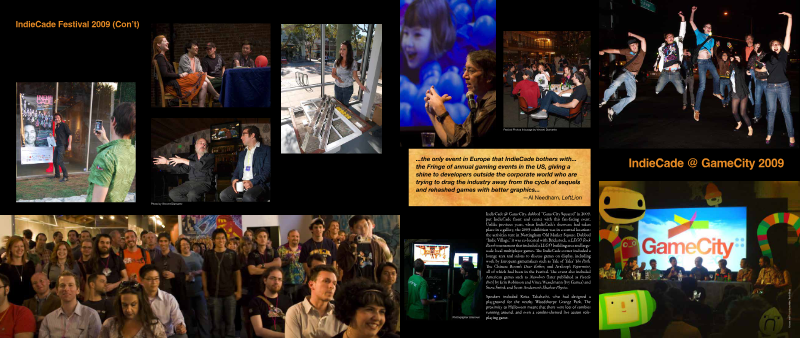
The author also analyzes how mainstream board games often sidestep difficult subjects through abstraction. Settlers of Catan omits native inhabitants entirely, and Archipelago reduces colonization to abstract mechanics with little cultural depth, while the self-published RPG Dog Eat Dog, funded through Kickstarter, explores occupation and assimilation more directly. The essay concludes that crowdfunding, print-on-demand services, print-and-play distribution, and conferences such as IndieCade and No Quarter are reducing costs and expanding reach, enabling a growing body of socially engaged games that conventional publishing models would be unlikely to produce.
ETC Press · 2023
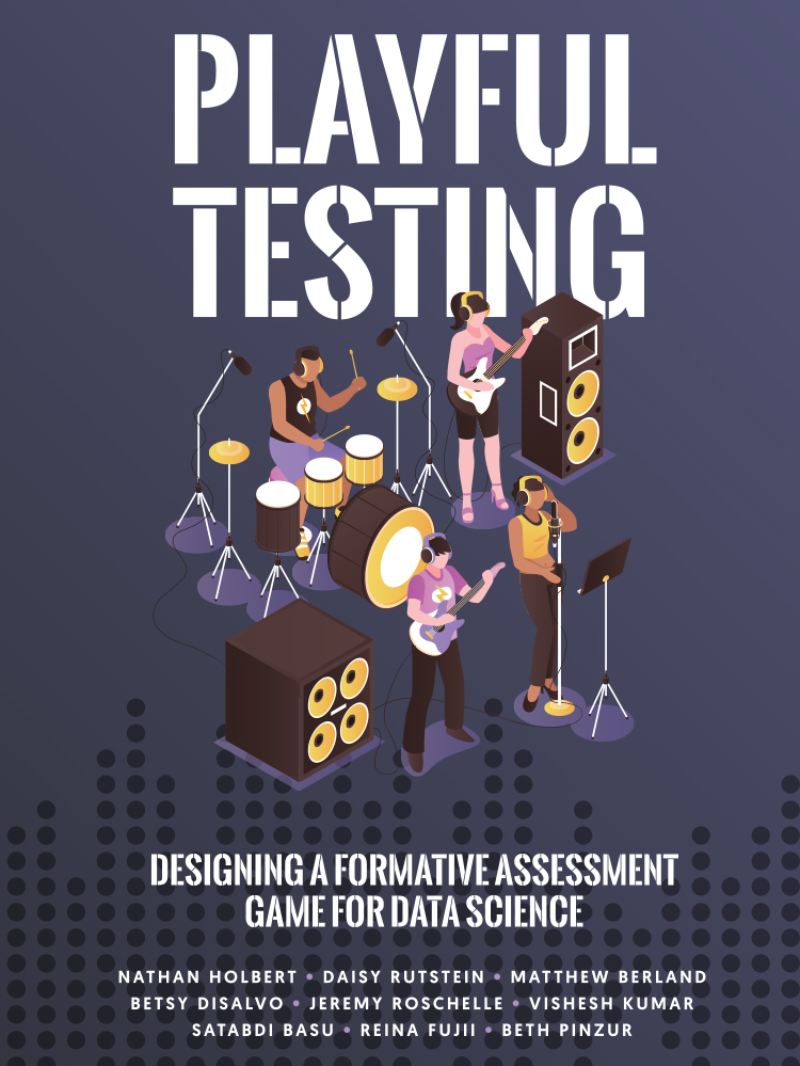
ETC Press · 2022
ETC Press · 2022
ETC Press · 2021

ETC Press · 2021
ETC Press · 2021
ETC Press · 2020
ETC Press · 2020
ETC Press · 2020

ETC Press · 2020
ETC Press · 2020
ETC Press · 2020
Game Developers Conference · 2017