VideoThe Game Business
"Some video game companies continue to be afraid of the Chinese market"
9 Oct 202554 min video
Hello. This week, the former chair of the US regulator FTC says I told you so about Microsoft's acquisition of Activision Blizzard. Ubisoft announces its Saudi Arabia based expansion to Assassin's Creed Mirage while there are cuts at June Awakening developer Funkcom. And our big topic today, we dive into the key developments and trends in the Chinese video game market. Hello and welcome to the game business show. My name is Christopher Ding and to help us navigate today's episode and sitting in the guest host chairs, I'm joined by Lisa Hansen, managing partner and founder at Niko Partners and Daniel Ahmad, director of research and insight also at Niko Partners. Hello Lisa. Hello Daniel. Welcome to the show.
Hello and thank you. Thanks for having us.
You've just launched this big new report on Chinese game behavior and and the market in China which we're going to delve into in a little bit. How how has that all gone down? Has it generated lots of buzz? Well, we're pretty well known for our China research. We've been doing that for more than 22 years now. And so with that long of a history in the market, we have a methodology that
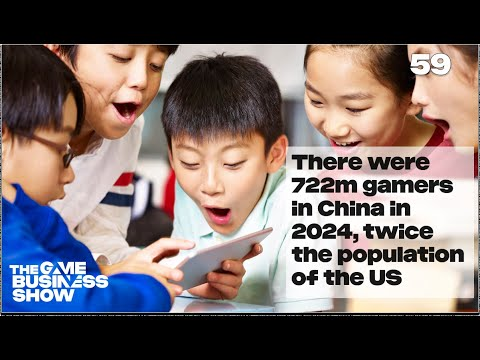
works to collect data insights, our network, do analysis, and then follow the gamers and the companies and the regulations and the M&A and everything. So together, all of that yields a pretty robust look about the Chinese market. And so when we do produce our market model reports on China or our gamer behavior and market insights reports or any of the other data that we collect on live streaming and everything else that goes on in the Chinese games market, it does generate buzz. But you know, some some companies continue to be afraid of the Chinese market or or thinking that they can't succeed there. And we're here to help them understand ways to get in there. There was this one of the stats I think in one of the documents he sent over was the fact that number of gamers in China is more than twice the population of the US
which is just it's just a mindboggling kind of kind of opportunity I guess.
Yeah, it's hard to really wrap one's
head around the size and scope of the Chinese market
and the fact that it's such a huge percentage of the global revenue. Even though so many Western companies feel locked out, this is still a massive market that if you can get in in some way, it's bound to be beneficial for one's business.
Well, before we chat, China, there are a few smaller stories uh to dive into from this week. Um the first is the former FTC chair Lena Khn uh criticized Microsoft's Activision Blizzard deal in light of the recent Game Pass price rises. Khan said on X Twitter, "Microsoft's acquisition of Activision has been followed by significant price hikes and layoffs, harming both gamers and developers. As we've seen across sectors, increasing market consolidation and increasing prices often go hand in hand. As dominant firms become too big to care, they can make things worse for the customers without having to worry about the consequences." It was quite a big I mean, we did talk about this a little bit last on last week's show, but it was quite a big thing this game pass.
certainly a little bit heftier than I was expecting. But my thing on it is that if you look at what's happened at Xbox over the last year, the proposed price rises for the $80 of the first party games, which I know they recanted, and the price rise on Game Pass Ultimate, I mean, that's the result of rising dev costs and general poor margins on new releases, or at least certain new releases. The increased pricing of gaming hardware, you know, that's gaming consoles are costing more to produce, and that's things like tariffs. The cancellation of some of the games, there have been problems with those games. It wasn't necessarily they're not directly linked to Activision Blizzard. So I I sort of I understand where Lena's coming from with her comment, but I'm not I'm not entirely convinced that you can put all of this down to the $70 billion. What the what I think that $70 billion deal has done is put a lot of scrutiny. You know, I suspect Amy Hood and the Microsoft executives are putting a lot of business pressure on Xbox to deliver things that perhaps they perhaps they could they didn't have to deliver quite so much before. they were perhaps not they weren't getting quite so much uh uh
focus from above which is probably where things have changed but I don't necessarily I think some of the things that Microsoft's doing is related to different issues at least that's my take on it I don't know did you see these comments Lisa and Daniel
yeah I uh I think that Lena Khan is off base I have never really appreciated Lena Khan's heavy hand at who can merge and who can be acquired and who cannot and her attempt at direct correlation of some business issue and some market outcome to an acquisition or an investment and so forth. So I have never been on the side of Lena Khan's approach to this type of long drawn out approval or not approval of who can merge and who could be acquired and so forth. And I also similarly disagree with her assumption that this is a correlation between the acquisition of Activision Blizzard and the price increase of Game Pass. I mean, it makes no sense to me. I
think that there are as you mentioned so many business issues and of course a large company has the luxury of evaluating its business units and having some be at a loss and maybe maintain themselves and some be at a gain and sustain themselves. But I think that overall they already both were very large companies and they have that luxury already. So the combined entity doesn't give them any more leeway to do this. Uh, I just think that there have been a lot of adverse impacts to the games industry and to international markets and with a change in administration and all sorts of things. I believe that these things have come up as a natural course of business rather than as a direct outcome from um what was a very elongated drawn out approval process for an acquisition. Well, I remember the FTC didn't actually get Microsoft to make any concessions. The
European regulators did. The UK regulators did. Um, and and because I did always feel that their sort of focus, I know they did talk about other things, but their focus on PlayStation and the impact on PlayStation, I think, was misguided. I think, you know, big consolidations like this
in an industry that's changing so rapidly is really hard to regulate against because you don't know what the future's going to hold. Um and and but I I was equally as you know FTC was concerned about the consolidation. I do believe you know I used to work at games in shop business and we were a media brand a really small media brand within a big large organization and that meant I largely got ignored and I got to do what I wanted and sometimes I did things that didn't always make sense but it didn't really bother people above them because they were more interested in other things. I think you spend $70 billion, you're getting the you're getting the support, but equally the pressure that comes with that support from upper management. But I don't think what you know I don't think these price rises these price rises might be the result of that pressure. Maybe they wouldn't needed to have raised the price quite so much. Maybe they wouldn't have
had maybe they would have given Perfect Dark a chance to come out. Maybe. But I don't think the reason they're being cancelled is because of that deal.
Yeah. I mean certainly there would be if there's cons consolidation between two businesses which is actually lots of smaller businesses within a greater corporate unit there might be some redundancy of employees and staff and so forth. one expect that. There were quite a bit of layoffs and you know to that end there is something to be said for well are we just closing parts of the business that we no longer want to maintain or what where are we going with that and I don't think anybody again can draw the direct correlation other than to say there might be some room for uh greater grander decision making in a larger entity but that doesn't mean creating that larger entity was a bad concept I think as we're looking at though some of the statements about the buyout of
electronic arts, you know, there have been specific things written that said there will be no change to staffing, there will be no change to the operations, there will be no layoffs and change of business. Now, mind you, that's a very different type of acquisition or buyout than what we saw with Microsoft acquiring Activision Blizzard, but I feel that maybe those statements were proactive to appease some of the authorities that might h have some sort of issue with it or write some kind of statements that would be construed in a certain way.
Yeah. Well, certainly in the short term. Let's move on to our second story linked somewhat to what you said about EA. our second story because Ubisoft has officially revealed its Saudi Arabia based expansion to Assassin's Creed Mirage. It's called Valley of Memory. It's a free expansion set in the Saudi Arabian city of Alula, I think, and will contain around 6 hours of content, although not confirmed by Ubisoft. This expansion follows uh a partnership between Ubisoft and Saabi Games, the games division of the Saudi Arabia's public investment fund, which of course
is the same fund that bought Scopely, invested in Nintendo, and is currently buying Electronic Arts alongside two other investment groups. Lisa, this is quite different to the other things Saudi Arabia has invested in. This is like a specific piece of content for a specific game. Or Daniel, if you want to chip in, what's what's the thinking here?
Yeah, I think Daniel is covering this market very closely and probably has some comments here, Daniel.
Yeah, I mean ultimately, you know, this is against a symbolic gesture towards what is essentially the largest games market in the Middle East, which is Saudi Arabia. And then paired with, you know, what we believe is is backing from PIF and Saudi, it's essentially a way to bring relevant content to that to that market to to gamers there that are interested. You know, Assassin's Creed Mirage has actually done really well uh in the region. For one, you know, broadly speaking as well, this is really much part of PF's larger goal of diversifying the economy, becoming a global games and esports hub and
building out a presence in in the games industry that shows that that it has really become the main
I mean I guess hub is the best word, but but sort of like you know any strong hub in the region. So is it a little bit more of a marketplace because ever you know acquiring EA and acquiring and um investing in these other studios is is a little bit more of an international thing or maybe setting up a development hub in the country where you get development but this seems to be more about creating something that's appeals to the country and the people in the country itself. Right. I mean that's my take on it but I don't I don't follow it as closely as you do. There's been a really big uh push towards localization and hyperculturalization globally and we've done direct studies on the importance of localization of games into Arabic and the culturalization of games to showcase and make familiar some of the the sight sound scenes people of the region in games in international games and as many countries around the world who support their games industry try to
do It's games is sort of seen as an ambassador of their culture to the rest of the world, right? So if this investment uh into building out content here, it's a natural fit for us. It's not surprising because you know this is a market that is building with uh importance of the gamers there. But overall the number of gamers there is quite small compared to the rest of the world. You know you we we can see that you know in stark contrast to the vast number of gamers in China the number of gamers in Saudi Arabia is quite small numerically speaking but that doesn't mean that the the culture and the content is not important to them and as these companies are being uh you know established and and grown from within Saudi Arabia to a certain extent I mean Ubisoft the PF investment in Ubisoft is is you know modest. I think that we can understand why some of the content would rise up. Plus, it just overall the
gamers and people of the world are having a much closer, much more magnified look at what goes on in the Middle East and this helps kind of shine a light on that. I think as well there's this sort of broader connection between what Saudi Arabia is doing in gaming and beyond gaming where they have a number of gaming assets, they have entertainment assets, sports assets. The EA deals is one example of this, right? Where has a large sports sports portfolio, Saudi Arabia's invested heavily in in in sports uh domestically as well and ultimately the goal here is to drive synergy between each of those elements to basically create a large entertainment entity. Yeah, I mean I think that in terms of what's going on in Assassin's Creed, that's one thing, but when we're looking at the bigger picture, there certainly is a convergence in the future.
Yeah. in our opinion of real world sports, video game sports, and esports. And Saudi Arabia is setting itself up to
be a not only a global hub of games and esports through things like the esports world cup or esports nations cup that was announced in August or investment in these games companies and games industry overall. But in this future of the convergence of those three types of entertainment that are around sports and I think they see the writing on the wall. I see the writing on the wall and the investment in electronic arts with its sports games excellence and the investment in say Premier League football or soccer teams, golf, flick, so many different things and esports overall the tournaments and so forth. we can see what's coming and what's coming is that there's a future here of the convergence of these media for sports entertainment if nothing else and esports is in the Olympics it's going to be you know it's for the older generations they can't understand how
esports is a sport but for the rest of us we can understand uh that it is and so I feel that Saudi Arabia has a lot of foresight right now and some of these investments are quite strategic. They're not just for operational benefit.
Well, I got a couple of quick news stories to finish on. Um, I'll move on. I imagine Saudi Arabia is going to become a big topic of conversation going forward. Actually have um we going to do a show in a couple of weeks with George Osborne who's studying the geopolitical landscape for the video games industry. That's one to to pay attention to. But our next news story is about Funcom. The Gene Awakening developer has made an unspecified amount of layoffs which includes the closure of The Outsiders, the developer behind Metal Hellser. I mean, I don't have too much to say on this. It's just another one of those unhappy stories. But FCO said in a statement that after the strong launch of June Awaken is now focusing on that rather than developing new projects. So that's new content the for June Awaken the console version of the game, new features, improvements, that kind of thing. Now Dune Awakening did have a strong launch. I think it sold a million I know it did. They announced it sold a million copies in 18 days. Uh if you
look at some of the data firms, Ampair says the game has reached 1.3 million since Yuzu says 1.9 million. Everyone's got slightly different numbers. Um player count has dropped quite a bit though. Everyone says um Ampair says down to 360,000 in August from a higher 1.1 million. They're still doing well. It's just um um but obviously the game is an opportunity. The trend of the industry is focus. Focus on the things you do and not the things you don't do. Um but obviously as we're seeing across the business and I think we're seeing at Famcom as well, judging by the statement is that that focus can come at the expense of the new and and smaller projects and things like that seeing across the industry. To be fair, I could have picked a number of European studios that have gone made some cuts and changes. It's sort of a similar similar story. Star Breeds has just made some cuts as it focuses fully on on um on Payday for instance.
I think on that um there's another angle you can look at as well. And yes, that's the broader aspect that the games industry as a whole is trying to orient towards more profitable projects. So focusing on payday or focusing on June
Awakening others. in this case. So, Funcom is actually owned by Tencent.
Yes, of course.
You know, there were a few stories last year, this year actually, where Netis was divesting from some of its overseas studios, 10 cent soup. And you know, one thing that's kind of flown under the radar is that Tencent has also done some of that. So, for example, they sold off Splash Damage to private equity group, Sumo Group, who they also sold off their their secret mode division to again a private equity group. with 11th hour. They sold that to Craft on for about 100 million. So, it's not to say that they're, you know, pulling back entirely from Western Studios, overseas studios, but there is the strategic kind of recalibration towards more profitable projects or studios that can deliver results shorter time period over some of the larger bets they made originally.
And that's just the public stuff. I have heard of a couple of other UK studios that have.
Yeah.
Obviously, there was cuts at um uh uh
Sharp Mob. That's what I'm trying to say.
Great.
And there's also been a couple of other studios they've invested in. They didn't publicly announce that. I know that they've sort of pulled away from as well.
They've opened new studios as well, invested in new companies.
Um I forget the one in the UK that did that PlayStation 5 launch game.
Oh, um Allst Stars game. Um it was Lucid.
Lucid. That's it. Yeah. new studio or something. So, you know, it is this strategic recalibration as opposed to like pulling out of everything, you know, closing down y
some are getting investments, some are not and it's just based on the market with energies, unfortunately.
Yeah, that was going to be all the stories I had one dropped in my inbox just before we recorded, which is the Sakana data for August is out. It's quite late to be reporting on August data at the beginning of October, but uh the interesting stat is the firm has revealed that Nintendo Switch 2 has sold 2.4 4 million units in the US in 3 months. That's ahead of the previous farting selling games console, which was the PS4, which managed 2.2 million over
a similar time frame. It's obviously been a big launch, too. We've talked about it loads on the podcast, but I still firmly believe that wait till after Christmas. Uh, wait till after the holiday period before. Um, I I think we'll be a better judge of how strong Nintendo's coming out of the gate cuz it is a lot more stockbased. It's a lot more the fans are there day one. It's it's when you try and bord them out that's uh I think it's going to be the bigger challenge. I hope it does well. But I my view is wait until after Christmas. That is our round up. But now let's start but let's dive into the main topic which is looking at what's going on in the Chinese games market. I mean there's so much to talk about um uh and let's talk about one of the things that you sent um Nico sent me over some some points and one of the things that is sort of China as a country that produces globally relevant video games. So you know black myth was obviously a high very highprofile success. There's been numerous mobile successes as well. Lisa Daniel, is this a trend that's likely to continue beyond the high-profile example like Blackmth?
There's a a a definite trend toward the
talent in Chinese studios developing games that will be appropriate for international markets. And there is a deliberate drive from companies big and medium-sized in China to expand internationally. So even though there's a huge audience in China, you know, just like everywhere discovery is difficult and this type of thing and not all games can get ISBNs. So an ISBN is a uh you know government license that enables one to publish domestically. You need it for a domestically developed title and an internationally developed title in order to be published in China. And so we can look and see that there are lots of companies of various sizes who have taken a concerted effort at looking out and then developing uh games to the standard that would be necessary for international success. And we've heard from companies here in the US or other western markets that there is a a
weariness, you know, an expectation that there's more competition coming from Asia, coming from China, coming from Japan. uh from other markets. Not just competition for those gamers in those markets, but competition from the game companies that have evolved over 20 something years and now have multiple levels of you know management um significant development teams. They even outsourced to other companies for cost savings inside of China. They have a tried andrue user acquisition model. They're looking at um AI for operational efficiency as well as AI for development. There there all these things that are setting up for a very successful domestic industry to develop games that are appropriate and desired by international gamers. So, I don't think it was a one-off. I think Black Myth kind of broke the seal. Um but I don't really think that this is something that not be repeated. H
we spoke to NCOFT a couple of weeks ago a couple months ago actually and they talked about the fact that so much international content is now widely available whether it's films or or music or you saw the rise of K-pop and that kind and and Kdramas for instance that's what that conversation was about because of things like Netflix and and these streaming platforms and the ability to access this stuff means that yes part of it is companies being smarter with attracting global audiences but it's less about localizing stuff it's actually more perhaps a more openness from the from other countries to hey I'm actually quite interested in experiencing these um types of entertainment that are coming from other countries which I thought was quite interesting this sort of rather than necessarily directly appealing to people in the west it's more about you know just putting it in front of them and actually you might find that they they're interested anyway my personal motto is peace through intercultural understanding and I really feel like in the games industry when you have this content that shows even as that previous story about Ubisoft and Assassin's Creed
when we see content about other places, it just really lightens the load, doesn't it, mentally to try to picture what are what's going on in these countries and so forth. And so, you know, some of the cultural mythical history themes are very prevalent in Chinese developed titles and they have been for years, but that doesn't mean that that's all they can develop. And we look at uh Korean games with K-pop, you know, and they love to export that really popular form of entertainment in in Japan. It's anime, you know, so we look at different things and we see how it's familiar coming from a certain country and that people around the world do appreciate certain aspects of it. Things that would surprise you. I mean, even if you remember the early music coming out of Korea, people thought, "How is this song from Korea? It's so amazing and I don't understand a word of it because it's in Korean, but this is such a fun, catchy song." you know, it surprises people at first, but then it becomes normalized that like of course people are people and they develop good entertainment there and let's take a look at it.
I think as well there's something to be said about the growth of sort of neutral micro communities globally as well. It used to be, you know, if you were the one person that likes anime, well, okay, you're the one person who likes anime. Now you can go on to Discord. You can well you can join a discord. You can go on to exopreneur and and basically buying hundreds maybe thousands or even hundreds of thousands of like-minded people that enjoy that content. And so that has been a huge enabler as well where you know there are games that maybe 10 15 years ago would not really have had much appeal in the west that now have much larger audiences because you know people are interacting with each other about it. going to comic cons or or exhibitions or you know in person events and really connecting with that theme or IP or brand or whatever it is right you know that's another kind of big change we've seen over the past decade two decades
h and have we seen as well in terms of the going back to the development question I asked earlier there's been
some government support haven't there for studios in in China
yeah China has you know this this very kind of I guess you could descri environment right there's tons of rules you have to follow. There's the need, as Lisa mentioned earlier, for a game to have a license before it can even launch in China domestically through an official capacity. And that's still the case today and it will likely always be the case. But you know over the past few years and even before that as well um there has always been this kind of belief that that games is a a strong cultural kind of entity in and of itself and that esports should be funded, games should be funded and then especially with with Black Mong when that came out um we saw a much more positive outlook from the government and especially over the past year I can point to at least you know 30 different policies that have been introduced on a both nation wide level but also public provincial level that provide subsidies for game
developers or esports teams that locate there and and that has really helped with supporting some of those smaller or mediumsiz game developers that are creating games in the country. Yeah, you can also see that you know this type of government support in China is similar to the government support in other countries particularly Saudi Arabia as we have already brought up India, Malaysia, Indonesia, Singapore there just so many countries that really have gone all in and said we're going to make this sector important here and they all have their own reasons why you know they want to perhaps just have more game developers. They want to perhaps have more of this cultural export. They want to perhaps seed a manufacturing uh industry and they feel that games is the way to uh rise up demand for new hardware which
needs to be manufactured and let's do it here. They're all they're all all the countries have a different approach to what's going on with Blackmouth Wukong. You know, the government first took notice not only because it was a cultural export, but also because there were what 39 different uh sites like uh sightseeing sites across China that were highlighted in this in this game and the the tourism to those sites exploded. Everybody wanted to go visit there and then government sort of saw that as like
this is a great way to educate people about the the different uh aspects of our own culture here and the different landscapes and the different scenic you know significant spaces and then the tourism board thought that this was great because they got a whole lot of money out of it and there I don't know there just a lot of follow on impacts of a game like that.
Yeah. Yeah. Well, let's talk about the market itself. Um, this will be probably
the most interest to some of the readers of the game business. You've got it is it $49.2 billion. Um, is the is the is the valuation. Where's that coming from? What's what's what's the areas that's driving that?
Yeah, $49.2 billion in 2024. This year, you know, we're saying it should it should exceed 50 billion and by 2029, I believe almost 55 billion. So, it's still a growing market. um the majority of that is still mobile. So about 70% um is mobile and it's primarily you know freeto-play games um kind of sort of obviously had a large PC games market in the 2000s but then leaprogged into into mobile um from the mid2010s but PC is still you know a significant portion of the market almost 30%. Console is much smaller around 3%. The reason for that um is one consoles actually banned in China up until 2014. So it was only kind
of recently that they became legal and you know could be sold above the counter rather than under the counter. Um and then secondly console gaming culture as a whole as I'm sure you discussed in in recent podcast and based on the last few weeks it's a very expensive hobby. You need to buy a console up front. You need to pay up front for games. that is changing uh as you know more freeto play games enter and as there's maybe like rental uh systems uh so ways of renting consoles or you know buying a Xbox series so lower price over the series X so um that is one aspect but it it's still niche and Nintendo and PlayStation definitely that I mean Nintendo does extremely well uh through a great market PlayStation does well through legal means so they're definitely the two that are investing in the market the most
you answered to some of my question my follow-up questions there Daniel I was going to ask if the console space is a serious opportunity in China because I always people talk about it
from time to time but I always feel like you know it's it's I mean you say Switch 2's done has done has had a strong start is in but not in in the gray market.
Yeah. So Nintendo hasn't officially launched the Switch there. They need hardware approvals. They need uh software approvals and in in a latter case they need a joint venture um to do that. They previously worked with Tencent with the original Switch. Um so it's right now they haven't announced whether they will continue that or uh switch to a different partner for software specifically. But there's there's really no rush for Nintendo to have that official presence at least in the short term because people can go to Hong Kong or they can import it, you know, by Hong Kong or Japan or or Asia or the US even uh at similar prices to the global price and essentially download games through the US eHop or Japan eShop. And so that is one way that that that they are you know obtaining
the console right now. I think, you know, one one thing just to bear in mind as well is that sure console is 3% of the market. But when we're talking about a $50 billion market, that's still notable, right? And uh you know, China is a you know, top 10 console market if you look at player spending. So it's um it's small within China for sure, but it's it's actually quite um a good opportunity as well for for the developers. M you say in your numbers um you mentioned it as you think you estimate that by 2029 it' be $54.8 billion to China. So what are the growth areas? Is it is it mobile that's the growth area or are there other you is it console? Is it is there other sectors that's that's going to drive deliver that that that increase? Honestly it's it's a bit of everything right now. Mobile's definitely the the main driver you know for the foreseeable future. it'd always be the the largest segment, but there's a few kind of things driving mobile specifically right now. One is is
mini games.
Oh, yeah.
I'm not sure how, you know, how well people know them here. Um, but it's essentially HTML 5 games. So, instant games that you play without downloading them. And so, in China, there's apps like WeChat, right? Or doian, the Chinese version of Tik Tok. Uh and inside of those applications because they're essentially super apps that you can use to pay for everything or you know uh get a taxi or pay bills and stuff like that uh they have um sort of instant games that launch uh within those applications and they right now um originally started out as very lightweight you know one touch one tap type type games with leaderboards and stuff like that but now with because of techunction increases and and gamer demand, we're seeing more core titles enter that uh ecosystem to the point that mini games account for
almost 10% of mobile games revenue
um in in in China right now. And then beyond that, of course, there's the government support aspect. Uh esports is a massive segment in in China comparatively um to the west. And um I guess that the the game development itself is also increased in quality. So we're now seeing a lot more um cross on multiplatform style titles that uh are meeting the needs of users locally. And you know that scales like an ancho from Netis for example that's set to come out um that I think is you know taken both China and the US um by surprise in terms of its open and and capabilities
and so a lot of gamers are kind of looking forward to uh playing but also spending in those games. I find that
sort of go around a while and I sit there and think of these sort of social network gaming I guess in a way is what they are right in in the in the in the west there's a lot of chat around telegram and discord games a lot of interest in that but I've so I I remember Facebook gaming I remember um um all of these sort of similar things that sort of they did you know they they created industries things like you know um um uh where words with friends and Farmville and all these sort of you know sort of things that came out of that area um but um then sort of faded away quite quickly. So I'm always skeptical about it but it's interesting it's uh I didn't realize it become quite sign so significant in China that that as as a as an actual revenue generator.
Yeah. I think the core difference there is it's actually moved away from their kind of words with friends style type of game
to more core experiences. Like just the last week for example, Tensson started testing um Horn of Kings, right? Which is their League of Legends mobile game
essentially, a competitor game um where you think that would that could not be an instant game um that just you immediately play without downloading um without you know maybe a cloud gaming subscription or something but but in this case they've been able to get it working. It is definitely more streamlined and more um you know like the rounds are quicker and stuff like that. So it's not the full experience would get um by downloading on the app store but essentially because of that because of the tweaks they made it's actually a lot easier for people that don't play the game to jump into it. And because it's integrated with WeChat all their friends are there they can see how well their friends do. um they can send you know get packs to each other etc stuff like that. So um that social element with the core game elements and then with inapp purchases has actually driven quite a lot of engagement in the space and uh we're starting to see some
Chinese game companies try and export those games um overseas as well. Now
that's really interesting. It's also a good segue to talk about uh how there we're looking at this concept of evergreen games and we're researching this now games that are of significant size and duration and have the longevity to continue on and on and on and they don't really lose their gamers and in fact they kind of generate more gamers over time and by doing things like putting Honor of Kings into as a WeChat as a miniame it's just one more step in the extension of that brand, of that IP, of that game to have it live even a longer life with a broader audience. So, some of these moves are uh they take up where the demand has been, but at the same time, they're intentional to to play and leverage to play off of and leverage uh the successful games and the
and successful gameplay elements or game game concepts or something. You know, it could be small a small game in as a mini game, but as we're seeing now with this Honor Kings example, we wouldn't have expected that, but now we can see how that would even extend the life further of such a game.
I mean, I also noticed in your report, you got some stats around AI. Um, so 85.2% of gamers in China are aware of generative AI technology. 39.4% are interested in its application in in video games. 60% of Chinese studios already use generative AI technology within their development pipeline. Is the opinion on AI amongst players in China different to the so well I I think the more skeptical view that we have here in the west is is there is there a cultural difference there in terms of how they view it?
Yeah, I think overall um and this applies to Asia broadly as well. There's definitely more interest in AO technology um either being imple well
yeah being implemented into games themselves um part of that is you know in more developing you know economies like India for example um they'll always report high interest technologies um when maybe they can't experience it themselves so they'll be really into like VR and ER where where then you look at the sales and they're not really that high just because of affordability gap. Um, but in China, I think what's interesting is that while there's certainly been some games in the west that have incorporated AI elements, there's a lot more kind of publicity and marketing and actual hands-on experiences that you can um dive into right now. um to like Justice Online from Netis for example uh is a really popular MMO RPG game uh on mobile that uh released I think three or four years ago but then they added in uh
uh essentially generates AI user based element. So for example, you can interact with smart NPCs in the game. You can c create your own custom cutscenes and kind of videos um using generated AI inputs. you can create your own character using it. Right now it's still a bit of a novelty in that sense where you know it's okay you can do x y and zed. Um and you know it's it's a bit of fun. You can share it with your friends and stuff like that. Uh and you know overall the there's certainly backlash uh when it's used poorly. So we've seen for example Riot Games in China put out um like a generative AI video to promote um I think the collection was comment maybe I balance um but they they essentially the the video they put out just did not capture the essence of the game at all and you know people holding their own weapons and in the cut scene and and
stuff like that. So, so that had a a backlash because it wasn't, you know, the end product just wasn't good. Uh, whereas in cases where the end product is good, um, yeah, people definitely not more accepting of it. I also feel like if we look back in time to the advent of free-to-play games in China, for example, 20 plus years ago, if we take a look here and we see this was the established uh like a business solution to a piracy problem and but as the gamers back then recognized, oh, I can pay the charged rate for certain aspects of the game that I want to pay for. I'm spending my money the way I want to spend it instead of having, you know, a fixed price packaged game for example or uh even a premium game. And those are rising in popularity again now
too. But if we're looking at like how overall uh culturally the gamers would like to be able to pick and choose what they want and help design and help be active uh in the design of their own characters. From a gameplay perspective, I think they're quite interested in how they can use AI as gamers. From uh the development side, Daniel's spoken about that quite at length already, but it's also something to be said that AI is helping with operational efficiency, too. You know, if you think about the the success of the Chinese game company, so much of it comes from a very unique user acquisition process that's dissimilar from other processes around the world where it's super aggressive and they go after every channel and they just, you know, track and test and see what's happening and then they attract more users and so on and so forth. That process could be sped up with AI, I'm sure. And I think there are other processes in the operations of like the
business of a game that will be helped along by AI too. So it's not just in the development pipeline. I think
I'm very conscious of the time and I've got some broad questions to ask. Um and um and one of those is for game companies in the west and you you've track you're right you track this market for so many years. You're the go-to for insights into into China in particular but you know other Asian countries as well. for those developers that are looking though to attract Chinese players. Obviously localization is a part of it. Um I imagine that's a key component, but what's the what's the best way for publishers and I know that you know sometimes if you they might not be they might not be officially released in China, but what's the best way of getting their games in front of that audience?
Yeah.
Yeah. Localization is is the first step. Um in in all these cases, you know, we we've spoken to developers where all they did is localize their game to Chinese. uh superpower Chinese and that led to an uplift in sales almost immediately
and the payment you have to have it available with the payment.
Yeah. And and and ultimately, you know,
that led to um an immediate uplift in sales uh just off that alone, right? Um but, you know, it really comes down to what type of game you're creating. For example, if you have a mobile game, mobile first game, um trying to release that in China means you have to go through an official um approval process. So you do kind of acquire a partner for that. They do have to you know make sure the content is online with regulations and that can take some time to get the license and publish it there. Um the same applies to being PC or console game. But for PC games and console games as well, uh one notable aspect is that Steam, the international version uh is actually available well accessible in China uh to gamers there without a VPN. And that includes all of the um games that do not have a license as well. So what that means is and this is a strategy that a lot of game developers
have already utilized is that um if they focus their efforts on the Steam version and promoting that in China uh with localization with support for payments with local servers uh with regional pricing and that is a way to uh drive adoption of their game uh in in in the country and you know I could point to for example blade or or Monster Hunter Wilds or Split Fiction, Power World, El Divers 2, all of which have sold over a million copies on Steam in China alone. Um, simply by following that method.
Yeah. How do you promote it in China then? Is it short form video?
I mean, that that's one option. Um, you know, China has a massive um live streaming and short form video kind of ecosystem. And so you as you saw in the data that that we sent through, but I mean short video is kind of the number one way that that gamers learn about new
games. About 41% of gamers will uh obtain uh new game information from from there. But beyond that as well, um China is extremely social, extremely community based. there are um niche communities that while I say they're niche, you know, we're talking millions of people because niche in China is still uh very large. And so, you know, tapping into kind of Steam community forums or um you know, other kind of online uh platforms as well and getting people to try out your game as a demo or you know, trial or early access is another way to to promote it there. Um, and they give a good example like Goose Goo for example was a good one and um, Liars Bar more recently I guess like where they essentially were picked up by very large streamers in the country and that
was what caused China to essentially become the number one market for release games where you know they may have not necessarily focused on the market or expected it to be a hit there. Um, just the fact that big streamers played it in groups together, especially the kind of the social production games like Among Us and stuff like that where you know groups of streamers can play together. That is definitely you know something we see often
on our Nico Partners has a China games and live streaming tracker and we track uh the live streams on Doyu Huya and Billy Billy every day we update more than 750 titles that are live streamed on the those platforms. Um we update them every 24 hours and we rank them on five or six different metrics. Um we have to code on the open API there. You
you have to have a server in the country. It has to be you have to update these links all the time. It's pretty cumbersome and tedious. But at the result is that we can see games rise and fall out of nowhere. Like the day that Blackm Wukong launched, we saw it shoot way up. It took over 62% of the streams on that day was from that game. It wasn't an anomaly. And then
we could see other games that have risen and fallen in popularity and we watch and we have, you know, some of our analyst team watches it all the time and takes a look and we have these kind of triggers. We see if things rise or fall and you can get a sense of if a game is going to be popular or not. You can compare it against other games in the genre, other competitive games, other games from the same developer or the same publisher. And then you could see what the streamers of those games are also streaming. And you can see when their time shifts to one game versus another game. And so it's really a a telling tool that we have to watch this the live streaming action in China. And
in the absence of sort of a a title level um a a reality check on PC, console, you know, Android, mobile. We do track all of those manually ourselves. But at the same time, this streaming tracker, live streaming tracker, is a very useful way for us to get a sense of things that are rising in popularity that they don't have to be just live streamed because it's a PC game or because it has an ISBN. I mean, they can be live streamed for any about anything.
Oh, well, I've got we talking about all the opportunities there in China, but there were some real challenges. Well, it always seems like an unpredictable market to me. You talk about game developers in the West as being a bit, you know, standoffish perhaps a little bit um towards China. I mean, there's always that fear that the government can just sort of turn can change things in an instant and decide not to approve stuff or um maybe they could turn off steam or whatever. I mean, what what do you see as the biggest challenges um um
at the moment facing this sector for particularly for those of us in the west that are looking to perhaps move in there? Yeah, I definitely think government recognations is the big one. Um, for example, Steam has been operating for, you know, all this time with unlicensed games when theoretically that couldn't be the case, right? Um, and now you can obviously throw in the the US China trade war risk and everything that's happening there. Um, and you know, who knows what happens in terms of US game approvals in China. right now it's still happening still going on but um you know things escalate things could change uh ultimately you know I think one thing that's that's really interesting about China's market games market is that they are kind of going through a similar thing to what we saw with um Star Wars Battlefront 2 and the controversy there around loot boxes um it's not to the
same extent by any means uh because China you They pay to win was always a big thing back in the day but there are definitely changing attitudes in China uh sort of mirroring global trends now where people becoming more resistant to pay to win they want fair progression systems they want this metication um you know that's why Netis with an answer for example said we're not going to do a character g system it's going to be you know more fairer in terms of quantization
and obviously you there there are still gamers that do are okay with the gacha system as it is or or we're kind of more aware of gacha system like pretty systems for example um but I think that that's one thing to bear in mind that um you know if you are targeting gamers in in China you've got to be aware of some of these shifting trends that that we see so that's one ammonization there's also warning kind of you know defines that we that we see all the time and being able to
understand what those shifting requirements and views and preferences are uh is definitely something you need to know if you want to succeed there.
I'm really conscious of time. Are there any other key developments before I wrap things up that the industry should know about that you think should be called out?
I just went to Tokyo Game Show and it was notable how the Chinese presence was strong there and I think there has been a big a larger and rising level of um exchange between Japan and China over the last several years and it seems like the gamers in both those countries enjoy each other's games and that is that really sets it up for a powerful region both in development and usage and so forth and one where you could I got a palpable sense at at TGS that there was a lot of optimism there and the Japanese companies might have more cash and they might have more interest in other Asia
as Well, and you know, it's it just felt like a different vibe than here in the West or in the United States with a lot of uh talk about layoffs and talk about what's next for the games industry and so forth.
So, uh I think seeing the Chinese participation there in Japan is uh that's something that we wouldn't have if we had this podcast 5 years ago, we would not be saying that.
Wow. I think as well just to put that into context in 2022 there were 45 Chinese companies that exhibited at TGS and 3 years later the number of there's more than triple that now.
Oh yeah. So there's a lot of, you know, uh, Chinese companies going overseas, which really started out in in mobile games, they moved on to PC, now to PC and console. And, yeah, I think there's a broader trend that we're seeing is that there's a lot of interest from, I mean, there's always been interest from Japanese companies, right? But from South Korean companies, from Chinese companies that really want to bring
their games global and be platforms that, you know, are more suited to Western gamers. console PC for sure and you pair that with the investment we see in in Saudi Arabia from their government and overall Asian men is definitely two broad regions still to watch when it comes to video games going forward
and when we get asked to do commercial due diligence projects you know more often it's from a company in Asia looking to see what they can do in the west or in another Asia country you know there this used to be commercial due diligence would be for investment or acquisition by a western company because they were larger, they were richer, there are all these things. But lately, the commercial due diligence projects are really kind of emanating from these countries that you would not have suspected in the past. Well, Lisa Daniel, thank you so much for your time. Um, there's an awful lot of information packed in there and for people, I think, to to digest. So, thank you so much for
for sharing it.
Thank you.
No worries.
That's it for today's episode of the Game Business Show. Check out the website tomorrow where we will release the latest European charts from GSD. Plus on Monday for paying subscribers, we will have our next edition of the Game Business Micro. Our next three show comes out Tuesday as usual. And for those in the UK who would like to come and say hi and see a live recording of the Game Business Show, we will be in London on Friday, October 24th at MCM Comic-Con where we'll be interviewing games legend Peter Moore on stage. The event is completely free to attend for people in the industry. Also, if you apply for a free pass, you get access to Comic-Con and there's a whole host of other industry talks that are going on. You just if you just search for MCM industry pass on on Google, you'll be able to find your way to applying for a free ticket. Now, that's all my house messages for today. Until next time, thank you for tuning in.
Auto-generated captions from YouTube — names and numbers may be misheard.
The global video game industry is currently undergoing a significant strategic recalibration, characterized by rising development costs and a shift toward high-profit projects. While Western companies often express apprehension regarding geopolitical risks and regulatory uncertainty, China remains an indispensable market with a player base more than double the size of the United States. The Chinese gaming sector is projected to reach $54.8 billion by 2029, bolstered by a sophisticated development infrastructure, government subsidies, and the international success of high-profile titles. Mobile gaming continues to dominate this landscape, with the rapid emergence of mini-games integrated into super-apps like WeChat now accounting for nearly 10% of mobile revenue.
Technological innovation is a primary driver of this growth, as 60% of Chinese studios have already integrated generative AI to streamline development pipelines and enhance player engagement. Furthermore, the market is increasingly defined by social connectivity, where live streaming platforms like Bilibili and Douyu serve as essential barometers for predicting commercial success. While the console sector remains a niche segment, it is expanding as cultural barriers diminish and global audiences demonstrate a greater appetite for diverse international content.
Beyond China, the industry is witnessing a broader convergence of sports, esports, and entertainment, exemplified by Saudi Arabia’s strategic investments in localized content and infrastructure. As companies navigate these shifts, the focus is moving away from traditional pay-to-win monetization models toward more sustainable, community-driven experiences. Successful engagement with the Chinese market for Western developers now relies heavily on effective localization and the strategic use of platforms like Steam, even as regional developers from China, Japan, and South Korea increasingly collaborate to capture a larger share of the global gaming audience.

The Game Business · 2026

The Game Business · 2026

The Game Business · 2026

The Game Business · 2026

The Game Business · 2026

The Game Business · 2026

The Game Business · 2026

The Game Business · 2026

The Game Business · 2026

The Game Business · 2026

The Game Business · 2026

The Game Business · 2026
Newzoo · 2017

Deconstructor of Fun · 2026

Two & a Half Gamers · 2026

Two & a Half Gamers · 2026

Deconstructor of Fun · 2026

Two & a Half Gamers · 2026

Two & a Half Gamers · 2026
Deconstructor of Fun · 2026
Two & a Half Gamers · 2026
InvestGame · 2026

Deconstructor of Fun · 2025
Xsolla · 2025
Comments