1 free read left. Create a free account for unlimited reading + AI research.
Create free accountArticle G|A|M|E – The Italian Journal of Game Studies
1 free read left. Create a free account for unlimited reading + AI research.
Create free accountArticleG|A|M|E – The Italian Journal of Game Studies
It places the 1998 graphics beside the 2008 visuals.
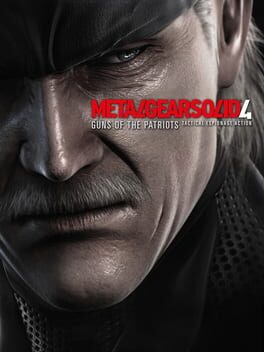
This Italian-language critical essay, published in the 2013 issue of an online game studies journal, examines the dream sequence set in the Shadow Moses base in Metal Gear Solid 4: Guns of the Patriots. The author argues that this sequence, though presented as a nostalgic homage, functions as a reflection on the video game medium itself. By deliberately placing the outdated graphics of the 1998 original beside the far more realistic visuals of the 2008 sequel, the game exposes its own artificiality and disrupts the player's immersion. The essay situates this technique within Hideo Kojima's broader career-long practice of metanarrative and self-referential design, noting earlier examples in Metal Gear Solid 2 and 3 in which the game addresses the player directly and blurs the boundary between avatar and user.
The analysis extends to the series' recurring motifs, such as the ninja figure, tunnel and corridor sequences, and fake game-over screens, which the author reads as deliberate self-citation. Kojima's repetition of these elements is interpreted as an ironic commentary on the video game industry's dependence on recycled formulas and on consumer appetite for sequels. The essay also argues that the pursuit of photorealism is a double-edged pursuit, since the more a game imitates physical reality, the more its flaws expose its synthetic nature, a point illustrated by the success of stylized visual approaches.
The essay concludes that the dream sequence delivers a message against the illusory promises of technology, including virtual reality and interactive cinema, and evokes a nostalgic longing for an earlier, more naive phase of video game history. The methodology is primarily qualitative and textual, grounded in close reading of the game's design, narrative structure, and scholarly commentary on the medium.
G|A|M|E – The Italian Journal of Game Studies · 2026
DiGRA · 2026