1 free read left. Create a free account for unlimited reading + AI research.
Create free accountWhitepaper DiGRA
1 free read left. Create a free account for unlimited reading + AI research.
Create free accountWhitepaperDiGRA
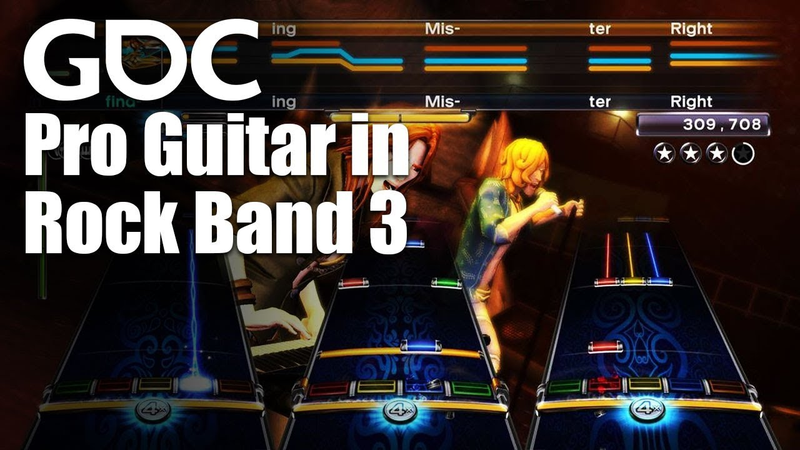
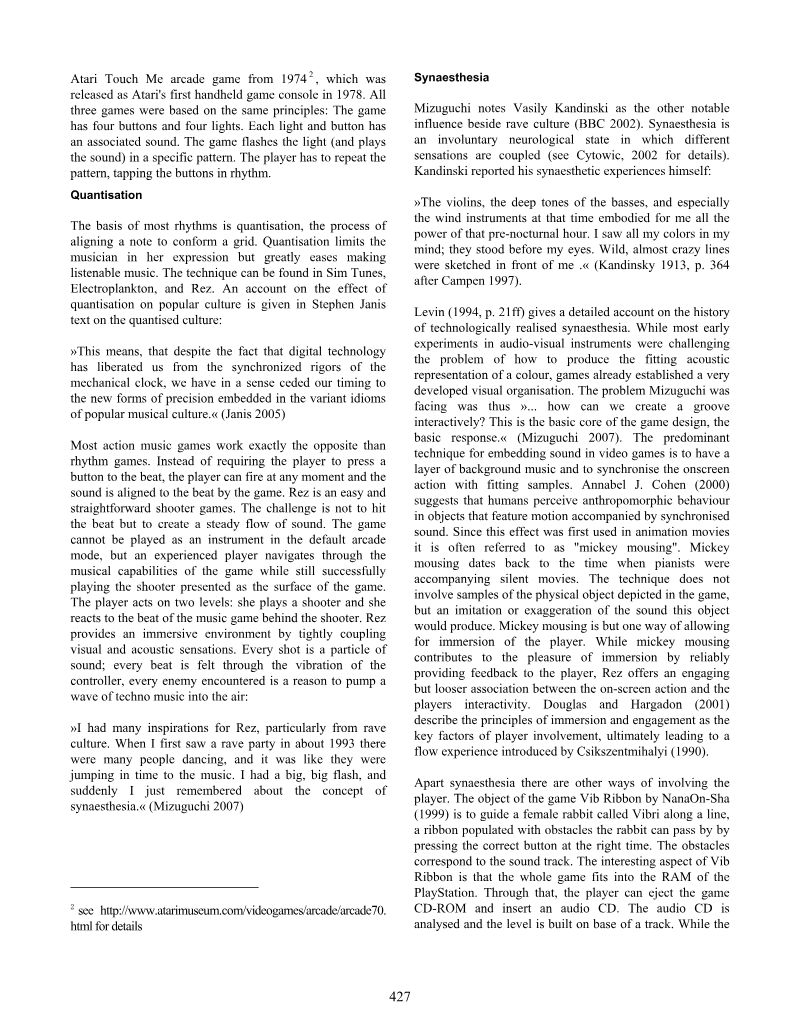
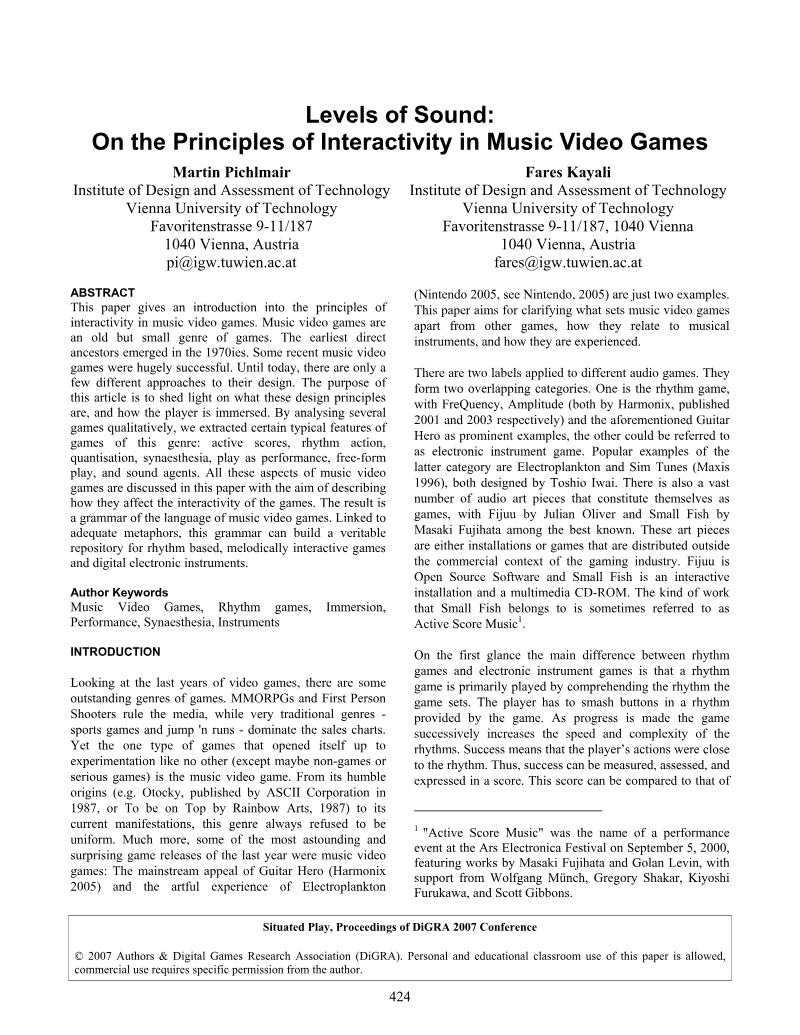
The paper argues that designers and players together co-constitute experiences of authenticity and actuality in Rock Band and Guitar Hero.
This paper examines how music and rhythm videogames, particularly the Rock Band and Guitar Hero franchises, construct a sense of "real" musical experience through captured media such as instrument peripherals, live performance recordings, and motion and performance capture. Its central argument is that designers and players together co-constitute experiences of authenticity and actuality, and that these experiences are shaped by shared expectations and desires about recorded media. The authors frame this interplay as a spectral entanglement rather than a fixed semiotic property of media, using Derrida's concept of hauntology to reinterpret indexicality as an active agent within networks of technology, material performance, and re-presented experience.
The methodology combines a network analysis, drawing on actor-network theory and hermeneutic approaches, with a new materialist rhetorical analysis of how captured media is deployed to produce reality effects. Rather than presenting empirical measurements, the work is conceptual and analytical, examining how design intent and played experience interrelate in the construction of immersion in real rock performance. The analysis distinguishes between claims of authentic experience and claims of actual experience as assembled through design and play.
The paper situates itself within existing scholarship on player experience, immersion, music game peripherals, and authenticity, while arguing that prior work has not sufficiently addressed the interdependence of design intent, material production, and player reception. It positions this inquiry as relevant beyond music games, extending to virtual reality and other forms of captured media where questions of presence and authenticity are increasingly salient. The authors contend that making visible the range of experiences produced by capture technologies can inform both the design of games that engage players with rock performance and broader ethical considerations about indexicality in digital media.
Each row is a game or company this document names, each column a document, oldest first. A mark means that document names it. Select a row to see those documents.

DiGRA · 2026

DiGRA · 2026



DiGRA · 2026



DiGRA · 2026



DiGRA · 2026



DiGRA · 2026



DiGRA · 2026



DiGRA · 2026

DiGRA · 2026



DiGRA · 2026



DiGRA · 2026

DiGRA · 2026
Extra Credits · 2022