1 free read left. Create a free account for unlimited reading + AI research.
Create free accountArticle G|A|M|E – The Italian Journal of Game Studies
1 free read left. Create a free account for unlimited reading + AI research.
Create free accountArticleG|A|M|E – The Italian Journal of Game Studies
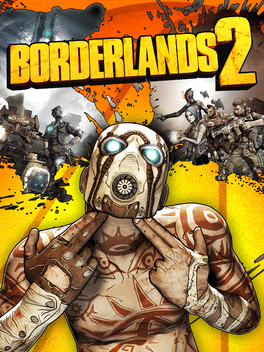
The analysis examines the game through the social model of disability and visual rhetoric. Cybernetic limbs, mental trauma, and scarring appear throughout its playable characters, NPCs, and antagonists.
This analysis examines Borderlands 2 through the social model of disability and visual rhetoric, arguing that the game frames disability as a social construct rather than an individual deficiency. Its post-apocalyptic world of Pandora presents disability as ordinary and omnipresent, with cybernetic limbs, mental trauma, and scarring woven throughout its playable characters, NPCs, and antagonists. Rather than positioning disabled bodies as grotesque, as many AAA games such as Dead Space and Left 4 Dead 2 do, the game humanizes them, and its playable avatars retain full mechanical agency regardless of their backstories.
The authors contend that the game's mechanical design reinforces this visual argument. Weapons and shields in Borderlands 2 carry built-in trade-offs, with strengths paired against corresponding weaknesses, so that no item is optimal in every scenario. The authors connect this to Bogost's concept of possibility spaces and Huizinga's magic circle, suggesting that the game locates disability in its objects rather than its avatars. This approach preserves player agency, which the authors draw from Murray and Tanenbaum's accounts of agency, while still embedding limitation into the play experience.
The analysis also identifies significant problems. Labels such as "Psycho," "Lunatic," "Midget," and "Goliath" function as slurs for people with mental disabilities, dwarfism, and gigantism, and the game often uses the associated behaviors for comedic effect at the expense of disabled characters. The authors note that Pandora's pervasive disability context partly complicates these stereotypes, but argue that the slurs' history and the reinforcing visuals limit that effect. The conclusion positions Borderlands 2 as a partial model for representing disability in games, while calling on the industry to move away from framing disabled bodies as objects of horror.
G|A|M|E – The Italian Journal of Game Studies · 2026
Deconstructor of Fun · 2026