1 free read left. Create a free account for unlimited reading + AI research.
Create free accountWhitepaper DiGRA
1 free read left. Create a free account for unlimited reading + AI research.
Create free accountWhitepaperDiGRA
The paper argues that these releases shape how players perceive and value the original games they rework.
René Glas's paper argues that remakes and remasters of video games should be understood not only as hypertextual transformations of their originals but as paratextual objects that shape how players perceive, value, and revisit those originals. Drawing on Gérard Genette's framework, the author distinguishes remakes (new code, updated presentation and mechanics) from remasters (retained code and mechanics, updated presentation), while noting that industry labels are often shaped by marketing narratives. Following film scholarship on the "paratextual marking" of remakes, the paper contends that the label itself creates an implicit contract that invites players to engage with two texts at once, with play serving as the mechanism of that comparison.
The paper's central claim is that the industry's function for remakes and revisits depends at least as much on paratextuality as on hypertextuality. Drawing on Švelch's notion of the "corrective" function of updates, the author suggests that remakes and remasters position themselves as the authoritative, up-to-date way to play a game, sometimes becoming the only practical means of access as originals become obsolete. The surrounding making-of material, often highly positive in tone, is identified as a key factor in assigning cultural value. The paper also links these texts to the concept of "revisiting" as an alternative to replaying, in which players knowingly return to a gameworld and assess past design decisions against present ones.
The analysis uses paratextual analysis as its primary method and focuses on examples such as Dead Space (2023), System Shock (2023), Metroid Prime: Remastered (2023), and the upcoming Braid: Anniversary Edition. A detailed case study of Black Mesa (2020), a fan-made remake of Half-Life endorsed by Valve and commercially released on Steam, illustrates the interplay of authorial and paratextual dimensions. The paper contributes to game production studies and to the broader understanding of how the industry shapes collective memory of gaming's past.
 ValveCompany · United States · founded 1996 · 529 documents
 Half-LifeGame · Valve · 1998 · 52 documents
 MetroidGame · Nintendo R&D1 · 1987 · 39 documents
 Dead SpaceGame · EA Redwood Shores · 2008 · 27 documents
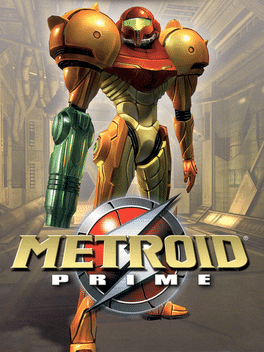 Metroid PrimeGame · Retro Studios · 2002 · 17 documents
Each row is a game or company this document names, each column a document, oldest first. A mark means that document names it. Select a row to see those documents.
DiGRA · 2026
Thomas Brush · 2026