Key insights
6 slides
Bridging the gap
Higher education needs better ways to connect theory with professional practice.
Integrating serious board games offers a potent pedagogical strategy to bridge the divide between theoretical curriculum and professional practice.
1 / 6
- 01Undergraduate physical education students using the 'Docentis' board game achieved an average grade 1.2 points higher than those in the control group.See it on page 16
- 02The study recorded a substantial effect size of g = 1.131, demonstrating the significant impact of game-based learning on academic performance.See it on page 11
- 03The game effectively simulates complex professional challenges by utilizing specific mechanics such as worker placement, negotiation, and memory tasks.See it on page 5
- 04Game-based learning enhances essential executive functions in trainees, including strategic planning, adaptability, and collaborative teamwork.See it on page 20
- 05The success of serious games in higher education depends on the precise alignment of game mechanics with educational objectives and instructor facilitation.See it on page 1
- 06The pedagogical framework used in this study is considered scalable for other professional disciplines, including medicine and spatial planning.See it on page 3
Ask AI about this report
Summary
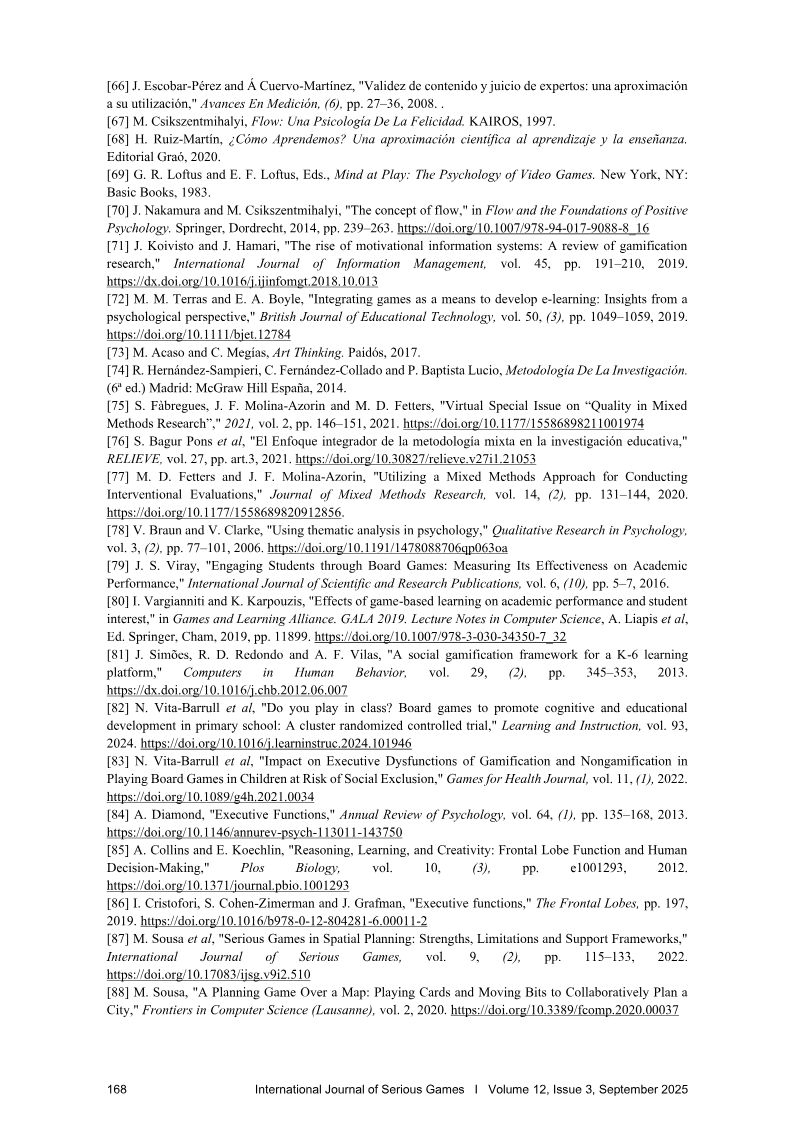
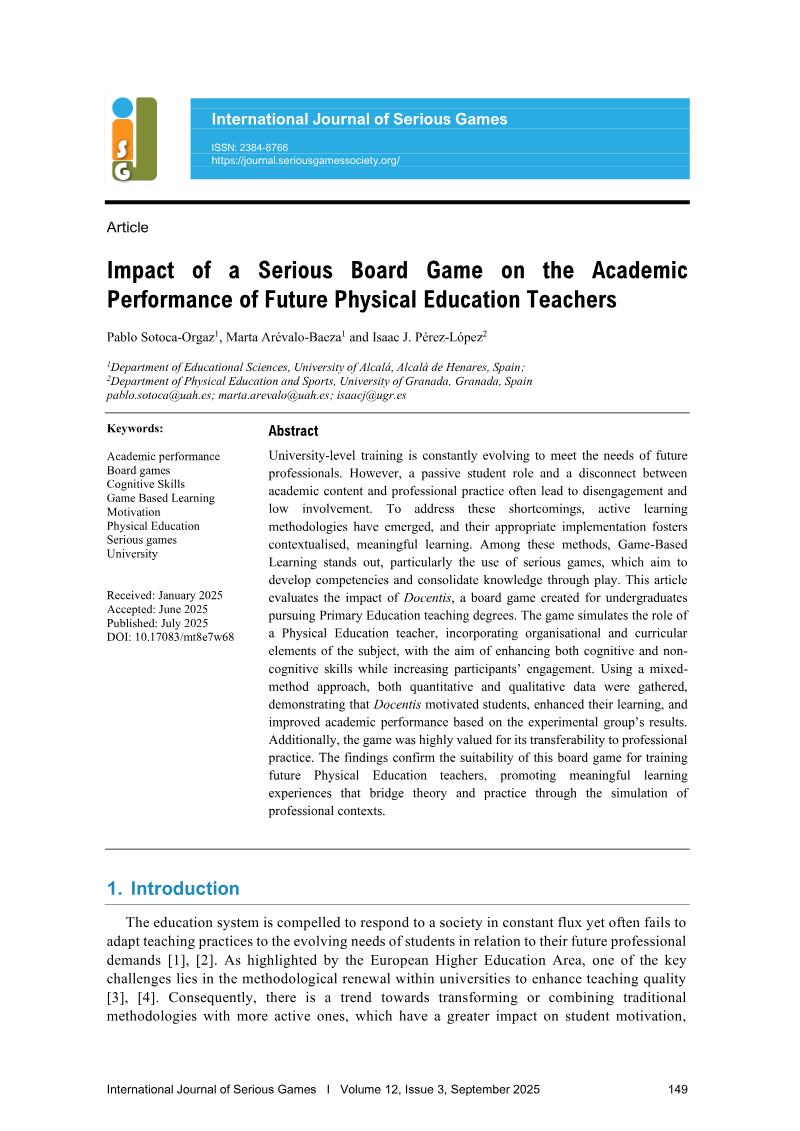
The integration of serious board games into higher education serves as a potent pedagogical strategy for bridging the divide between theoretical curriculum and professional practice. By utilizing the Eurogame-style board game Docentis, undergraduate physical education students can effectively simulate the complexities of classroom management and curricular planning. The primary thesis posits that game-based learning, when grounded in rigorous design thinking and expert validation, significantly enhances both academic performance and the development of essential executive functions, such as strategic planning, adaptability, and collaborative teamwork.
Empirical evidence from an experimental study involving physical education teacher trainees demonstrates a clear performance advantage for those utilizing the game. Participants who engaged with the simulation achieved an average grade 1.2 points higher than their peers in the control group, reflecting a substantial effect size of g = 1.131. These findings indicate that the iterative mechanics inherent in the game—specifically worker placement, negotiation, and memory tasks—successfully reinforce complex pedagogical concepts. The game functions not merely as an educational supplement but as a high-fidelity simulation of real-world professional challenges.
The scope of this research encompasses the intersection of game design and pedagogical methodology within the context of teacher training. The success of such interventions relies heavily on the alignment of game mechanics with specific educational objectives and the instructor’s proficiency in facilitating game-based learning environments. Ultimately, the application of serious games provides a scalable and motivating framework for professional development, with implications that extend beyond physical education into broader academic disciplines, including medicine and spatial planning. By fostering cognitive development through interactive play, these tools offer a robust alternative to traditional instructional methods.