1 free read left. Create a free account for unlimited reading + AI research.
Create free accountArticle G|A|M|E – The Italian Journal of Game Studies
1 free read left. Create a free account for unlimited reading + AI research.
Create free accountArticleG|A|M|E – The Italian Journal of Game Studies
Teti argues that by this period the video game had become the principal cultural repertoire from which cinema draws. He frames this through cultural convergence and remediation.
Marco Teti's essay, published in the second issue of a 2013 Italian game studies journal, uses Disney's animated film Ralph Spaccatutto (Wreck-It Ralph, 2012) to examine the relationship between cinema and video games, particularly from the late 1980s onward. Its central thesis is that by this period the video game had become the principal cultural repertoire from which cinema draws figures, images, and aesthetics, a shift the author frames through the concepts of cultural convergence and remediation developed by Henry Jenkins, Jay David Bolter, and Richard Grusin. The argument situates the film within a long tradition of cinematic adaptations of games, from Tron and The Wizard to The Matrix and eXistenZ, while noting that many later adaptations, such as Super Mario Bros. and Resident Evil, rely on game worlds more superficially to broaden their audience.
The analysis draws its main evidence from the film's dense web of references to classic arcade and console titles, including Donkey Kong, Sonic, Pac-Man, Call of Duty, Halo, Mortal Kombat, Street Fighter II, and Metroid, and from the design of its protagonist Felix, modeled on Mario. Teti argues that the film's use of three-dimensional animation reflects the immersive character of the video game medium, aiming to place the spectator inside the action through sensory stimulation before engaging conventional narrative devices. He also observes that the film's intended audience is not children but adults who grew up playing arcade games in the 1980s and 1990s, and he reads the work as a nostalgic tribute to the arcade as a social space and to the generation whose cultural identity was formed there.
The essay is a qualitative, theoretical close reading of a single film rather than an empirical study, so it presents no survey data, sample sizes, or statistics. Its scope is limited to Western and Japanese games and films and to the period from the mid-1980s to the early 2010s, and its conclusions rest on interpretive analysis of the film's content, production context, and the broader phenomenon of gamification.
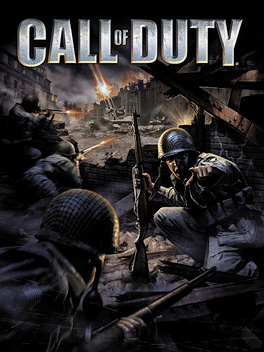 Call of DutyGame · Infinity Ward · 2003 · 737 documents
 DisneyCompany · United States · founded 1988 · 272 documents
 Street FighterGame · Capcom · 1987 · 152 documents
 Super Mario Bros.Game · Nintendo R&D4 · 1985 · 87 documents
 MetroidGame · Nintendo R&D1 · 1987 · 39 documents
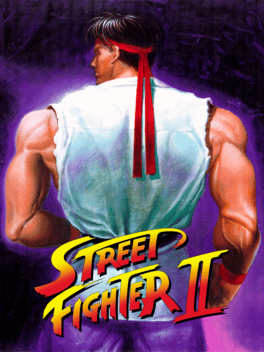 Street Fighter IIGame · Capcom · 1991 · 9 documents
Each row is a game or company this document names, each column a document, oldest first. A mark means that document names it. Select a row to see those documents.
G|A|M|E – The Italian Journal of Game Studies · 2026
DiGRA · 2026