1 free read left. Create a free account for unlimited reading + AI research.
Create free accountWhitepaper DiGRA
1 free read left. Create a free account for unlimited reading + AI research.
Create free accountWhitepaperDiGRA
Radical ludology holds that narrative in games is an irrelevant ornament. Klevjer contends instead that cutscenes are an integral part of the gaming experience.
Rune Klevjer's essay "In Defense of Cutscenes" mounts a theoretical argument against radical ludology, the position that narrative elements in games are irrelevant ornaments layered over play. Klevjer contends instead that cutscenes are an integral part of the gaming experience and that narration and play can coexist rather than being mutually exclusive. Drawing on the work of Aarseth, Eskelinen, and Burke, he argues that computer game events are inherently representational and rhetorical "symbolic actions," which gives narrative framing a legitimate role in shaping how players understand their activity.
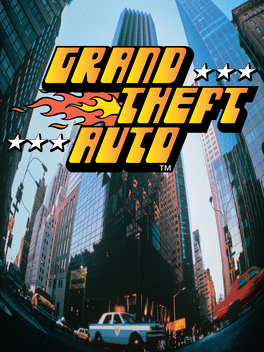
The essay's central move is to address what it calls the "paradox of make-believe" in story-based games such as Grand Theft Auto III. Players want both the freedom of open-ended agency and a pre-written mythical narrative, and Klevjer argues that cutscenes resolve this tension by providing genre-based framing that endows player actions with symbolic meaning. Through the concept of "pre-telling," narrative meaning is cast forward onto gameplay events, so that moments of play are understood in relation to the story they belong to. The oscillation between cutscene and play is presented not as a design flaw to be dismissed but as a developing artistic convention.
Klevjer supports these claims through gameplay examples from titles such as Agent Under Fire and Grand Theft Auto III, showing how cutscenes regulate rhythm, supply tactical information, and function as motivational rewards. Rather than relying on quantitative evidence, the analysis draws on narratological and theoretical frameworks from Genette, Booth, Ryan, and Aarseth, with Sim City also serving as an illustrative case. The scope is primarily conceptual, focused on the relationship between narrative and interactivity in digital games of the late 1990s and early 2000s, the period in which these titles were prominent.
Each row is a game or company this document names, each column a document, oldest first. A mark means that document names it. Select a row to see those documents.
DiGRA · 2012
DiGRA · 2011
DiGRA · 2011
DiGRA · 2011
DiGRA · 2011
DiGRA · 2011
DiGRA · 2011
DiGRA · 2011
DiGRA · 2011
DiGRA · 2011
DiGRA · 2011
DiGRA · 2011