1 free read left. Create a free account for unlimited reading + AI research.
Create free account
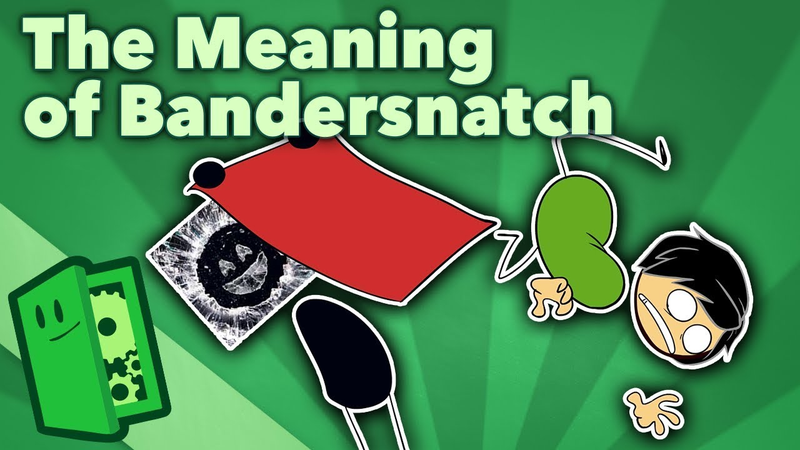
The Meaning of Bandersnatch - The Philosophy of Free Will - Extra Credits
Key insights
5 takeaways- 01Bandersnatch uses Netflix’s branching-path technology to force viewers to confront the distinction between character empathy and the role of an external controller.
- 02The narrative functions as a critique of modern life, suggesting that human autonomy is often an illusion constrained by narrow, pre-designed channels.
- 03By systematically dismantling viewer immersion, the film reveals that the participant’s choices are limited by the creators rather than being truly autonomous.
- 04The film draws a parallel between the protagonist’s lack of agency and the way modern algorithms, social media, and institutions curate and limit the human experience.
- 05The meta-narrative concludes that individuals are frequently passive actors following paths predetermined by external influences, serving as a cautionary tale against the erosion of personal agency.
Ask AI about this video
Transcript
How much free will do we actually have? What are we really in control of? And how much do our decisions really matter? These questions just scratch the surface of what Bandersnatch tries to ask us, but there's a deeper, bigger question buried in its loops and choices. Are you ready to see where this path leads? This episode is sponsored by The Game Experience, a game development summer camp where they simulate the real-world process of creating games. Check them out at the link below. Netflix developed a new technology, a way to add interactivity to the films on their streaming service. They tested it with kids films like Puss in Boots and one of the Minecraft movies, but they wanted to take it big. So, they turned to Charlie Brooker and the Black Mirror folks, which guaranteed we were going to get a show partially about questioning the implications of the technology it was built on, partially a commentary on modern society, and partially a philosophical musing about the essence
of our own humanity. And for better or worse, that's certainly what we got. Now, two things before we dive in further. First off, the rest of this video is going to be spoiler-tastic. So, if you haven't seen Bandersnatch and don't want to know anything about it, please choose the option of leaving now and coming back once you're caught up. And second, if you've seen Bandersnatch, have watched this whole episode, and want to dive in even deeper, and I'm talking like four levels of Inception deep, James and Jack were just guests on my erroneously titled podcast The Only Podcast About Movies. And we chatted for a long while about the film and what it might mean for the future of cinema and gaming. For the record, I know it's a shameless plug, but how often do these things coalesce? So, knowing all that and with spoilers incoming, you have a choice to make in three, two, one. Okay, still here? Great choice. Really though, did you have one? Bandersnatch is about free will. That much is very clear. But what it's actually saying all hinges on one
question. Who are we, the viewer, supposed to be? In games, this is one of the most important questions for a designer. Are you the character in the game? Are you projecting an ego onto an actor or acting out a role? Or are you you? Take God of War for example. In God of War, you are playing Kratos. You're definitely not playing you. You're embodying the avatar of living rage. And you don't get to make choices that don't fit within that description. As such, the emotive core is really about understanding that character through being them. And thus getting more out of experiencing their personal journey through the medium. Whereas in something like Fallout, you're a projection of whatever role you want to play, making decisions and choices as you go. The emotional center of the piece is about crafting a character and exploring how they would respond to different circumstances, rather than just following their journey. And lastly, there's something like Civ, where you're divorced from the game itself. You are a
player playing. You're the hand that moves everything while never directly interacted with yourself. This makes the emotive center about the play, about the struggles and triumphs, the rise and fall of the civilization you're trying to shape. Who you are in the context of a game changes how you understand it, changes your relationship to it. And Bandersnatch intentionally makes that question murky. It sets you up so it can pull the rug out from under you again and again and again. In the beginning of Bandersnatch, you're set up to feel like you're in control of the main character. It does this by opening with totally mundane but personal choices, like what cereal you're going to have for breakfast or what music you're listening to on the bus. This allows you to familiarize yourself with the controls and root you in a single character. And by using the film technique of following a single character, never cutting to anything outside of what he's experiencing, and by only ever allowing us to make choices for that character, they reinforce this. It hammers this home when we get to the part in the game studio. And if you
choose to work on your game there, rather than back at your home, the experience just tells you, "You're wrong. Go back." Now, that reaction to your choice doesn't fit within the character as we've learned about him so far. But since you are the character, you simply can't move forward in the story in the traditional sense in that direction. But by saying, "Go back," reversing time and letting us choose a different option, it reveals its game-like nature. It shows us that we can't possibly be the main character. It intentionally breaks our immersion into that character space, which is great because it plays right into the hands of people who thought that they were just playing a game and not really immersing themselves in the first place. Because Bandersnatch is soon going to pull more of those rugs we were talking about out from under them. Now, here's where we circle back to free will. The main character has no free will. We know this. They're a character. They can't make choices because they're part of a script. But there's a point where they start to become aware of it. They even
try to break out of that pattern, to fight against it, and to warn others about this sense that their actions are all constrained by someone else. And eventually, we get that fateful moment at the computer where you, the player, can reveal who you really are. You. The fourth wall is shattered. You are a Netflix viewer. Not only in real life, but also in the experience as well. And in this way, your actual life has been brought into the plot of the film. Now that you know the role you truly play, things get even weirder. You start to think, "What are the moral implications of this? Do you bear the responsibility for the horrible things you make characters in a game do?" Because the Black Mirror crew are about to push you into making the main character do some very horrible things. And there's the rub. There's the thing the whole experience is actually about. They are going to make you do things. You in the experience are really you the Netflix
viewer, but your actions are actually being chosen and constrained by the experiences creators. The main character is an analog for you. And you both slowly come to the realization that your choices are not your own. You may even now try to fight against it, but in the end you're powerless to do so. This is its true critique. In a world of designed experiences, how much free will do we really have? As Netflix curates its selection page, as Facebook, Instagram, and Twitter decides what's on your feeds, as your cities become locked in grids of streets that only go to certain places, as your ballots only come with two choices, how much free will do you really have? How much of your life do you really get to decide rather than just going down the narrow channels that someone else has designed for you? In the final scene of what most would consider the proper ending, the main character is back on the same bus from the beginning at the moment we chose what tape to listen to. But this time
the only choice is a tape labeled Bandersnatch. On one hand the tone it plays is actually the start to a simple ARG. But on the other, on a more narrative leaning level, the main character is now passively listening to their life as dictated by someone else. It's a warning. Don't let that be us. Once again, thanks so much to The Game Experience for sponsoring this episode. The Game Experience is a summer camp for middle and high school students to learn the nuanced process of creating games. Located in Seattle and Los Angeles, you'll learn from experienced game developers that will share their knowledge and experiences, and you'll work with fellow students to create your own game project. Then, you'll overcome the trials and tribulations of what it's like to make a game in the real world. You know, that sounds like some invaluable skill building I wish I had back in the day. Not to mention, James will also be coming to talk to the students attending the Seattle program. So, register soon if you want a chance to ask him questions in person. If you or someone you know wants to discover if
game development is really the career for them, click the link in the description below while I go find where Zoe put my time machine.
Summary
The interactive film Bandersnatch serves as a meta-narrative exploration of free will, utilizing Netflix’s branching-path technology to challenge the viewer’s perception of agency. By analyzing the film through the lens of game design, the discussion highlights how the medium forces participants to confront the distinction between embodying a character and acting as an external controller. Initially, the film encourages viewers to identify with the protagonist through mundane, personal choices; however, it systematically dismantles this immersion by forcing the viewer to acknowledge their role as an external force manipulating the character’s life.
The core thesis posits that the film functions as a critique of modern life, where individuals often believe they are making autonomous decisions while actually navigating narrow channels designed by external entities. Just as the protagonist eventually realizes his actions are constrained by a script and an unseen player, the viewer is forced to recognize that their own choices are limited by the film’s creators. This mirrors broader societal concerns regarding how algorithms, social media platforms, and institutional structures curate human experience, effectively narrowing the scope of genuine free will.
Ultimately, the film concludes that true autonomy is an illusion within designed systems. By breaking the fourth wall and revealing the viewer as the true participant, the narrative suggests that individuals are often passive actors in their own lives, following paths predetermined by external influences. The film serves as a cautionary tale, urging audiences to remain vigilant against the subtle erosion of personal agency in an increasingly curated and programmed world.















Comments