1 free read left. Create a free account for unlimited reading + AI research.
Create free accountWhitepaper DiGRA
1 free read left. Create a free account for unlimited reading + AI research.
Create free accountWhitepaperDiGRA
Paul Martin's paper develops Alexander Galloway's theory of "social realism" in digital games, arguing that realism's critical potential becomes visible only when three elements are considered together: the mode of representation, the everyday, and what the Marxist critic György Lukács called the social totality. The paper's central aim is to revise Galloway's account, which the author finds to neglect representation, to conflate realism with critique in general, and to depend on a "congruence requirement" linking the everyday life depicted in a game to the everyday experience of its players. Martin instead draws on Lukács's defence of literary realism as a means of connecting individual lives to the totality of social relations, and on Yuri Lotman's view of everyday life as a boundary zone where personal habits collide with dominant codes.
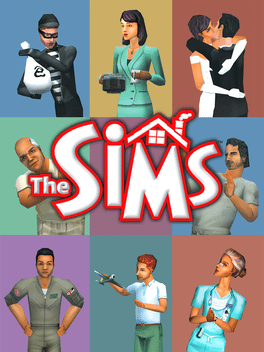
The paper's main argument is that realism in games would foreground everyday life by placing everyday practices into play and linking them to the social totality. Martin does not claim to identify an existing genre of realist games. Instead, following Rosa Mucignat's observation that the realist novel intersects the everyday with adventure, he examines Shenmue, Mother, and The Sims as examples. He concludes that each game semioticises the everyday through this intersection, yet none reaches the critical potential Lukács attributes to realist fiction.
The scope of the work is primarily theoretical and conceptual rather than empirical. It engages with a small set of commercial titles, selected for their combination of everyday activity and adventure, and draws on literary theory, game studies, and cultural theory. No survey data, sampling methods, or quantitative findings are presented; the contribution lies in refining a theoretical framework for assessing critical realism in games. The paper was presented at the first joint conference of DiGRA and FDG.
Each row is a game or company this document names, each column a document, oldest first. A mark means that document names it. Select a row to see those documents.
DiGRA · 2018
DiGRA · 2018
DiGRA · 2018
DiGRA · 2018
DiGRA · 2018
DiGRA · 2018
DiGRA · 2018
DiGRA · 2018
DiGRA · 2018
DiGRA · 2018
DiGRA · 2018
DiGRA · 2018

PocketGamer.biz · 2026