1 free read left. Create a free account for unlimited reading + AI research.
Create free accountWhitepaper DiGRA
1 free read left. Create a free account for unlimited reading + AI research.
Create free accountWhitepaperDiGRA
The paper observes that Indigenous representation has grown, particularly in Mexico and Peru. Indigenous participation in the development process remains limited.
This paper examines how Indigenous Latin American cultures are represented in video games, focusing on the production dynamics that separate games developed "with" Indigenous communities from those developed "about" them without direct participation. Its central thesis is that collaborative development yields more authentic, respectful, and enriching representations, while developing games about Indigenous cultures in the absence of community involvement risks superficiality, stereotyping, and missed opportunities for deeper cultural understanding. The study situates these concerns within a broader observation that Indigenous representation in Latin American games has grown in the past decade, particularly in Mexico and Peru, while Indigenous participation in the actual development process remains limited.
The research is built around two case studies from Lienzo, an indie studio based in Chihuahua, Mexico. Mulaka (2018), developed in close collaboration with the Rarámuri community, is presented as a model of collaborative production that enriched the game's narrative and authenticity and provided the community a platform for its own cultural expression. Aztech: Forgotten Gods (2021), created without direct Indigenous collaboration, is characterized as an imaginative but less authentic interpretation of Aztec culture. The paper frames these contrasting outcomes as evidence that the developmental approach materially shapes representational quality and carries ethical weight.
Methodologically, the study adopts a decolonial framework and a qualitative design that combines textual analysis of both games with interviews and secondary literature. It also draws on theoretical concepts of nature as relation, including Chicueyi Coatl's relational framing, Servín's work on Rarámuri traditions, and Moore's notion of "oikeios," to examine how the games depict nature and the environment and how Indigenous conceptions of nature might offer alternatives to mainstream gaming tropes. The paper does not report quantitative survey data, and its scope is limited to two titles from a single studio, a constraint that bounds the generalizability of its conclusions.
Beyond the case analysis, the paper engages with the ethics of commodifying Indigenous spirituality and culture for entertainment. It argues that developers working "about" Indigenous communities without involving them risk perpetuating stereotypes, while collaborative practices can produce more nuanced and respectful portrayals. The paper concludes by advocating for collaborative, community-involved development as a guideline for game developers and scholars seeking ethically sound and culturally enriching practice in the Latin American industry.

DiGRA · 2026

DiGRA · 2026



DiGRA · 2026



DiGRA · 2026



DiGRA · 2026



DiGRA · 2026



DiGRA · 2026



DiGRA · 2026



DiGRA · 2026

DiGRA · 2026



DiGRA · 2026



DiGRA · 2026
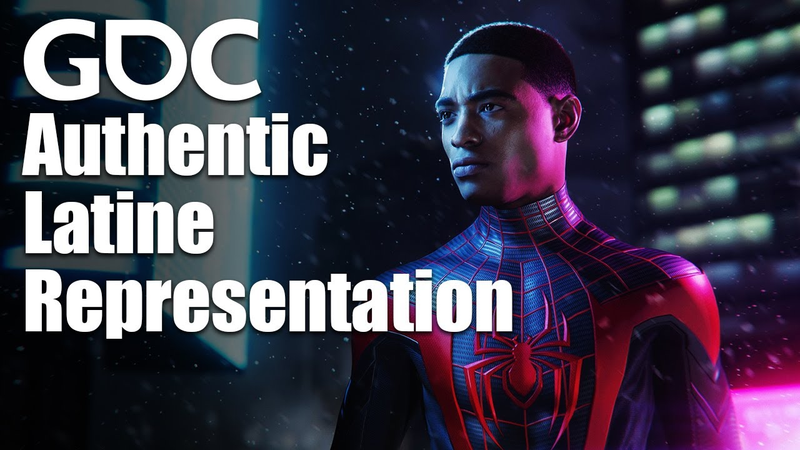
Game Developers Conference · 2023