Games and companies in this document

Connections
Each row is a game or company this document names, each column a document, oldest first. A mark means that document names it. Select a row to see those documents.
1 free read left. Create a free account for unlimited reading + AI research.
Create free accountWhitepapergamevironments
The catalogue groups the clones by original platform: the Magnavox Odyssey, Pong, Atari VCS, Sega Master System, and Nintendo Famicom/NES.
Brazil's share. Brazil accounts for the majority of the catalogued clone consoles.
Phillip Penix-Tadsen's article argues that Latin American clone consoles, active from roughly 1973 to 1994, deserve a central place in platform studies and game history. Its central claim is that informal practices such as reverse engineering, cloning, and hardware localization were not peripheral deviations from the formal industry but the dominant means by which most players worldwide accessed games. The Argentine Telematch, a likely early landmark clone of the Magnavox Odyssey and possibly the region's first video game console, anchors this case, alongside the game Fútbol, whose developers and release date remain uncertain.
The study's scope spans the Americas south of the United States, with particular emphasis on Brazil, Mexico, and Argentina, and covers the period from the early 1970s through the arrival of the Gradiente Phantom in 1989 and the close of the era in 1994. Its evidence base includes a catalogue of roughly ninety clone consoles grouped by their original platforms: the Magnavox Odyssey, Pong, Atari VCS, Sega Master System, and Nintendo Famicom/NES. Brazil accounts for the majority of these entries, many tied to the country's 1980s informatics market reservation, which encouraged domestic production under protectionist conditions. Mexico and other markets are represented through case studies such as the NESA Pong.
The article documents how firms including Philco-Ford, CCE, Dismac, Dynacom, Gradiente, and Polyvox moved from cloning toward innovative adaptation. Polyvox alone reportedly produced over a thousand Atari-compatible units daily by 1983. Local clones frequently added features suited to regional conditions, such as translated titles, pause buttons, wireless transmission, built-in turbo functions, and compatibility with incompatible television standards. Their makers built reverse-engineering expertise and manufacturing supply chains that later supported national game industries.
The author acknowledges significant limitations. Sources are scarce, largely in Spanish and Portuguese, and depend on fan communities and journalistic accounts, so many release dates are estimates rather than verified records. The conclusions therefore rest on an incomplete but extensive evidence base. Within that frame, the study treats clone production as technological appropriation and a form of resistance to global capitalism rather than simple piracy, and it argues that recognizing this history is essential to a more diverse account of video game history.
Each row is a game or company this document names, each column a document, oldest first. A mark means that document names it. Select a row to see those documents.
gamevironments · 2026
Replay. The Polish Journal of Game Studies · 2026
International Journal of Role-Playing · 2026
DiGRA · 2026
DiGRA · 2026

DiGRA · 2026
DiGRA · 2026



Journal of Games Criticism · 2025
Press Start · 2025



DiGRA · 2025
Pontificia Universidad Católica de Chile · 2025
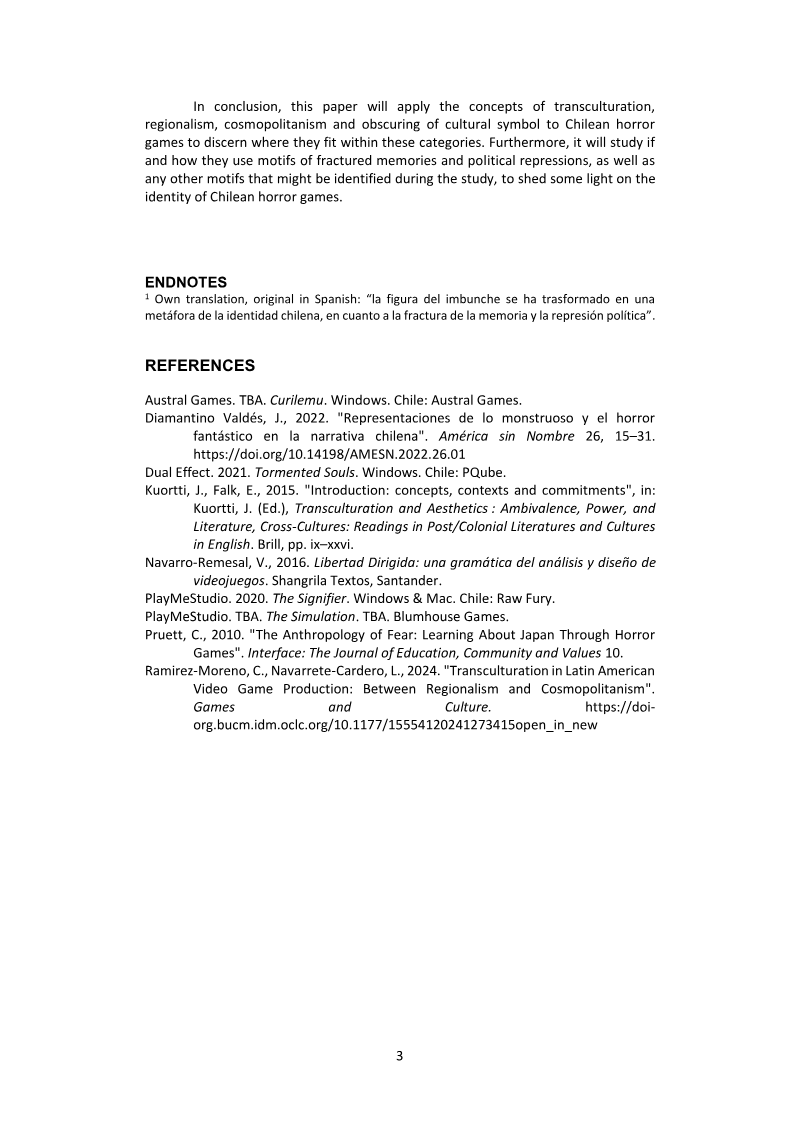
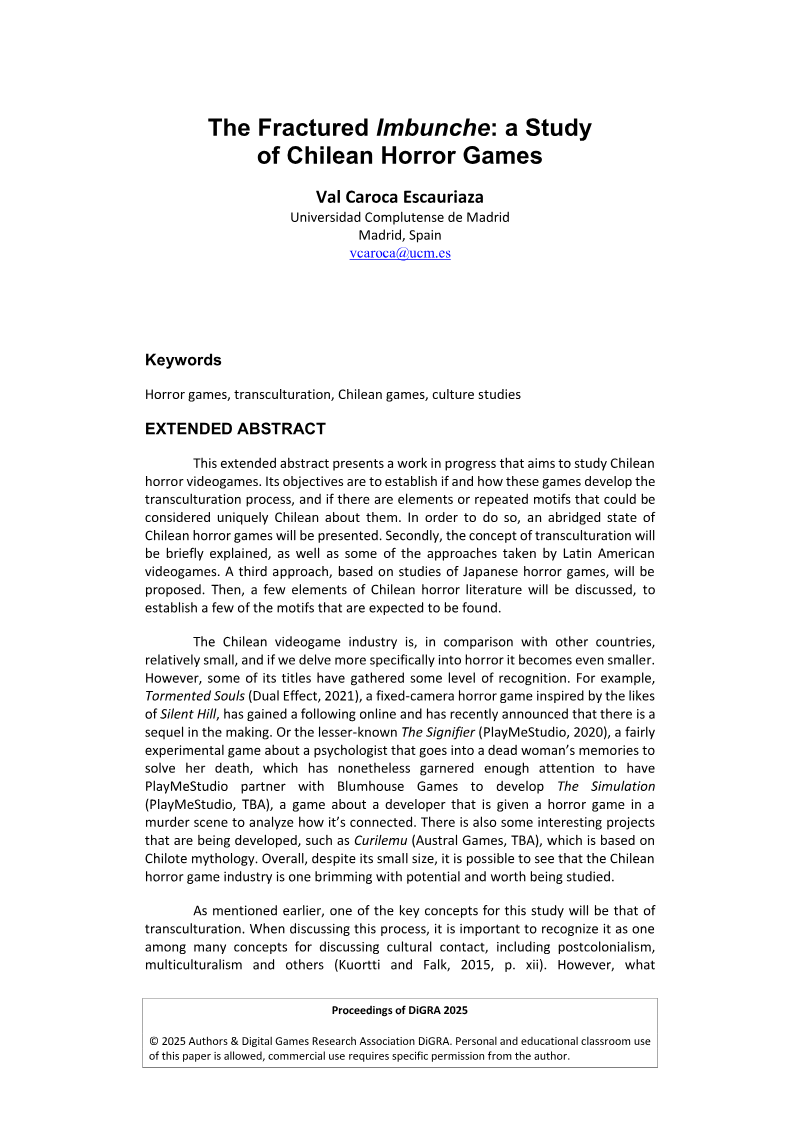
DiGRA · 2025
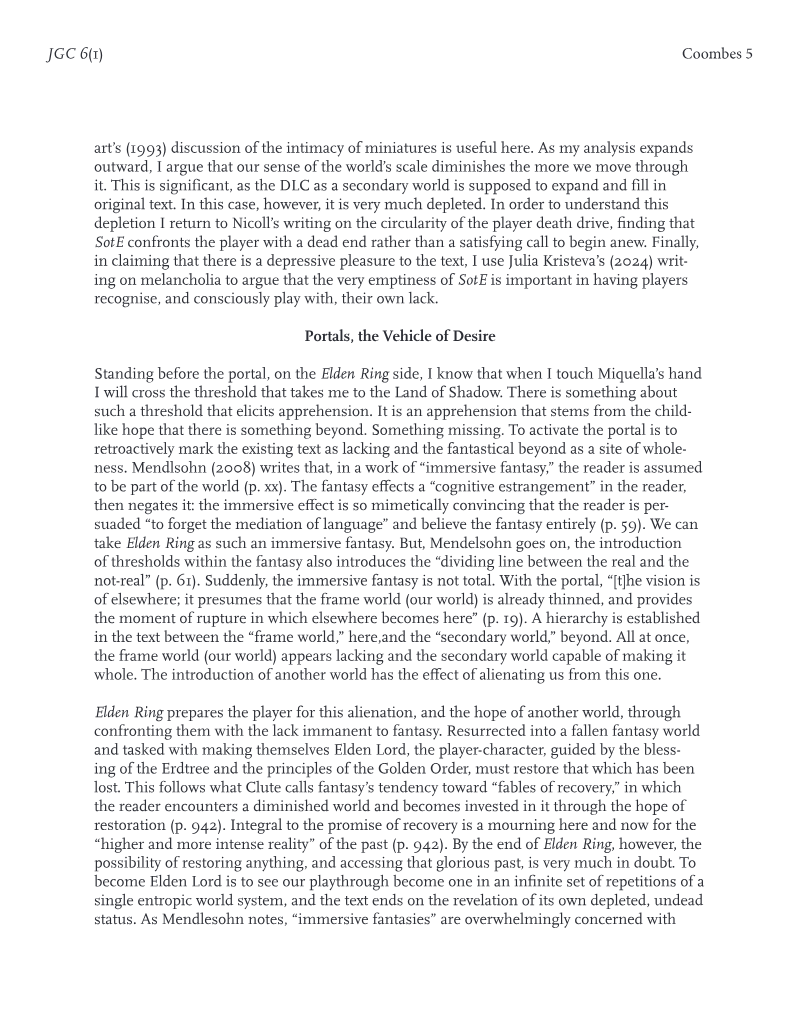
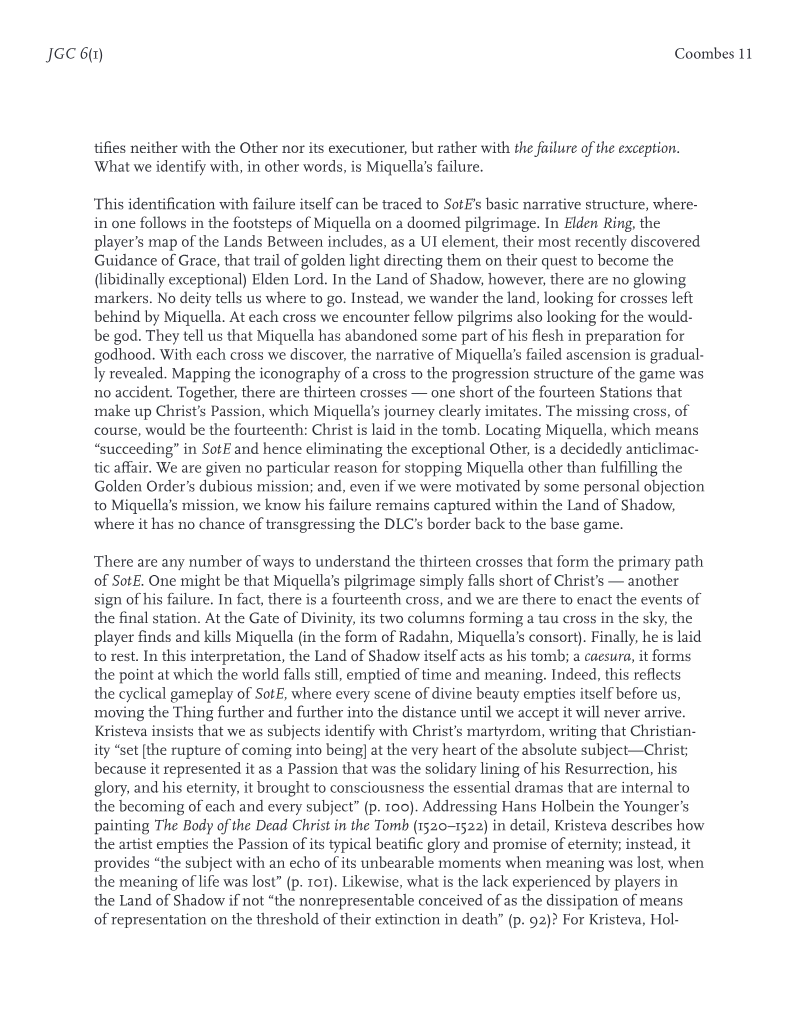
Journal of Games Criticism · 2025