1 free read left. Create a free account for unlimited reading + AI research.
Create free account
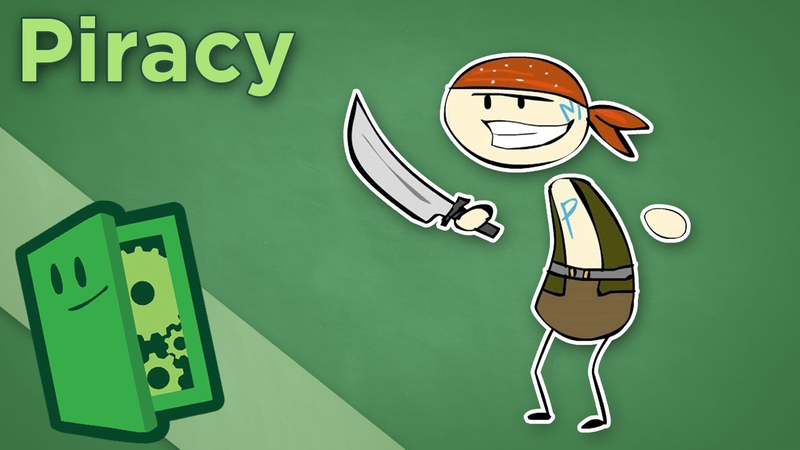
Piracy - How Can the Game Industry Stop Illegal Downloads? - Extra Credits
Key insights
7 takeaways- 01Players should advocate for industry change through constructive feedback, such as requesting demos, rather than resorting to theft.
- 02Restrictive Digital Rights Management (DRM) is a failed strategy that penalizes legitimate customers with inferior software while failing to effectively deter piracy.
- 03Creating a product experience that is objectively worse than a pirated version inadvertently incentivizes users to seek illegal downloads.
- 04Piracy should be addressed by improving service accessibility and rewarding loyal customers rather than relying on punitive measures.
- 05The industry should foster a partnership model by maintaining transparency regarding server shutdowns and avoiding the removal of features after a product is purchased.
- 06Legitimate justifications for piracy are limited to specific scenarios, such as when a game is unavailable for purchase in a region or is no longer sold by a defunct company.
- 07Consumers should reject the rationalization of piracy based on personal financial constraints or dissatisfaction, as high-quality development requires significant financial investment.
Ask AI about this video
Transcript
This is going to be rough. This topic has been looming over our heads for a while now. Trying to discuss this issue is like stepping into a minefield, but then we can't really ignore it forever. I get the feeling we probably aren't going to be winning any friends with this one, but well, let's just get this over with. It's time to talk about piracy. The extent to which piracy hurts game sales may be debatable, but there's no question that piracy has a considerable impact on this industry. It's a hot-button issue for everyone, no matter which side of the debate you fall on, and it's impossible to have this conversation without getting ethics and morality involved. In our opinion, neither of these groups is completely justified or in the right, so we'll just address each side in turn, I guess. First, a word to the industry. Hello, industry. Guys, you're not going to get anywhere by punishing your customers. We all know that current-gen DRM just doesn't work. If you're lucky, your DRM won't be cracked until maybe a week after your
release, if you're lucky. In the meantime, you're saddling all of your paying customers with buggy, conflict-ridden software or limiting what they can do with your games, the ones they purchased legally from you. If it helps, think of pirates as your competitors. Free of charge is already a pretty tough offer to compete with, so why give them even more of an advantage by ensuring that they offer better service, too? Pirates already have the advantage of being able to provide games 24/7. GameStop closed? Your friendly torrent service isn't. Why allow them to also provide versions of your game that are indisputably better? Versions with all the DRM ripped out, versions that can be installed on unlimited computers and don't conflict with other software they may already own. In a decade, when we can count on 90% of our customers having a constant internet connection, we'll be able to provide functional, non-intrusive DRM by just doing occasional check-ins with our servers. But, until then, the DRM fight is lost. Instead, find ways to reward your customers for legal purchases. This can be as simple as offering rewards for frequent buyers. I mean, come on, even my local coffee shop gives me my 10th purchase free. The point is, don't try
to punish your customers because people are pirating your games, period. Secondly, it's not cool to take features away from your product simply because you don't want to support them anymore. You know what? I agree with the guys who kicked down the door of the PlayStation 3. If you bought a PS3 as a Linux box because Sony told you that other operating systems could be installed on it, and then you find that capability removed by the manufacturer, you have every right to restore the functionality you paid for, regardless of what the EULA says. Oh, and Sony, a word to the wise, do not tangle with the kind of people who install Linux on their PlayStations. Trust me, you are wasting your time. But at the same time, I also want to appeal to consumers to not get up in arms when a company shuts off the servers for your favorite game. I know you love the game and you paid good money for it. Those are completely valid reasons to be upset. But also try to be understanding because no studio ever wants to do that. They do it because they have to. James has been there before. When you're in a studio and shut down day comes, people there are upset. These people poured their heart and soul into that game, spent years of their lives working on it. They hate it being
shut down as much as you do, and the last thing they need is to be flamed on the forums or called jerks over it. Running multiplayer games is expensive. Sometimes it's an expense the company can't afford, so try to cut them a little slack. It's already hard enough watching your work die. And I guess that brings us to you guys, the consumer. This is going to be the hard part. It's easy to feel accused whenever these discussions come up. I mean, even when you aren't guilty of piracy yourself, it still feels like someone's pointing a finger at you, but well, here it goes. There's exactly one legitimate reason for piracy, when you simply cannot buy the game legally where you are. If you live in Azerbaijan or Mongolia or anywhere else where you really cannot get games, please pirate away. If a game that James has worked on has never been distributed in your country, he'd like you to know that he's just happy to see more people able to participate in the medium. Knock yourselves out. Or hey, maybe you're an aficionado of the medium and you want to experience a game made long ago by a company long dead. You can't buy the game anywhere anymore. To you, I say go nuts. Remembering where games have been will only help us to move them forward. Past that, if you like a game, just pay for it. We can't build these things
without money. Honestly, everybody working in the development side of this industry takes a way lower salary than they could be making with the same skills in another field. And big games still cost millions of dollars to make. I wish we could do this simply as a labor of love, but you'd never see games of the quality and scope that we have now without money behind them. Also, we like being able to eat. Now, I'll be the first to admit, and I speak from experience, that it's really hard to make yourself care when piracy is such an easy act to justify to ourselves. After all, I'm only taking a digital copy of the thing. It's not like the game makers are losing an item from their stock, and it's not like me acquiring this copy is going to prevent someone else from playing the game. The list of justifications we use is endless. The game is buggy. The game isn't worth paying for. The game's overpriced. I hate the developer. I hate the CEO. The DRM for this thing is ridiculous. And sure, these may be perfectly valid points against the game, but in the end, if we're still pirating the game to play it, it renders all of those arguments meaningless, because the game is apparently still worth playing despite the flaws. This is a mindset we really need to outgrow as members of this community. But what if some company releases a game without offering any
kind of demo? Well, here's a high-road kind of solution. Instead of pirating the thing, write to the game company and tell them that you didn't buy their game because they didn't put out a demo. Imagine if even a fraction of the people who would normally pirate a game instead flooded the company's inbox with those letters. You bet your ass that company is going to give some more thought to releasing demos in the future. And then there's that other argument for piracy that we often hear in the US, the I'm too poor argument. I don't have the money, and I wouldn't have bought this game anyway. This argument doesn't really hold water for me when it comes to video games, because any machine that can run a modern video game is a luxury item to begin with. If you can afford a decent PC or a video game console, you can probably afford a game to play on it. This argument really is just another way to rationalize something akin to theft. But just to be sure we weren't being horrible jerks by saying that, James did an experiment. For the sake of argument, he assumed that you can own a decent gaming machine, but somehow can't afford games for it. The results are in and you're in luck. There are plenty of legit free gaming experiences to be had out there. James just spent the last 2 weeks playing games on a $0 budget, only playing games he could get legally for free. He played Echo Bazaar, Vindictus,
Dungeon Fighter, a bunch of games off Kongregate, free apps on his iPhone, downloaded demos on his Xbox. He had a great time, and it got him to try a bunch of games he would otherwise never have seen. All I'm saying is it can be done. And I mean really, if you can even budget $60 a month for games, you're ahead anyway. It's rare that the industry releases more than one truly top-tier game in a single month. And between all of the free titles, extra cash from trade-ins, and reduced prices on titles you didn't buy on launch day, you should be able to easily fill up your free time with amazing interactive experiences. I guess all we're really trying to say here is don't be a dick. If you like a product, pay for it. People worked hard on these things. If for no other reason, think of it as an investment in future games to come. And we're running long again. Okay, we may come back to this eventually so we can rant about copyright law and such, but I think that's probably enough flame war fuel for one show. Thanks for sticking with us for all that, guys. We'll see you next week.
Summary
The video game industry faces a persistent conflict regarding digital piracy, a complex issue where neither developers nor consumers hold the moral high ground. The industry’s reliance on restrictive Digital Rights Management (DRM) is identified as a failed strategy that penalizes legitimate customers with inferior, buggy software while failing to deter pirates. By creating a product experience that is objectively worse than the pirated version, companies inadvertently incentivize illegal downloads. Instead of punitive measures, the industry should focus on rewarding loyal customers and providing better service, acknowledging that piracy is often a symptom of poor accessibility or restrictive business practices.
Conversely, consumers must recognize that piracy is not a victimless act. While there are limited, legitimate justifications for piracy—such as when a game is unavailable for purchase in a specific region or is no longer sold by a defunct company—rationalizing theft due to personal financial constraints or dissatisfaction with a developer is flawed. The development of high-quality games requires significant financial investment, and the argument that one cannot afford games while owning expensive hardware is inconsistent. Consumers are encouraged to advocate for change through constructive feedback, such as requesting demos, rather than resorting to piracy.
Ultimately, the relationship between developers and players should be viewed as a partnership. Developers should avoid removing features from products after purchase and maintain transparency regarding server shutdowns, while consumers should support the medium by paying for the games they enjoy. By shifting away from adversarial tactics and fostering a culture of mutual respect, the industry can better sustain the creation of high-quality interactive experiences.

















Comments