1 free read left. Create a free account for unlimited reading + AI research.
Create free accountWhitepaper DiGRA
1 free read left. Create a free account for unlimited reading + AI research.
Create free accountWhitepaperDiGRA
This paper argues that videogames offer a distinctive medium for enacting the tragic experience, one that allows players to confront the limits of their own agency rather than merely observe a character's downfall. Drawing on Aristotle, George Steiner's claim that the tragic worldview died with theological frameworks, and Hannah Arendt's view of tragedy as the art of human relationships, the author defines tragic agency as the total failure of human action in the face of fate. The argument distinguishes these works from the more common notion of "tragic" as merely sad, positioning games as an art of agency that can reveal its own frustrations.
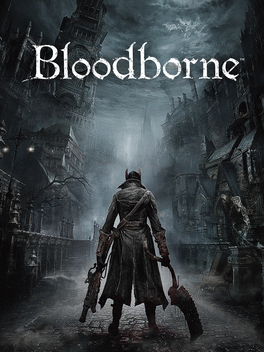
The analysis proceeds through close readings of three titles: Bloodborne, which the author contends uses a more radical experiment on player agency than other FromSoftware games to produce an Oedipal recognition of the player's complicity and a final relinquishment of control; What Remains of Edith Finch, which fuses gameplay mechanics with narrative to produce a felt sense of necessity and ineluctability; and The Stanley Parable, which dramatizes the determinism of gameplay and questions the meaning of freedom in modern life. Across these cases, the paper locates the tragic in the frustration of meaningful action rather than in the satisfaction that much ludic scholarship emphasizes.
A central claim is that games transform tragic agency from an object of contemplation into a first-person, affective experience, since players are both actors and spectators, exposed without an audience. The paper is a conceptual and interpretive work rather than an empirical study, drawing on a theoretical framework and a set of selected games rather than survey or sample data. Its scope is primarily philosophical and literary, presented at DiGRA 2025, and it concludes by suggesting that games may serve as a productive site for reflecting on real-world tragedy, whether historical or prospective.
DiGRA · 2026
DiGRA · 2026