1 free read left. Create a free account for unlimited reading + AI research.
Create free account
Nexon’s CEO on Leadership, Virtual Worlds, Innovation & Antifragility
Key insights
7 takeaways- 01Nexon achieved a 307% return over the last decade by shifting from a traditional AAA model to an antifragile business strategy that balances stable, long-running franchises with high-upside, asymmetric bets.
- 02The company’s 2019 strategic pivot focused on fewer, higher-quality products to minimize risk and insulate the business from market volatility and short-term quarterly pressures.
- 03Nexon treats virtual worlds as evolving theme parks rather than static products, prioritizing long-term community engagement and iterative feedback over aggressive, short-term monetization.
- 04Nexon’s technological strategy treats modern mobile devices as high-performance workstations, effectively expanding their total addressable market beyond the traditional PC gaming base.
- 05To maintain the agility of an independent studio, the company utilizes custom software tools that automate complex tasks like environment generation, allowing for faster development cycles.
- 06The company maintains a cautious, user-centric stance on Web3, requiring that any emerging technology integration must provide tangible value to the player experience rather than serving as a speculative business model.
- 07Sustainable growth is supported by radical transparency, ensuring that leadership messaging remains consistent across investors, employees, and the player base to foster long-term creative health.
Ask AI about this video
Transcript
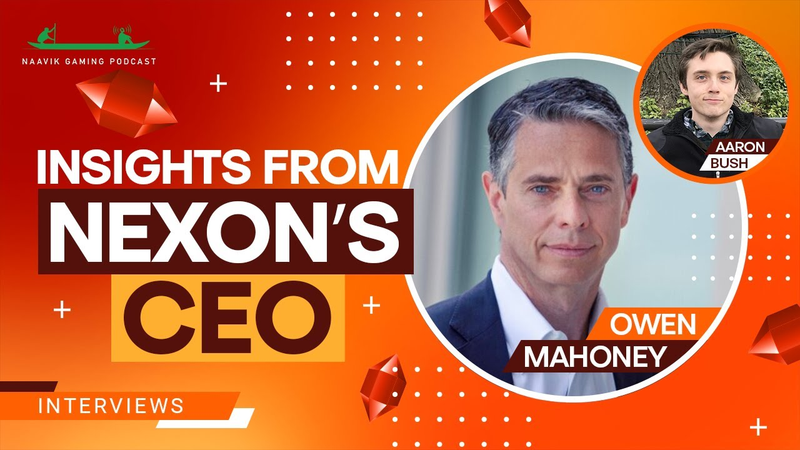
foreign [Music] gaming podcast where it is our mission to explore the business and future of video games we bring together the industry's brightest Builders investors and thinkers to keep a full sun current events dissect emerging Trends and games share Lessons Learned and have a great time this podcast is also part of novik's growing ecosystem which ranges from free and premium research to Consulting and advisory services for more information visit www.navic.com now let's jump into the episode hi everyone I'm your host Aaron Bush and I am really excited about today's episode my guest today is Owen Mahoney the CEO of Nexon now most of you are likely familiar with at least a couple of nexon's leading franchises like MapleStory or cart Rider or maybe dungeon and fighter but Nexon which was
founded in Korea and now is headquartered in Japan has long been at the Forefront of major movements like free to play and MMORPGs and as a result it's become one of our industry's largest and best performing companies for context and converted into Dollars last year Nexon generated approximately two and a half billion in sales and currently trades at a market cap of 17 billion also if you take a look at nexon's stock over the past 10 years which is about when Owen took over as CEO it's generated returns of 307 percent as of the time of recording which is more than double the market and over the past five years has outperformed most all of its Western peers so in short this is a business that we really should get to know better and I'm grateful that Owen is here to help us better understand and learn from how Nexon works so with that all said Owen welcome to the Pod thanks thanks
Aaron thanks for having us awesome so there's a a lot that we'll try to get to today how Nexon focuses how it thinks about live Ops scaling mobile how you're planning for the future but to start Owen I want to talk a little bit about you and to begin maybe could you walk us through your games industry journey and just share how you became the CEO of Nexon to kind of set the foundation for this discussion sure well it's a bit of a long story uh but I'll give you the short version uh the short version was I started in games when I was in high school I worked at this really dates me but I I worked at one of the first computer stores in the US and I sold Apple twos which you may or may not or your audience may or may not remember but it was the really the first mass PC and uh they hired me at this computer store in San Francisco to sell games because we were all on commission and the other sales people really wanted to sell higher end accounting machines and early
spreadsheet machines and things like that and so they hired me to sell games and so um you know in those days a game was 48k uh on it on a floppy disk that's how we sold them and I sold them in retail and I did that in high school and it ended up working pretty well so it put me through college and I went to UC Berkeley and ended up living in Japan and going to graduate school in Japan for a few years and uh and dropped out of graduate school in Japan and ended up working starting my career at Apple and in Japan and then uh uh long story short I I was at an early internet company called pointcast um and uh and met the founder of Nexon at that time he was just starting next on this would have been at the dawn of the internet so it was 95 or 96 or so and um and then I ended up at EA a few Electronic Arts a few years later in 2000 and EA was very focused on building Asia and building its online business
and I was the head of corporate development which meant really M A and strategy and so I reconnected with the founder of Nexon and a few other people and in town and it became very clear to me at that time that the future of games was going to be online and I was blown away by what the Korean game companies were doing at that time again this would have been late 2000 early 2001 and um you know I I attempted to buy Nexon several times while I was at EA and we couldn't put a deal together um you know the first couple times it was neither EA nor Exxon Nexon really saw the um the logic of it but by the last time right before I left in 2009 it was it was clear that you know EA at least really wanted to try to make that happen and so it was a ultimately I left EA and um and they invited me over to be their CFO at Nexon they were getting ready for an IPO they wanted to do an IPO and we're trying to figure out how to how to do it what
Market to do it um I had was the only person who had been in a large publicly held company uh everybody else was at an Exxon at the time were really found the executive team were all founders and or had been at the company since very early on and uh so I came into CFO led the IPO in 2011. um it was a very very big IPO um and uh and then a few years later became CEO in 2014. so that's the kind of lost story yeah bill that's good and now uh uh Nexon is a little too big of a pill for EA it's a swallow but that was really interesting to to hear the the history around that there so so obviously Nexon is a very global company with offices all over and I presume in different languages too and through our Communications I quickly caught on to the fact that your job takes you all over the world and um even even before recording you mentioned you're in Korea right now and
flying tonight um to to Japan so I'd love to just better understand what that is like how do you personally go about managing such a a big Global business like do you have magic jet lag remedies do you speak several languages how do you do it well I speak Japanese I learned Japanese when I was in college and and uh kind of spoken it you know in some degree of fluency often on my whole adult life um and uh uh in Japan and um Nexon is based in Tokyo we're headquartered in Tokyo now as you mentioned we were founded in Korea um sadly I don't I don't know Korean but I I'm learning Korean I've got a tutor now so um but I I guess I mean the context is the games industry is really a people business and and game developers are at their Core artists you know when they're when they're doing a good job I think the game developers are artists and
certainly most game developers started out loving games and and the Art of games and so they they they are artists in at their core and and so it's very much of a people business and you can't really do it remotely it's not like we've got like Google's business or you know a factory or something like that where like it just like the ad words business runs itself for example at Google it's it's you got to make games you gotta operate games and and so you got to be face to face with people and people have personalities and motivations and paranoids and concerns and and families and and all the things that happen and and it's not an automatic you know press a button and things happen sort of business so face to face is very I've always thought that face-to-face relationships is very important and we have you know the the center of gravity for development at Nexon is clearly Korea um it's also where the live operations capability was founded and built um so
we have enormous Talent base in Korea several thousand employees here um and we're building outside as well um our our corporate headquarters is Tokyo so I have a lot of reasons to be there as well we have a a publishing group there we have a new um newish team that we have funded and developed and and bought uh called Embark Studios which is in Stockholm so I'm in stock I'm in those three countries a lot plus the United States but I'm technically based in Tokyo I spent a whole lot of time in Korea and I'm in Stockholm frequently um relative to jet lag I you know like there's no there's no secret remedy I just other than get as much sleep as you can when you can get it don't drink try to stay healthy and eat good food that's about all you could do I admire admire your stamina afar and to be the Globetrotter that you are as a leader um and now that you have been a leading executive at Nexon for 13 years
um I'm curious how you have leveled up and managing such a large Global business like are there any key learnings or things that you've changed your mind on um over the years in terms of how you you personally have become more effective leading a company of this type you know uh you know I guess if the the some of the things that I've learned um go to what the challenges in the games industry are really all about and I I think you know I've said this publicly some people have sort of been critical of the comments but I think I continue to think they're very true I mean I think the dirty secret of the games industry is it largely is not very Innovative especially in in large scales um you know we we think of innovative tech companies like apple was at its Heyday or Google or you know my friends at Uber a few years ago were talking about making you know drone taxis to
take you to SFO from downtown in 20 minutes or 10 minutes or whatever that the amount was that that was that and of course everything that's going on in AI right now that's real innovation in the games industry you know largely we're still painting you know painting on Virtual leaves on Virtual trees in Photoshop and we're throwing thousands of bodies at this problem at this type of problem so and there's a reason for that and it's not because game companies don't want to be don't want to be um Innovative it's because it's really hard to be Innovative if you green light you know a triple A game you're you're putting 100 million dollars down for development alone and you're going to be in for what five or six years and you're going to be spending another 100 million dollars or thereabouts to um to market the game so you know if you fail in that you're going to drill a gigantic hole in your p l and um saying yes to that and is going to be is going to be a
hard thing for any CEO of any public company to do it's just really hard so as a result what does everybody try to do they try to protect their downside um and I used to think that before I was CEO that that um getting people to be in large companies were not Innovative for that reason that that basically CEOs were risk-averse and and I what I learned along the way is it's it's not just CEOs it's everybody in the organization in fact Innovation is just really hard and but of course we know that to grow you have to be Innovative I mean all Innovation or all growth comes from Innovation but what does innovation comes from come from it comes from um being willing to to to take on risk and taking on risk is about you know tempting failure and so by the transit of property you have to be willing to fail in order to go go forward and and to get growth ultimately otherwise you will slowly die and
so by that logic tree you know the question is okay how do you get people to be Innovative and I can lecture people all day long about like hey let's be more Innovative but if you're a developer you know and your product fails you might get laid off you might get fired and that's a daunting thing and so I think everybody very understandably is very afraid of failure but once you're afraid of failure in the entertainment or art business you're not going to make you know high quality product and as a result our industry has a lot of a lot of product that looks the same as it did before and 10 years ago I mean again I go all the way back to my 48k days and in apple twos there were no genres people would try crazy stuff you know a rescue a helicopter rescue simulator called shoplifter or a you know a nuclear power plant simulator called Three Mile Island there were these crazy different things that were in all sorts of different genres because the stakes were low and people were very dedicated it wasn't that they were more dedicated to creativity then it's just the stakes were a lot lower
so you know I think the thing that I've learned along the way is that we have to rethink how we do things in the industry and it's not just about motivation it's not just about hey let's be more creative let's be like you know some great Creator let's be like Akira Kurosawa of You Know video games no it's going to be something more fundamental about how we go about making video games and I've come to have a greater appreciation of that than I used to I think the other the other quick thing is I'd say is um you know the idea of failure and tempting failure and Innovation is perceived differently around the world you know I grew up in Silicon Valley I grew up in Menlo Park and in San Francisco and you know that was sort of 80s post hippie generation and who built Silicon Valley in those days and you know they were they were all good about trying something new and tempting failure and you know a lot of a lot of the most successful entrepreneurs I know you know they they got their funding from tier one Venture Capital firms
because because they had been through some failures before um in other parts of the world you know if you fail once you're you're sort of your your resume is Tainted and you and it's very very hard to come back based off the ecosystem that are in those countries and so the the view of failure is is very different in different parts of the world and of course the different parts of your career yeah that's a really interesting answer and it's interesting too because um Nexon in many ways too has been at the Forefront as I mentioned in the intro of some of the big changes in the industry like free to play or even MMORPGs earlier than that um and and this is kind of zooming down our outline a bit Owen but in um your 2021 shareholder letter you say and I quote over the past 25 years the initiatives that made us the most successful were the ones that were considered most weird when we originally tried them nobody was thinking about massively multiplayer online
role-playing games when we invented the category with the kingdom of the winds in 1996 the idea of giving games away for free and allowing people to buy virtual items with virtual cash it was also considered crazy when we first introduced the model um with quiz quiz in 2021 and you also have commented um you know elsewhere throughout your shareholder letters about um you know just kind of focusing on your principles of thinking long term sometimes even at the expense of short term Wall Street pressures I guess you could call it and building a portfolio that um also is anti-fragile and asymmetric and so it's interesting to hear you you talk about what you've learned about how organizations and how you as a leader internalize risk um where um you know you as a company have also just sort of been on the edge of of trying new things over the years and I know you have a philosophy of
um thinking about asymmetry and anti-fragility I'm curious how how do you um despite there maybe being some risk intolerance I guess you could say that makes itself known in most any big organization how do you Foster an environment that still leads itself to anti-fragility and asymmetric bets yeah so so there's kind of two answers to your question one is about attitude and um one is about your business model um but I guess I I guess the point that I was trying to make um in in that letter to shareholders and in a few other places was um you know we all love to talk about Innovation and we all really appreciate the people who innovate for us and have brought great new things into the world I mean everybody loves to talk about you know currently the discussions about AI
um you could talk about the iPhone uh or the Macintosh or you know I'm going through you know all those things that sort of have happened in the last 30 years or so and uh when you're when they're done we love them but when you're about to do them or when you're trying to do them you would not believe the forces arrayed against you to do anything new and different um and I mean they're they're really they come from all Corners they come from the people who are there to make them they come from the critics and the fans who who hate you know your implementation of something new if you get it wrong by a little bit they'll be vicious to you if you if you try something and it doesn't work out your investors largely hate it um before you've proven that you can make them a lot of money of course right like because investors always want their money to be returned to shareholders and
um and but it'll come from the accounting department or the HR department and and the reason is not that they're anti-innovation really it's because people don't like change and so you may come out with something new that requires a whole new way of accounting you know it may require a different type of person and you can't hire a person from you know some other department into this new position because they don't have the qualities that you want so you get it from all my point is you get it from all Corners every Force everything around you is against Innovation and so the attitude is you just have to be very honest with everybody about what Innovation and titles and it fundamentally Innovation and tiles change and humans largely hate change and unless it's shown to be like the coast is clear and you're safe um so it's really an attitudinal problem I think and and certainly every time I try to do something different or weird or we try to do just something different
or weird we all this stuff pops up again and largely the the common in our um our our shareholder letter was sort of paraphrasing her sort of quoting um uh one of our senior Executives here in Korea and he he was saying listen everything that we've ever been proud of has felt really geeky when we were doing it like geeky geeky like you're in high school and people are making fun of you for it and and um you know a new clothing or something like that but but it always turned out to be right when we really felt we were out over our skis or whatever your analogy is so that's about attitude the second thing is about um how you get a company to be able to position yourself so you can you can do that sort of innovation without everything being a giant roll that dice which is an existential threat like I could I could talk about how important it is to to innovate but you know like if you don't have some sort of dialogue or some sort of way of going about this you're going to get crushed by your investors and and the
sort of rule of public company CEOs is you get two quarters and if after if you biffed your numbers two quarters in a row your job is in serious danger probably won't survive a third quarter so the question is how do you structure this so you can do real innovation in a in the context of a large publicly held company and the way we've sort of thought about it is is what we wrote about in our q1 earnings Colin q400 February and you've talked about a little bit our shareholder letter but but our ideas like what's the kind of company we would want to invest in we'd want to have something that was an asymmetric opportunity um so by the way that's also the kind of company we would want to run meaning you'd have your downside you know from an investment perspective it's your downside is covered so you don't have to worry about whether you can keep the lights on or not but then also you've got some real upside opportunity and we've always tried to make sure that our existing base of virtual worlds um continues to last and grow for a very
long time so if you look at MapleStory dungeon fighter most people in the west don't understand this but I mean MapleStory we're just celebrating his 20th anniversary last weekend I mean this game continues to get bigger and bigger over the years it's an absolute monster around the world and it's a in in the games industry it's sort of unheard of that it would continue to grow for all these years when I was on our IPO Roadshow uh in 2011 the number one question I got in every meeting and you almost always it was the first question was congratulations on the growth of dungeon fighter maple story but is it going to go down forever starting next quarter or the quarter later or what have you and here we are all these years later you know and it's still growing and dungeon fighter is you know continues to be huge as well so these these Virtual Worlds will go up and down a little bit over time but then they but they generally are up into the right and then and then we're introducing several new worlds um and if one of those does well we're going to be in you know a solid
double-digit grower and if we're more than one goes well we'll be a whole different company we'll have asymmetric websites so I guess I'd summarize the sort of long answer is one is additudinal and then the other is structural like how do you structure a place that allows you to do that sort of innovation as a result of point of the point about our you know covering our downside things like hey when we launch at Thanksgiving or not uh start to become a whole lot less important and timelines of launches become less important that's very important for uh you know investors and sadly most of the analysts who cover the games industry are very concerned about this you know time of of launches which puts the game company in a very tough situation when they're trying to build games um we'll get back to some of the uh future stuff and kind of some of the new bets that Nexon is taking in a bit um but I guess to take a even another step back it's not in many shareholder letters or you don't hear
many CEOs really talk about anti-fragility just as a term which for our for our audience I mean that basically means that like a company that benefits from chaos or disorder that benefits from change in some way and I actually have the book right here you can see it on on my screen um anti-frame and the background it is a really good book and a lot of the the core premise of kind of the idea of anti-fragile is that in order to benefit from change uh or chaos or whatever whatever's going on um there it's sort of a barbell approach where on one end of the barbell is the more or call it like venture-like bets that you are making where not everything is going to work but um if you hit once it's going to be pretty groundbreaking and cause like tremendous positive change for your organization or whatever it is you're building but the other side of the barbell is the more resilient side which is basically in order to benefit from change you still
have to survive the change and survive the time that it takes to to make change possible and and this this Regard in 2019 Nexon conducted a pretty major reorg in which the company narrowed its focus on as you put it fewer bigger and better products and so I'm curious um now now that we're four years later what has been the results of that refocus and more tactically um how is a more narrowed Focus today impacting how you plan out those future opportunities sure I mean there's a couple different concepts you're talking about we can dive into any one of them I guess the the short answer to what you're saying is the idea with so the simplest way to think about anti-fragility in our business and why we saw an analogy there was look we're in the micro transactions business not in the macro transactions business we're not demanding on our on our on our customers you know we've made every
mistake in free to play that there is to be made since the first free to play game was an Exon game and so we've been doing it longer than anybody else by definition and and we've certainly made every mistake but one of the mistakes we realized we don't want to make is to be demanding on our customers in terms of monetization and I think everybody who tries this goes through sort of a generation of asking okay can I monetize more for my existing invest you know for my existing player base we've learned that that's the absolute worst thing to do um so we think about it as microtransactions right which is really you know uh you know just we're not at it's not like we run a ski uh Chalet or a high-end hotel or where Tiffany's business those are all good businesses but they tend to be tougher businesses during times of Economic downturn and you know when we look out in the world we see a whole lot of reasons to be certainly optimistic but we see a whole lot of other reasons to be pessimistic about what's going on
in the global economy we don't want to have our business be affected too much by that as a matter of fact we'd rather have a business where we get stronger when things go bad around the world and we think that the business that we're in you know sort of sets us up well to do that as a matter of fact Nexon has always done well in times of severe economic dislocation going all the way back to the you know huge this is the long-term Capital Management crisis that affected Asia so bad in 1998 you know in the in the in the early early days of Nexon but every recession we've done you know quite well um and I think it goes back to the fact that you know we're not asking for sixty dollars up front we're not asking for you know a major investment up front to play our to play our experiences as a matter of fact only 10 of our players ever pay us anything most go happily through for years without paying us any money at all um you could go a level deeper and say okay what's a whale right like there's a topic that happens in free to play in the West on mobile a lot well as a whale a person who
spends thousands of dollars a month or as a whale a person who's really dedicated and has a core group of really dedicated players that they play with we would respectfully submit it's the latter so we should Orient our business around that ladder one if you're taking a long-term approach you're gonna you're gonna see the logic of that very very quickly but if you're under the gun to make your number for the quarter that's not that's that logic is going to pass right over your head um so going back to your question about the reorganization in 2019 you know we had a lot of different projects we were doing a lot in casual mobile we just realized we weren't good at that stuff we were good at one thing and that was making a uh you know a large virtual world with lots and lots of players last and grow forever and we wanted to be good at that one thing and make sure that we didn't defuse our attention we had lots of money in the bank we had lots of cash flow but we just really realized that we were probably not doing as good of a job as we could at Super serving the types of
people who show up and live in a virtual world where we weren't doing well by them and therefore that business you know we were we were probably under investing in them and under investing in and diffusing our attention so we cut off a whole bunch of projects I mean over a lot of dead you know a lot of objections a lot of people were very unhappy with what we're doing but we didn't do any layoffs and some people left because they didn't believe in the vision but um it worked out well and allowed us to be a lot more focused on what we think we're really good at it it really did seem to work out well for you and still keeps going and obviously to make Virtual Worlds um perform well liveops is very core tenet um to to spur on engagement over long periods of time and Nexon has among the best live Ops chops in the industry given the team has been cultivating franchises like MapleStory and cartrider for for 20 odd years and everyone listening um to this episode knows the
importance of great live Ops but can you maybe take us into the weeds of how Nexon operationalizes high quality and super responsive uh live Ops efforts across so many different Studios and just different types of virtual worlds are there any common principles or patterns to what makes Nexon effective there sure so I I get this question all the time from investors because they you know because it's new even to investors who have been investing in games in a while they they sort of it's a different type of business I'm going to be a little vague because it's a little competitive um so you know it's it's sort of hard one information um but but I I think I can be useful to to people who are listening in terms of sort of core principles and and what I'd say is first of all it's a thousand little things so we could spend 10 hours and we wouldn't even start to scratch the surface on what makes it good but I
think the the the best anal you know we sometimes we use the term virtual worlds for sometimes when we're really trying to indicate how our business works a lot of people mistake the games business for the movie business they sort of use this analogy of well games are like movies because that's the analogy we know in the entertainment business in this new form of entertainment really it's virtual worlds are more like virtual theme parks in a way so if if you go to Disneyland there's a thousand things that are going on in your immediate area that you don't even notice that they're doing really really well like how often they come by and scrape the chewed gum off of the ground and how often Dopey comes out and says hi you know it's not too much not too little and how and their placement of the restaurants next to the rides and what restaurants there are they've optimized this for 60 years like to make that work really really well so it's not one big thing but it certainly is an attitude of getting a lot of small details right and in a virtual world it's a live Community
people come back you know for tens of hours per week and they notice a lot of little things so there's going to be an analogous thousand things that we do in any virtual world at any one time and the our learnings have come not from any premeditated strategy it's not a linear process it's very much an iterative process of oh that didn't work okay let's try something different uh and the good news with game fans or game players especially in live online games they're very vocal about what they like and they don't like I mean they'll like especially in a place like Korea they will get very very vocal that they don't like something and they'll tell you immediately so you get that feedback and the point is you got to incorporate that feedback um but I say attitude wise I'd go back to saying you have to operate it for the long term in other words if you intend to be here 10 years from now talking about how great your your virtual world is going you have to act like someone who cares about things 10 years from now and again humans are not very good at thinking that far in the future um and
and then you have to go back to organizing your business in in a way that's structured so that you can do that um you know I I want to be here five years from now or 10 years from now telling you how great MapleStory is doing and how it's so much bigger than it was when we last talked in 2023 and if I'm going to do that the last thing I should ever do is try to you know monetize hard or push the monetization and um of a game that's happening right now what we should do instead is just I have the job of communicating with my shareholders and telling them that MapleStory is down this quarter but here's what we're doing to fix it and make it better and that's my job and that's where I come in the development the live development team has the job of building up things over time so a lot of times what they'll do is they'll really step back on monetization and they'll say okay and they'll communicate with the community and they'll say here's what here's what we heard from you on
our most recent update here's what we're changing here's what we're going to try that's new and that that virtual world might go down for a while and it'll make all the investors nervous but then it'll you know our experiences it'll be it'll come back again at a later date and be bigger than ever so there's a lot of attitude that goes in there as well and even if I want frankly even if I wanted to push over push monetization you know I'd probably get a palace Riot internally because we've learned the hard way how how bad an approach that is um and you've seen it certainly happen with other companies right for sure um one other topic that I wanted to hit on before we start talking about the future is mobile and next song naturally didn't begin with mobile but last year nearly a third of Revenue came from mobile and you have also seen strong growth even as mobile as a whole has slowed across the industry and many other leading Publishers especially in the west are having to to reorg or just
flat out rethink their mobile strategies and so um oh and I'm curious to get your perspective on why is Nexon succeeding here in Mobile when many other leading Publishers aren't what are you doing differently strategically operationally whatever to ensure the type of success that you're seeing sure well I I'd say first you have to think about what mobile is and um I'd say there's two mobiles there's let's call it traditional mobile that's the mobile of sort of simpler games designed for short simple duration gameplay that would go all the way down into the Casual world and even in the hyper casual World those are all what people think of when they say mobile um and then let's make another category and let's call it mobile is a workstation I mean again I'm old enough to remember even 10 years ago where what is currently sitting in my pocket in the
form of an iPhone 13 would have been called a high high-end workstation I probably couldn't even if you know buy something that's as powerful as what currently sits in my pocket I mean the GPU on a mobile device now we did some research on this it's way better than an Xbox One and it's way way better than a Nintendo switch both of which are considered you know console and we're workstations when they came out I mean maybe not the Nintendo switch as much but but the point is these are very powerful machines and it's both at the GPU level and for us more importantly at the networking level I mean the infrastructure that sits around all of us now in both the networking chips are on the phone themselves and then also you know all around Wi-Fi and so on there solo latency and so high bandwidth these are these are the highest end things you couldn't even buy them before so yeah okay well what's that really mean what that means is you know uh where we built our business was on PC and there's roughly 300 to 400 million game playable PCS
that's in the world in the wild today that are active uh that's a that's a PC with a GPU attached to it okay well how many how many iPhone 12s or 11s or higher are there and equivalent Android devices well there's three to four billion at this point and so that's a the math on that is really simple it's a tam expansion of 10x okay so you've got three to four billion workstations sitting in people's pockets What type of game should you develop for them well the good news for a company like us is we make deep immersive Virtual Worlds they require some graphics Fidelity but more importantly they require a lot of network Fidelity low latency high bandwidth communication that is massive I mean this is this changes everything so as excited as some people are about BR or about this other stuff it's like nothing compared to the total sea change that's going on in computing power at the edge
not to mention what's going on at the core as well I mean um streaming media and all that sort of stuff the point is uh great gaming devices are now everywhere every flat screen has a great gaming device basically attached to it even my new Samsung TV has you know some pretty impressive compute power so if you skate to where the puck is going um you say okay well and you look at what Nexon is good at and not good at well we're clearly not good at what what I was calling traditional mobile there are some companies that are better than that but we we looked at that we experimented a lot thank goodness we didn't spend too much money on it and the reason we didn't spend too much money on is the more we experimented the more we realized we didn't really like the economics of that business very much and and and as important or more important we didn't really know how to make a great experience that would keep people coming back for a long time so we go but the good news is there's now a tam expansion at 10x so let's think about where this goes well you
know PC Mobile it's not in a few years I mean already it kind of doesn't matter right there's some differences of interfaces and there are some differences in gpus for the very very high end but other than that there's there's no difference between a PC mobile device now so let's just pretend that there is that there isn't a difference because in reality there isn't and let's do our development that way and so we've been slowly shifting in this other area so the Casual mobiles business we've we're not spending any time on now the traditional mobile business we're spending on building our same types of games but with the lucky happenstance that Moore's law has created a 10x Tam expansion for us a total addressable Market expansion for us and so I guess uh related just to poke into that a little bit um how has Nexon built its its competency and what it's done well at in Mobile because if you look at a bunch of at least companies in the west the ones that I I tend to keep the best tabs on you see a lot of Acquisitions that many of them haven't worked out as planned um you've seen a bunch of co-development
um happen and we're starting to see the pendulum swing back in the other direction now and so there's been a like a pretty broad struggle in terms of just like where to even begin in terms of building out the competency that you're going to dedicate to um for for the long term how like what is nexon's strategy been in terms of just like what type of teams it relies on how it got those teams in the first place um what's the the story there sure so um I think there's actually two parts to your questions what do we spend our time to build out our competence on competency on and where don't we spend our time so you know early on when we were in very much the learning stages of mobile we it dawned on us that the the companies that were really good at mobile were very good at this you know and managing um their install costs meaning that the the metric that they spent a lot of time thinking about and obsessing about rightly was ECPI versus LTV so effective
cost per install versus your expected lifetime value of that customer so if you spend I'm going to make these numbers up 10 bucks to an acquire a customer you want to get 12 bucks out of the lifetime of them well as you can imagine from a uh uh you know as you can imagine first of all the tolerances were very tight it literally was something like 10 versus 12 or one versus one dollar and 20 cents or you know in some cases one dollar versus a dollar and five cents you know these were very tight and tolerances and that's before you pay for any of your overhead or administrative costs and so on so we realized that a those tolerances were very tight which are very different from us the second thing we realized was the expectations on lifetime value are very wonky meaning there's all sorts of ways that you can fudge lifetime value and they end up not being true later as you go through your experience you know Bill Gurley the the legendary investor at
Benchmark Capital has written very eloquently on this topic going way back several years and he just he's really really taken the industry to task across not just games but other areas as well about this LTV calculation and I think it was very very insightful to do so especially when he did it um we don't want to be in that business we never actually we looked at it and we're like boy that's a rough business other people can do that well that's not our core competency and sometimes you have to decide what you're good at and what you're not good at um and uh so we're not spending much time thinking about that we didn't do any or we did a little bit but we we sort of got out of them M A around companies that that live in that world what we have found um is illustrative by um a game we put out we put out our original MMORPG Kingdom of the Winds the first MMO or PG in the world long before World of Warcraft long before um you know anything was Kingdom of the
winds in Korea in the mid 90s it was 96 I think is when it came out and we put out a mobile version of that and it was a huge hit because everybody in Korea has you know played Kingdom Millions at one time or another and a new generation was learning about it and it was on their mobile devices we put it on mobile and we found out the retention numbers are very high it played just like the PC game um and then we put out uh dungeon fighter on mobile mobile dungeon firing free and it also was a big hit but we built it instead of having a lot of the things that you typically would see on a mobile RPG like Auto Battle For example which is very popular in Korea we didn't put in our battle we it plays like a PC game and we found that the economics of it are very much like a PC game well that's great because again there's 10 times as many mobile devices out in the wild and there are PCS so boy we could we could really um we could have a a business that looks like our PC business but there's 10 times as many people potentially playing of course we
have to play the platform tax but that's overwhelmed by the top of the funnel right which is the number of players so you know that's great and but here's what we found and we found when we launched a cartwriter on multiple platforms recently that where you need to spend your time to your question is on the interface right because if you're you don't have the tactile feedback of a controller or PC Mouse I personally am a PC and mouse person my my two teenage sons have no problems with a um with glass with with you know no tactile feedback on an iPhone on their mom's hand-me-down iPhone and but you got to get the you're gonna have to get the interface really right and that takes a lot of experimentation there are no real best practices that exist right now there it takes a lot of work on interface so those are the types of things that we're doing again assume that a mobile device is a PC but it's just going to have a different interface so you have to focus on user experience in user and interface issues gotcha that's really interesting but
let's go ahead and shift gears to our our final um area of conversation just the the future of Nexon um and so previously I talked about the quote that you put in the 2021 shareholder letter where you said that the initiatives that made us most successful were the ones that were considered most weird when we originally tried them so I have to ask um what are the new weird ideas Nexon is building today that you think could make the company even more successful in the future the other side of the barbell that we were talking about previously well they're weird in a couple ways because they're weird in the sense that so we are working on stuff that that the people largely aren't thinking about but they may seem they may come across as incredibly mundane but I'll give you some examples so for example at our Sweden Studio embark um this is a lot of the team that were the founders of Embark including um the CEO or the founder Patrick soderlin came from they they were the team at dice that
built Battlefield and Patrick ended up running the studio until 2018 at Electronic Arts all the studios at EA very successfully but you know they they had sort of built up this set of things that they had they had built the frostbite engine when they were Dyson they realized that the way that they were making games largely in the industry is is completely brain dead and that we need to just stop take a breather and rethink some of what we're doing and you can apply a little bit of software and then you could get a 10 or a 20 or a 30X return on that software investment just by changing the tools that we use to build something so I'll give you an example of something that seems almost embarrassingly low-tech so if you look at the trailer for The Game Arc Raiders which is the second game from Embark um you'll see a big sort of desert with some mountains in the background and
some rivers and of Lake down below and it's of course a because it's in the future it's a desolate hellscape and you know people are trying to battle against the evil robots that want to take on resources so um how do we build that well normally in the game's business what you do is you have a map designer and the map designer is very highly qualified very highly paid it has a team of other people with them sometimes that team is in another country because you want to save costs because artists are so expensive and if you and I were to draw a map from one angle I don't know if you have any artistic talent I definitely don't but I could probably draw a map and it would look cool from one angle but if you turn that map 90 degrees it would look completely unnatural so you have map designers you know level designers who make things look natural well the Embark team was like why do we do that when we can just get actually what originally started out as natural okay well how do we get what's really natural well it turns out laser scan data of the
earth is super cheap to buy and you can buy it spend a few thousand dollars and you can just so what you see there is tariff and we bring it in then we bring it into some software tools so we can modify it for gameplay maybe we like the river to be a little bit bigger then you can take instead of painting on a river you can actually simulate water flowing you can simulate the participation precipitation at a high altitude you can simulate air and so when you paint with trees the Shrubbery that you're getting at sea level is going to be different than you are at two or three thousand feet up so you should be able to just paint with trees that that look natural without having like to plant trees specifically all these things are just simple software problems and if you spend a little time on the software to get this right you can bring these in into your workflow that's already existing with unreal and other tools and blender and so on and and you've saved yourself if not you know months of work literally months
of work you know millions of dollars and and so you know our investors love to hear about this because they hear about cost savings and they hear about Time Savings and time to Market those sorts of things but that's not the real estate the real saving is it gets the game developers closer to the game process and what do the game developers do well they iterate that's at a core what game development is all about it's not a linear process this whole idea that the games industry is a linear process like a movie making we've got pre-production and production and post-production those are all movie metaphors and what games development at least games that we really love that come out of nowhere that do really well they're all about iteration and so what you want to do is you want to get the game developer much closer to the to the process of trying stuff out seeing if it works throwing out what doesn't work you know killing your babies and going on is something new and the more you do that the better and the more original the game you're gonna get and so
what we found as we looked around for great tools that would help us is actually there's been precious little innovation in this area so we just had to build a bunch of tools and to do it ourselves and the team spent about nine months and you know no one in their right mind would spend nine months at the beginning before you even really start game development just building tools that are not your own game engine they're just plug-ins they're just little things that work here and there but the good news is you get you know 10 Again 10 20 30 x your return on the game development time I'm using an example here of you know building a world but there's a bunch of mundane examples I could give you there's like 100 of these things that are just sitting around waiting for a good software developer to do so you set your software developer next to the game developer and say the game developer complains that something doesn't work well the software development hacks something up that works well for them and um you know sadly I think our industry isn't thinking enough about this but if we did we'd all be a lot closer to the development process and we'd have
probably better games in our industry I think about I keep going back to Minecraft as the ultimate example of a blockbuster game made by one guy and I played so much of it especially with my son when he was growing up but I I played it by myself too because I love the game so much why because Notch was really close to the development process and he he knew What mattered to him as a gamer and he didn't have a team of a thousand people he had to manage he had a very he had himself and maybe a sound person and you know uh and that's about it uh Tynan Sylvester who made rimworld is very much like this himself you know he's rimworld is a fabulous game that he's built up over the years and he's just really close and he iterates like crazy and he has an idea and he hacks it up and tries it out so I think large virtual world development in an online World by building some tools can help a lot so that's an example of what we're doing cool that's really interesting answer my team wanted me to ask you about web3 and
I know that you know even though web3 gaming or you know pick your phrase of what you want to call it um is I think still pretty highly restricted in your largest market by Revenue South Korea but it still seems like Nexon wants to be involved um I know you've done minority investments into a bunch of companies but also you're investing into projects like maple story Universe which inject nfts into that virtual world ecosystem and so I'm curious um on the spectrum of web 3 functionality being just an experiment to like thinking that it's a core pillar of the future of Virtual Worlds how important in your mind will embedding web3 functionality be and to nexons Virtual Worlds going forward and I guess just kind of as a related question like are there any any pieces of like what this technology unlocks that is
particularly interesting to the team sure so it's the first question of how important is it to our future I think they jury is out is the short answer um but I I would ask a slightly different or we've asked ourselves a slightly different question the question isn't hey here's what's our web 3 strategy or you know do we need to have a web 3 strategy I think that's a commonly asked question it's sort of like the metaverse and what's your VR strategy and that sort of stuff that's not the question the question for us is okay there's this new technology out does it help us make a really cool user experience and if the answer is yes we should explore it or potentially yes we should explore it really deeply if the answer is no then we should ignore and move on and we ignored and moved on from VR you know I used to get asked what our VR strategy I'd say you know the hype and that like we have none it sucks um there's no people who use VR and my pra agent really hated that answer but
they don't they don't work for us anymore um uh but um you know the metaverse uh Esports you know those are those are there are hype Cycles around that and they typically have to do a lot to do with the Venture Capital hype cycle and and the reason and there are good reasons for that but we didn't want to spend any money on this but when we looked at what web3 was it wasn't like hey let's make an nft version of MapleStory or let's make something like axi Infinity I I think Gamers have been are very justified in having a very high degree of skepticism about game companies you know embracing nfts or um or web 3 into games they they look rightly I think sniffed out that that a lot of folks saw this as monetization strategory a way to essentially shake down their customers for more money and you know I say that I I I I really I really have a lot of
Sympathy for the people who are very skeptical very early on and it turned out that a lot of that ended up being true I think from our perspective when we step back and we say okay what business are we in are we in the offline games business no are we in the Casual games business no those are not things that we do we're in you know we make MMORPGs and online first-person shooters and things like that but where we think of ourselves is you live in a virtual world that's why we call it a virtual world rather than a game usually internally and what's important in your virtual world well your social relationships are very important in your virtual world your the politics that go on the adventures you go on all those are important components and of course the economy is a really important component so when you look out in the future and say okay well I'm going to live a larger and larger portion of my you know my entertainment time in a simulated reality delivered from the cloud well the economics are really important and I want to have some ability to live to to maybe exchange
with other Virtual Worlds and um and I want to have some way where I know that the the in-game or the in World economy is tangible to me well what unlocks that you know a fiat currency makes that harder um potentially and a a currency that's not necessarily controlled by us makes that a little bit easier or it can make that a lot easier actually and so we're not big subscribers to the idea of well reason why you have to have web 3 is because you must as a customer owned your things and people don't trust game companies and you know that sort of thing we're not really taking it from that angle but we are saying for example you know that that what I've built up in a world should be more fungible should be more tangible to me just like the social relationships should be tangible to me and so and the one way to do that is with something that is not necessarily controlled directly by us or
so completely by us and so that's one angle in which we take that and so MapleStory universes are is sort of our offshoot from core maple story in which we experiment with that and we try out some of those ideas um and you know as an example of let's say we introduce a new virtual world going back to another now Sim to lab concept that you may have read about the lindia fact right like you know that MapleStory is not going to go away tomorrow because it's been around for so long it's been around for 20 years if you launch a new virtual world you know uh Gamers sometimes say well you know we hope it fast but if it doesn't take off so therefore you have a problem investing your time in money we want to make that easier for people to know that that the stuff the stuff that they bought in one virtual world may be applicable to another but I'd summarize all that and say look none of this works not a bit of this works unless the user experience is better
than it was before before Nexon makes a dime of money in other words if we Embrace a new technology it has to be completely apparent to a player why this improves their life in gameplay and until we have crossed that hurdle there is no business to be had so that's sort of the attitude we've taken with it gotcha well that is a a seemingly wise and surprisingly refreshing take given the all the the craziness uh that people you know talk about with regarding what web3 is and could be and how polarizing it's become um so so thanks for um sharing your thoughts on that we do need to to start um nearing towards wrapping up one question that I did um wants to ask you and we can we can start to to hit on these a bit faster is um is there anything that Western video game industry onlookers don't see right now or or maybe just under appreciate
um regarding Trends in the east in Asia that could go Global and are interesting well I think there's been the short answer is I think there's been a lot of um folks who have spent especially recently have spent a lot of time studying what's been going on in Asia so I and I think that's really healthy and I think it should go both ways so you know whereas five years ago I might have had a very different answer I think you know there's some great folks out there who have been very thoughtful when I think about the conversations I've had with you know valve or you know um in sampela now at EA I've previously you know uh respawn you know uh the League of Legends team early on Market Brandon were very very thoughtful very early on um about what was going on in Asia and and asked really good questions I think that's very very healthy okay great and um maybe lastly outside of Nexon itself
what are you most excited about and the broader games industry uh like a game or a trend anything maybe more on the the business side but a game is is cool too well maybe I'm completely myopic at the most exciting thing in the games industry right now of course I think is Nexon so sorry for that Glitter uh all right now you know what I will say is um I I'd say this sort of two uh answers to your questions I am hopeful first of all that um the that um we can we in other companies can make tools that unlock creativity a lot better than we currently are I mean I think we've had huge strides but again I come from this like apple II
experience and I used to hack up little little gamelets when I was a kid you know in high school messing around on in basic and 6502 assembler language and it was very tangible to me right like my game sucked but they were but they were fun for me and fun for my friends and and this idea that you could build something and then share it with people I think is enormously powerful and I don't think as an industry we're there yet I think the tools are still very much too hard but when I look at adjacent areas like Tick Tock or you know Instagram putting aside all the you know all the sort of the politics of tick tock I mean it's amazing the creativity that that has Unleashed and linear media is in a lot of ways a lot more um sort of simple than games which have a lot of interactivity and if then statements and stuff like that that's inherently harder to do but I'm hopeful that we and others can enable that because the creativity outside the games
industry is you know on average going to be a whole lot better than within the games industry there's a variety of reasons for that one is you've got a much bigger pool of people the other is outside the games industry nobody's worried about getting fired for the creation that they make they'll just like move on to the next thing and I'm just blown away by some of the stuff that I see on Twitch and how clever people are when they're playing Grand Theft Auto for example or how clever stuff that I see on Tick Tock is sometimes not that I I try to limit my my my assumption of things like that that'd be one area that I'm really excited about and I think we've just I mean it's like the top of the first Inning on stuff like that second thing I'd say is I I'm hopeful that our industry can make a change I I I think what we're learning is the world is getting much more organic and interactive and we've tried to take this approach you know you've referenced a few that
essentially what you tell your investors and your customers and your employees they have to become absolutely the same thing in other words when we do Town Hall meetings at Nexon and I talk to employees I'll say look here's what I told investors here's what they're concerned about this is what's up that can be very hard to do in the context of a large public company you know because like and and I think the games industry has sort of gotten itself in trouble from time to time not always but you know from time to time it'll say like hey look here's our monetization strategy on x and then Gamers rightly get a hold of that and say wait a minute I'm your monetization strategy what's up with that that's really stupid and I don't like that and you forget it's easy to forget that the customer is the boss truly and they they want to be treated with respect and they want value for money and I think what we've really endeavored to do and I think some other companies have done a really good job with this as well is just be and there's certainly some very very good companies outside the games industry that have had a very open dialogue with our employees
their customers and their investors all of whom can be very vicious in their own way but they have to but they have to be leveled with and that is the job that's what you get paid for as a management team so I I see sort of a growing Trend in that area and I'm very hopeful that that develops out in a much bigger way awesome um well we should probably wrap up here um Owen this has been a lot of fun I've really enjoyed learning from you and your your perspective running one of the most important and companies in the industry um so it was it was a pleasure to get to know you and and learn what you think about all these topics so uh thank you again for thank you and on if you enjoyed today's episode whether on YouTube or your favorite podcast app make sure to like subscribe comment or give a five star review and if you want to reach out or provide feedback shoot us a note at podcast navic dot Co or find us on Twitter and Linkedin plus if
you want to learn more about what novik has to offer make sure to check out our website www.navic.com there you can sign up for the number one games industry newsletter navic digest or contact us to learn about our wide-ranging Consulting and advisory Services again that is www.navic.com thanks for listening and we'll catch you in the next episode
Summary
Nexon’s operational philosophy centers on the cultivation of enduring virtual worlds, a strategy that has yielded a 307% return over the past decade. The core thesis posits that the gaming industry’s traditional AAA development model is inherently flawed due to excessive risk aversion, which stifles the experimentation necessary for true innovation. By shifting toward an antifragile business model, the company balances the stability of long-running franchises like MapleStory and Dungeon & Fighter with high-upside, asymmetric bets. This barbell approach, refined by a 2019 strategic pivot to focus on fewer, higher-quality products, allows for resilience against market volatility and short-term quarterly pressures.
The company treats virtual worlds as evolving theme parks rather than static products, prioritizing long-term community engagement and iterative feedback over aggressive, short-term monetization. This commitment to live operations is supported by a technological strategy that treats modern mobile devices as high-performance workstations, effectively expanding the total addressable market beyond traditional PC gaming. To maintain creative agility, internal development is bolstered by custom software tools that automate complex tasks, such as environment generation, allowing teams to iterate with the speed and proximity typically associated with independent studios.
Looking toward the future, the industry is moving toward the democratization of game creation, mirroring the accessibility of content platforms like TikTok. While exploring emerging technologies like Web3, the company maintains a cautious, user-centric stance, insisting that any integration must provide tangible value to the player experience rather than serving as a speculative business model. Ultimately, sustainable growth requires radical transparency, ensuring that leadership messaging remains consistent across investors, employees, and the player base to foster accountability and long-term creative health.







Comments