1 free read left. Create a free account for unlimited reading + AI research.
Create free account
Messaging games and the art of socialising
Key insights
6 takeaways- 01Messaging platforms provide massive scale with over a billion monthly active users, offering high convenience and viral discovery due to their web-based, no-install nature.
- 02Messaging games must be designed as 'social-first' experiences, where the core gameplay loop is fundamentally dependent on user interaction rather than treating social features as optional add-ons.
- 03Social design is categorized into 'soft social' models like Everwing, which allow solo play with optional competition, and 'hard social' models like The Test, which require active pairing to function.
- 04To counter lower day-one retention rates compared to native mobile apps, successful titles leverage social loops—such as notifications and group interactions—to drive recurring engagement.
- 05Games reaching 10 million monthly active users typically prioritize rewarded video ads over in-app purchases to better monetize a broader, more casual audience.
- 06Success in the messaging ecosystem is measured by group-level retention and closed-loop activated pairs rather than traditional metrics like individual session length.
Ask AI about this video
Transcript
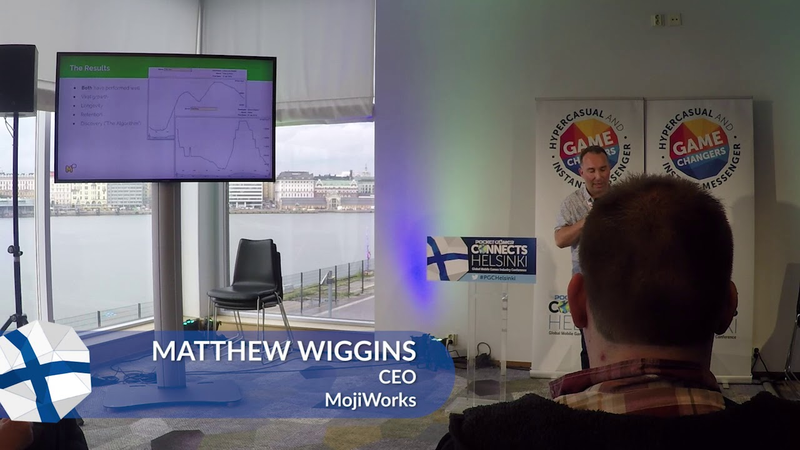
[Music] hello so yeah I'm a fumigant on the CEO moji works originally I didn't have a title for this presentation but when I was invited to come and talk about this and they put this placeholder title in I spent about half a day trying to think of something that would be more interesting and in the end I thought actually this kind of gets now exactly why we're involved with messaging I'm so I'm gonna talk you through a little bit about our backgrounds and how that pertains to why we think that social is the core of the core of what messaging is about talk you to a couple of it case studies not of our own games actually for a couple of a couple of games that done by other companies but I think you're gonna find pretty interesting and I'll make sure we release in time at the end for any questions you might have I'll also be around this afternoon you feel free to ask me anything about social design for this stuff but also any numbers or anything so I'm quite happy to share ok so a little bit about
me first of all so I've been in the energy for a really long time started back at Lionhead which was a fairly large UK developer that came out bullfrog sort of working on things like black and white affable and those sorts of games for those you know for years 100 people that's type of stuff and then back in 2007 went to work on Second Life because I was interested in in multiplayer and social and that was at the time when it was a toss-up between Second Life or Facebook about what would be the major social media platform we're still waiting to see how that turns out then early on on the app store started another company completely focused on mobile we partnered with ng moko had some early success on the app store in the US and they sold that to Zynga ran Zynga UK and then did the IPO so that sort of thing the reason I referenced this stuff is because each one of these has been really about a big platform change that was happening to the game two at a time back at Lionhead that was kind of the tail end of PC and PlayStation 2 so that
was bringing in like a whole new audience to game someone there before we Second Life who's about the rise of social obviously with Wonderland and with dinga that was about the sort of the platforms and mobile and I think the similar sort of thing is happening now around messaging Mogi works so we were founded in November 2016 so we're not that old again we've based over any okay you can't Guildford we've had just over two and a half million in VC funding from a few good theses including lifeline here in Helsinki the reason why they've invested in us is because we have a relatively unique view on both the scale of messaging and what its gonna take to you know hopefully be the superset of messaging which is what we're trying to do the company is structures in a relatively unusual way as well we have game teams we also have an insights team and we have a shared technology team so the game and also I should say that all
the people in the company are actually involved with with multiple teams so as well as doing development within the source mall cross-discipline teams the insights team is one of our core things which is a combination of marketing data science user testing and other kinds of research and their moji tech is the group that's building up sort of an internally shared technology platform on top of open source html5 spec we started an iMessage because really the whole light idea in Genesis the company came about because of my message on iOS 10 and Apple introducing a store swear at that moment we thought well this could be the next big platform shift and platform shifts are a really good time for startups and as probably all of you know mature parts of the industry are generally not a good time for staff certainly a good place for startups so we felt that there was maybe something really interesting happening around messaging kicking off with with iMessage in the West but obviously really coming off the back of WeChat in the east and so the question was why would we want to develop
something on messaging over and above any of the obvious business reasons and really that's not going to talk about we currently have four games in various launch stages its stages on instant games as well as the kind of legacy stuff that we have on iMessage I think we've still got one that's or top three games or my message but we're really not focused on native we've focused on html5 and also that means instant games in the other as time goes on so our mission is to make the experience to define messages against platform and so the question is what are those and I think it's maybe slight in contrast to the name of this track just want to be clear that messaging doesn't mean hyper casual and hyper casual doesn't mean messaging there's absolutely no reason why you can't have hyper casual games on a messaging platform but they're nice actually the same thing but there's those planets alone from both in terms of sort cross-pollination so when people think about messaging I think they tend to start thinking about it's only from a business point of view in this sort of order first of all they think about the
market size so the fact you've got you know 1.3 billion on monthly access on Facebook you've got a similar number on whatsapp WeChat has a billion users all of those numbers sound great and so people think what an awesome platform this is going to be they also then think about discovery cuz people are terrified of the fact there's a couple of million games on the App Store and they're looking for ways that they can get their games discovers and they like the sound of there being no install because it's a web-based and it should be basically instant and all of those all those things are really good reasons why from a business point of view you'd be interested in messaging but from a players point of view they don't care about any of those things so I don't think they particularly even care about there being no install from a players point of view they want to walk the question market so why would they play a game or messaging rather than playing a game from the App Store and we believe that's because messaging is the social first game platform by developing games from scratch for messaging and obviously as I say we're facial instant games but
this is really true for any messaging platform the game inherently is this in a social context and that's not something that you get from any other platform even looking at even look at original Facebook app platform I would say that those were not meaningfully social games those who are solo games they used a social media platform for virality and that's not the same as thinking about from the game design point of view a truly social game and so we're approaching instant games as social firsts so any game that we develop the core loop has to be social one of our one of our investors says like that the way to think about this is why can this game only work on messaging and that's we're trying to do because we're having that quality of game those are the things that will bring a billion people into playing games on messenger so in order to talk about this I'm not going to talk about any of our games for now I'm going to pick on a couple of games that are already out there so ever
wing and the tester - the more successful instant games this is our sort of internal tracking or to screen show part of our internal tracking dashboards that we've made it was really made by some friends of ours and then we've kind of taken it on all of this information incidentally is basically open and out there and it's very interesting for anyone looking into instant games if you want to talk to me about this stuff just just go ahead afterwards so everything in the test let's dissect those a little bit more to see the different approaches of social so every wing you probably already know about this if you've been paying attention to instant games made by black storm or game closure they changed their name last year launched alongside instant games in the back end of 2016 it's a casual shoe smart and overall it's been the most assistance than game so far so thinking about the social loops in this every wing is what we term a soft social game it doesn't require you to play with friends you start with a solo experience and then you bring in
group play to it in an optional way it's played in groups it tends not to be played so much in parents so you tend to share in su both faced with groups and also messenger groups it's cooperative and competitive it has low personality personality influenced by which we mean if I play with someone else in this game I'm not particularly aware of any likes or dislikes of what they do I don't really care about them as a person I'm really using them as a scoring mechanism it uses the notification systems of a messenger really just for school notifications so they're not perceived they're not physically rich but they're more informational and so the risk with this kind of social game play is that it kind of lacks meaning you don't you could play this game really on any platform you know the social aspects of that do not really enhance the relationship that you and I are already having within the messaging context when we think about messaging we
think about conversations and we think about that happening between close friends family people who actually want to converse with each other and so that implies the opportunity to do something more interesting and so then the other game the test which is made by Lawson which Bob already mentioned earlier so that launched last year and it's a very very light party quiz game really just a sort of a question and answers game it similarly has done as you saw from though from the dashboard pretty well so we think about the test in the slightly different ways well we turn hard socials so in order to play this game you have to play it with other people there's you're really not going to get any value from playing this on your own it's played really only in pairs it can't be shared in two groups but the actual loopers is between two people it's very lightly cooperative so you can see here like it's got levels of our relationship and that's really just based on how well we've done in in sort of answering questions about each other but it's very highly personal you know you would play
this game with somebody because you're really interested in the answers they give and the kind of person they are and so because of that it has a very rich notification SSL so when you get notifications and messenger about other people playing the game it's about the questions they've answered and it's really enticing me to come come back into it so the risk with this one is that it's it's a turn-based lockstep game which means this is only as strong as the weakest link in the chain so if I'm playing with a so I'm playing with Leo here and he decides for whatever reason he doesn't want to keep playing the game then there's really nothing that I can do to to cause cause more of that to happen I'm gonna have to go off and find other friends and nudging generally wouldn't work the plus side though is is that it's extremely social so we look at the the comparisons between these two games which are really two extremes of what you could do on messenger for social with the test is
hard socialist our leading friends with ever wearing it's about softly introducing people into groups in terms of the size for the test it's all about pairs it's all about the close relationship between two people with every wing it's about groups and potentially massive groups and leading on from that with with every wing that slice sort of disconnects from the individuals means it's kind of a low personal game I don't get a lot of information or value out so for these specific other people I'm playing with where's the test it's really strongly about that relationship and as I say that the test being lightly cooperative it's really no competition in that game whereas every wing has this combination of competition and cooperation but what I care about in that really is whether I'm going to win overall I don't really don't really care I care about the other players so if you look at those two games that they're very very different but sort of want my challenges and other
challenges for moji works is how we can use these as kind of lenses and obviously other games and prototypes that we do we make out of the games we go live with how we can use those as lenses to help figure out the source of experience is that the messaging messaging can can do and the interesting thing for both of these games is that they performed extremely well and they've done it in relatively similar ways I should say that these two graphs are mostly normalized and these are very big numbers so you can think of these games just having in the region of 10 million monthly active users so they probably got one to two million tau and so you know to give you some sense of the scale of instant games already they both are very well they've tended to go do that through viral growth so when you when you look at other games on the platform maybe with slightly similar mechanics but maybe not doing such a good job of social interactions these two games have performed really good in terms of takeoff they've also had extremely good longevity for the style of game that they are and when we
believe that's because of the strength of social what's going on within that and a really key thing for instant games and are probably a concern that you may have heard before is the messaging platforms tend to be low retaining platforms so it wouldn't be unusual Fritz to have games of some 10 20% day want retention if you're coming from mobile sound absolutely terrifying but those that tends to be 10% will probably tend to be around the average but you see games at 5% and then you see games at 50% don't want retention so you see the soup very big ranges and the games that have extremely strong retention particularly that go through more than a couple of days that tends to be to do with the social retention that happens through messages so they're going into group context so if you if you use messenger and you play games in there you'll have seen the opportunity for notifications both in the conversation you're having and from the bots and those tend to be the things that drive attention and so if you have a resocialize of facebook's
concentration on algorithmic discovery rather than curated discovery that means that you're much more likely to get high organic growth and the organic downloads so something like the test for instance grew very fast I think partly out of strong social retention and strong CTR on those vacations getting to the algorithm which is Facebook's sort of machine learning based system for floating stuff to you to push that high up into the results and that's nice to give you like a really interesting engine when you when you if you hear people talk about kind of challenges of instant gains from a discovery point of view and complaining about that algorithmic discovery because it's quite nice to be curated on the App Store if you get that kind of opportunity it tends to be because their games are not doing the things that Facebook care about in terms of approving your discovery so if you can make this about social retention then you want to a good thing so going back to that original
slides market size we know is billions it's extremely large and discovery is viral and no download means it's instantly extremely convenient which is great but all of that is based on the reason why players would be there in the first place which is about social and these platforms like instant games and others will become the next huge opportunity for games and for game developers by us getting that right so the key takeaways from this social is in our belief I'm quite opinionated so I might be wrong but so far it looks like we're probably on to something social is the key to unlocking the potential of messaging both instant games and other platforms because the things we're finding now are the same sorts of things we found out on I message there are no fixed models so both the test and ever winged approaches in a very interesting way and in a very different way I think the test is the more messenger type game than ever wing but that doesn't invalidate either approach there's a lot
of pioneering work to be done that's one the reasons why we VC funded is to give us that kind of the runway so that we can do some of that experimental work you've got to start with social and when you're actually working on the core of the game you've got to be aware how many of the choices you're making impact upon the social experience of players thank you for listening great thank you Matthew those fantastic we've got a couple of minutes I think so if anyone has any questions for Matthew they're about about instant messaging games social games emoji works then let us know well hand you a mic yeah there's one at the back over there I think yeah Mario is on her way around thank you thank you for that I'm just a question as far as we're in the process are we with monetization on instant messaging sure so ad based monetization on all platforms which works pretty much
the same as you would expect our monetization to work on mobile and then in-app purchase is on Android and where there's a 70/30 split now and that actually people worry about the fastest on iOS I don't think that I think it's unlikely it's going to be but an interesting thing with this is that Android is by far the majority of the innocent games users so in the region of 60 65 percent of users on Android so you're looking at minority on iOS so that that means it's not so important to get IP there also I suggest for the kind of users who are here and the fact that you're going for really mainstream audience you're going from sort of very large volume which is a bit what yeah I was talking about earlier implies the ad based monetization is a good way to go so we're mostly focused on that which also means that we can we can make that work a lot better with social and social between friends and we could do if we were really focusing on IP because it's very hard to get like to Wales playing together I'd much prefer to have a much
larger a larger number of the audience monetizing to a smaller degree and enabling us to play together does that answer your question I imagine thank you the way that you would work adds into that experience as opposed to maybe in like the normal rewarded ads scenario and having a in a mobile game specifically yeah when you do it I would use you can use banner ads or interstitials or rewarded video I definitely always want to use reward a video you know anything that interrupts the experience especially when you're looking for like high high session count a relatively low time in a session most likely it implies that you don't want to be just forcing them into watching ads it's much much better to incentivize great thank you some more questions perhaps all this one over how do you how do you measure social impact it's quite hard it depends
on the game so obviously there's okay and looking at you know number of invites and CTR and invoice how many what we call responders come in versus how many pioneers pioneers being the kind of organic solo initially solo players but then when you get down into the into the game design itself you might come up with slightly different metrics to measure that so for instance I was measuring the test I'd be thinking about kind of the loop between me and you and then back to me again if the game can make if we can end up with a measure that represents us actually playing in that active way together then that's a good that's a good measurement of it for something like ever weighing you would probably measure that something around like retained group so for instance within our group if one of us plays every day for a week then you consider that's probably bg7 retention it doesn't necessarily need to be both of us every day so I'd be looking at those summations we're doing quite a lot of
work on modeling group behavior and how you can measure those things to give you an indication of engagement there but it tends to be that is that you don't actually need everyone in a social context to play all the time that you could have someone who's super engaged and someone else who's less engaged but what you care about is the overall engagement of the group does that answer your question yes I think it kinda does and maybe an additional question would be okay but how do you boil it down to a number that you can actually understand sure so if I say we're working on a game that has like this this hard social loop and in that we have what we call closed looped activated pairs and that's the percentage of pairs that are on a given day actually work as a team together so where we would have at least a be a in terms of sessions so we can look at the overall growth of the game and say less
need 25% of our groups have engaged in that sort of behavior and then I cannot we can optimize based off that another example with it will be around sharing and notifications you can classically just use a as a ver ality metric for that but it's interesting because it depends on the game the specific game obviously loop looks different with it each and every game you have to find your way in it yeah so we are we the first thing we do in a soft launch apart from my stability testing is we cut we figure out what the best way of measuring that for real is gonna be because it can be different [Music]
Summary
The emergence of messaging platforms as a significant gaming environment represents a major industry shift, comparable to the rise of mobile and social media. Messaging-based gaming is defined by its inherent social context, which distinguishes it from traditional mobile applications that merely utilize social features for viral growth. The primary thesis is that successful messaging games must be designed as "social-first" experiences, where the core gameplay loop is fundamentally dependent on interaction between users, rather than treating social elements as secondary or optional features.
Key industry findings indicate that messaging platforms offer massive scale, with major services reaching over a billion monthly active users. Because these platforms are web-based and require no installation, they offer high convenience and viral discovery potential. However, these platforms are often characterized by lower day-one retention rates compared to native mobile apps. High-performing titles mitigate this by leveraging social retention, where notifications and group interactions drive players back into the game. Data suggests that games achieving 10 million monthly active users often rely on these social loops to sustain engagement, with monetization strategies favoring rewarded video ads over in-app purchases to accommodate a broader, more casual audience.
Methodologically, the analysis categorizes social design into two distinct models: "soft social" and "hard social." Soft social games, such as Everwing, allow for solo play with optional group competition, prioritizing broad reach. Hard social games, such as The Test, require interaction between pairs to function, creating deeper, more personal engagement but increasing dependency on the social partner. Success is measured through metrics like closed-loop activated pairs and group-level retention rather than individual session length. Ultimately, the industry is still in a pioneering phase, requiring developers to experiment with game design that prioritizes meaningful social connection to unlock the full potential of the messaging ecosystem.






















Comments