1 free read left. Create a free account for unlimited reading + AI research.
Create free accountWhitepaper DiGRA
1 free read left. Create a free account for unlimited reading + AI research.
Create free accountWhitepaperDiGRA
The approach is associated with Ian Bogost, Mike Treanor, Michael Mateas and Jonathan Blow. Wright treats it as productive but incomplete.
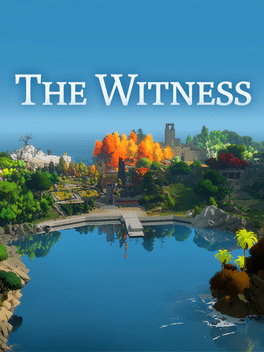
Ryan C. Wright's paper examines The Witness as a test case in the debate over how video games create meaning. The puzzle-based game is an apparent ideal for proceduralist analysis, which locates ludic meaning in formal rules and the metaphorical content of puzzles, an approach associated with Ian Bogost, Mike Treanor and Michael Mateas, and the game's designer Jonathan Blow. Wright argues that this framework, though productive, is incomplete. Drawing on Miguel Sicart's insistence that procedural analysis be complemented by attention to lived play, and on Catherine Bell's practice theory, the paper contends that the meaning of puzzles includes a habituated, personal, and creative domain that formal rules cannot fully capture. The work positions itself as an experimental method, testing how a play-centric perspective extends rather than replaces proceduralist readings.
The analysis concentrates on puzzle sequences as units of meaning built through accumulated play. Using Blow's concept of the "superstructure" and Paweł Grabarczyk's typology of representation, the paper examines how the game guides players' ways of seeing. A central example is the tetromino puzzle couplet, in which simplified mirror-image solutions placed after a long gauntlet of difficult puzzles operate as a defamiliarization technique and an indexical representation of the game's wider space of possibility. The paper concludes that players do not simply decode these structures but negotiate and personally embody the game's guided perspective.
The final argument concerns the paired yellow additive and blue subtractive tetromino puzzles. Rather than representing a broader rule system, as proceduralist readings would suggest, the blue puzzle invokes the yellow through the player's embodied history of pattern recognition. Mechanics, on this account, are bodily habits that shape perception. The paper is theoretical rather than empirical, offering no data-driven findings, and its contribution lies in arguing for a layered analytical approach in which formal rule analysis and play-experience analysis together account for ludic meaning.
Each row is a game or company this document names, each column a document, oldest first. A mark means that document names it. Select a row to see those documents.

DiGRA · 2022

DiGRA · 2022



DiGRA · 2022



DiGRA · 2022

DiGRA · 2022

DiGRA · 2022



DiGRA · 2022

DiGRA · 2022

DiGRA · 2022



DiGRA · 2022



DiGRA · 2022

DiGRA · 2022
DiGRA · 2016