Key insights
5 slides
Context
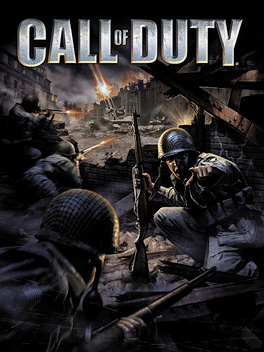
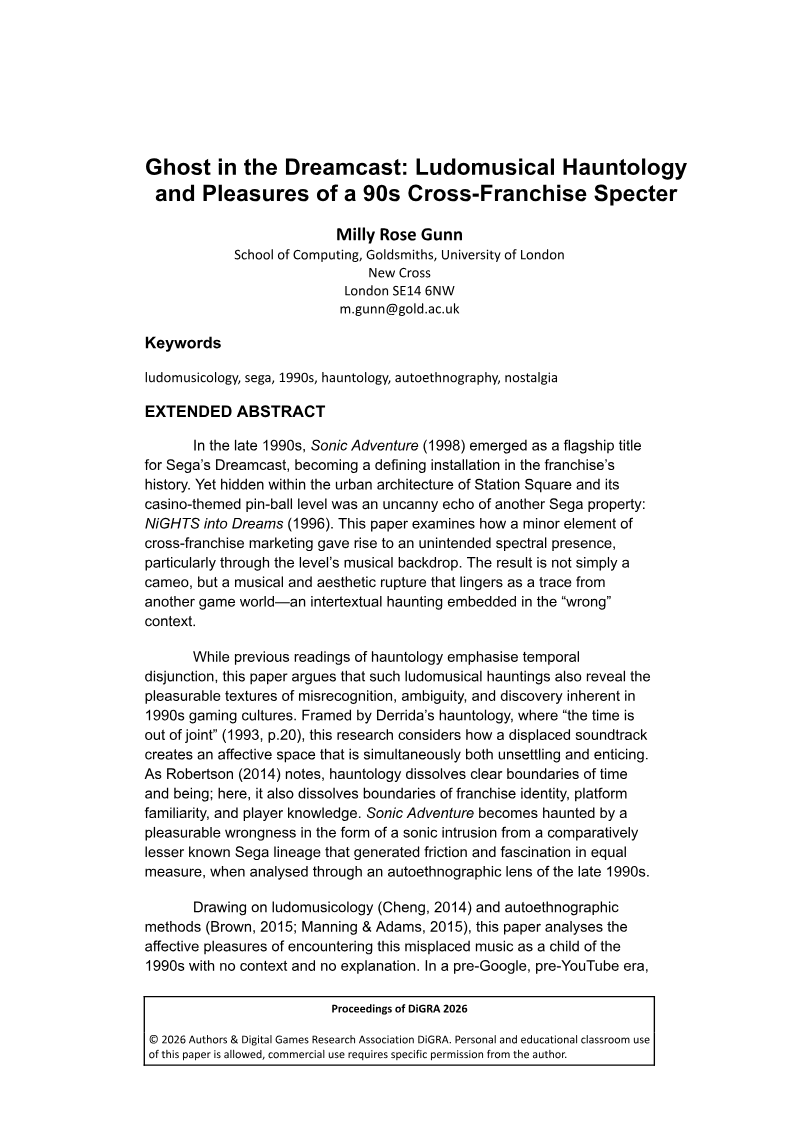
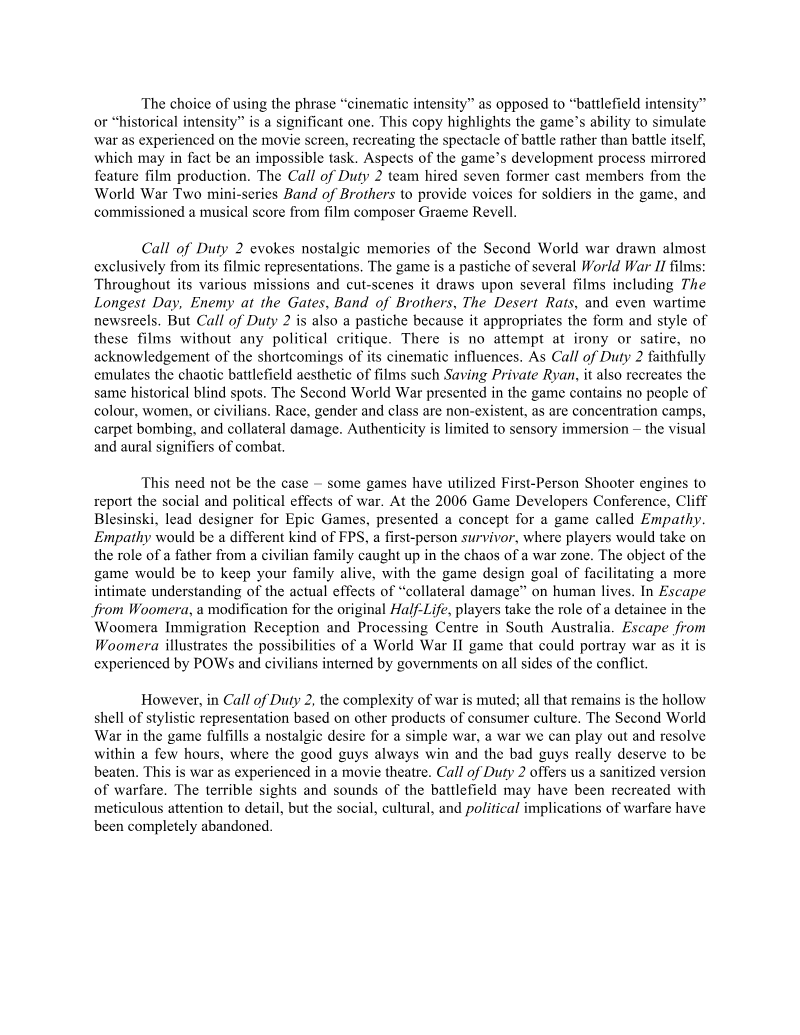
Call of Duty 2 serves as a psychological escape from contemporary geopolitical complexities.
The game offers a sanitized, binary narrative of World War II, contrasting with the ambiguous geopolitical landscape of the War on Terror.
1 / 5
- 01Call of Duty 2 (2005) functions as a psychological escape from the geopolitical complexities of the War on Terror by offering a sanitized, binary narrative of World War II.See it on page 1
- 02The game utilizes a 'retroscape' strategy, employing the visual and auditory aesthetics of classic war films like Saving Private Ryan and Band of Brothers to manufacture a sense of historical authenticity.See it on page 6
- 03The title’s perceived authenticity is limited to superficial sensory immersion, intentionally omitting the human, political, and social costs of war such as civilian casualties and systemic violence.See it on page 6
- 04By prioritizing a cinematic, heroic spectacle, the game reinforces a simplified moral framework that contrasts with the uncertainty of contemporary military engagements.See it on page 1
- 05The study categorizes Call of Duty 2 as a product of consumer capitalism that provides a predetermined, righteous conclusion to conflict rather than a realistic simulation of warfare.See it on page 7
Ask AI about this article
Summary
The analysis examines the intersection of nostalgia, authenticity, and consumer culture within the 2005 video game Call of Duty 2. The central thesis posits that the game’s popularity reflects a collective societal longing for the moral clarity and binary conflicts of the Second World War, serving as a psychological escape from the complex, ambiguous geopolitical landscape of the contemporary War on Terror. By framing the game as a "retroscape," the study argues that publishers utilize historical aesthetics to provide a sanitized, utopian version of combat that avoids the messy realities of modern warfare.
The research employs a discursive analysis of the game’s marketing materials, public relations efforts, and single-player campaign narrative. It draws upon theoretical frameworks regarding postmodernism, specifically the concept of pastiche, to explain how the game mimics the visual and auditory signifiers of classic war films—such as Saving Private Ryan and Band of Brothers—to establish a sense of "authentic" experience. While the game received critical acclaim for its immersive sensory details and intense combat simulation, the study concludes that this authenticity is limited to superficial immersion.
By stripping away the social, political, and human costs of war—such as civilian casualties, war crimes, and systemic violence—the game functions as a hollow spectacle. The analysis highlights that while alternative game designs have attempted to explore the human impact of conflict, Call of Duty 2 prioritizes a nostalgic, cinematic experience that reinforces a simplified narrative of heroism. Ultimately, the game is characterized as a product of consumer capitalism that offers a predetermined, righteous conclusion to conflict, contrasting sharply with the terrifying uncertainty of current global military engagements.