ArticleGameDiscoverCo
Is This How to Decide the Game You'll Make Next?
11 Jul 20251 page~10 min full read
Key insights
7 slides
Market context
Mid-2020s industry rewards systematic project selection approaches.
The game industry increasingly rewards developers who employ data-driven, systematic approaches to project selection and market positioning. Success on PC and console platforms depends on identifying established, high-demand subgenres.
The risk
Unclear market fit causes products to fail with players.
Developers risk creating products that fail to resonate with players due to unclear market fit. Anchoring new concepts to proven commercial hits mitigates this risk.
Three dimensions
Darts evaluates projects on enthusiasm, feasibility, and market potential.
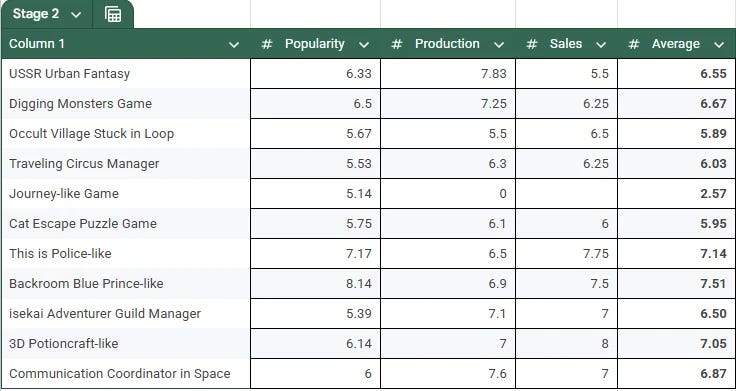
The studio Darts evaluates potential projects based on three core dimensions: internal team enthusiasm, technical feasibility, and market potential.
The hook
Teams define a 10-to-15-second hook modeled after hits.
Effective project selection requires teams to define a clear 10-to-15-second gameplay hook modeled after proven commercial hits.
Early Access
Risen player expectations require proactive community engagement.
Valve’s guidance indicates that player expectations for quality and polish in Early Access have risen significantly. This necessitates a proactive approach to community engagement and feedback management.
Growth data
Diversified developers achieved significant year-over-year growth.
While console hardware sales have faced recent headwinds, developers with diversified holdings on PC and console platforms have achieved significant year-over-year growth. The competitive edge lies in combining logical planning with disciplined communication.
Agile advantage
Agile studios combine market-aware planning with iterative development.
Agile studios gain a competitive edge by combining market-aware planning with disciplined, iterative development processes.
1 / 7
Ask AI about this report