ReportBoston Consulting Group
Video Gaming Report 2026: The Next Era of Growth
26 pages~48 min full read
Key insights
6 slides
New direction
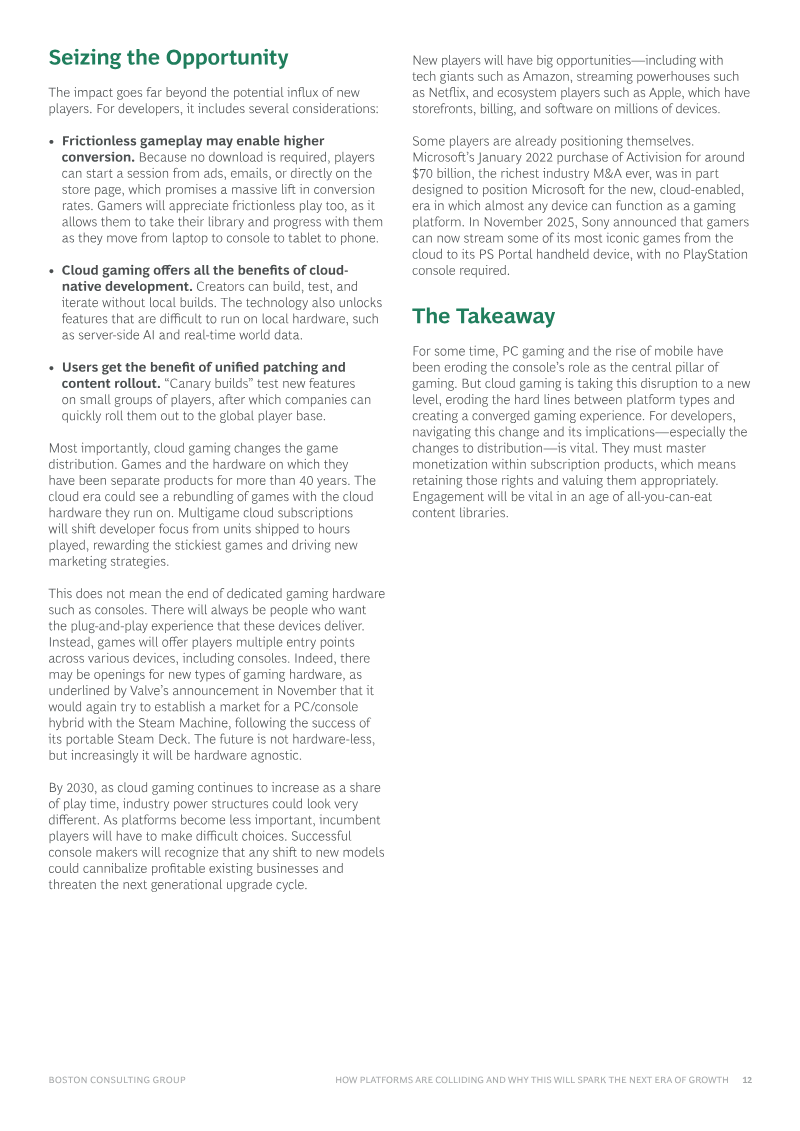
The video game industry is shifting from hardware-centric models to a multiplatform, cloud-based ecosystem.
The industry is moving towards more flexible and resilient models.
Development evolution
Studios are adopting generative AI to streamline development and enhance adaptive gameplay.
This adoption replaces high-cost release cycles with more efficient, sustained engagement models.
Like a chef using new kitchen tech to create custom meals faster, studios use AI to build more engaging games efficiently.

Market opening
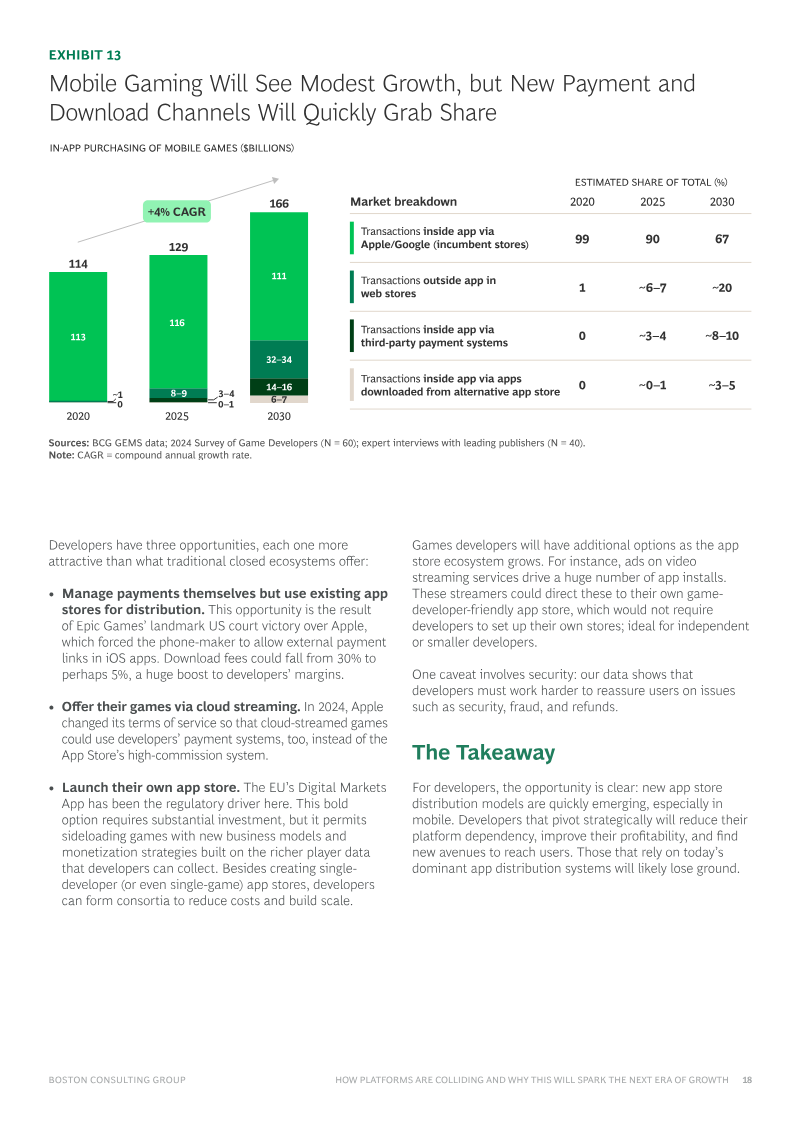
Regulatory changes and legal rulings are breaking the dominance of incumbent app stores.
This enables developers to adopt direct-to-consumer webstores and alternative payment systems.
Revenue opportunities
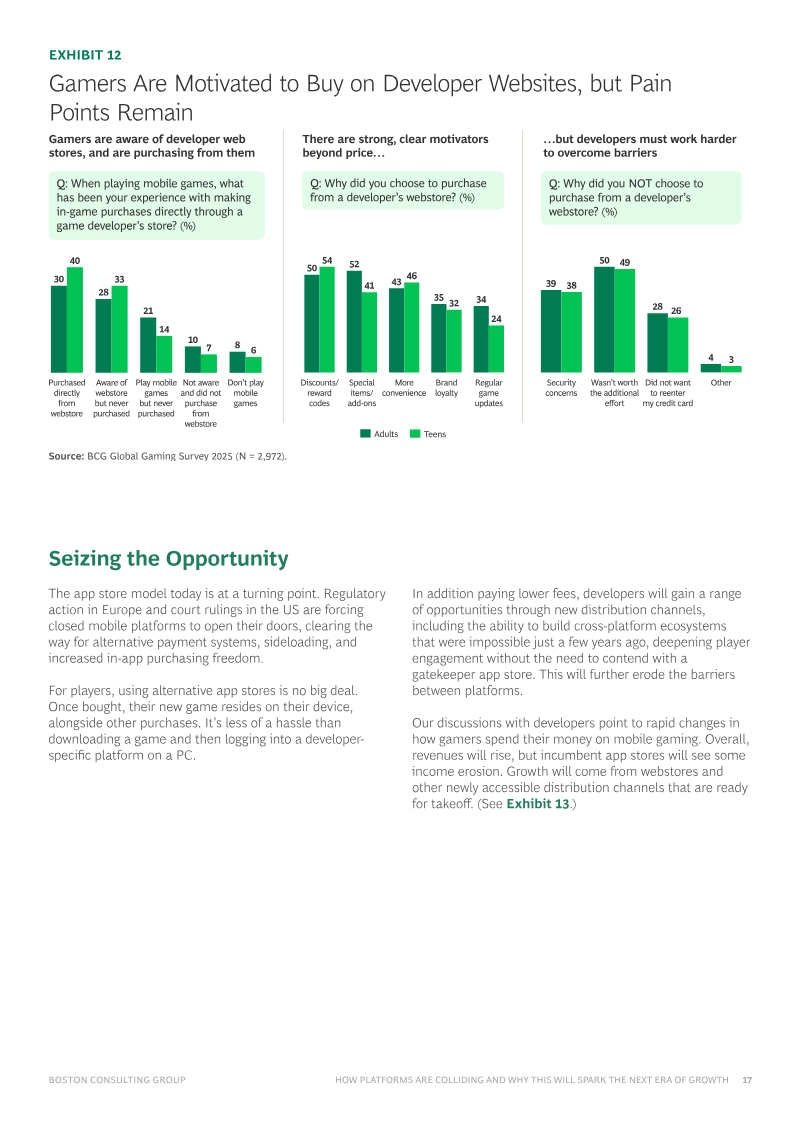
Developers can improve margins by implementing diversified monetization strategies.
These strategies include tiered pricing, in-game advertising, and subscription services.
Platform focus
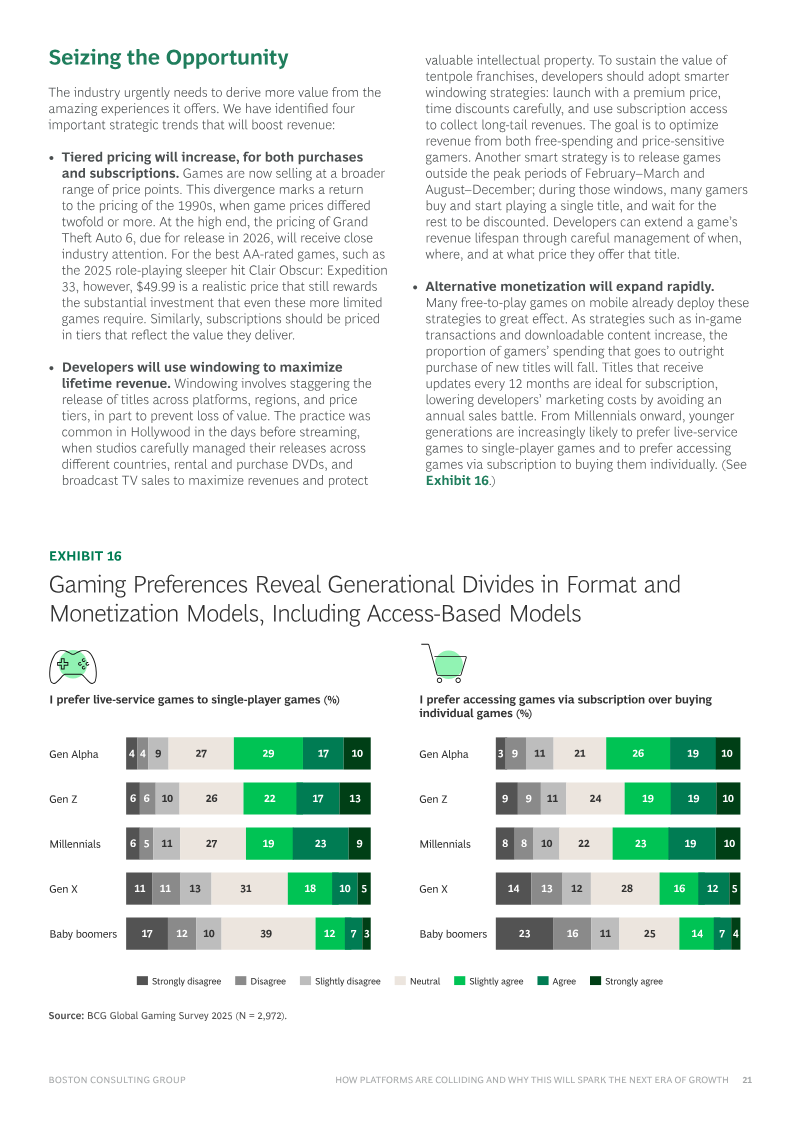
The market is moving toward hardware-agnostic platforms that prioritize user-generated content.
These platforms also emphasize community-driven discovery. This shift supports a more flexible and resilient gaming landscape.
Key to success
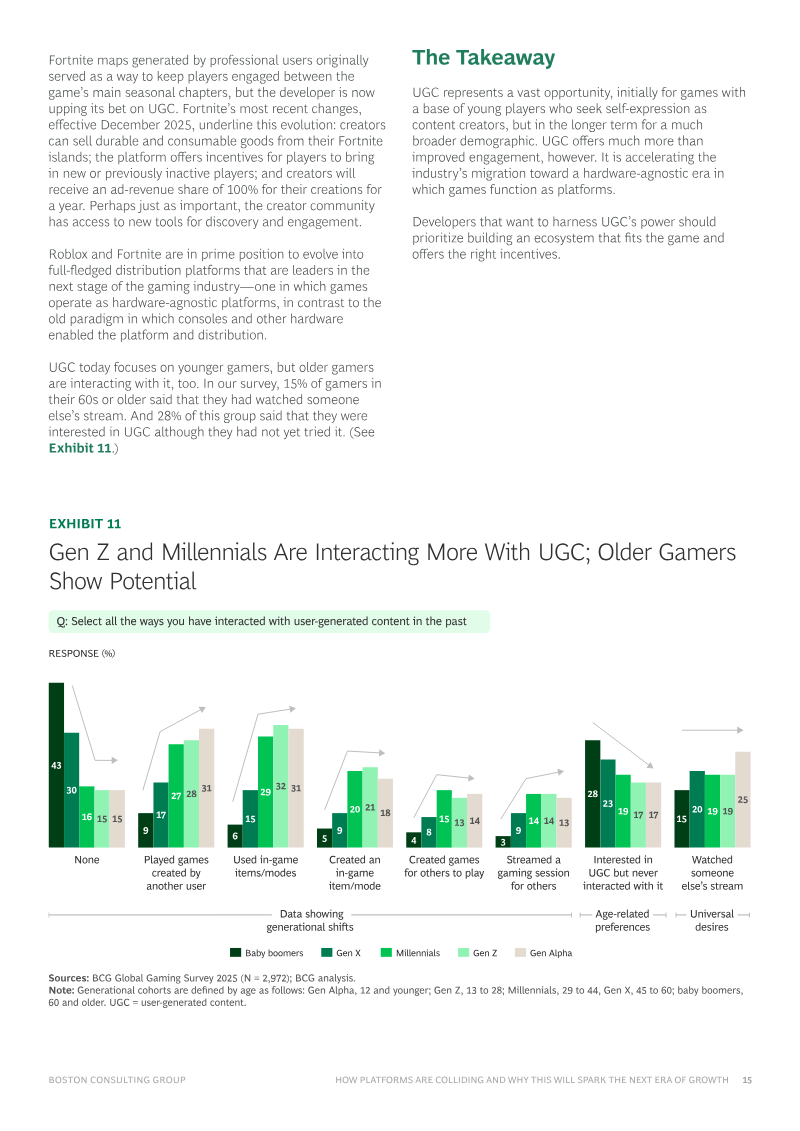
Success in new, open distribution channels depends on developers overcoming consumer friction and security concerns.
Building user trust is crucial to fully capitalize on these new channels. Developers must prioritize convenience and security for players.
1 / 6
Ask AI about this report