Transcript
[Music] welcome to the novic gaming podcast where it is our mission to explore the business and future of video games we bring together the industry's brightest Builders investors and thinkers to keep a pulse on current events dissect emerging Trends and games share Lessons Learned and have a great time this podcast is also part of novic growing ecosystem which ranges from free and premium research to Consulting and AD advisory services for more information visit [Music] www.nic.edu overwolf is the guild for in-game creators whether you're a gamer Creator or game studio overwolf is the ultimate destination for integrating ugc in games
for Game Studios overwolf offers curse Forge for Studios a white label solution that lets game makers and Publishers easily integrate mods safely and seamlessly into their games both existing and new at zero cost it's battle tested by triplay Studios and games including Maxis with the Sims 4 Studio wild card with Arc take to interactive and others for creators overwolf is the all-in-one platform that enables creators to build distribute and mon ize in-game apps mods and Game servers in 2022 overwolf paid over $160 million to in-game creators proving that they truly value the talents and contributions of The Gaming Community you can check out everything overwolf has to offer at overwolf tocom or check out the details in the show notes and with that let's jump into the episode what's up everyone and welcome to the novic gaming podcast I'm your host Alex deay and this is the interview at insight seg
2024 and the game industry is in a bit of an identity crisis or rather many big players are trying to figure out what identities they should have in the remaining decade in 2023 and into 2024 the industry has been bombarded with layoffs to date over 11,000 with no clear pattern or exemption for Studio scale or game success with perhaps the only clear pattern being this is predominantly happening in the west versus with Eastern Studios multiple small Studios have closed or scaled back to skeleton Crews and the big AAA players have taken opportunities to rightsize their businesses and get back to fundamentals off retaliation of big budget games that weren't driving or weren't predicted to drive big budget profits but in the wake of all this the big guys still stand and are facing some big questions about what to do next and so today we're going to talk about platform Titans the ogs primarily being Sony Microsoft and valve and we're going to add Roblox to our list as well we're going to discuss why these platforms have made the decisions they've made what segment Trends and market trends are exhorting them to do so and very
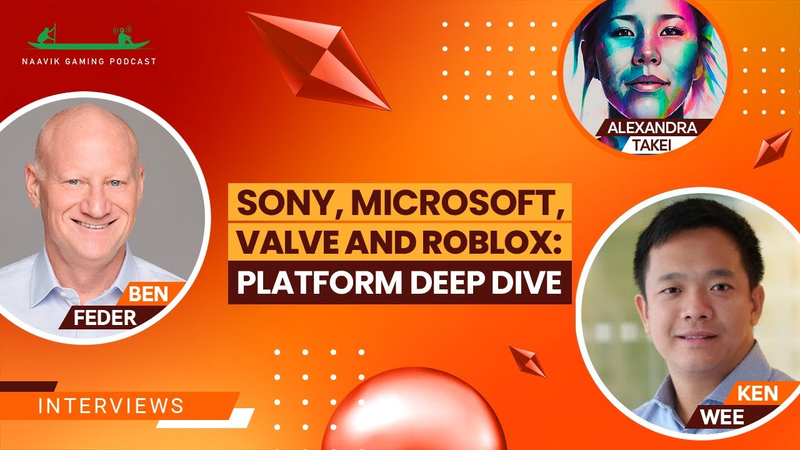
importantly discuss whether or not this makes sense what I'm hoping folks walk away with today is a a better understanding of what the existential threats to gaming are and why they're happening and be an opinion on whether what the major platform players are doing um sodi Microsoft valve and Roblox is smart and positioning them for Success over the next five years um of course I'm never alone on air here and it's my absolute honor to welcome two kings of strategy who will help us walk through how to make sense of all of this um um so my first guest uh needs absolutely no introduction in in this industry but I'll do it anyway I'm excited to welcome Ben feder managing partner at tur Ventures Ben as you know has had a very middling career in games uh with career credits such as being the CEO of Take 2 and being a founding partner of zmc with stra selnick he sits on the boards of gaming companies we've totally never heard of like epic games glue and Bad Robot and he spent six years as the president of international Partnerships at tenson um I'll have him tell us a little bit more about tur
adventures in a moment but Ben it is so awesome to have you join our show my next guest um I'm personally lucky enough to have worked with on air um on everyone's favorite work stream at Activision Blizzard King the lrp um and excited to welcome Ken we to the Pod Ken has a background and Consulting at the firm also known as McKenzie and was most recently the chief strategy officer at Activision Blizzard King and he's currently toying around with his next move um very excited to have you on Ken welcome to the show thanks for having me Alex good to reconnect yeah at this point you're probably like 80 to 100 Bobby lrp decks older than me at this point maybe more um so we've got a lot of uh of your knowledge to download um all right guys so before we dive into our episode um I want to give you guys some space to hit us with some quick intros um Ben how about you kick us off we'd love to hear a little bit about what you're doing at turta and any other background that maybe I failed to mention uh thanks for that so first of all pronounce trta um
and uh it's a it's a venture firm that I formed with my partner um Justin Yuan uh about two years ago and uh we're focused on um the video game exclusively on the video game industry games and related Technologies uh it's early stage kind of pre-series a um we've been in business two years we have been at an incredible Pace we have uh 16 companies in the portfolio um just under about a deal just over about a deal a month um and uh you know we're really we think this is a really really exciting time to be deploying capital and a really interesting uh uh area um for not only venture capitalist but also for LPS to be um to be exploring it's an amazing industry it's got a lot of growth ahead of it it's a lot of change ahead of it as we'll talk about um and those are usually recipes for Innovation and Entrepreneurship um we focus on three buckets then I'll stop talking um one is content per se
the other is tools and technology and the third is infrastructure um all of which we think are kind of right for disruption and an enormous amount of growth out of us awesome terrific yeah well Alex I think you captured it uh recently left activition blizzard where I spent uh over the last five years uh as a chief strategy officer LED strategy m& corporate development and also built our external development function with a broader team to really expand the work that we do with tnal Studios uh it's been a real roller coaster ride there some fantastic uh success stories really seeing the growth of franchises like Call of Duty continued growth of uh Candy Crush on the mobile side and really some of the uh kind of the new generation of Blizzard games some of the new changes there as well um still toying around with my next move and we'll have more uh more news to share on that shortly I also joined the board of behavior interactive one of the leading independent Canadian Studios behind the
uh the Smash Hit dead by daylight so pleasure to be on and Ben uh really privileged to spend the time with you here as well it's awesome congratulations that sounds really fun um dead by da is a great franchise um all right so before we dive into the platforms uh I want to Anchor Us in some big macro trends that have hit the gaming industry over the past three to four years and so not like the long long term like the rise of mobile but more like the past midterm maybe past you know three to five years and to some extent I kind of want to arrange this in a little bit of a Porters five forces sense you know what has been going on with competition two you know who are the new entrance in our industry that are shaking up the scene um three supplier power um you know uh this will lend greatly to our discussion of the platforms themselves and distribution power um for you know what gamers are doing changes in consumer behavior and then five you know substitution external to games what are games competing with and so Ken I would love to tap your
strategy mind for a quick download on the first three you know what is going on with competition what is going on with new entrance in the gaming space and then what is going on with suppliers in distribution absolutely Alex I think the first thing I'll say is um it's never been a better time to be a gamer and a gamer in the broadest sense of the word whether you're someone who casually plays with friends or someone who's locked in your own man cave or woman cave uh jumping into the into the most hardcore games if I have to reflect over the biggest changes the last few years I think it's really gaming going mainstream and with a lot of the adoption that we normally see being pulled forward especially during Co and at least in my mind three things have happened with that the first is that gaming has become inherently more social you are seeing games really innovate on social features on the mobile side you're seeing Publishers really focus on K factoring rate of verality and their mobile hit games you've really seen Discord emerge as a uh platform with
persistent social features outside of uh pure gameplay you've seen twitch and you know to a lesser extent YouTube and others continue to grow and streamers and content creators become a increasingly big part of new content Discovery and game promotion um this has all kind of been a part of gaming becoming more social the corollary to that is that audience and engagement has concentrated even more in the largest franchises so you've seen especially fortnite during the pandemic um really take off where gaming became a social place and people who may not have previously identified as being gamers are now spending a lot of time in game catching up with friends the behavior is turning into um more and more of a social hangout space I'm glad we include Roblox as a platform because I think that best exemplifies this new Behavior especially with young and demographics Forum a gaming platform is the social hangout place of choice as opposed to the mall or uh the you know the park by
school or what have you um so I'd say that that's a second big disruption the third one is you've just seen a lot of capital come into the space equally from strategics whether in gaming or traditional media in toys and so forth uh as well as Financial investors especially on the early stage I think you know youve pointed out the challenges in the industry in the last year or so the capital has pulled back in a pretty big way uh but we have seen a lot of new ideas new Studios get funded and given the game development Cycles I think that you know the jury is still out on what some of these teams will be able to do yeah it's an interesting statistic I was reading a newsie report this morning that was um you like I think eight% of new playtime is dedicated to newly released titles um and so a lot of that mind share like you said is dedicated towards you know the same the same universes and ecosystems that have been alive for the past six years already um so really interesting point there Ben I'm curious giving your
Vantage Point on the content investing side whether or not there's any of those behaviors on consumers and players wants and needs and also on content that might be pulling them away from the games as we know that average playtime and habits have changed dramatically over the past you know five years well yeah while you hit the nail on the head in terms of like trends that we've seen that are really shaking up the industry that's a big one kind of players sticking with their old games something like six what is it 60% of I'm probably going to get the stat wrong but 60% of time spent um you know on life service games for old games and those games uh and and I think you know if you referen the news report I think they also you know highlighted dips in life service games corresponding to new title releases that basically cannibalize uh you know console sales PC is a little more resilient but I think the the reduction of capital the capital coming out of the system especially at the later stages with a strategic focusing on fewer better titles which I
think is really a continuation of you know a very long cycle of that of uh fewer bigger better titles does leave the door open for independent um call it double A games um and I think there's less competition that for that area um you know a lot of AAA projects have been cancelled a fewer games will be released and I think it's good for the industry frankly I think there's has been a glut of uh both both the studios that have been attempting trip AAA but also good AAA and able a titles there's a lot of nuance between you know among the uh the AA the doublea titles but I think there's probably never been a better time to be an indie uh developer mostly because of the supply side not necessarily the demand side but po world and shrouded Manor Lords these are all kind of great examples of opportunities for um indd and AA games and it's an area that we're you know super focused on it's not uncomplicated it's a very very crowded Market you know 15,000
games released on um on Steam last year um it's very very difficult to break through but if you do break through um and you have the right stuff uh I think the opportunities are really great and it's a great time yeah interesting um I guess actually just I'm curious before we jum jump into the into the into the platforms um you know we've been having this overall conversation between triaa and double A and those are things that in terms that have existed in the games industry for the past you know five to 10 years um do you think that there's a difference or a distinct difference a definition today between double A and AA that is different than maybe what it was in the past six years I'm just curious to hear your thoughts on you know what do you think besides the the company that creates the game and maybe the scale of the project you know what is the difference between double A and triaa I think first of all I hate the word double A because it doesn't I mean the whole thing started with triaa and then people didn't have a word for something a little Lessa um but I think that uh again there's a lot of nuance in that indiea
world there are games that have done fantastically well that have two developers in the garage and there are games that qualify as indie or AA that have large teams that are basically AAA aspirational but not quite there yet and don't quite have the Polish or the budget or whatever it is um and so there's a lot of nuance there I would say you know the scope of some of the AAA games have gotten so large um that that in itself creates an opportunity right these are kind of you know typical games 80 hours plus um but you know the average user doesn't complete these games the average user plays about 20 hours 25 hours um and so there's a sweet spot for doublea games and India games to just kind of basically give Gamers what they want which is about 20 to 30 hours of gameplay high quality um High engagement um and you know that sounds sort of fasil coming from you know some top level view but the truth is these things are incredibly difficult to
create it is so hard to find the fun and it is so hard to find something that's truly Innovative most of what we look at content wise is derivative um but when we see something that is truly Innovative um uh we get behind it in a big way because we think the opportunity is Big um but to sort of extrapolate from that and sort of discuss all of daa and all of indd is um sort of to miss the Nuance of you know what's required to make these things successful yeah yeah um yeah well thank you for sharing that because there's also triple ey um so it's just a think you just come up with a bunch of turns to bucket things into right um but that the industry is healthy right this it's kind of people ask about the video game business I was like that's a video games is a big big word there's a lot that's going on underneath that title that rubric um you know and you sort of like say you have to say like what do you which part of the video game business are you talking about there's a lot of there's a lot of nuance here yeah Al I do think you know one of the things
you mentioned is just the the scope creep or really the creep in production values of games I mean Ben nailed it most Gamers aren't looking for 00 Plus or you know thousand hour plus live games is the next thing that they pick up but in addition to the length of the game there's also the production value as well not every game should necessarily be investing in 4k rate tracing highest Fidelity Graphics um that's just on the graphical side the same thing could EAS e apply to the depth of narrative or you know some multiplayer systems as well and I do think as painful as some of the cuts the recent cuts are to our industry a lot of it is warranted because there's a lot to what Ben said about finding the fun which is the core part of it and then finding the right production budget the right type of scope of a game around that as opposed to always shooting for something that is going to be the highest production uh value game out there yeah yeah it's also a good context as well
and probably folds into a lot of our discussion today around the platforms and so now that we have that context um we're going to start diving into the meat of our episode and start discussing those four platforms um and one thing I want to make very clear for our audience today is that we're going to do many deep Dives onto only four platforms Sony Microsoft valve and Roblox but want to delineate platform versus the hardware as we'll be discussing two platforms that lean console and two platforms that lean PC um we're discussing Platforms in the sense that their marketplaces and suppliers beyond the hardware Hardware is obviously a facilitation to the platform but not necessary to create it um and I want to call out that we won't be discussing all the platforms that exist today um we selected these for our conversation because these platforms have shown strong aptitude for excellence in development so asymmetric growth scalability and homogenous Supply on both sides of the platform um this means developers and players um and what these four platforms do particularly have an inordinate impact on the games industry um in general so we're going to
kick it off um with our first platform Microsoft um and so I'm going to start with just a general book of business and then we're going to dive in so Microsoft's obviously a big business can't break out the market cap necessarily for Xbox but market cap is three trillion install base for Xbox is around 20 million units in this gen um gaming layoffs in 2024 stands around 1900 to 2000 um some recent gaming hits for Xbox have been po world um the the acquisition of Activision Blizzard king um the sale of Tango softworks um the closure of Arcane Austin um and other notable news events have been setting up a AAA studio in sorry a doublea studio um as you define doua inside blizzard um raising the prices for Microsoft Game Pass and some of the warcraft developers have unionized um so Ben I'm going to start with you um at as a as a general macro level um you know what do you think Box is doing to Grapple with some of the
existential threats that we've just discussed in gaming um and what are they doing to try to capitalize on the trends the and the Tailwinds that are currently existing inside gaming um uh I mean it's a great question I think without question uh you know just look at the fat pattern fact pattern they are uh doubling down and investing heavily in exclusive games um in content to differentiate themselves from PlayStation to Nintendo um you know acquiring small Studios acquiring B big studios Bethesda all the way to um um Activision Blizzard um so that's kind of thing one thing two uh again uh deep investment into Game Pass expanding his library of titles um many of which are kind of cloud supported including tripa titles like Starfield um and a little less a little less interesting but I'm quite curious about it is kind of the Xbox Mobile store um you know they've confirmed an upcoming release of its Mobile store to capture new segment of gamer um we'll see if that works but I think
kind of you know they're clearly as I see it I think they are uh leaning heavier and heavier into the software side of the business um and you know so much so that I kind of sometimes I wonder you know why they're focused on the console at all um but you know I'm not you know I'm not priv to those conversations I don't if they're having them so that's kind of you know that's kind of falls into the category of you know what are they doing to position themselves and then in terms of you know capitalizing on market trends I think gain past subscriptions more important than ever then I think they're focusing on those versus console sales um I think they've already publicly stated that they're porting first-party titles to additional consoles so I think they're very much focused on the software side um and I think platform games are platform only games are probably uh they're pushing us more towards uh crossplatform and I and more cloud-based which I think is um something Microsoft
is very well positioned to capitalize on um and I think that you know the Activision Blizzard acquisition more than anything has made gaming a big part of the Microsoft business and it's you know gaming used to be a tiny piece of it and now it's significant and so I think you can expect Microsoft to really um focus on things and I think they're uh you know as you look at different business models uh and different platforms it seems clear to me that um they're focused on software businesses focused on annuity businesses subscription businesses and I think those those are great businesses to have um and so we'll see if those subscription models work um but if they do I think they're they will take their Market position you know on if you just look at them on the console side I think they're kind of not in a great position but if you look at it more uh uh more generically and more generally uh just in terms of game portfolio software
subscriptions every all the elements that could make a great business I think they do have some great assets do you um on the subscription business itself um obviously like yes so much of their so much of the moft 365 and their software business is subscription based uh do you think that that actually works for games um in the same way in at the in the way that the games are consumed today and the High I mean kind of this like high clip of releasing new titles from a bunch of different Studios staggering those things into a game pass but also the consumption tail that we just talked about where you know 60% of the hours is devoted to older titles um supplying a subscription based pass with a bunch of new content right don't those things maybe seem like non lined up with one not lined up with one another in the sense that if players are always playing old titles does it really make sense to have a subscription game pass with lots of new titles in it how do you see that kind of playing out for them well first of all
it's not unusual for a large company to experiment with different strategies even though they may look inconsistent to the outside world it's okay to experiment with different things and see what works and what doesn't work um you know provided of course that no one test can take down the company and nothing that Microsoft is doing in the game business I think is gonna take down Microsoft no they're I think it's perfectly reasonable and rational um for them to do that um and I don't know I sort of think you know my issue on the subscription business is um first of all it's great and you have them it's very hard to get people to sign up for subscriptions and I think they were smart to kind of come up with different tiers for different consumers um the issue for me is from third-party Publishers I think the large ones with great IP are going to fight tooth and nail uh against putting their Frontline titles into a subscription tier and so you may end up seeing things we're already beginning to see things like the movie business did with windo releases
and to to take advantage of different um uh you know diff the timing of things so you can skim different segments of the market you may see some of that uh but you know you're you're highly unlikely to see for example a Grand Theft Auto come out on in a subscription business day one you know maybe you'll see Grand Theft Auto 3 in subscriptions today Grand Theft Auto 6 is going to be a Frontline title it's not going to be um on the subscription on the subscription business so if you can imagine for example if you sort of said oh they should just be in the subscription business they would lose out on all that and that would not be a great strategy yeah so it sounds like you so you have faith kind of in this idea that they're going to um the Microsoft store and the Microsoft game passes obviously which they already have a PC line and obviously now they're creating this mobile store it's just going to be it's going to be a con Hardware agnostic to the sense that they're going to basically pass through the Xbox install base and expand onto potentially other
platforms if it's PC Etc we could talk about maybe Sony in a second um and you think that is basically what is their their kind of their long range strategy right is to build up the subscription business um and and sort of see an experiment with that kind of habituated behavior and that habituated payment style in games um got it yeah I think so on the hardware side I you know but both both Xbox and Sony have this issue of conversion from the old from you know from the last um generation to the current generation Next Generation Um that is a huge opportunity actually for Microsoft to take share from Sony while they have consoles out there um and I think GTA will probably be a big driver for converting uh those users onto the new platform because GTA is NextGen only and uh and I think it's jump ball and that's a big user base I think it's something like for for Sony I saw something was like half of user base is still on PS4 so that's a huge
opportunity I think it's jump ball for both um Microsoft and Sony and I'd expect them to compete pretty heavily for it um want to give Ken an opportunity to jump in here but Ben is there anything that you would do differently that Xbox is doing right now um if you had to change something about their strategy where do where do you think that they're kind of Mis stepping um I me you mentioned the thing about being in Hardware in general but would you the hardware piece is a big question mark for me um but I think they're doing the right thing honestly I think they're you know doubling down on content doubling down on cloud um you know strategy is kind of the intersection between you know all the available opportunities that are out there in the world and the things you know married against or or intersecting against the uh you know the quote unquote unfair advantage that you have by the assets that you have um and you know Microsoft as opposed to Sony has clear advantages in my opinion in Cloud um and subcription and I think they're right to lean into that got it so the BET here is
that potentially if cloud gaming were to be a thing um which is as right now it's obviously a smaller segment of the market but if we Trend that way they're obviously going to be positioned for the long tail um over someone like s yeah and I think they are much more Fierce competitors today than they were even five years ago the one thing that I would uh look into if I were there would be kind of you know where does the Innovation come from I think they have scale I think they have scope where's where does the Innovation come from where does like some somebody like an anap porna you know fit into this little ecosystem that they're building yeah yeah um okay got it uh Ken any thoughts uh lots of thoughts I mean I need to be careful about what I say and can only really talk about what's being publicly disclosed given how close I'm being on the activis blizzard side I think Ben has really nailed it though for me Xbox is in a extremely interesting position for two reasons now one is just the scale of the content
business they have after spending almost 80 billion across Activision lizard in zenx that is single-handed that has catapulted them into poll position as far as the amount of first party Studios development capabilities the content they have um I think the second thing is really uh oh and building on from that one of the questions you asked earlier is almost distribution versus content in most content businesses in the long run it's a little bit of a pendulum shift and I think what we've seen over the last couple of years in the medium term is really that pendulum shifting more towards the content side I think in particular during the pandemic What epic games was able to drive with fortnite to really enable true crossplay cross progression um has really been a big driver of that and other games have followed soup including Call of Duty which even though Microsoft uh acquired them had they all Call of Duty has always been available on PlayStation and no signs that that is going to change anytime soon I think the other big
disruptive thing which everyone's eyes will be on is what happens with Game Pass Game Pass is is the first thing that Xbox has really done that's been a clear leader in a sense that they've they've gone from being the number three player for the last couple console Cycles to the clear leaner in clear leader in all you can need subscription based offering um they're already at 30 million Subs which kind of shows that this isn't just a console play this is very much expanding to become a PC plate and if you look at what they've publicly stated about Ambitions to cross 100 million Subs the only way you get there is a robust PC and probably mobile offering as well and I think therein is probably the biggest challenge Microsoft faces with all of this amazing content Studios how do you balance what is already a fantastic consumer value proposition especially with day and date as Ben points out with the need to run a business and kind of maintain uh a robust business model on the content
side as well and I think that's going to be what the the future really hinges on can Game Pass and particular see that level of growth in the subscriber base while maintaining the right type of model with the right type of content Cadence uh time time will tell but a lot of things going well from them given the mobile positioning given their early positioning in Cloud given the sheer kind of first party Studios and content that they add yeah all right thank you yeah that's was a great summer en closing thoughts to to Xbox there um and we definitely want to you know we'll keep talking about this is they're a great one to start with um we' move to the next um Deep dive on Sony um which obviously also very similar to Xbox have similar similar pillars of businesses except for the fact that they you know they have um you know different different content Cadence and different store style Etc um so let's start with a little bit of a book business for Sony um and then we'll dive in there um so market cap for them 122 billion are Hardware installed B significantly higher than Xbox at around 55 million
for PS5 but as Ben mentioned also a huge IB for PlayStation 4 that tons of people are still interacting with um gaming layoffs at 900 8% of the global PlayStation work force uh recent gaming hits have been games like hell divers um Elden Rings Shadow of Earth tree that DLC for Elden ring that came out a couple years ago um big investment and acquisition activities so 1 billion into epic games in 2020 um you know 500 million into scopely in 2021 and several minority investments into content Studios by their Venture arm um the Sony Ventures uh unit um some notable news events uh anticipation of the PS5 Pro um Sony is planning a mobile games platform Sony adding Discord integration to the console which Ken you mentioned at the beginning is a huge part of consumer and social behavior in games today and um most recently even today announcing that they shut Concord down um only two weeks after launch um so Ken maybe I'll leave
it to you to kick this one off since Ben kicked off Xbox um what are your kind of thoughts on what Sony is doing right now um and how they're handling and capitalizing on um some Trends the in the gaming industry yeah so I think the the changes that we've discussed in the broad gaming space are definitely impacting Sony's strategy in a bigger way than Xbox and what I mean by that is if I think about Sony historically they've been the leader on uh on kind of the console side relative to Xbox they've invested a lot more in exclusive first-party content especially the type that you know drives drives a lot of interest in the platform um and so I think you know when when you look at everything that's coming with you know in between the new competitors in between changes in the publishing landscape changes in consumer Behavior I think that kind of calls into question more of what Sony is doing um you know going back to my Microsoft for a moment we've already seen some of their titles
uh kind of move off Xbox exclusivity we just heard of Gamescom that Indiana Jones will eventually come to PlayStation so Xbox uh in part because they've had less uh exclusive content is more embracing this more open kind of platform agnostic content Le ecosystem it's still unclear if Sony is going to follow suit um and so that for me is the biggest question you have a leader ship transition at the same time as you have a continued effort to uh attach more ps5s into the installed base we'll see what Sony does um I think if there is a type that type of content that a platform should invest in and subsidize uh Sony is kind of already in that category what I'll call high production value narrative single player content if gamers are looking to play with their friends if they're looking for that more immersive experience it's easier to kind of put that content as a platform exclusive and draw people there
and if you look at the big Sony franchises where they've you know had a lot of a claim also had a lot of Commercial Success Last of Us God of War Uncharted the New Horizon franchise all of those are in that vein that if you're going to make content exclusive to a platform that's the type of content where players are less likely to be annoyed that they can't play with their friends and see some value in that platform business now whether or not as gaming gets more social engagement moves more social spend moves towards multiplayer games um and you see continued free-to-play games as a service whether or not Sony will see the the the financial benefits of that type of content investment remains to be seen and I think that's going to be one of the interesting things to see how steadfast Sony remains in you know their the state of desire to keep a lot of this content exclusive to PlayStation yeah I think um you know going to Ben's
Point earlier of you know kind of a contraction from to to into whatever double ey Indie Etc um you know Microsoft is building up that kind of content arsenal of Studios that are making that content to fill the Game Pass right and Sony is almost like on the opposite end of the barbell here you know spending $300 million $400 million on Spider-Man um and you know but also still struggling with the unit economics over there on those on that side of development so what you guys think kind of about Sony's production costs and and and then the value of those games they obviously have tremendous power and IP but I think one of the things that we're struggling with now is just the longtail development cycle and the cost of development in general and if we think about all the games and even those IPS that were just mentioned God of War um Spider-Man these are games with maybe you know seven seven to 10 years in between each one do we think that Sony can compete with somebody like Xbox on on on sort of the live service or the almost like games as a service inside a subscription model um if that makes
sense I think eventually they'll have to I mean you will see a rationalization of how much you're spending on content and by the way if a game is going to be exclusive to a platform it's going to be more single player narrative in nature I think you will need to figure out what is the right production budget and scope that fit that type of model so I think um we're already seeing some of that play out earlier on Alex you mentioned there have been a lot of uh layoffs in the industry a lot of projects being cancelled I that's actually not true just to say that's happening in the west it is happening in Japan it's happening in you know China the rest of the East as well and so I think across the board you are seeing a right sizing of studios and production budgets uh relative to what the opportunities are I I I would say Ken that you know some of the Publishers that I talk to can't figure out how to get outside that box that like you know they can't figure out how to make a title of that Quality quality
for less than $300 million um and I think a lot of them are looking to AI tools uh for example to reduce the cost of development because especially if you're exclusive onto a single console there's no way to justify these kind of costs on the one hand and on the other hand can't manage their way out of that box of like how do we how do we do this and laying off people in counceling tuttles don't really do the trick in my opinion I mean maybe you can reduce the scope from an 880 hour game to a 30- hour game that might do it um but the uh the cost structure of some of these or some of these organizations is just they are they are what they are um and to make matters even more complicated we're finding in the early stage of AI content development because that's the things that we fund and we see differences is that it's not just you know pluging Ai and your cost go down the way uh folks develop with artificial intelligence is fundamentally changing the workflows fundamentally
changing the way uh uh developers create and it's hard to turn around a big ship as you know and if you're kind of if you're an incumbent studio and you're looking at that and you're look you're and you've been or you're an executive in those Studios a you know how to make games the way you know how to make games and you don't and it's hard to change B you've got three years of development locked in today I mean that you can't just change it tomorrow so um again I think leaving room for independent content creators but if you know if I were Sony I would and I've given this advice to some Publishers right I mean could you set up a team that's Don't Force AI onto your teams but can you set up a team that sits next to your your regular teams have the AI team and sort of say look you're you know your goal is to make a AA game for 10 or20 million and have people look over your shoulder so they can sort of say you know how did you get the art to be 2
cents instead of $200 uh I think they have to figure something like I'm not saying that's the answer but they're they need a way to accelerate uh either either to accelerate the implementation of AI into their Studios or somehow figure out a way to reduce costs from $300 million down to $100 million because I don't think it's sustainable yeah no I I definitely agree B I think look one of the things you said earlier in this and it's one thing that I truly believe as well there is a real Gap and opportunity for I really hate the term double A so I'm going to say you know games with a production budget call it 10 to maybe 50 maybe 10 up to 100 at most um that kind of bit of an undeserved place in the market right now because you're not going to get a publishing deal from one of the large platforms that covers all of those development certainly not going to go exclusive but there is an opportunity there and I think we're going to see some really interesting uh games but also new business models come out from opportunities in that segment
yeah I think AI is certainly very interesting it's still very very early days for us um in between you know developer push back consumer push back labor rules Tech uh copyright and IP issues I think all of those are challenges that AI will face I have seen some smaller Studios think of AI as not really a cost-saving as all but as a way to just get that much more content uh to their players especially for live games we always talk about the you and I have talked about the content treadmill that free to play live games all run into AI can help solve that I do think over time you are going to see a way that AI really does lower the cost but that might that might be a little bit further out given all of the issues facing AI at the moment I do I do have a pet theory that I'll test out on you live on air um which is you know appropo of this whole Hardware thing and Sony's position right I can imagine a world where having like
a imagine a world that AI is integral to video games but B you know where does the AI sit and that I can imagine a world where you know Microsoft has it in the cloud and Sony has it on device on the console um and I and I can see that leading to vastly different gameplay on a Sony console versus a Microsoft kind of cloud service um and I think uh that's thing one and then thing two is like it could be an answer to the question is like is there another console cycle well you know if all of a sudden the console doesn't look doesn't architected like a PC and is architected more like you know an AI device could be pretty interesting I think that's definitely an interesting thing to consider right I mean right now for me when I've when I've looked at AI in games it's being cost prohibitive to kind of have the AI in the cloud now my my crystal balls as good as anybody else's uh probably is not as good as anybody else's when it comes to how much Cloud cost are going to Trend over the
next five years when you look at the next generation of consumer devices everyone's shipping local npus and kind of slim llms that sit on device or maybe Edge um I do feel the hybrid model is kind of the way that it's going but I think you're right in that Sony is going to lean on more local and um Microsoft well Xbox will leverage the strengths of parent company Microsoft in a way that works best for that at the end of the day though um I've yet to see any true new poor game Loops or progression systems that truly require AI the idea of smart NPCs or avatars that adapt to you know whatever you want to do uh IRL um sounds nice but I'm not really seeing much traction there in the market either from Publishers or from consumers fully expect that we'll be new core game loops and progression systems that are built on AI and will do phenomenally well I just haven't seen any of those yet and
you know maybe given your Vantage Point in the early stage site you've probably seen more promising ideas that I have yeah we see we see the ideas we we don't see the businesses yet but that's what we fund so it's so it works for us we have to squint a little bit more than you do yeah okay awesome but I want to shift gears um from talking about some of our console platforms uh Microsoft and Sony talking about PC um because as we said there's also expansion from Microsoft and Sony onto the PC front um and so I want to kick us off on on valve and valve is just the big PC Titan here um you know obviously no market cap but generates around six and a half billion dollars year um in terms of the um in terms of active users maybe like sitting at 130 million active users um with about three million steam deck sales um and no layoffs for valve but if anything we've learned how this year how few people valve employees it's like sub 400 or something like that in 2021 um some recent G hits for valve have been Paul World um the banana
clicking game um and now and now deadlock um which just is you know kicking butt even though it never actually launched um over like 150k concurrence um and it's you know was silently launched onto steam which is what you can do when you own the distribution platform um in terms of big Investments and acquisition activity obviously valves on the quieter side but you know a lot of the growth we've learned um on Steam is coming from China and that has been it's been kind of flat in R and and growing in China um I would love to hear you guys's perspective on whether or not you think any of the prior platforms that we've discussed such as Sony or Microsoft um could actually Dethrone valve in some way um on the PC front or are they just you know passively going to ride along forever position for Success so in terms of well look I actually I think we'll get to it but I think the bigger threats are from ufn and from uh uh from Roblox um as new distribution Platforms in
terms of Microsoft I sort of feel like maybe um you know obviously very strong in PC uh but you know valve I think of as you know relatively passive company um they've got a great Market position they don't need to mess with it um you know estimates are kind of $9 billion a year and turn over 50% of that in profit so I mean it's just it's a Nutty sizable profitable business um but there are signs of deterioration right I think you know conversion rates from wish list to purchase is has haved from what it was a few years ago from 6% something like 3% um but where I think there is a in the armor is in the area of you know Discovery conversion marketing um areas that a Microsoft or even an Amazon um could really uh you know create some real damage to the platform um I think that would be if there were a I think it would be there um and
then and then separately you know monolithic games that are available for download versus platforms like ufn and Roblox where all you know it's all kind of in one platform ecosystem I think is the other threat as things and and I think the China business for you know I've been involved in China for a long long time it's a gray Market that somehow the the authorities kind of turn a blind eye too everybody keeps wondering when it's going to end and it just it's still pretty it's still flourishing and there's some great op you know maybe there's some great opportunities there but it's surprising to me that steam is still as strong as it is in China I think steam has always been to me one of the enigmas in the gaming space um when I think about it from the publisher perspective taking 20 to 30% or honestly what doesn't feel like a lot means Publishers have not liked steam but they've gone there in order to get distribution and historically that was true for Indies and it's even true for the largest
companies largest Publishers as well Call of Duty went on Steam Apex Legends went on Steam even Microsoft's franchises um XBox franchises are also steam at the same time for the players um it's not the best experience either I think content curation and Discovery is extremely challenged on the platform social features while they while the mo that they have around social graph is truly incredible they haven't really innovated on a lot of social features and when I think about where the innovation of social has come a lot of it's happened on Twitch for discovery on Discord for realtime Communications on platforms or fums like you know Reddit for more persistent out of game Dialogue on what's happening in the game um so I don't want to say that I've been beating the dead horse and saying steam is right for disruption but I I am surprised that it has been p as persistent as it has Ben hit on um you know really the the content
Discovery and curation as being one issue I would also argue that social features UI and persistence have you know are definitely weaker than what they've been in the past and so there is a really interesting opportunity for somebody else or other players to come into the ecosystem ultimately I don't know that there's one single winners all of the Publishers in between you know Ubisoft connect EA play Battlenet EA a desktop and origin like we can name the number of competing uh the riot launcher the number of competing distribution platforms there are and I don't think anybody's ever going to truly uh supplant steam but I do see the market being more and more fragmented and if I'm a larger publisher at the moment and in term a long a smaller publisher longer term it may be less critical to be on steeve that said the mode that they have around social graph and around some of the technical py requirements where its real effort to make sure your
game works on Steam as well is not trivial and I think steam will be around for for a lot longer I think China is an interesting example I think we've all seen what uh black myth Wukong has done and how game science which by the way fantastic example of that smaller production budget yet what feels like a high production value game is able to do um has driven a lot of the growth there um let's also keep in mind you have both the gry market steam as well as the effic IAL licensed version of steam unfortunately given where China's economy is going I don't know that they're about to take any measures to Cur kind of gaming especially of foreign Publishers you look they're still approving new licenses every month almost at record numbers so I feel like there's even more growth to be had there and more broadly steam is growing internationally as well I would say I think that's that's a great pry uh Ken I would say you know was talking about this one of my partners earlier and they said if you were steam and you you know
you exper you felt like your position was uh threatened and you experiencing more competition what would you do well you might see them you know step in and you know either buy or acquire I mean acquire kind of hire hiring best-in-class strong Developers for new games and then this morning we wake up to you know an acquisition of Hope games so you know it may be that they feel like uh they that their moat is somehow not what what it once was yeah and I think like that's kind of the pervasive Trend with with steam is that they used to be a jugernaut in creating fantastic IP and fantastic games with TFT and you know um uh portal and all the others and then now they've kind of gotten kind of rested on their Laurels a little bit and becoming this huge distribution platform um but then something like deadlock comes along you're like oh perhaps this is kind of what they've been working on in the background um and so it's kind of it's just they're just an interesting platform in the sense that they actually
aren't really doing very much like you said towards curation Discovery even though they have this mode they could be expanding it a lot further than they actually are I think they've actually intentionally tried to do some of those things around that inhibit discoveries there's no like ranking charts you can't you know pay to boost your you can't even like pay to Market your title there's no like storefront placements Etc um so do you think that it would it would actually be to their benefit to kind of like lean into some of those things or do you think that that would actually be more deleterious to to to their brand um in general and maybe like lose them a certain amount of customer base such that people would flock to different platforms I'm just curious well I was just going to say I think ultimately it's a very academic question because that's not a Val thing to do earlier I said that they are one of the enigmas in gaming and I truly mean by mean by mean what I said there um the approach that they take to featuring and promoting content on the on their platform is unlike any other Alex right to mention that if you're a publisher you don't really have a robust dialogue
with steam about promoting your game that they could easily make 3x 5x the money that they're making on that part of the business but that's just not a priority for them um and it's something that works really well for them so yes they could make more money they might alienate some customers at the margin but they're not going to do it that's not the way that they're set up to operate it's not how decisions get made you said exactly what I was going to say k so feel the I feel the same way I saw stat the other day that like like they did 37 million concurrent users last month I mean that's just it's just like they have scale they have scope they have so much going for them they don't need to do much yeah yeah but I mean you you mentioned deadlock I mean the idea that they that they've done smaller Acquisitions to kind of support the potentially the development of that I think that's interesting but even looking at deadlock where they they launched a closed access beta that they've scaled without really featuring it prominently on Steam and really relying on the community to take it is
something only valve would do even the core of the game which is this I played it a bunch I love the premise but it is incredibly uh sweaty and complex the idea that we will take a MOA which people already complain has a really high skill flaw combine shooter mechanics make it a hero shooter have item progression in the game so that even the guides embedded in the game are so overwhelming this is not something that people think people would think of as like a mass Market massively accessible game um but that's again what that's what Bel does so yeah they didn't even have a landing page for it you literally just find it in the ether they did make it easier they did make it a lot easier to invite friends so that is one one positive Improvement so all right um okay so uh let's actually Flip Flip Flip the book and go kind of to the opposite side the Spectrum um let's you know to Roblox our final player for today um and I want to
conclude with Roblox because although it's an actually an old company it's a newer dominating platform of the past decade um and so for Roblox they've got a market cap 28 billion um as of Q2 2024 80 million da and 70 billion hours of Engagement um no notable restructurings necessarily at the company that I think have been publicly released um top gaming hits for Roblox are games like adopt me Brook cave been blocks fruits um there was that blade ball slicing game that was uh really big a couple months ago um in terms of investment acquisition activity um they've basically acquired a lot of things around infrastructure speech lead blocks link um Discord servers for gaming platforms kind of beefing up that side of the you know do-it-yourself ugc um platform and some in terms of notable news and events uh Netflix announced earlier this year they plan to lend in license Netflix owned IP roblo platform this is called Next World um there's an e-commerce plat um partnership with
Walmart um and Roblox is kind of a little bit in a league of its own here um you know com you know on the PC on PC but doesn't necessarily have a you know storefront distribution in the same way that valve does no Hardware Etc um and so I think you know for my inclination is to think that they're the best position to capitalize on new player Behavior but what do you guys think will be the challenges for Roblox looking ahead um and are they are they positioned well for the next five to 10 years or are there kind of like as you said pen chinks in the armor that we're kind of missing well look I sort of uh you know I think Roblox has some fundamental challenges that um they've been struggling to overcome for a long time um first and foremost is the demographic um you know they have high number of 12 and under um which is both you know which is kind of a double issue you know it's an issue in terms of scalability and getting to older demographics and paying demographics but also for kids under 13 there is some pretty stringent regulation worldwide
stringent and complex um and the costs of falling out of compliance are much larger than anybody thought um and like much much larger uh and roblocks uh as I understand it has you know a you know a problem on that front so I think they need to fix that as just kind of table Stakes um moving to an older demographic I think is um you know I think it's sort of interesting it's kind of a challenge for Roblox but it's an opportunity for the rest of the industry frankly because you know I think robloxs and potentially ufn are where the new users come from you know these are these are kids that have grown up in a certain you know with video games of a certain type um but they're new users in the in an industry that's not growing you know from a top line not growing very much um you know which I should say growing mod moderately so uh I think it's that demographic is both a challenge and an opportunity for roblocks and for the
industry um and then just kind of standard Revenue drivers you know um daus are up and arpd is up okay but I think you know they have to do a little bit better um and then just on the on the developer side I've always found that the economics for the developer need some sort of improvement which is tough because um you know without a better share developers are not going to have the capital to Vel great experiences and without great tools from roadblocks uh developers are going to have a tough time making great experiences and I say it's tough because a large part of roblox's players come from mobile platforms and so when you're when a developer is done with the Apple tax and then done with the roadblocks piece of it there's not much left for the developer in the waterfall um and it's one of the reasons that you know epic was so active with apple um and it's something that I think because you know um is an inherent problem in the
industry hard to deal with when you're a public company a little bit easier to deal with when you're a private company um but to me those are the kind of the fundamental challenges for for Roblox all that said theyve built an amazing business um hats off to them I think it's a uh you know I think it's a an incredible platform they've done an incredible service to the industry frankly um and um and I think they're you know if they can sort some of the stuff out I think they're going to be great and I think there's room for both you know both a Roblox and the ufn frankly and also you know a Minecraft there this is is an incredibly interesting part of the the B business I think you're right Ben I mean I before we jump straight to some of the issues I think we should take a step back and look at look at how incredible Roblox has grown over the last the last couple of years I think the conviction to build out true crossplay cross development with a very simple kind of engine and interface was probably one of the most successful highest conviction decisions in the gaming space that I'm aware of so
you know Dave and the team deserve all the credit that they've gone for that at the same time some very real challenges uh I'm not going to cover the the child safety issues as much but when I think about their stated ambition to scale up to to scale up the audience to grow the their share of the audience in older age groups I actually kind of view it as a vicious cycle with the the economic model that they have right now if you think about most platforms you know paying out um paying out 30% keeping sorry keeping 30% paying out 70% Roblox is almost inverted and I worry that if you think about what's needed to attract and retain all the players if you think that that's going to be higher more professionally produced experience deeper engagement functionally better games um you're not going to attract scale professionalized developers while you know only paying out 30% I think that economics are one part of that the other thing that's also very challenging
for traditional game Publishers to do is when I'll call ownership of the audience you don't really know who your audience is on roadblox but more importantly you're not able to kind of promote things off platform to them if I want to make a a game for like a large Marquee double A or even aleaa IP I'm not able to actively encourage those users to kind of go to an platform gain experience or at least not without a lot of friction and so I think that's kind of the Vicious Cycle large and more professionalized developers needed to build higher production value um experiences or games that will then help robots age up Their audience it's something that I think over time that they'll they'll probably realize and make some changes in their approach um but that's kind of the open the open issue facing roadblox as I see it today now you do have some you do have some interesting companies building on Ro uh
companies like gamef fam and Vex are both consolidating the robo Creator space professionalizing the developers so a lot of it is happening organically I know of some teams in China with 30 plus developers trying to build higher end experiences on Roblox I think' be interesting to see how that does But ultimately I think roadblocks will need to revisit both the economics and how tightly control they control their ecosystem with respect to other Publishers before they can really age up yes so it's you know you guys both talked about this trend of Aging up the audience um I'm curious to whether or not you guys think that Roblox has fundamentally changed what you think Young game what Young Gamers expect out of a video game um I had this interesting conversation um a couple podcasts ago with someone from the India gaming market and I kind of asked this question I'm like why are all games in India based around betting and you know what is it with what is it with the Indian gaming Market that just love to bet and I think the thesis was
that some of the first games that were introduced were betting games and so this kind of like set the fundamental groundwork for like this is what a video game is and this is what we expect um do you think that you know because we have so many eight-year-olds 11 year olds 12 year olds Etc playing Roblox with all of these ugc free forming moments that this is actually going to kind of transmogrify what the beur that are currently aging up into being 15 16 17 will actually expect from the development Studios that are you know the Double A's and the aaa's that are positioned down the line or do you think that they're going to basically grow up into God of War I think I would say yes and no I think Roblox has done a phenomenal job expanding the gaming audience and so when I think of Roblox for me the biggest breakthrough is just a social space where you look at a lot of the games or experiences on Roblox are very simple rooms where you just emote to your friends and communicate it's not even about building games or the user generated uh mods which by the
way mods have been a thing in the gaming space for for quite some time now and the whole MRE came out of uh of mods to um to blizzards Warcraft 3 so no in that um I I think that you've always had this mod Community you've always had some people who want to be creators and what robots has done is just given them some incredible tools especially very accessible at a very young age to do it um that's not necessarily new but yes in that the sheer scale of it is also very different but when I look at what you can do in ufn I think the Fidelity there the audience there the economics there are all trending more positive to more professionalized developers and so I would I would say that that's kind of a a very big opportunity for epic that they can continue to grow into and for Roblox to try to adjust their philosophy to to do something yeah I think I think that's right I think it's more likely
that they navigate to a ufn than they are to go play gods of War God of War excuse me and um uh it seems like a more natural progression now if I were Roblox I'd sort of I feel like I I mean just kind of creating higher Fidelity tools uh and a higher Fidelity engine is very very difficult it's you know a lot easier said than done I mean even epic that is starting with an Unreal Engine base is rolling out these tools you know more slowly than a lot of developers want them to um but they're I mean and I know that they're you know moving Heaven and Earth to get it all out as quickly as possible um but if I were Roblox I'd you know find ways for creators to produce content tailor to the 16 plus audience within the Roblox world you know older players may not want to associate with a platform that caters primity young young kids and segmenting and branding the platform differently along with you know offering more mature relevant content may help attract this larger age group and I think this goes hand in glove with the issue we
mentioned at the top of this discussion which is content moderation um and uh and and ageg G well it's more than ageg gating at this point but if you can segment the platform itself into safe areas for kids under 13 and areas that are 13 to 16 and the 16 plus I think it would and then and then find ways for creators to produce content for the 16 plus audience I think it would help grow blocks a lot into maintaining because I mean that audience is Theirs to lose and um and I think you can say with a lot of confidence that those Gamers will get older so you know so what are you gonna do about it right right yeah I think it's it's think you're actually pointing out something that's pretty interesting i' I've also had this conversation with with some folks and I'm like Roblox to me is kind of like they're they're like the gateway to ugc but then they're like the gateway drug a little bit but then as you get older like somehow like Legos are no longer enough for imagination like as we when we were six or seven years old we
we could play in our backyard with Legos and ponies and Lincoln Logs and everything and then as we got older we expected things of higher Fidelity that were more mature um and so it's kind of like the Gateway for something maybe like a ufn where those tools are a bit more sophisticated and cre create those 16 plus experiences that um you know someone who's eventually going to age will expect um yeah pretty interesting um all right guys so I completely lost track of time because I realized that we are um this is such a fascinating conversation I want to move to our conclusion because I think we're you know let's think about you know who is actually positioned to be the winner here um you know in the next five years this is obviously a pretty hard call you know who do you think comes out on top Sony Microsoft Roblox or steam you know who's the long in this Dynamic um maybe you can you can choose top two um who are the top two um Ken I'll have you go first so I'm going to cheat a little bit and give an unsatisfying but what I feel is truly the answer which is the
consumers will win I do think that it's less about a single platform winning and being the de facto choice you know it's not about the Xbox ver PlayStation console Wars It's Not About Steam being the only distribution platform on PC I think ultimately as a consumer you the choice to consume different types of content on different platforms with crossplay cross progression is something that's kind of here to stay will only continue like we're seeing some of the regulatory shifts on the mobile side as well I think all of that is positive for consum that said I do kind of want to answer the question I think what Xbox has with Game Pass is truly disruptive it gives them a way if they can figure out a way to make the economics work it gives them a way to kind of redefine the market from just console to all Gamers across all platforms and again big question on the the long-term business model there but if they can solve that very interesting market for them um I do think Roblox as they figure out what
they do with the the younger audiences and the more professional developers will only grow but if they're unable to do so one of the companies that we didn't cover today epic in between the continued just persistent strength of fortnite as probably the closest thing to a metaverse there is combined with what they're doing with UE FN puts them in an extremely interesting position and then lastly I'll say I don't think Steam or Legacy Xbox or Legacy PlayStation are going anywhere they have great first party content they have strong social drafts a lot of friends um I don't really view it as losing out because there's so much growth in the gaming space I expect all of them to persist all of them to do well um that's the that's I guess the not so hot take on it from my perspective uh Ben what are your thoughts uh you know again kind of a non-satisfying answer but I sort of feel like you know in today's regulatory Anti-Trust environment you kind of lose by winning and you know if you sort of
say who's the winner there's you know if you if there actually was a winner you'd have the government knocking on your door pretty quickly um and so uh and as it turns out I don't believe that there's a winner or loser I think you know everybody's got um strengths and weaknesses you started off with Michael Porter's you know five forces um and I if anything I see this the video game industry further Vulcanizing um with different companies taking uh different territory different positions um with obvious intersections and bumping into each other and when that happens uh I think you see something like you see with big Tech today which is like the only way to grow is to take share from from there from the other big tech company um I don't think that's the case today where you have to take share from somebody else I think the industry is still growing in a healthy way um and you can uh any one of these players can carve out a place for themselves we talked about um Microsoft leaning into Cloud we talked about Sony leaning into console and I think you can sort of see
that uh play out I agree with Ken that you know steam is King on PC I don't see that going any place anytime soon um at the same time uh I'm very bullish on ufn bullish on roblx I think that is a entirely new segment of the of the industry and is going to grow the industry the one thing we haven't talked about is GTA as you know another potentially emerging metaverse um when that comes out I think it's really going to shake a lot of the pieces um and both with respect to kind of we talked about the conversion rates of um folks that have not converted to nextg um but also market share I think it's a great opportunity in terms of uh wanting to grab more share between Microsoft and Sony but finally you know to the extent and I'm sure there is an online version of GTA a persistent world of GTA um you know that is I think that is yet another game that's going to become a platform and I think it's going to be a very very powerful powerful platform um and
probably creates you know more friction to the 16 plus audience for you know somebody like a Roblox so i' keep my eye very much on GTA and take two awesome well it just sounds like what you're saying is that in a couple in a couple maybe a year or something from now we have to do this podcast again and with Absol pleasure and add GTA 6 to the mix um Ken and Ben this was so awesome thank you so much for coming on um I think that I you know hopefully our audience now has a much better understanding and you know of how to think about these four platforms who are obviously playing such a big role in shaping the future of the games industry um so it was awesome to have you guys and um you know as always for the for the audience and the guests if you have feedback or ideas um please hit me up at Alexandri nvic.org [Music] if you enjoyed today's episode whether on YouTube or your favorite podcast app
make sure to like subscribe comment or give a five-star review and if you want to reach out or provide feedback shoot us a note at podcast nov. or find us on Twitter and Linkedin plus if you want to learn more about what novic has to offer make sure to check out our website www.nic.edu to learn about our wide-ranging Consulting and advisory Services again that is www.nic.edu [Music]
Auto-generated captions from YouTube — names and numbers may be misheard.


















Comments