Loading the document
1 free read left. Create a free account for unlimited reading + AI research.
Create free account
Is AI piracy an existential threat to games? And do we need a PS6? (feat. Digital Foundry)
Key insights
Distilling the key insights…
Ask AI about this video
Transcript
This week, how seriously should we be taking the AI piracy threat? And is now really the time to be talking about new video game consoles?
[music]
Hello and welcome to the Game Business Show. Game Business is a reader-supported publication. So, if you want to subscribe to us, you can do it for free at the gamebusiness.com and you'll get an alert every time we put out our big Tuesday and big Thursday episodes. If you're interested in becoming a paid subscriber, you'll get an extra episode and extra news letters as well every single Monday called Here's the Drink. The one we just did in fact had an exclusive interview with Capcom in it. So, do consider becoming a paid subscriber if you would like to. It does keep us going. Right, this episode. It is in fact episode 164 of The Game Business Show, which is somewhat serendipitous because today marks the launch of Legend of Zelda: Ocarina of Time, the remake, which is of course based on the N64 classic from 1998. You see what I did there? That means yes, it is the start of Ocarina of
Crime, which sees GTA and Zelda dominate the gaming landscape over the next few weeks. Although as people point out to me, it is now not just Zelda and GTA, there's also World of Warcraft forever, which launched yesterday. Maybe that's what the of is in Ocarina of Crime. I think it still works. It still works. Right, I have to say I am loving the campaign for Ocarina of Time. I don't know if you've seen the Google execution that Nintendo has done. So, if you go on to Google and you put in Zelda or Ocarina of Time, a little sword appears in the corner and you press the sword and it takes you back to like a 1998 version of Google. Takes you back in time a bit like you do in the game. It's a great little idea and in fact the whole thing is super nostalgic. I think Nintendo's done an incredible job. The UK ad for the game is based on the UK ad for the original Ocarina of Time in 1998. It's very similar. And I've also just been I've just been to the midnight launch of the game in London. And at that midnight launch, they were giving out a special box for the game which is based on the N64 box they released in 1998. Nintendo's done a really great job of tapping into the nostalgia. Midnight
launches alone are nostalgic enough. And if I was Nintendo, I would certainly consider putting this up for the Game Business Marketing Awards. There's my There's my plug. In just over a month, I will be reviewing the greatest, most innovative, most interesting marketing campaigns we've seen so far in 2026. I think we've had about 30 entries already, and I know that some people are still launching their games right now. So, they haven't quite taken part yet, but they tell me they will. I think it's going to be a really fun We're going to pick out a few games. There's not going to be one winner. We're going to pick a few winners. We're going to select a few cool campaigns, and we're going to highlight them and some of the people behind it. So, if you'd like to take part, celebrate your team that have done incredible work this year. There is a link in the newsletter, and that's attached with this very show. You can also find out more about it at the gamebusiness.com. So, yes, do take part. We'd love you to take part. Right. This week's show we've a slightly different structure for you. So, of course, normally, I do my little introduction. We welcome our guest. We have a lovely chat. And then, after that, we have a little another thing, basically. It could be an interview. It could be a new story. It tends to be
something a little bit shorter. And the thing I have for you this week, only think it's really fascinating. It's another major game publisher doing something in the classic game space. And it's interesting. It's a lovely interview. What they've done is really cool. However, the embargo for the interview is 4 hours after we would normally put out an episode of the show. So, we debated what we do. Do we delay the episode? Do we run the interview like next week and then we'll run it late? I don't know. And in the end, we decided we're going to split this episode in two. So, in just a moment, you're going to have the full chat including our guest, and then a few hours later, we're going to release the second part. And depending when you listen to this, both parts might already be out. I generally think the interview that we're going to show you in a little bit is fun and a surprising one. So, do stay tuned for it. But, for this particular episode, I've been diving into the conversation around AI and piracy. So, you may have been seeing these video games that have been playable in browsers. So, big games you can just now play in a browser. We've seen people reverse engineering code, recompile games in different ways,
mashing things together. Xbox has already acknowledged this and have launched something called Xbox Labs, which is their effort to sort of work out if they can capitalize on this rather than having to fight against it. But, it's clearly a potential challenge for game companies as they're seeing their games being distributed in ways that were not intended and potentially cracked faster than they were before. So, I've spoken to a number of trade bodies about this, including the ESA, to find out how big of a concern is it, what are they doing to combat it, is it likely to cause major harm to the video game industry? And to help me discuss that, plus a few more things, including whether it makes any sense to launch new video game consoles next year, I was joined earlier on by Digital Foundry boss and founder Richard Leadbetter. And here he comes. Hello Richard, welcome to the show.
Hi.
Hello.
Happy to be here.
Well, it's a year since we caught up and back then you were just going independent.
Right.
Uh well, you'd just gone independent, I think. And back at Gamescom, I believe. And yeah, how's it gone? What's what's
been the what's been the the full year been like as a as a independent Digital Foundry?
It's been really really interesting and liberating and empowering and we've got a lot done and I'm really really pleased the way everything's working out, to be honest with you. Um it's it's happy days. And ultimately, the being a completely independent entity means that you make your own calls and you live and die by them.
Yeah.
You know, there's there's no blame anymore. We can't blame the other guys for not doing things because we're fully in control of our destiny and things have worked out pretty well. So, I'm quite happy about that. But, at the same time, being independent obviously gives you a certain degree of vulnerability because, you know, if we think about everything in the media space at the moment, you essentially beholden to factors that are entirely out of your control.
Right.
And so, if we consider YouTube as a platform, for example, YouTube can change anything they want, Google can change anything they want at
any given point and you have no input into that and you're basically at their whim, and um it's a core component of the business. You you kind of think they don't want to muck things up, but you know, mistakes happen, right?
Yeah.
Um in the in the web space, obviously, I think there's a we're not sort of massively invested. We've got a website, very, very pleased with it, you know, partners at Hookshot are a pretty awesome, right? But at the same time, it's like um yeah, what's happening in in the web space? It's it's um very much a transitional change with the advent of AI search results and stuff like that, and the fact that basically your entire output is uh fodder for a whole bunch of AI models.
Yeah.
So, yeah, there's a lot going on there, but I think we're in a pretty good space overall because fundamentally, our business is is based on original content as opposed to taking what other people do and repurposing it, repackaging it, stuff like that. Uh we aren't aggregators as such. So, in that sense,
we're we're kind of like
Um
How can I say it? We're we're on a sort of um a different tier, so to speak. So, I'm quite happy about that. But yeah, um I think this year has also been very, very interesting and potentially scary in a number of ways because of the amount of layoffs, the the fundamental restructuring that's happening in the games business at the moment. It's another factor over which you have no control, and um obviously, you know, we're we're deeply connected with the games business, and to see so many people suffering, it's it's bad news, right?
We I was going to I was going to say that there's a bunch of things that uh I wanted to talk about, but um one of the subjects I've got that I talk about today is is around um cuz I've been inundated with by journalists and peers in the industry asking me to cover this rise of AI-powered mods uh and ports and and that kind of stuff. And we've seen games crop up inside of other games. Um now, I mean, I've seen that before, but I think it's it's happening a lot more prevalently now. We've seen ports of games like Call of Duty running in web browsers, all powered by like, you know,
Claude. Now, this prompted Xbox to launch an entire division to look at this tech. Um and just this just this week Claude you you told me this has stopped stopped people being able to recreate games using its tech in a bit. So that's obviously a a welcome piece of news for the industry. But this has prompted a bit of panic from some quarters. But before I get into that cuz I'm I'm not a technical expert, you are. Is this something you've looked into much and what's going on there? Is that something that's interesting to Digital Foundry?
Um the re-compilation's not so much.
Mhm.
On the more industry side in terms of like the impact of it, I think there is definitely questions that need to be answered in terms of what we do. Um
[snorts]
I don't really want to get too much into AI because I'm not a mega expert on AI, right? We do have a member of staff who is following the trends and understands the technology, tests out the technology and has a great much greater understanding, right? But um I've basically spent an afternoon with Claude, right? And I basically just
asked a bunch of questions cuz you know, I I I know the stuff that happens in Digital Foundry. There is a massive workload. Let's say, you know, pixel counting, the native resolution of a game, right? Um because obviously upscaling is a thing for pretty much every game at this point. And there's very few games are actually full 4K. And the users want to know what it's upscaling from to what it's upscaling to, etc. etc. It's a massively intensive task for uh my staff to to do because you know, it's all about finding frames where the upscaling doesn't work properly and then you can figure out what the native resolution is from there, right? It's a for want of a better word, it's a rephrase, it's donkey work. You don't you know, it's I consider it to be a waste of time for the staff really. So you know, I had a conversation with Claude about it. And um what's surprising about it is that um you know, you give it a few clips. You say what you want and it goes away and it does it. It seems to have access to the sum total knowledge of what's out there on the internet and even more you
know, also has the ability to reason and to improve its work. So you know, I was giving it some footage from uh, machine learning based upscaling which is very very good, very difficult to track, and it actually sort of said, you know, actually explains its reasoning to you, and it was saying, "Mhm, I'm not seeing much of a signal here to work with, but if I bring in data from surrounding frames, then I get a much better picture." And it's like, I wouldn't have thought of that. That's the crazy stuff. So, you know, just to give you a sort of idea of the level of my knowledge, I'm kind of at once in awe of it, and secondly, I am very worried about what happens when it is so widely available to everyone. And I think that's kind of like what's happened with these re-compilations, where the people have discovered that the Claude is exceptionally good at reverse engineering code, right? And then it's also very good at within its bounds encoding. So, it's like two steps, and, you know, it We've even got a supporter. I was I was looking at our Discord. One of our supporters wanted to play Final
Fantasy XIII Lightning Returns on his phone. He just got Claude to do it, right? So, which is, you know, this is the the scale of the problem here, where somebody who's, I assume, has very little to no knowledge of coding was able to make a port of a game for their phone. This is obviously very, very dangerous, right? And I think, um, beyond that, if it can do that, what else can it do?
Yeah.
Now, let's sort of focus in on the games business here, because there's been a proliferation of re-compiled games, right? And obviously, there's there's concern about the fact that, you know, um, properties, not even dormant properties, are being, um, re-compiled to to run on different systems. So, for example, I guess the the classic case in point, the most dangerous one, I guess, is, you know, people have got, um, PlayStation 5 games running on PC in a world where Sony's strategy is basically to say, "We tried this out. We don't think it's what we want to do, so we're going to move away from it." Well, you know, bad news,
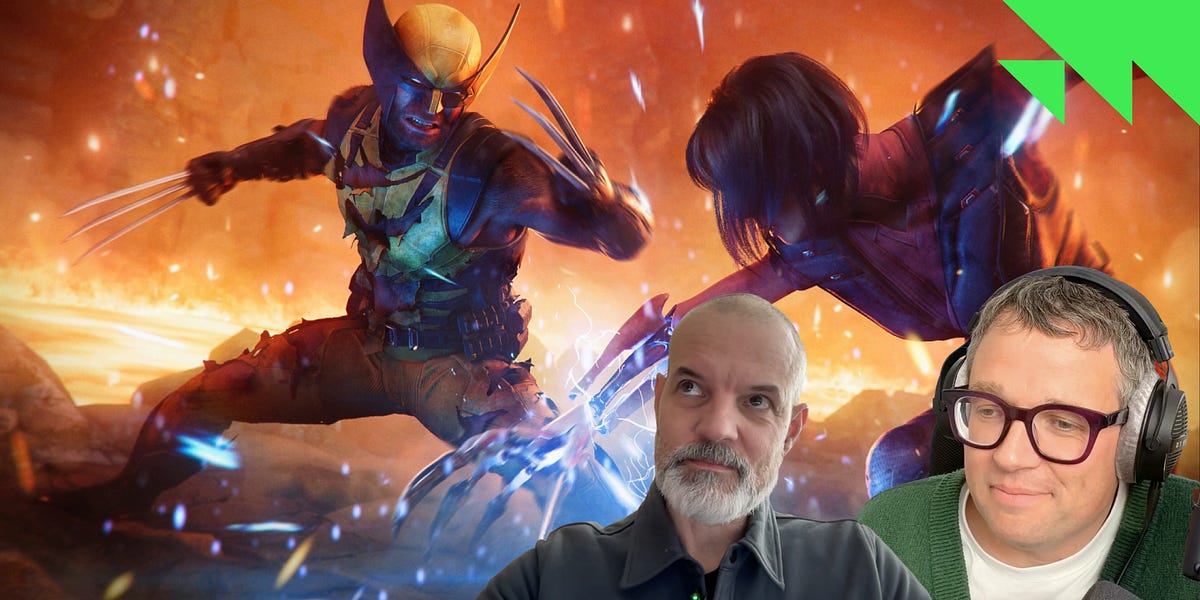
everyone. People are playing Demon's Souls on PC, and it's a PlayStation 5 exclusive. It's choppy, it looks horrible, but Marvel's Wolverine is running on a PC. So, there's all of that to contend with. I consider the fact that uh, Anthropic has put a stop to it with a server-side block essentially to be probably the result of legal pressures or a sudden realization that this is wild west frontier stuff that's got out of control. But let's be clear here, the genie's out of the bottle and Anthropic isn't the only player in the game. They might sort of have issues with all of this stuff, but you know, let's say that the Chinese models are 8 months away from doing the same thing. You know, what's going to stop them? And OpenAI, what's going on there, you know? Yeah. Yeah, I'd say it's problematic.
Yeah. Well, I spoke to I spoke to the trade the trade bodies in the games industry. They all have like anti-piracy groups or IP infringement groups. I remember when I when I first joined MCV
like 20 years ago, I did an interview with Sony, Microsoft, Nintendo side-by-side at one of these things, but it was all about like back then it was about stopping car boot sales selling like copied [laughter] discs of games.
Right, okay.
But I went to them and I'm quite surprised at how many people are still doing it. Like the head of anti-piracy at Nintendo is still the same person I spoke to 20 years ago. But I spoke to mostly to I spoke to the trade bodies and they also work with governments and police and all sorts to crack down on this stuff. And most of it was on background cuz you know, that's the way they work. But I did do an interview with Pete I can't I'm not going to get I'm going to get this pronunciation wrong. I'm sorry Pete. Pete Mehravery. He's chief counsel IP protection and security at ESA. Now, these guys it's interesting cuz they are concerned about this as as you quite rightly pointed out. They are you know, they are worried about it. But if you actually talk to them about what is preoccupying their minds at the moment, they've got their eye on that, but it's commercial cheats and it's bot farming and it's item harvesting and it's account trading. It's that's the kind of stuff that their members are actually asking them to tackle cuz it's
the stuff that's you know, they can see how much money they're losing and the problem that's causing their player bases. When it comes to piracy, it varies by platform holder and company. One of the people I spoke to came from the music industry. So, he's in anti-piracy now in the UK in in sorry, in games, but he came from the music industry. And he was surprised by just how not joined up the video game industry is on this subject. He told me that, you know, company like Nintendo very much on it, you know, they have zero tolerance, they're very aggressive in the space. Whereas other platform holders, he didn't name names, but I might like you work that out, I guess, were just a little bit calmer, a little bit less aggressive. They know they're a little bit like, "Yeah, we're not so It's not so much of a thing." Um and it was just interesting to hear and it means that actually getting a consensus from the industry of going out together with one voice and uh you know, to sort of combat this stuff, is actually hard for them to do because there isn't a consensus. And now that's not surprising in an industry like ours where some people just make free games and they're not too worried about it. And you know, and um and so and so so it's just not as joined up as the music industry or the movie industry. I think probably
Nintendo's stance maybe stems from the R4 card, which you must remember, um which was a which became a mainstream problem. Now, and here's a I got an interesting um uh anecdote actually about how some of this sort of works and and I'm hoping I'm going to get this completely right cuz I wrote it down in notes cuz I'm background. But one of the things one of the problems they have when it comes to sort of stopping this stuff is you can go to an ISP and a lot of the people a lot of these pirates or whatever, they they put it up on an ISP in another country, like um the Philippines or whatever. And then you have to go to the ISP provider and ask them to take stuff down. And they sort of will to a point, but they make money from people accessing their service from international markets. So they're actually not They're kind of disincentivized to do it. And that's one of the things that we got from um uh a trade body, I might be with the ESA, uh they pointed out that they'd like stronger cooperation across borders in order to sort of give to stifle this. So all that sounds concerning. Anyway, uh and Pete at the ESA, he did say, "AI has the ability to accelerate parts of the work involved in examining software, identifying weaknesses, and developing
circumvention tools, and so we take this possibility very seriously." However, I did have to ask myself how much of a problem is it from a bit you know, from a sort of mainstream point of view. Cuz we we know people can do it and you have a digital foundry, you know, someone who knew your leadership, you know, creating Final Fantasy ROMs on the phone, all that kind of stuff. Um, and we've had moments where piracy became a bit mainstream in the past. We saw it PlayStation, we've had it with the Nintendo DS, it can happen. But it isn't really mainstream today. And as that famous Gabe Newell quote, which is piracy is is almost always a service problem and not a pricing problem. Basically, poor service from legitimate sources, limited access is what drives people to piracy. I think the example being wanting to play Final Fantasy on the phone actually is an example of of the
[laughter]
of that being an access problem. So, even if people can access stuff more easily and pirate more easily, will they? The Football Manager team shared stats years and years ago, I remember this, um, saying that they compared they had a game that was cracked very quickly and a game that wasn't cracked at all. And they were able to compare how well that game sold if it didn't get cracked.
And the answer was it did sell better. So, there is money that's lost there. So, we know it can be a problem. But generally, it is still a niche. All the people I spoke to on background were quite calm about it. They talked about how it's very much a thing for the hardcore people to do. It's not popular on consoles. Obviously, we're talking about the ability to take console games and play them on platforms. But console manufacturers, you know, PS5's been cracked, but you know, if you're using illicit software on a console, you know, Sony will shut you off, right? Um, and when I spoke to the ESA, you know, I'm not saying they're being blasé or they're calm is probably a better word about it. It's all, you know, they said, "You might be surprised to hear this, but it's the passion of the players that gives us the most confidence. Players care about the games they love and recognize the creativity, technical skill, resources, and years of work um, required to make them. Supporting those games helps sustain future releases, updates, and new experiences. Players also have a direct interest in fair competition, secure accounts, and communities." That shared interest between creators and players is a strong foundation for protecting the industry's future. Basically, people don't want to steal it. Um, um, I mean, obviously, some people do. But it's it's a small it's a small group. He also He also
talked about how AI can be used on the defensive side. So, as well as it being used to reverse engineer and crack these things, game developers are already using AI-assisted tools to identify coding problems during development. And security researchers are using AI to discover vulnerabilities and help develop fixes. Oh, I've done a lot of talking there. Um, but it was um, but the but basically, they are they said also some of this stuff has always already been possible be it not as easy as it is today. And I think the concern is you know with the economy and people's finances being tricky and maybe people not being able to access things like the PlayStation example you gave you know no longer being able to get something on PC. You know there will be an element of well you know I used to be able to buy them and now I can't and how long will it be before that becomes an issue. But it's not necessarily a priority for a lot of these trade bodies or even the big publishers they're actually more concerned about you know the stop killing games movement and the kids act and the digital fairness act and all this all that stuff's taking priority for them.
Yeah yeah I can see that.
But they're all I think they're all sort of keeping an eye on it over there but they've got other fires to put out first.
Right. Okay. Well let's break it down. I think there's basically reasons why they're probably quite calm. Right. Let's talk about re-compilations. Basically you can distribute a re-compilation right but you can't distribute the core game codes that it's needed to run it. So basically there's the re-compiled executable and then there's all of the game assets you know artwork audio everything the maps the whole the whole lot. You can only redistribute the executable. You can't redistribute the game. So basically you can grab hold of it and then you've got to source the other files or you've got to delve into the murky depths of the internet to find like a complete package somewhere that someone's put together. There's always going to be the worry of malware viruses etc. etc. embedded into that and quite naturally so. So there's a certain level of distrust I think from users in terms of like finding how to play all of this stuff. And certainly the unquote legal way to
do it is basically to own the original game and to dump it. Let's say you've got a PlayStation 5 game or PlayStation 4 game. I think one title that's been widely talked about is like a a re-compilation of the Uncharted trilogy from PlayStation 4. So it's all of the PS3 games on PS4 done by Bluepoint. And yeah there's basically a re-compilation of that available. Now, you can either source it from the internet and worry about, you know, the malware and that side of things, or you can dump it yourself. And to dump it yourself, you need an exploited console. So, the barrier for actually getting a fully safe a series of files is actually rather onerous. You need a You need a PlayStation 5 under a specific firmware, and you need to have kept it there. And to do that, obviously, once you are on a specific firmware that's out of date, you can no longer play multiplayer games. You can no longer access the PlayStation Store. And, you know, actually the subset of games that don't already have PC versions is very, very
low. It's basically the Sony ones, right? So, it's a lot of faff to go through. You know, you basically need a second console that you're keeping on an older firmware in order to dump the files. And yeah, I suspect most people aren't going to do that except like a a tiny sort of majority. Um secondly, we've got to talk about the quality of the re-compilations because um I won't say it's like console secret sauce or whatever, but basically a console is a fixed platform, and the code is designed for that platform. And to bring it to PC is fine, you can do that, but there's, you know, stuff like one of our big issues, shader compilation, where basically the the graphics code needs to be recompiled for every single graphics card that you that's [clears throat] out there. And it can't be done, so it's done on the fly as you play, and it causes stuttering. So, the quality you know, the quality of the experience is much, much lower in that in that space. Unless you've got somebody who plays it through for you
uh to basically compile all the shaders, and then you play it. It's just so totally unworkable. So, the quality of the experience can be pretty low. So, you know, on the PlayStation side of things, uh I can only think of one, you know, there there's going to be certain first-party titles that obviously people want to see on PC, like Marvel's Wolverine, for example, Demon's Souls, etc. It's actually quite a small amount of games though if we're thinking about it, because there's a whole bunch of actually very good PC versions for pretty much everything else.
Mhm.
[clears throat]
Obviously with GTA 6 coming along, which won't have a PC version at launch, um there's probably some level of panic there. And um I actually think that there not being a physical disc for that has has saved GTA 6 from any kind of experimentation with reverse engineering via AI because that disc would have been mastered with an older firmware. And I can well imagine that since all of this stuff kicked off, Rockstar has been speaking to Microsoft and Sony and saying, "Look, make sure your platform is fully secure before we put this out."
And it it will be sort of locked away behind a firmware where um all of the files are encrypted and nobody can access them. The extent to which that will remain the case, we don't know, but um yeah, there's that. So, you know, the console side of things probably not too much of an issue. Microsoft, well, there's already like PC versions of literally everything they've done from, you know, midway through the Xbox One period going forward. Nintendo is the interesting one, right? Because um they have been extremely litigious against emulation. Um And that's a problem because emulators are perfectly legal. Um Sony Sony inadvertently helps to set that precedent. And and rightfully so, right? But Nintendo is basically had a number of issues where they want their titles exclusive to their platform. They don't want them anywhere else. And they have taken action not against, well, on the face of it it seems as though it's action against the emulators, but what it actually is is
action against the piracy circles that have built built up around the emulators. And and which in turn seem to have implicated the emulators. And they've done a uh a bit of a a job in terms of like shutting down emulation. Um but um they've just recently had an exploit of their own on the on the Switch too. Mhm. And that has basically allowed people to get hold of decrypted files of uh pretty much every Switch 2 a game available now. So, there's been some crazy stuff that we've seen. People have like got very badly running versions of Mario Kart World running on Switch 1. And that that sort of thing.
Yeah.
It kind of makes sense. It has the same graphics API as it does It's It's got far less memory and far less horsepower. So, none of this surprises me, but you can well imagine that Nintendo are not happy about this and will be doing everything in its power to to stop these these various ports. So, yeah, there's there's a lot going on here. I think the thing is though that
the um Anthropic can basically put in a server-side block for this sort of stuff, but um I think to a certain extent the genie is out of the bottle.
Yeah.
And and even with the new laws or or or rules on their servers, they have some issues. So, for example, Nvidia DLSS has been pretty much the standout technology for Nvidia um uh for pretty much since like 2020.
Um
The original DLSS 2018 not so good, but 2020 was like a quantum leap in quality for upscaling, and it's served them well to the point where they're talking about 85% usage on their platforms, and it's a selling point for Nvidia GeForce products. Um we've now reached the point where AI is has reverse-engineered DLSS, and um you can run it on an AMD graphics card. Now, the extent to which it's, you know, a fully verified great product is is debatable, right? But, that's basically what's happening with AI at the moment.
So, there's this kind of I won't call it a poetic Well, I suppose it is a poetic irony that is probably Nvidia GPUs hardware that was used to decompile DLSS and make it run on other systems on other on other platforms.
Mhm.
I don't think that sort of stuff would be covered by the Anthropic um server-side wall, but it's very much I think a sticking plaster anyway.
Yeah.
But, yeah, you're quite right. I think, you know, this basically on the console side of things, things are relatively locked down or there's no impetus to actually want to bring an Xbox uh Series X game to PC cuz it's already there. Yeah, Nintendo I'd be worried and I think they're probably going to be bringing the hammer down at some point you know, as they have in the past. PlayStation it's all about securing the platform against further exploits and protecting the games that are to come. Everything that's out there beyond a certain firmware can be decrypted and it can be shared and it can be reverse engineered but Another thing which I think is quite
interesting is like the I was talking about the Uncharted re-compilation there. It's recompiled to a certain point but it's actually bundling in elements of an existing PS4 emulator. So it's it's kind of like half one thing half the other. It's it's kind of weird but yes, I think there is a service problem with that sort of stuff too in that you know, people want to play those old PlayStation 4 games higher resolutions higher frame rates and you know, we've done some modding of our own one of our tools person has has done some modding and basically had Bloodborne running at 4K 30 frames per second or 1440p unlocked with VRR. All of this stuff if a modder can do it then Sony should be able to do it and um Bloodborne would sell millions of units again off the off the back of that I think. So you know, it's part service and part sort of wild west AI adventures I
think.
Yeah, I'm interested with the Nintendo stuff. I think with Nintendo is part of its audience likes the protection of being on a dedicated device. You know, this is my this is the thing that I've not quite got to the bottom of and I guess we'll have to wait to see how it all pans out but yes, it's a problem obviously if you can access these games on on PC for Nintendo but the reality is that the majority of the 150 million people that you know, access have a switch. You know, is that a um No, is that what they're is that what they're likely to do and and I think even you go back to the DS though and I did this thing on one of my first cover stories was off the DS, the shocking truth was very sensational headline. But there was I spoke to a bunch I spoke to Square Enix and Square Enix and other companies like how badly they'd pirated GTA Chinatown Wars was. And their concern was you know we get it's fine if we are making games aimed at the broader audience of DS, but if we're trying to make games aimed at the super hardcore on that platform, we find they're just using the R4.
And so that and so towards the end of the DS life cycle, those companies they they told me they were actually actively deciding against making certain titles for DS. They were they were they were they were making fewer of those sort of more hardcore games because they felt the platform that that that the piracy was too high on it and it was a problem. And so that's where you you know you know I don't think Switch Sports result is going to be heavily pirated on PC, but then maybe Metroid Ravenous might be or something. And so that's where you that's where you've got those potential issues. But we'll yeah.
Well, that's an interesting debate, right? Because the the the kind of hardware piracy solutions like the the R4 cards, they're basically locked out on Switch 2. They've got they've got a pretty good job of being a I mean that they exist, but they don't particularly work or Nintendo locks them out or bans the user. Nintendo or the platform holders have like a huge amount of telemetry coming back from their consoles. They know what's going on, you know. It's like Patrick Stewart in X versus he's seen everything.
[laughter]
I've been what I've been watching those clips as well.
Um so yeah, I mean I'm I'm I don't think from the hardware side it's too much of an issue. I mean the the thing is that um you know um I don't think Switch users want to pirate games. I think is is the bottom line at this point and the routes to doing so are no longer very easy.
No.
Right. It's the other side of things which is you know people on PC who want to play Switch 2 games. And you know they want to play Tears of the Kingdom or the Ocarina of Time remake at like 4K 120 frames per second. That's kind of like the stuff that was happening with the the sort of piracy scene that was emerging around switch one emulators, which you know, I think [clears throat] they've managed to make big strides in in shutting that down, but it's it's it's still out there, I think. And it could happen with switch two based on the other exploits that have been happening recently.
And potentially earlier than than last time. Well, and let's I mean, let's shift the topic a little bit cuz I'm
aware of the time and I did want to you touched upon it earlier, which is the future utility of new consoles. I really because with the with somehow six years into this generation cycle, this is the point where, you know, new consoles are either about to be announced or stuff starting to get out there and and I know that you know, your life would be what's Digital Foundry saying about Project Helix? What what are they hearing about PlayStation 6?
Right.
But it doesn't feel like it's the right time to me to for any for so many reasons. I don't I think don't think we've seen as much as we can for the current hardware. I don't think we've seen enough games. I don't you know, there's the price of the whole thing. This is your world more than mine. Like what what's your take on the whether we're going to see a new generation anytime soon.
Um well, that's a very interesting question because fundamentally what is a console and it's in theory, it should be an inexpensive way to access really great games, right? And it's not anymore. And we've basically got actually, you know, let's be fair. I
mean, price rises on switch two have been relatively modest compared to what's happened elsewhere. So, wasn't it like $50 or something that they've added to it? So, from that respect, I'd still say the switch two is is okay. It's I mean, it's expensive compared to switch one, but I think you I think the value is there. I don't think they're going to be having like massive reductions in volume based on price rises. PlayStation and Xbox are in a different position because, you know, they've got more memory, they've got more expensive parts and um they use bigger SSDs. So, they're really at the center of the of of the storm, so to speak. And it's a big, big problem. Now, um um I think there was the the will to produce consoles in 2027. We might still see them. Um it may not be the full-blooded successors to PlayStation 5 and Series X. I mean the Fortune article last week was quite remarkable, wasn't it? It's kind of like it seemed to be on background information gone mad.
Yeah.
or conjecture from the writer, but I note that the the thing the thing about the Xbox rebuttals with
Seeing is that
When they don't rebut something, yeah.
Yeah.
Yeah, you know, certain things they rebut. They put themselves in a position where they're seemingly tackling minutia. And then there's like things like oh, we're going to be producing a handheld in 2027 and a full console in 2028, which is new information, which they're not rebutting.
Yeah.
Yeah.
And instead they're talking about squabbles between uh different departments of Microsoft.
Yes.
Anyway, yes. So, the question is really what's going to happen there? And um the cost of memory and storage in particular is so high now that um the plans for the next generation of consoles problematic because you can't make them cheaply. If you do, you're going to be um subsidizing it to the tune of hundreds of dollars, which I don't think either Sony or Microsoft wants to do anymore.
I mean
So, there's that. Um so, what are you what are we dealing with? Like consoles that are going to cost well north of a
thousand dollars at this point? And the other thing about the Fortune article was they were you know, they were seemingly talking about a twelve hundred to eighteen hundred dollar Xbox. And it's kind of like the core Xbox audience are going to reject that.
Mhm.
Principally because the consoles they've got are still performing very, very well. And you know, why should they be spending what is effectively PC money on on a games machine? That that's not a high-volume device. That's that's really problematic because you can't make a console in the same way that a console has been defined in the past as like a kind of accessible way to high-end gaming, so to speak, for Microsoft and Sony. So, that's the lie of the land. They they just can't get out a device that's going to be cheap. So, what do you do, right? Um seemingly Microsoft's strategy is to pivot to a handheld device, which I assume will be low volume, similar to what they've been doing with the Asus collaborations, right? And probably quite expensive. Um that's just the way handhelds are at the moment. Sony, I don't know what they're
going to do. And they've got their own handheld, of course, um we understand. So, you know, are they going to release that? I don't really know. PlayStation 6? I mean, Mark Cerny's always talked about it being years away. So, maybe 2027 was never the plan, but we know the silicon exists. Um but I think the core point is are those devices needed at the moment? And um probably the answer is no. I mean, you saw what GTA 6 extended look look like. And it was like things we've never really seen before running on a current generation piece of hardware. And then you're seeing games like Gears Eday, actually, where features from Unreal Engine 5, which we were projecting to be seen in next generation games, are actually arriving now at 60 frames per second on the Series X and even a Series S. So, this generation has got a lot of legs left in it. But let's say the next generation does come, right? The issue there is that um you've still got to make Series X and
PlayStation 5 versions of those games to make them commercially viable. So, how do you approach development? Do you do you do you do you start next gen first and then downscale? Or do you start with the majority of the market and then upscale everything for the yeah, for the for the new consoles, you know, everything's shinier, ray tracing, path tracing. I don't think that's probably viable enough for um to to make a new purchase sort of um desirable.
I do sort of get the idea of the handheld [clears throat] idea, you know, the cuz they you're effectively going it's we're going to continue the PlayStation 5 and continue the Xbox Series X, but in a in a portable format.
Yeah.
I I my bigger thing I've always been this has been my sort of thing I've been banging on about the show for It really does come down to games. And I mean as much I think the PlayStation 5 and Xbox Series X generation, generally speaking, there's been great games on it, but generally speaking, it's been one of the weakest generations I've ever encountered. And [clears throat] I mean that And I mean that partly because I haven't seen a Naughty Dog game. Not a new one anyway, right? And and we've not
even had it yet, but we're about to have one Rockstar title this whole generation. And okay, we know that games take longer to make and COVID was in the middle of that as well, which slowed things down, but I just I can't help but think the classic curve of the consoles. So, we've gone through the peak, we're now on the bottom end of that curve, but I just think if we get to the point where we start some of these big studios start turning out some really interesting and exciting games again, we can turn that curve up. You know, we've seen it happen. Nintendo has quite done it multiple times actually. When you think that they're done, suddenly they get a big spike of interest in their platform because they dropped a Pokémon or something. And so I think there's lots of financial reasons why um we've there's a justification to hold off on the next generation, but also I think there's just I think there's plenty of good stuff that that this generation can do that doesn't require more advanced hardware. Um and also there's the diminishing returns that we're seeing with each generation anyway, at least from a from a mainstream perspective. I'm sure that there's I'm sure your audience would hate to hear that in that kind of thing.
No, no, no, you're you're you're quite
right. Uh this is true. There's no doubt about it. Basically, this this console generation has actually uh solved most of the issues that the last one had, right? So, what were those issues? First of all, everything was running off a laptop hard drive, which which couldn't really produce um enough raw bandwidth to you know, produce things like fast loading games. That would be nice, wouldn't it? That's basically been solved this generation. Last generation, the CPUs were weak, so everything was 30 frames per second mostly, and that's been solved to a certain extent this generation. They're just much better balanced pieces of hardware. And um you know, put in the love to a console version of a game, which is a fixed platform, and it punches above its weight. So, that's that's you know, that's fair enough, right? So, yeah, I mean from that perspective, the the hardware is is is pretty good and it's good to last for a few more years, yeah. That's That's my take on it. Um yeah, [snorts] so I mean, but you're quite right in terms of like things that have happened this generation where it it's not a vintage as such, is it? So,
you're quite right. We haven't seen a new Naughty Dog game. And um
I'm still waiting for Ken Levine to do to come back. It's been like it's been it's been longer than but GTA 5 to see it fixed.
Right. Yeah, there there is that, yeah, but basically, um we were discussing this on our podcast the other day. It's like, you know, what is the legacy of this particular generation? And the legacy seems to have been in certain quarters, the the folk Previously, the focus has always been, let's say, make some great games and we're going to make some money from it. Uh the focus this generation has been more like, we're spending an awful lot of money to make games. We've got to make sure that we make as much money as possible. And I think basically, the the money side of things, the the ROI, the return on investment, is probably more important to than than actually making the game.
Yeah.
So, for example, it's probably best exemplified by the fact we haven't seen a Naughty Dog game. And why haven't we? Because they spent years making a live service game, which they canceled. Uh that seems to be like the fundamental reason for that. So, yes, that's that's
sort of one of the reasons why things haven't been particularly great for this particular generation. But my final point on that, sorry, is that basically, um we haven't seen the end of this generation, even as there has been the the mooting
mooting of the arrival of new hardware.
Um it is the case that, you know, GTA 6 is doing things we've never seen before on a console. You know, Gears of War 4 is taking graphics to the next level, and you're just sort of sitting there thinking, yeah, you know, maybe it is best to pause and leave things as they are.
Which I've taken up too much of your time. I really have. I'm glad that things are going well for Digital Foundry. I know it's a uncertain time. But thank you for your time. Where can people find Digital Foundry if there's anyone who listening to this that just somehow doesn't know what it is?
YouTube.com/digitalfoundry. Should do the trick. Um digitalfoundry.net is the home of our website presence. Thank you for coming on. Cheers.
Thank you to Richard there. Lots and lots and lots to think about. A little bit of a bleak outlook there for the hardware sector, but hopefully at some
point prices might fall, maybe. Might be a few years yet. Right, we do have a second part of this episode that's coming up in just a few hours or depending when you listen to this, it might already be out. So, do make sure you don't miss that. And I say it's a really fun little story, so do come back for that. But in the meantime, let's do our news roundup, shall we? So, this story, my goodness. So, I don't know if you've seen this. Xbox's first COO, Helen Chang, left the company after only 3 months in the role. We reported on that last week. Now, there was a report on Eurogamer that she was let go due to policy violations. Now, I didn't report on that bit, not because I doubt Eurogamer's credibility, but because I'm aware of perhaps political motivations behind that story being out there. Well, now Helen Chang has fired back a little bit on LinkedIn. There's been some speculation about my abrupt departure from Microsoft, she wrote, including claims that I was fired for a policy violation. That's not accurate, and while I won't turn this into a play-by-play, silence should not be mistaken for agreement. What has been said about my departure and what has been left unsaid has created a picture
of me that I hardly recognize. It's important to me to set the record straight. And doing the record straight, she said she goes on to say that she didn't leak information to journalists. She hasn't left Xbox to go to a competitor. I did note that she put Xbox in all caps during this in this LinkedIn post. So, still sticking to the style guide. Third, she did not engage in discrimination, bullying, harassment, insider trading, embezzlement, or other fraudulent activity. And she did not leave because she was passed over for a bigger role. And that didn't really make much sense anyway, cuz she'd only just been made COO. Um she wrote, I believe in fairness, accountability, and holding ourselves to the standard we expect of others. Those standards only mean something when they're applied consistently. I have serious concerns about how they were applied in my case, and I believe those concerns deserve to be taken seriously. This is not how I imagined my story here would end, and it is not the whole story. And there are many comments under there, including from former Xbox executive Shannon Loftis that have fired quite fiery viewpoints at the current Xbox management. And I do get lots of
texts and emails and the occasional phone call from within the walls of Xbox, and there are currently strong feelings about that new management team there. Not all negative though, I must stress. Some feel change was long overdue and they're excited by the change that's happening. I mean, obviously some of the change some of the change is deeply negative such as the job cuts and the Xbox studio closures.
[snorts]
I think we all knew things needed to change at Xbox. Whether the changes that are being made now are the right ones, time will tell, but there are very strong feelings on both sides of that viewpoint internally at that company. And And that sort of seems to be flowing out there from this rather surprising Helen Chang story. I I interviewed Helen once around Mojang, it's about 5-6 years ago. She was She was lovely. I certainly didn't give me the impression of anybody that would that would do it have do anything wrong. Um But uh and she says she didn't, so there we are. Right, next story. Newly released Wuxia action RPG Phantom Blade Zero had already surpassed 4 million copies sold in just 3 days. Another sales milestone story is the Borderlands franchise has now sold 100 million copies worldwide.
That's pretty impressive. Remedy has posted third quarter revenue of 39.6 million euros, a rise of 226% over the year before. This follows the September launch of Control Resident. The game has sold 1 million copies, which is the company's fastest selling game to date. It's also the firm's second self-published game after its smaller live service launch last year, RBC Firebreak. For Remedy, it's really their first major self-published game. And the game still has some way to go, of course. It had 2.4 million wishlists going into launch, so they've still got plenty of people to reach. Whereas the original Control was on 6 million sales. There's there's certainly room for growth there for that title. Um Polish developer CI Games has secured a $32 million loan from two lenders to fund the development and launch of Lords of the Fallen 2. They're going to self-publish that as well. It will also refinance all the group's existing debt. We thought this was coming, but Gang of Dragon developer Negotiate Studio has closed down after Chinese giant NetEase pulled its funding. Games platform itch.io has deleted a couple of terabytes of AI slop/spam from its service. It's also introduced a filter that allows users to filter out games made with generative AI. You're supposed
to disclose where you got generative AI use in your game on that platform. Toy giant Tony, which is behind IP such as Beyblade and also designs Transformers, it sort of operates that franchise in partnership with Hasbro, has launched an indie publisher called Enjoin Games. Its first game is called Suck and Sus, a social deduction game about burgers and betrayal. Interesting. Dishonored developer Arkane has been given extra time to find a buyer by Xbox. It was due to face closure mid-November and now has until mid-December to find a new home. Indie developer Maddie Makes Games has delisted Celeste and TowerFall from Xbox to support the pro-Palestinian boycott, divestment, and sanctions movement. It's not the first company to do that. I'm sure it won't be the last. FromSoftware has delayed Nintendo Switch 2 exclusive The Dust Blots into 2027. That's not not much of a surprise there. Very odd game, The Dust Blots. I really wouldn't I don't get it. Um it looks cool, but I don't I FromSoftware being on Nintendo isn't that unusual cuz we just had a, you know, Elden Ring and and we've had games like Dark Souls on there in the past and and you go all the way back to sort of the GameCube, there was games like Lost
Kingdoms, but sort of a multiplayery Dust Blots, I don't interesting. Investment firm 10:00 a.m. has closed its debut fund and exceeded its initial $50 target. 10:00 a.m. has already backed companies and projects including Star Wars Galactic Racer developer Fuse Games, upcoming racer Clutch from Maverick Games, Daba: Land of Water Scar from Dark Star Games, which is being published by PlayStation that one. Dweller from Top Hat Studios, Motor Slices from Brazilian developer Regula Studio, and there's loads more. Um there so they've raised a lot of money that company. And finally, Bethesda has officially confirmed that the next game in The Elder Scrolls series will be called The Elder Scrolls 6: Sentinel. It is the sequel to the 2011 game Elder Scrolls 5: Skyrim. It's been a long time coming that one. Right. That's it for today's episode of The Game Business Show, except it isn't. There is a part two that is to follow and it's a great story about long-forgotten video games from our past coming back and indeed how All games were found. So join us back for that one. But, if you're going to skip that, I really wish you wouldn't. But, if you
do, we'll be back, of course, next week with more news, analysis, insight, and interviews into the video game industry. So, make sure you don't miss anything, head to the gamebusiness.com, put in your email address, and you'll get an alert every single time we put out an episode. Plus, you'll get a write-up of every episode that we do in newsletter form. But, that's it from us, at least for the next few hours. Until next time, thank you for tuning in.



Comments