1 free read left. Create a free account for unlimited reading + AI research.
Create free account
Interactive Livestreaming and the Future of Esports [Genvid]
Key insights
6 takeaways- 01The future of esports relies on leveraging connected devices to transform spectators into active participants within a dynamic, responsive digital stadium.
- 02The industry must move away from 'viewer-last' design by adopting a three-strata engagement model: informational, customizable, and influential.
- 03Interactive livestreaming shifts esports from passive observation to active participation by integrating real-time data overlays and mechanics directly into broadcasts.
- 04Broadcast features should be tailored to specific game genres, treating MOBAs with the pacing of basketball and card games with the strategic depth of poker.
- 05New monetization channels, including sponsorships, freemium models, and in-game economy integrations, allow developers to capture value from non-playing viewers.
- 06Interactive layers in titles like Counter-Strike and various fighting games have been proven to increase audience retention.
Ask AI about this video
Transcript
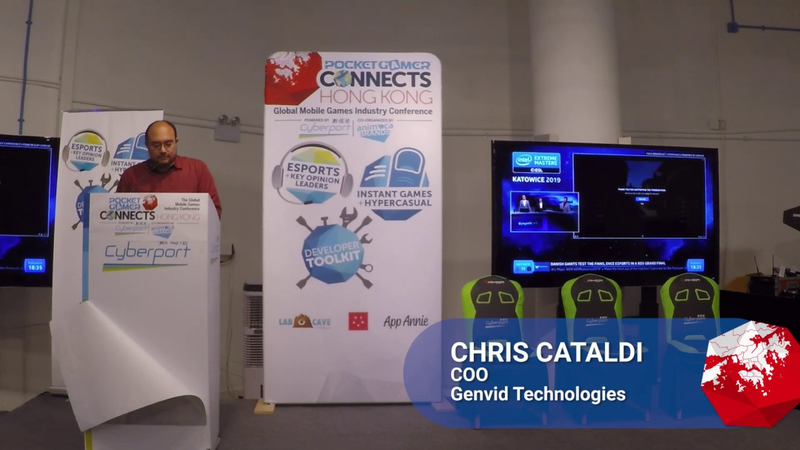
[Music] thank you very much hey it's a honor to be here in Hong Kong for Pocket Gamer connects Hong Kong and sniper port is an amazing venue for this because it's a really good environment for my talk which is interactive streaming and the future eSports just I whenever I give a presentation I like to take a poll of the room and understand how much I'm talking to people who already know my my theme or not so how many people have heard of Jen vid my company before ok cool good how many people have watched an eSport event in the last six months there's some people who haven't raised their hands that's interesting thank you for coming to this talk anyway so just a
brief overview of my talk today I'm going to briefly explain my background the background of the company Jen vid and what we're doing and what we think is interesting about where we are in the games industry today we see sports as the first step towards a very interesting evolution or the game industry and it's really going to be coming around what we define is interactive streaming and at the end I will show some direct demos some samples of what interactive streaming is that's live today and I hope you find that compelling as well so a little bit about my background and the background of Jen vid Jen vid was started about three and a half years ago we have four offices in three countries headquartered in New York main development out of Montreal we
have live ops and business development in LA and we have a growing team in Tokyo and later this year we'll be announcing more expansion in Europe the founders of Ghent had come from the games industry many of us were leaders Square Enix and we all have a diverse history of other companies in and I've been very fortunate to be able to come together and do what we're doing in terms of our investors for those of you who are based in Hong Kong you might have heard of horizons ventures we also were very fortunate to not only get their support but also makers fund which is also very much Hong Kong specific and in the u.s. we have March capital and OCA ventures we have its more than 40 people today in those four offices I was like showing their faces because if it wasn't for
these people I wouldn't be here just and to talk to you and rant about my ideas and so what we're focused on agenda it is giving game developers the tools that they need to really reach out and touch the viewer experience and so when you look at the fact that hundreds of millions of people are watching other people play video games it would come to you know reasons that those people watching those video games should be able to actually reach out and touch those video games and be able to have responsive feedback but when we came to the scene about three and a half years ago we were very not surprised but you know puzzled by the fact that no one had created the right tools developers weren't doing this and it surely wasn't from lack of interest right or just lack of focus and probably also a convergence of opportunity on the market and also technology if I tried to do what we did maybe five years ago instead of four
years ago probably wouldn't have been there yet and we've been very fortunate that very big players like twitch and YouTube and Microsoft and you name it are focusing on this area which is giving enough momentum for developers to see that this is a space for you those of you who are developers and are following the the twitch blog we generate is fortunate to be one of the better-known partners for twitch when they're doing their extensions program and for those of you who don't know what extensions are on twitch they are the ability for you as a developer or a channel owner to put an interactive layer on top of the video and for places that you're using gen vid we make it very easy for that layer on top of the video to be part of the the game experience and I can kind of show you what that means so our key thesis and what I want to be speaking about a lot today is that we see a convergence right
now between traditional media and games we see games to be at the forefront of really three important factors when it comes to the business model when it comes to content design and when it comes to technology and if you put these any of these three against traditional media games are at the forefront games usually have to be more aggressive earlier they have to innovate faster in order to please their consumer which is a player a very discerning very strict consumer as opposed to more traditional media that's been around longer and relies more on more traditional business models or the ability for people to not switch and with people's time becoming more and more precious and more and more [Music] competition for people's time interactivity and you know satisfaction from from the end users can become more and more important and whether you're
looking at Netflix saying that fortnight is the biggest competitor or just about everywhere in this space that's seeing you're seeing traditional game rather traditional media coming and seeing games as their biggest competitor for that time and therefore we're gonna see convergence around that so we think that interactive streaming is a really good hybrid of these two genres that that can offer both the casual kind of sit back experience of what traditional media has given us and they're watching a movie or listening to music we don't have to have skill for any of those things wherever as games you do need skill because that's where fun comes from but for games skill alone can be quite gating so what we're finding is some cool stuff there so before I go into my finding the gap between interactive entertainment I always like to for those of you who've not seen what we're working on to show a little bit of demonstration because it wakes everyone up and you can kind of see what's going
on so this is one of our oldest and finest demos what you're watching right now is a live stream of Unreal Tournament we this we did this in coordination with epic before again that's very popular today it came to market back when there was a lot of focus on the new announcement of Unreal Tournament we're watching a live stream of this on YouTube right now I'll actually show you that it's YouTube live you can see in the bottom YouTube live and what I'm going to do is I'm going to do things that you've really never done with a youtube stream before so for example I'm gonna go ahead and click on Loren you might not be able to see clearly when you zoom in a little bit when I click on and off Loren I get a unique information kind of call out for all his information what gun he has how much healthy has what his shields are and I can turn that on and off for each one live okay so I see for example Callie and I'm gonna zoom out a little bit so I can show you that I've got
menus on the side with all the player names and what you're seeing right now is camera is changing very rapidly right and this is a little bit disconcerting it's a little bit jarring because today eSports is a bit jarring for the viewer the viewer is not anyway in control right when we're watching a game or playing a game in engine we have full control over what's going on we can we can change the camera angle we can choose what player were following but when we're watching it on Twitter YouTube we're just we're stuck we're stuck with whatever the broadcaster wants to show us and that's because there's no real way for the viewer to be able to contribute in a value adding way for the broadcaster to be able to take that as feedback and kind of do something cool with it right so let's actually fix so right now we're watching that cross I'm gonna go ahead and cheer for necross when I cheer for neck Roth you might have seen right above him there's a little flame right what that's doing it's signifying the fact that I've actually sent a cheer into the broadcast neck Roth has heard that I've cheered for him more importantly we have a very
simple broadcast popularity index and so now we're gonna start following the popular player which in this case is neck rod so as long as neck Roth is being cheered for you can see that the cameras gonna follow him and no matter how many times he dies and so what you're seeing here is for the first time individual viewer input is affecting live broadcast right it's not affecting neckla play that graph is still playing he knows that people are cheering for him but that is what it is and what about going back to the fact that well maybe I don't a launch neck rod right maybe the he's the most popular and the the main broadcast is going to be falling most popular but I want to see what other players are doing well what we don't necessarily want to do is replicate the entire player in engine experience right each play each viewer having their own your camera is too complicated for free sports because it's just too much happening so what if instead of that it's about giving the
best views so this is the exact same match from a different perspective I can actually go ahead and click on any of the players and follow them around I can cheer for them as you would but I can also do things and this is where we go from the eSports of today to craziness of tomorrow I can press skull buttons and the skull buttons do kind of what you think is called button would do it's now killing players so I'll go back to the player view and I'll start to split so we're following Kali I'm gonna press the skull button and now Kali if I press it correctly will die as you can see the countdown yeah so I can do this for all the players now you might be thinking why would you ever want to kill a player or why as you are you as a developer would ever allow a viewer to do something as crazy as kill a player and the answer is have you been able to do it before now you have the chat you have the choice to do it and it's not about necessarily killing the player it's
about now the viewer is an agent in the outcome and when you think about what traditional sports and traditional spectacle is why do we go to the stadium we go to the stadium because we want to be part of the action being part of the action is actually the illusion or the realization that we somehow dictate the outcome because we're cheering at the right time or we've distracted the player while he's doing is free shoot right games up until now I haven't been able to do that and so developers haven't had the ability to even think about this it's just been you know a dream or in many ways a nightmare the important thing is once the developer has complete control over this they can start thinking of game loops that take into consideration that viewers exist and viewers can be a valuable agent to the game and can do all kinds of stuff so with this in mind I'm going to start talking about what we think the opportunity is so I was just
thinking about why we go to the stadium and what the the fun part of that is and it's it's feeling engaged right for traditional media and I put sports in this because it's it's one of the better examples we have really three different levels we can look at in in real sports first is the player the person playing the game in front of everyone right in terms of population this is the smallest chorused population these are people who love the game who are demonstrating a live skill so much so that other people are paying them to gather in a place and then demonstrate that skill in front of them these people are not necessarily being monetized directly right they're not paying anything then you have the people who really care about that same game that same sport we're spending a lot of money to go and be close to these people who are playing the game and again feel as though they're
contributing to their their performance through their their monetary or otherwise support these are people being monetized the most per capita whether it's the fact that they're getting you know the best seats or they're buying lots of items to to demonstrate to the to the players or to others that they're the biggest fans or they're in the corporate boxes or whatever what have you or they have the VIP to to meet but there is a very strong service design that's been made for these people in order for them to feel as though they've been made a customer then they're more participants than players or in this case they're more people who are in the stadium far more than their people in the middle of the stadium playing alright then you have the people at home you have the people who are not necessarily paying a lot per capita but in many ways the most money's being spent on them because they're being monetized through broadcast rights or through sponsorships
so that they can be marketed to via the the sport itself and again many more of them than there are of the people in the participant in the stadium and even many more of them than the people who are playing so what do we have if we're going to juxtapose this against what we have today for digital we have the people playing the game right so these are your eSports players or your enthusiasts and for the game industry these are the only people we currently care about people who are demonstrating skill in front of others or in front of themselves right many other people who are at home who aren't playing we're watching the broadcast there are more of these right than the players how many more is is a topic of some debate because in some cases it's a sub function of the people who are playing the game we're also watching the game but let's take it as a given that more
people watch games than play games so the same game right but what is the digital stadium experience participant experience that doesn't exist today right so that's our opportunity right so what's happening right we have a completely underserved market there's a gap here yet people playing the game and you have people watching them play the game and they're really watching because they want to not because it's that that product itself has been designed for the ground up before them and this is a really a function of the history of the eSports in the gaming industry where as very much community driven it wasn't developer driven it was people who love the game so much that in a vacuum of an actual service created their own service the supplement that vacuum and are enjoying that thing they made which is fantastic but has limited ability to really interact with that game because it's it's it's the players okay but coming up with their own so imagine sports if there were no owners and no
stadium's it's just the players union deciding they're gonna make it awesome you know it works but let's let's think about what the opportunity here is so because it's a player centric historical kind of you know a progression a lot of eSports today is being done from the player perspective but by definition it doesn't take into consideration what viewers would want because it hasn't been done with a viewer first and model and whether this is camera angles or commentary or you name it there is so much we could be taking as inspiration from traditional media when coming up with what what eSports couldn't be and I'm not just talking about getting people in a stadium and getting them you know things to wave around and having awesome you know halftime shows right these are these are supplemental to the actual viewing experience rather than core right and so what what opportunities do you have here
rather than just copy what the digital world rather what the physical world does for service design we have the opportunity to really take advantage of what digital provides us which is the idea that there are different modalities of of video consumption people are watching on their phone people are watching on televisions people are watching on PCs all of these are connected devices therefore they have the ability to not only take in live video but by the factor that they're connected to the internet but that's the only way they can watch it we have the ability to have interactivity so the dream that we've all had as children when we're standing in front of our television yelling at the television while we're watching live sports and and in deep inside a reptile brain we believe that actually means something there's no longer an illusion we can literally have that be a reality where the home experience is the digital representation of the arena right it is you know that but for that we need to really start creating this from the
ground up so why is this important if you think of what I call multi layer or multi player value creation if the player is the core driver of creating this awesome content the people who are watching who care enough to sit in the front row I would in the physical world on digital world these are the interactive viewers that service design creates enough of a gravity that you can start having broadcast rights for the non interactive viewers right people who just want to watch but now it's compelling to watch because it's been thought of from from a viewer first design and these are also a bigger market and also an opportunity so this is why it's important for us to start thinking about that participant middle layer because it's only once this is done can we kind of scale what we're trying to do right now is scale skipping this layer we're trying to go directly from player to viewer without thinking about that front row seat that that enthusiast that just likes it not is
playing it and this is quite important so now I'm going to get into some case studies they're gonna be a little bit Gen bit centric because we're the only ones crazy enough to do this right now but it's still worthwhile for traditional eSports like counter-strike we've been very engaged with some top tournament organizers are we like face it and an ESL and I'm gonna show you some examples done with them that both we think revolutionized what eSports is today as well as what it can be in terms of monetization so for I will go into videos and hopefully you can see them quite well yes I'm that guy who does live video streaming from the internet as part of his presentation [Music]
and so that is a very quick way of showing you what I'm going to show you now which is what we've been doing for the last six months working with the the top counter-strike tournament organizers to have what we think is the best viewing experience in the world for eSports today and and here it is so we worked with a company called stats helix which is one of the premier data analytics firms for eSports to create this viewing experience with partnership the valve and this is a livestream of counter-strike on Twitch I'm assuming you've seen counter-strike before and what we did for the last two majors and for the ECS finals were face it is we sold a subscription to a special channel that had the functionality I'm about to show you so for example when was the last time you came to a twitch channel and got a tutorial about how to go through and use that channel I would
probably guess never we had to create this that I'm now gonna use this to demonstrate the functionality of this so you bought the premium pass now let's show you how you can use it so first thing you can do is you have complete customization potential of what you're watching so on the upper left hand side you have a radar that shows where all the players are any given time we're used to seeing that as part of the UI but sometimes it gets in the way of the action so what if you wanted to actually change the size of that again this is not a static image for those of you who are near a big screen you can see those players are moving around in real time and you see where all the players off next we have all the players right so what if I wanted to actually go ahead and click on any of the players names get all of their stats in real time as the as the match goes on if I could click pretty important right cheering I will show later because I think it's pretty cool what we did for ECS and face
it is very much about giving all of the camera angles for all of the players for the first time we were able to link dynamically if you click on any of the player avatars it'll bring you to their perspective and so you can actually follow whatever player you want all with the live shoutcast from the people in studio or you could always come back to the main broadcast follow again this is all on twitch and if you wanted to change any of this functionality you could so I'll show you some more stuff so the scoreboard super important is super simple right when we go to the stadium we have the chance whenever we want to the look up at the scoreboard and see what's going on right watching on ESL just in more you know traditional so I say shall I say broadcast you don't have that ability right you're looking at HL TV or you're waiting for them to turn it on on the main broadcast but we you know it would just something as simple as
doing on this scoreboard is interesting but this is digital right we have the opportunity something a little bit crazier so what if we had the ability to look at a mini-map top down where all the players are at any given time and actually show data that viewers usually don't even get to see like what weapon they have equipped any given time what elevation what direction they're looking right looking at their perspective alone wouldn't give you this information this is this is more than that so what you're seeing right now is well the players are you can kind of see you know literally what weapon they're they're having I can click on any of them when I click on fallin for example on the upper left hand side I see again the same call-out with all of his stats I can kind of thumb through that if I want to and let me do something that you've probably never seen before which is cheer for a person while they're playing Counter Strike so I'm going to on the left hand side you'll see here a cheering element when I cheer each time I cheer you'll see a little kind of blip go out I'm
gonna use premium Cheers and by the way when I say premium cheer is literally you're using twitch bits to use these premium chairs which is their virtual currency and so I'm gonna cheer for fallen with the premium cheers and you're gonna see really quickly at falling it's going on fire right and I can do that for all the players followings about to die yeah there goes and so what the what we're now starting to see is not only the tickets to the virtual but what the difference is between the back seats and the front seats which is proximity to the player proximity to the action and really you know the chance to be on the broadcast yourself this is these are things have already happened this is not a demo what I'm showing you now has happened for the last two counter-strike majors and you should be seeing this more and more in the future so again what have we done from a business model perspective we've created a way for people to purchase premium experiences on the on the platforms that
they were there already Act which is the live streaming platforms they don't have to be an engine to do these things and now we also have within that more about by the way I didn't say the most important thing the output of those cheers aren't just being shown on my screen this is not just a local thing right that is being shown to all viewers also it's being fed back into the broadcast booth and they have a live ticker of when each player is or isn't popular and they can cross-reference that with what's happening in the match live and they can do dynamic shoutcasting based on what the viewers care about and again think about this when you're watching a football match and the shout the announcers are talking about the crowd getting into the emotion right and that that really makes a big difference when you're watching at home and that's counter-strike I will figure out a way
in the I will go past some of these other examples really quickly and I'm available after they talk to show you more but we have lots of examples of developers who are seeing the opportunity to create these interactive experiences for all different kinds of genres including fighting games so there's a moment of sorrow which has recently been it was originally a ps4 launch exclusive and then went to the epic store for the PC exclusive this is a really amazing south american fighting game that integrated gen vid so that viewers can be able to when they're watching live see the live input from the players see the hitboxes of where the players are in any given time telling them on and off and do something as simple as understanding who's waiting like literally turning on and off real-time win-loss probability things that we take for granted in things like
like poker what we're watching right who is winning if you've never watched a fighting game before just looking at the health doesn't tell you who's winning right because it could be a super meter it could be tearing of the characters there's a so much context that is lost if you're a new viewer oh man did a one get some really cool things with Ullman so what are what are possible now I'm going to go into a little bit of framework hopefully give you some information that's useful for you so I already showed you some examples of what the interactive streaming can do for free sports having personalized data about all of the players for each viewer being able if you're a new viewer to understand exactly what's going on and give readouts that you would never give to players or if you wanted to take it to its next logical conclusion making the viewer alive kind of contributor to what's going on these are various strata we also need to think about what the consumer viewer experience is for each
kind of game genre but this is very important because it's not one-to-one you don't just take the you don't you should just copy for example if it's a fighting game a really good example when you're watching a fighting game it's not really like MMA it's not like watching boxing it's a very different kind of experience it's fast paced its tactics focus it's not really about the the training up until you're not demonstrating you know physical skill you're showing dexterity and you know really fast paced to input so it's very akin to something like badminton which were very familiar with here in Asia right and so what are you doing when you're creating a a broadcast for badminton right you're doing focusing very stronger than replays slow-motion you know different you know focusing on on what's happening because it's very fast-paced if you're doing the same thing with MMA you would have wide shots zoom in you wouldn't really be about slow-motion maybe after a knockout right but but it's not nearly the same thing
also arounds very quick rounds as opposed to badminton as you do with fighting games it can end very quickly right MOBAs are team based right they're medium-paced so we can take basketball as a football team you know seeing situationally what's happening any given time on on the court very important CCG card collecting games or strategy games are a little bit more slow-paced very much stats focused in the item focus so we can take we can this is a bit lazy but we can copy from poker here right stats are super important understanding what the next card is asymmetry of information from the from what the player sees is quite important and an MMO if you're talking about the broadcast experience for ammo it's pretty much golf it sounds ludicrous but think about it it's by slow pace its narrative it's a person against himself it's it's a person against the world and it's lots of what
happened last year what happened you know with this clan six months ago this is what all the time has done being done being spent on when when show involved and I'm going to conclude before going to Q&A I have a little bit of time to go through three kind of strata when you're thinking about what the interactive experience should be for your game or for whether it's eSports title or not and kind of give you some some hints and as to how it could be both implemented and monetized so the first level and the most important level is informational which is the ability for a viewer to understand what is going on right right now most eSports a lot of time is being spent in this but it's kind of hard to give everyone the right information right so if you if you take for granted the fact that most people who are watching today are very familiar
with the game that they're watching either their current player or an ex player and they're not too distant past the information that they need is very different than a casual viewer who likes that genre but that maybe hasn't played that game for a while so if you're gonna pick between those two you're always gonna pick the more core demographic because you don't wanna lose your core viewership interactive streaming doesn't require you to make that trade-off so what does that mean from a from a UI UX perspective it's literally something as easy as being able to tahoe on an office information but also be able to present this in a way that is unique for both the the seasoned viewer as well as the new kind of casual interested party so why would you want to do it and help you monetize it well there are a couple of options you have here because it is the most important it's the base of which all of the other levels are you can provide it for free right you could just use it as a starter for funnel to get
people watching and keep them watching you could have it paid for by a sponsor this is something that's new and innovative viewers up until now I haven't had access to all this terrific kind of content so sponsors wanting to get into the space in a more controlled but also authentic way I want to be attributed with this new kind of feature or you could you know do the old-fashioned thing put it behind a paywall right only people the only people who get the best experience of the people who have demonstrated that they're willing to pay for which of this is the most successful is really game specific and how implemented but all these are possible in terms of how much work is required to do this it's the least amount of work of any of the other levels I'll show you because all of the data the data that real sports and media and music are spending billions of dollars to to capture is all trapped within the game gave to the only media where everything you need to do to do informational is
actually already in the game you just need to expose it this is actually the complete opposite of everyone else in the world and a really cool opportunity but you do need to identify what that data is and think about what you're doing what's your demographics are and be able to to you know make unique experiences for them second tier a little bit more you know difficult but potentially more rewarding is customizable and this is the idea that you have different demography is whether it's language whether it's team focus whether it's again interest or familiarity with the game and giving each of those demographics their own unique experience so let's go back to the stadium an example so if you're a big baseball player and you I know I'm in the wrong part of the world you're speaking about baseball but I'm from New York so you'll have to bear with me there's the home and Way side of the stadium right they don't put these people in two different stadiums right they're in the same stadium saying this this sharing the same space and they're going crazy
with each other if we want to have the best eSports experience we need to keep people in the same digital space but give them their own home in a way sections so they're together right we benefit the entire industry much more if we can grow audiences as opposed to segmenting them off so does that mean what's an example of that this is could be something super simple like literally camera different camera angles right so different seats within within meta jewel arena or different languages and overlay super simple right like if I'm in Hong Kong I should really be able to see my stuff at the knees if I want if I want right in in many places I have when I'm watching television I have the option to turn on and off different languages in of the audio shoutcasting there's no reason we should have to change the channel or go to a different arena to get the that appropriate thing for us right
monetization I get quite similar but you probably wouldn't wanna give this away for free this is something that's a bit more difficult to do therefore you have a higher opportunity to monetize here but how much work is required is a bit more work than information because this is information that isn't just in the game right this is information that's much more audience generated so who who are those segments and how do we create content for them and last this is the what this is the you know I think the Holy Grail but also the most difficult is influential right and with it influential we have two different levels there's there's passive participate passive input which is cheering very simple just think cheering when I cheer I'm putting in some input but I'm not affecting necessarily the output from the player and then there's active input which is literally going in and throwing in an item or bomb or or whatever it is right I've shown you examples of what
this could be again interactive controls is cheering and in buying and game items this is the highest burden in terms of game design because you're literally changing how to get rx2 viewers being there how rewarding this is is very much game dependent but if it's done right you can imagine titles where the economy is completely put on its head where you only have ten players in the world and everyone who's inputting in real way are the people watching and there was other people being monetized right and if it's done all right I will say now I believe in the next five years gonna see a major title where the viewers are the main monetization driver and the players you have forced scarcity where only the best players in the world could either play the game right you have these kind of types and so what this is doing is creating from an underserved market an opportunity for a fully interactive cycle between the player and the viewer where the viewer is actually engaged and the only people
who can actually make this possible are the game developers who up until now haven't seen the viewer as their core constituent I have lots of examples of game developers who've created these crazy viewer influential games I'm running out of time so you're gonna have to come and speak to you afterwards so I could show you examples of it but really cool stuff happening we're seeing really good cool data but the next step is and this is what I want to end on today is I've been speaking mostly about competition and eSports but when you think of where the lines get blurry so for example Pro Wrestling or these other kind of interactive you know spectacle that that that's demonstrating some kind of competition we can start seeing examples of where the audience plays a primary role in the enjoyment of the thing but it isn't necessarily about the skill of the player of the game right
and I'm gonna show you some examples of of what some developers have done with interactive streaming here it's about a minute and a half and then I'll conclude and take questions really briefly two questions if I can press the button isn't press the button apparently trying to go fullscreen doesn't so you're gonna have to watch it without going Posca or you're not interested [Music]
[Music] [Music] [Music] [Music] [Music]
[Music] so are some examples of some titles that are using our tech and you can kind of see what's going on and I have all of these live and demonstratable so if you want to see these after my talk I'd love to walk you through them I'm at the end of my time I think I don't even have time for Q&A but I think I've answered many of the questions hopefully but if I haven't I'm available afterwards to take any of your questions thank you very much my last 30 second to seconds key takeaways eSports is the first wave of monetizing viewership and the audiences are large enough now that developers and
people who are controlling what the game is are able to you know take notice of this we're still really early right we're still thinking existing game models putting interactivity around them creating interesting experiences what's really energizing is the next wave of games that are coming that know that viewership is there and that's super exciting and I can't wait to see what's gonna happen tomorrow so that's the end thank you for your time and thank you Patti for thank you sorry that we don't have time for questions but you can always grab him like maybe not grab yeah [Music]
Summary
Interactive livestreaming represents a fundamental shift in the esports landscape, moving away from passive observation toward a model of active viewer participation. By integrating real-time data overlays and interactive mechanics directly into broadcast streams, developers can bridge the gap between traditional media and gaming. This evolution transforms the spectator experience into a digital stadium, where audiences engage with live content through personalized interfaces that mirror the intensity and connectivity of physical sports.
The current esports industry is hindered by a viewer-last design philosophy, as many broadcast standards were established by community members rather than the game developers themselves. To rectify this, the industry must adopt a multi-layered approach that categorizes engagement into three distinct strata: informational, customizable, and influential. By tailoring broadcast features to the unique pacing and mechanics of specific genres—treating MOBAs with the rapid-fire intensity of basketball or card games with the strategic depth of poker—developers can create more immersive environments.
Successful implementations in titles like Counter-Strike and various fighting games demonstrate that these interactive layers significantly increase audience retention and create robust new monetization channels. Through the use of sponsorships, freemium models, and direct integration into the game’s economy, developers can capture value from viewers who are not necessarily active players. Ultimately, the future of esports lies in leveraging connected devices to turn spectators into participants, ensuring that broadcast experiences are as dynamic and responsive as the games themselves.














Comments