1 free read left. Create a free account for unlimited reading + AI research.
Create free account
Increasing productivity while preventing burnout
Key insights
6 takeaways- 01Stress is a significant health factor, contributing to 75% of doctor visits and 60% of all human illnesses.
- 02Burnout is primarily a failure to manage stress and mental focus rather than a direct consequence of total hours worked.
- 03High-intensity work schedules of up to 96 hours per week can be sustainable if the individual employs proper mental and physical regulation.
- 04The average person loses approximately 50% of their waking time to distraction or being lost in thought, representing a major opportunity for productivity gains.
- 05These productivity and stress-management strategies are specifically designed for high-pressure environments like the software and game development industries.
- 06A four-step framework—mindfulness for logical thinking, 30–60 minutes of daily exercise, external motivational cues, and consistent routines—is required to build immunity against burnout.
Ask AI about this video
Transcript
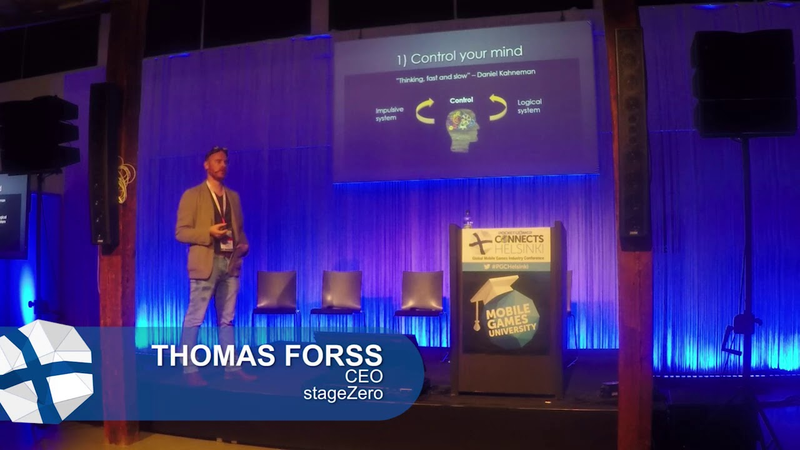
[Music] [Music] all right so my name is Thomas and I'm here today to speak about productivity and preventing burnout and and how to combine those together normally I guess speakers tell people to put their phones away but I'm gonna do it the other way around here I'm gonna ask you to if you're interested in what I'm saying today you might want to bring out your phone and have your camera ready because I have a couple of links in my slides that you might might be interested in all right so about me I have a master's
degree in in software engineering and I just recently sent in my PhD in economics in in machine learning and analytics so it's under review I'm I'm also a co-founder of the company named stage zero it's a small company based here in Helsinki doing game development and also last but not least I've written a book called the self-aware way forward which is going to be really released later this year which talks in which I talk a lot about product productivity and being focused and and also a little bit about burnout and stuff like that yeah and so I brought my glasses just in
case so you wouldn't recognize me from the picture all right so why is this topic relevant at all so start off with a little bit of statistics we have currently last year 75% of all doctor's visits were stress-related so three out of four doctors with this could be prevented if if people were better at handling stress additionally about 60% of all human illnesses are said to be have a have an underlying cause that is also stress right and that's quite a lot actually and furthermore if if you're in a situation where you're having prolonged sessions of stress weeks or months or maybe even years you're really you're
really setting yourself up for a chance of being burned out and I would define burnout here essentially as as the moment where the voice inside your head says or agrees with you that you can't go on anymore that's essentially my definition of burnout here because once you get to that point it's gonna be really hard to do anything an interesting thing here is the people seem to think that it's a number of hours you work that is determining whether or not you will burn out but I'm here to tell you that it's not necessarily a case and and I have some examples from my own life to show all right so compare these two scenarios so a few years back I worked at a regular regular full-time job 40 hours a
week I was a teacher teacher at at a school teaching programming just the environment and then the teaching job ended up having me getting really close to a burnout after that I I quit that job and then I started looking into techniques and different things that could do to prevent prevent myself forever from ever going into like that that state again and so I changed how I worked and with with these changes I was able to last year just out of curiosity for myself I was able to push myself I actually counted every day how much I worked so I ended up at 96 hours per week on average and if you compare these two the first one 40 hours a week I felt like really bad and the other one when I
when I worked 9 96 hours a week it was probably the best year of my life so there is slight difference here right and how do you increase productivity or let's try to define first what productivity here is or or how you can increase it and then I'm gonna talk a little bit about the different ideas I have on it so research has shown that the average person spends about half his time half his waking time lost in thought so whatever you're doing more or less you are always half of that time you're lost in thought doing actually something else than what you were actually thinking about or trying to do right so so one way of increasing productivity would be to reduce the time you're lost in thought right and the
other approach would be to work more hours and I guess that's something that's pretty normal in in this business and as you saw I also tried it myself but it's also after a certain point after that it gets diminished and and you get less less done per hour of course right but what I'm gonna talk about here today is techniques and tips for reducing how much you are lost in thought pretty much and it's for four different steps I have and the first one is to learn to control your mind and I have a book listed here at the top called Thinking Fast and Slow by man named Daniel Kahneman in it he shows or he or his colleagues have shown to guess 20 years of research
that the human mind consists of two different systems you have one system that is impulsive fast the first thing you can think of is always that system like somebody asks you something and the first thing that pops into your head that's the impulsive system and the other system is a logical slower system that you take some time and you decide on something in a logical way and so the idea here is to to use these techniques that I'm going to talk about to let the logical system be more in charge of of your day essentially and and the first step here in this process which was controlling your mind is a number of techniques called mindfulness techniques and here is the first link that I talked
about so if if you want to check take out your phone and take a photo and you know it's a good time for that so through mindfulness techniques these are short techniques 10 to 15 minutes per day you do it's it's a kind of main mental exercise where you you train your ability to focus and to train your ability to kind of not take not change from what you're doing to other things right and the link here is is to my soundcloud I've created a few different credit a few different guided exercises so if you if you are unfamiliar with these types of exercises you can check it out and and I will guide you through it through those exercises and then you guys can learn about the techniques that
way the second thing that we can use to to become less lost in thought is turn to control our body and that's something pretty pretty standard with doing exercise so light or medium exercise 30 to 60 minutes per day is a really good way of doing that so recent research has shown that exercise improve memory and learning surprise surprise and through this techniques we can set up our day so that our so that we exercise when we are the least productive and in that that sense become more productive the third step is to create kind of situations for yourself that you're reminded of why you are doing what you're doing so one of the greatest flaws that humans
have in in in general is that we tend to forget you didn't forget why we're doing something and we tend to forget what we are doing so you start a diet you easily forget a few weeks later why did I start this diet I'm gonna stop so if you want to become more productive set up small cues in your in your day to remember why you're doing things could be posted lab post-it notes it could be whatever but I also have here a second link which is to a YouTube playlist that I've created it's a playlist consisting of consisting of motivational speeches I've found that motivational speeches are really good at getting you back on track with what you're doing so finding out when you are not productive and then using using cues
to get you back on track so the fourth step first and last last step here is to create daily routines out of this different kind of ideas we have to become more productive so we we want to identify the weak spots in our kind of daily routine when are you least productive can you answer that or not I don't know for me it's in the morning when I wake up I'm really unproductive for like one or two hours right and also usually after lunch not that not doing that much for maybe half an hour and then also in the afternoon maybe like four or five I start to get tired again so finding out your own weak spots during a day and then you can use one of these three techniques that I all represented to to get you back on track at the right moment so it's kind of a trial a trial
and error period you have to find out when when am i unfocused van am i unproductive and then you just use one to fill in that void sort of getting back on track right how does this relate to preventing burnout yeah so it relates to preventing burn and by by creating a process so when we create a process out of how we approach our daily work we automatically also become less prone to burnout I would even I didn't even suggest that we become immune to burnout because if you follow if you follow a very certain process every day and it's easy to easy to continue you never get to the point that you decide for yourself I can do this anymore so if you
build it into a routine and you have a good good process for it then you will be preventing yourself from from getting a burnout but also the steps in the process will help you develop kind of the mental tools you need to be able to de-stress so that's something that in the first situation I've talked about I was not able to when in my old job I was not able to de-stress and that's kind of why I got close to a burnout but now when I have the techniques that I presented I can always distress when I eat them so that's how I see that working alright so that was my last slide hires some some graphics from the game that they're developing and yeah [Applause]
so do you guys have questions we're open for questions people you feelin there very quietly it's like wow hey thanks for the talk so this is all for preventing burnout when you actually hit burnout should you just assume these steps also take you out of burnout or is that a separate method yeah I would I guess usually when you hit burnout you need you need to you need to switch up what you've been doing a bit so so you have to get some get some rest but I would also yeah I would say that you could start this as well if you hate burnout it's in that case I would say it's both both the mindfulness exercises and and
the exercising just physical exercises those two will be the best bet to get out of there not yeah thanks so once you get good with the process of distressing yeah how long does it typically take for you to de-stress like it's a session so I usually for me I usually go I go for an exercise in the morning like 40 minutes 45 minutes that's kind of let's say I it's a pre pre pre release of stress before I even start working but but then when I get stressed I usually in the in the afternoon I use 10 to 15 minutes to just really stress that through the mental exercises [Music]
[Music]
Summary
The primary objective is to address the intersection of professional productivity and burnout prevention, arguing that burnout is not a direct result of total hours worked, but rather a failure to manage stress and maintain mental focus. The central thesis posits that individuals can significantly increase their output while remaining resilient to burnout by implementing structured daily routines that minimize the time spent "lost in thought."
Key findings indicate that stress is a pervasive issue, with 75% of doctor visits and 60% of human illnesses linked to stress-related factors. Data from personal experience demonstrates that high-intensity work—up to 96 hours per week—can be sustainable and fulfilling if managed through proper mental and physical regulation, whereas significantly lower hours can lead to burnout if the individual lacks the tools to de-stress. The analysis suggests that the average person spends half of their waking time distracted or lost in thought, representing a significant opportunity for productivity gains.
The proposed methodology for mitigating these issues involves a four-step framework: controlling the mind through mindfulness exercises to shift from impulsive to logical thinking; regulating the body via 30 to 60 minutes of daily exercise; utilizing external cues and motivational content to maintain focus on long-term goals; and establishing consistent daily routines to identify and address periods of low productivity. By integrating these practices, individuals can develop the mental tools necessary to de-stress in real-time. This approach is presented as a proactive strategy to build immunity against burnout, though it can also serve as a recovery method for those already experiencing it. The scope of these findings is applicable to high-pressure professional environments, specifically within the software and game development industries.


























Comments