1 free read left. Create a free account for unlimited reading + AI research.
Create free account
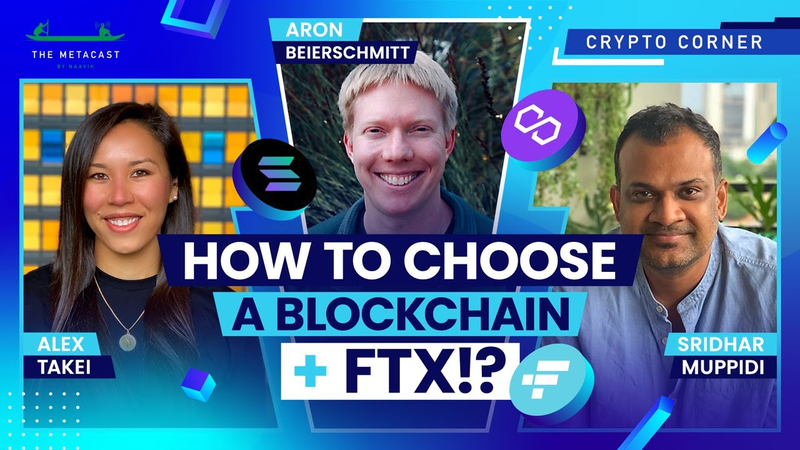
How to Choose a Blockchain + FTX!? - The Metacast By Naavik
Key insights
5 takeaways- 01The collapse of centralized entities like FTX has shifted industry focus toward a clear distinction between transparent, decentralized protocols and centralized 'black box' services to better insulate projects from systemic market shocks.
- 02Developers must choose between EVM-compatible chains for established tooling and interoperability, or high-throughput alternatives like Solana for the low-cost, scalable performance required by high-frequency gaming.
- 03Building proprietary blockchain infrastructure is increasingly viewed as an inefficient distraction from core game design, leading developers to favor established solutions like Polygon Supernets or existing Layer 1 and Layer 2 networks.
- 04To mitigate platform risk and ensure long-term flexibility, developers are prioritizing cross-chain messaging protocols that enable seamless interoperability regardless of the underlying network.
- 05The strategic choice of blockchain depends on whether a studio targets a smaller base of high-value, crypto-native players or requires mass-market scalability for millions of traditional users.
Ask AI about this video
Transcript
[Music] GM friends welcome to another session of the crypto Corner brought to you by navic I'm your host Alex Decay but you can call me to K for short and so today I'm joined by Aaron beyerschmidt and sridi mupiti and we're going to actually get into the weeds of web 3 game development chain Choice um AKA how to pick a chain to build on if you're a web 3 game developer this is a conversation I'm really excited to host because I actually see chain choices being kind of tantamount to picking an engine in the standard web 2 games and it's also been an incredibly exciting past few days for crypto and blockchains um on the day of recording this podcast uh two days ago Finance it basically issued an Loi to buy FTX and yesterday they rescinded that Loi
um and so it just would be it's going to be an interesting time an interesting question in terms of how this affects all the people that are going to be developing on chains like Solana and the evm ecosystem Etc so anyway welcome to the metacast guys thank you thank you for having me yeah um and so I guess I'll just ask for a quick couple of quick introductions Aaron I know you've been on the podcast a couple times but just remind the audience um you know who you are what you're building what chain you're building on Etc yeah I'm Aaron barshman I'm one of the co-founders of Laguna games we are the creators of crypto unicorns a game that launched on polygon uh May 5th so we're coming up on uh going on eight months of live operations um and dealing kind of with the madness that is managing a web 3 game and an open economy and so uh yeah I feel like I've earned some Battle Scars at this point yeah from the um Aaron and I were at the uh for the audience we were at the game seven gamer with a three
conference um uh up in SF the other day and Aaron gave a great talk on managing web free live Ops my favorite um my favorite takeaway was that LTV ltvs can be negative so that's a true utter Joy I'm sure um coming from the mobile PM space so um yeah yeah uh sweetie well uh first of all uh Alex thanks for having me over here uh this is uh this is I I've always been a fan of the podcast when Nicole was hosting and uh uh so I'm happy to see this continue um my name is sridharmapuri I'm one of the co-founders of a company called yes no we are a Hyderabad india-based Studio we've been building games for mobile games probably for about 10 12 years now uh I think our claim to fame would be big games like Star Trek trixels uh there was this you know Texas one and
pixels 2 we we work with a few other IPS like Adventure Time Kingsman and Madagascar and a few others so we built big monster free to play games that's our background uh lately we've kind of pivoted into a skill gaming platform and skill gaming you know IP holder so we have a large portfolio of skill games uh which are primarily people play using real money uh but now now we're trying to explore if people can please those skill games using crypto so lead we started working with salana uh for a few months now and we are Geo testing our platform nice awesome yeah it will be interesting to get your take um on what the environment are of of like of Solana is right now and so uh you know if it's too good to it's too good to not talk about but um what are people's perspectives first of all is everybody okay um what is what are your guys's mental anguish levels anybody holding any uh
significant amounts of ethereum or ftt God forbid that thankfully no I'm I'm certainly fine I do know some people who have definitely been affected by this blow up um so I my part definitely goes out to anyone that had funds at FTX um certainly anyone that was holding ftt um and really anyone that kind of believed in SPF because it's very clear he's uh another in a long line of um people that I don't really think we're here for the space um and and we're very clearly simply trying to monetize it as much as possible so um but yeah thankfully on on our end um no exposure which is which is great it's good the same here uh we uh we actually quite like it uh you know things are cheaper uh to acquire we were thinking of acquiring the quite a bit of soul for our own game so that became even more easier so we did uh so we you
know we have no complaints actually got it yeah I think it's just it is really interesting because I think that um well the tldr in case the audience doesn't really hasn't been up to date or doesn't really um hasn't really been following too closely but essentially um FTX is one of the largest um centralized exchanges um and binance is the largest exchange um and basically what was kind of discovered over the past couple of days is that um Alameda research Group which is a trading firm um that uh was basically holding a substantial amount of ftt on its balance sheet and the kind of presumption is that perhaps Alameda was basically using consumer Holdings on FTX to actually Finance trades and because they held ftt which is their discount token they were getting a lot of kind of maybe Insider benefits on trading on FTX and so basically Finance CZ basically decided that he was going to sell off all his ftt and then he was like I'm gonna buy this and which would have been technically in the United States again
this has nothing to do with FTX us or um at all um but what would be considered potentially in the in the United States a um a question of antitrust because if you have the two two of the biggest markets um merging essentially together to basically make this um you know this basically completely entire Market consolidation um and so it's just very interesting to hear kind of um what the what the Fallout is being essentially like all crypto values have basically plummeted in market caps so um but yes I guess in that sense it is a cheaper time to buy uh um but um just it's interesting to hear you guys is it's a great time to build yeah um any other any of any predictions for how this will pan out guys if what is true and that they took out loans against the ftt token which is a token that they kind of control given they're the ones that issued it um if they were really taking loans out against it which appears to be the case uh especially with Carolyn's hole you know we'll buy as much as you want it
twenty two dollars which was a heart back to Sam's I'll buy as much Soul as you want at three dollars or whatever right that's why I've never liked Seoul quite frankly so I'm just gonna go ahead and come out there and say that but I don't like any token or chain that's too closely tied to uh to a big money group um but yeah if they were taking out loans against ftt and then obviously as binance cze started to dump against that they began to get liquidated they also have to post collateral for it to not get liquidated and the real horrifying thing if if it ends up being true is is if they took customer deposits at FTX and handed them to Alameda whether it was to backstop liquidations or to allow Alameda to attempt to effectively create yield on top of those deposits like it's just a it's a that would be an unmitigated disaster and the only Silver Lining I see in it is I hope it is an absolute slap in the face to Gary Gensler who has spent so much time
focused on D5 where everything is fully on chain and transparent you can literally look at the code of the smart contracts and if you look at this year Celsius Voyager FTX Nexon like what is the pattern there centralized black boxes there's where you regulate Gensler and so I hope this is a huge knock on his career I mean this level of ineptitude in our regulatory body has now been I think uh very much brought to the Forefront um so yeah you know it's super sad that that tornado cash developer is in jail right now that is a huge problem that is something that I hope upsets people uh in the space as it should and who has gone to jail in any of these black box centralized kind of exchanges that have really defrauded consumers and that is not possible in D5 because you can literally with doing analytics get proof of funds right and
so um again I my take is and hope for the future is that this really does uh show us that the SEC has been paying attention to the wrong thing there is a need for regulation in the space the fact that SBF was pointing at defy and saying go regulate them is a massive you know thing or it's like all right this guy clearly was not super um was not really a a person that we should have put on a pedestal ever ever and we clearly put the wrong people on the pedestal uh the wrong person on the pedestal here so go vitalik I feel like he's one of the last people that we can really point to as somebody who genuinely believes in the space in the future and not you know is not sitting here simply trying to monetize it as much as possible um sure so good riddance to SPF and I hope somebody goes to jail uh on this front for sure and ginsler regulate the right thing
a spicy take um and I guess now that we are it's a great transition since we believe in vitalik to start talking about maybe the evm ecosystem and sort of again like the chain Choice question so shifting away from the FTX circus um when we decide to build in web 2 right um you know we're trying to build a game you know we ask ourselves a couple questions we're like is our game 2D or 3D do we know how to code what languages do we know do we like object-based programming do we like visual based programming what's the graphical Fidelity that we're looking for um you know what platforms we want to publish on and then from that we basically decide do we want to build an unreal Godot game maker Unity Etc um and so I think you know after you have to make the same decision in web3 but then after that you have to decide what chain you build on um and I'm not even sure if the engine choice is related to the chain choice I would love
to actually know whether or not that's actually something that goes to your guys's minds but um maybe Aaron you can kind of kick us off sort of what are my general options right um I know that there's a bunch of there's l1s there's l2s there's Roll-Ups right there's Bill Jerome right what's the high level I guess thinking around how you would go about you know surveying the actual menu of chance that's a really great way of putting it um I guess at a real high level top of the funnel it's do you choose evm or not right and that kind of is the choice between like Solana and a few other like non-avm chains right and then the entirety of the evm I think that's a first critical choice to make as a developer one of the reasons we chose the ebm is there's many many chains that support it and so the idea I think it's really important to understand is I'm walking through what led us to polygon like we also made this Choice last year
around um August and September of last year right so things were very different at that point it was not very clear that polygon would kind of be at the Forefront of the space they hadn't kicked off I mean polygon Studios wasn't even a thing yet right they had not kicked off a lot of the BD effort that they've had ongoing Avalanche was much bigger than polygon you know the binance chain was much bigger than polygon um so the lay of the land has shifted a lot since kind of we made the choice but but the First Choice was evm or non-evm we went with the evm you're going to see a lot of the decisions that I made were based purely around preserving optionality over time and the idea that the space is still very early we don't know what's going to win uh yet um and you know I think that you want to try to preserve as much optionality as a developer as you can so you can kind of react and shift with the space as it changes and that just comes from my perspective right I've been paying attention to the Space daily since 2017 and um it has evolved a lot since then so I
would say first choice ebm not evm then you've got if if you're going evm you've got an enormous number of choices and now she brought up the idea of like are you L1 are you L2 I think that's probably the next layer of choice um right now ethereum is relatively cheap it is not super cheap in the context of you're still spending multiple dollars for you know even a very simple transaction and probably tens of dollars for a more complicated like breed or evolutionary transaction depending on how much is actually on chain so that's a choice that's you know kind of important to make and I think most developers are choosing more and more to go to l2s which are usually cheaper and potentially faster and that opens up another whole spectrum of things right are you going optimistic are you going uh ZK in terms of your roll up um and you know most of those right now are still in the earliest stages of getting deployed right even arbit from
an optimism still have very heavy centralization even though there's far less risk of uh funds being completely stolen in those environments given the ultimately roll uh down to ethereum name you know mainnet um and then you have choices like polygon which are side chains right and make certain sacrifices on um decentralization to provide you know cheap and kind of fast transactions and and you have like the CZ chain or binance which you know is an evm chain but is very very centralized and very heavily controlled by CZ so you kind of enter his fiefdom um uh is how I see it um so anyway I'll kind of pause there there's a ton of stuff to kind of pick apart but to me it's like evm non-edm L1 L2 and then you have a bunch of choices still within that you know within that spectrum and non-abm side you have Solana you have Mir um you know Mina is supposedly coming out with smart contracts you have cardano I mean there's a lot of choices
that aren't the evm um right right I guess heavily biased yeah and so then I guess tree like you you chose not evm can you walk us through that process before I do that I would like to ask Aaron why he chose the navm uh so what was your core thinking behind it uh [Music] yeah um evm is the Smart contract environment that has been around the longest and so smart contracts against the evm are way more battle tested you have way more interoperability like for example the ox protocol which one of my favorite projects in the space that I don't think gets nearly enough credit something like 50 of token volume every day on ethereum and on polygon um is using the ox router right to route your liquidity from a swap to a swap and um you get all of that battle tested kind of smart contract work
um where you just know billions and billions of dollars of value has been held and has not been exploited so you get that and then you just have the tooling available right there's a lot of evm tooling um you know given it's been around longer than many of these other non-edm environments um so I think you get a lot of Advantage there and just deployment tooling and you know you've got infrastructure providers like inferior and Alchemy outside of choices block Damon right you have a lot of choices where you step out into these more nascent ecosystems and I think the amount of tooling goes down and the optionality again that you have to pick different providers infrastructure providers and things goes down um cool so um yeah uh I I agree with you I actually said those are good points uh for me uh you know I would like to take a step back first on why we were building a web 3 or a blockchain platform or a game
right this uh uh we were we were we wanted to build something sustainable right it's uh we weren't looking at like hey can we just take a free-to-play game which could work which works already on a web to world uh can we just make our user participants in it and you know do a bunch of tokens uh that won't have worked because that might not have been sustainable uh you know it could be but you know uh if if it does work then why even give anybody a share we might as well uh you know uh just do it on our own as a web 2 game right so there were decisions to be made but uh for for us to be on with three was uh about on our platform uh the kind of games we build which are skill games uh we felt like there is a trust deficit uh people don't trust uh these kind of platforms enough and being on blockchain everything being transparent everything you can go to an Explorer and view what has happened who
you played against what is in their wallet so when we are able to show that information there's a lot more Trust on the platform that you're not playing against a board and so on and this also provides liquidity uh not liquidity in terms of tokens and coins but liquidity in terms of matchmaking uh you know because you are playing using crypto so you are you know kind of borderless right uh kind of unshackles the potential of what is possible uh and then uh we were also looking at loyalty I mean if I can make my user reports spent in my own ecosystem uh uh would that give me an edge or somebody who's doing in this on a web 2 world right so some of these uh with the thoughts which we're going through uh that brings me back to uh you know when we talk about a a web 3 game there are primarily two aspects right there's the collectible aspect of it uh crafting Collections and
so on where the nfts come in and then there is the economy uh your tokens you know which could exist uh as an SPL token for us or you know or uh you know your ethereum tokens or you know you know if it is another L1 so something else so um for us uh tokens was our primary way of trying to do this uh and when we were looking at that and the number of transactions which are going to happen our decision was primarily about we wanted a stable ecosystem we wanted something which has all the tools but we also wanted something super fast and something very expensive so to give you some numbers uh on Solana I could probably with the price what it is right now I could probably do 11 to 12 000 transactions simple transactions on salana chain for a dollar
for one dollar I could probably do 10 to 12 000 transactions now I'm not sure on polygon I'm assuming that's probably for a dollar you could probably do 30 transactions or forty uh if it is finances probably uh I don't know five so it's you know so as a game developer when I'm trying to evolve my uh how how my users are gonna play uh the expense of you know using a chain uh which is that expensive it's just not worth it so and then uh so we wanted something real time too so uh something fast was also important so there's really no comparison when you compare salana with some of the other chains out there so it sounds basically like the kind of game that you're choosing to build it sounds like you have um a collectible game um with a token economy right which not all games might have they might not you might not be a collectible game and you
also might not have be issuing um either semi-variable tokens or in any governance tokens at all some games have chosen to do that but it sounds like basically you went from the game first and you said hey like I want to be I suspect that in my game economy these this level of transactions will be happening amongst the players and therefore you chose Solana because you felt that it has the um basically the cheapest number of transactions per second essentially is that a good summary or and also fast you know something was response responsive and we're building a game not like you know uh something is gonna uh you know go really bad if you know the response doesn't come through or uh all the chain crashes uh but uh you know the way we looked at it is as long as when it works it's fast and it's cheap you know that that's that should be good enough you see yeah um and so I guess there's a couple of
pieces to this um I that I heard right you know you're talking a lot about the chains or the speed it's cost maybe it's like technical capacity I heard Aaron talk a lot about kind of the support um the developer support right so the stability in the ecosystem based on how long it's been around and how many people are developing on it you know oh you know a huge reason for why people develop on Unity is just because there's so many like developer forums and Reddit and everybody's resourcing and um fixing problems or issues with the with the engine um and so I think that's actually two big themes that I've kind of picked up on is the chain itself in terms of its actual technology technological capabilities but then also the text the the support system other developers that are developing on the Chain the chain itself and and the resources that it's kind of giving you as developers um any initial reactions to that or any any you know how do you for example for the salon aside how do you perceive the support system right um the other developers the Solana I guess development team themselves
and uh you know to add to that Erin also talked about uh uh you know the value which is already created on those chains the assets which are already sitting on those chains primarily on ebm uh which could you know potentially be accessible to uh the new new products which are new apps which have been built on it right but we are looking at primarily from a user point of view uh how do I bring in the next 10 million next 100 million users uh to the web 3 world uh ethereum probably has uh half a million monthly active wallets right now right so it's yes there's a lot of a lot of Bells but there are not a lot of people out there active right so uh from a web three games point of view we're looking for regular players who don't necessarily have to be crypto aware uh can we onboard them can we educate them about
crypto can we give them you know agency can give them control aboard how they can participate and how they can have ownership of that particular platform or game right so that's how we're looking at it uh and so we don't necessarily need to worry about or are there like you know billions worth of assets because that's not who we are going after we're going after the user base who are going to bring in the value onto the platform now to the other uh two points you talked about which is uh you know the support system now great thing luckily for us uh you know with FTX and everything which has happened Solana has been one of the top five chains out there uh and for you know for a year or more they have built in c number of tools and a lot of there's a very strong community so there are a lot of tools already there if some of them
which aren't there are already have started supporting them so uh so that way uh in terms of um you know uh analytics Platforms in diagnostic Platforms in terms of dexes you know all of that infraction is already there and uh you know in the technology itself rust is like as you know is like competitively very very easy to get on board on uh and uh and I'm assuming all all BD teams are equal but my our experience with salana BD and disappear system has been you know awesome they they created a slack Channel they've been helping us whenever we needed any but the technology itself was so easy uh that we didn't really need to uh you know hit them up too much got it got it um and and for those in the audience that don't know rust is the um coding language that um Solana is is developed in
um and so yeah I think that those those points are really critical right um you're talking about the developer tools and the things that come kind of come off the shelf that help you build your game but um I guess I would also ask the question of sort of like what's your what's your perspective been on some of the security and outages issues that Solana has experienced over time right um you know in 2021 Solana went offline for 18 hours um it's definitely had its fair share of hacks um it's obviously incredibly ambitious of what it wants to do for the web 3 ecosystem right with even developing their own mobile phone right to skirt um the you know the Apple Store and the infrastructure that we have to do there um but when it comes to actually being a live game it sounds like you guys are in development correct um are there other people in the ecosystem of Solana that are live right now that have been almost derailed by some of these upsets in the chain well uh I I've been through the field
video of Twitter this right uh you know it's uh uh you know anything new anything big uh you know and when you're building almost real time uh does have issues uh I'm not justifying issues here uh it's just that uh if you look at uh their problems they're progressively been coming down uh and you know at the end of the day we're building a game we're not taking ourselves too seriously uh and we have built those uh uh you know uh those rappers around the system in case there is a uh there is a problem where the chain doesn't respond and you know that happens in other chains too right there's no outage but sometimes it takes three four minutes for them to you know uh respond if a transaction has happened or not right uh so that's not very different from say something being down for like a an hour so we built those rappers uh on the platform but I
think the positives completely outweigh uh the one or two negatives there as I said I can potentially do eleven thousand twelve thousand transactions for every dollar on salana which all no chain out there provides of course there are couple which are probably free but uh they just don't have any any infrastructure around them got it I see um Aaron it sounds like you're about to well this is probably I think where srid R and I disagree a bit right you said one thing srid R where you said we're making a game we're not taking ourselves too seriously and that's the piece that if these assets are real digital assets that people own and control the only way they have value long term is if ultimately the store of record you know records that value and holds it keeps it right and so um we're obviously a bit further along in terms of being deployed and being live and you know have sold and shipped
a lot of assets out to players um and so yeah you know I I kind of get what you're saying where it's like well you know Salon is building it's gone down a few times and you know things go down it's like yeah you know polygon experience has experienced one uh extended period of downtime since we started building uh there you've had like arbitrum and optimism experience downtime um ethereum mainnet hasn't um and I you know generally kind of put it up there at the top but it's obviously way more expensive so the idea is like you know yeah transactions are cheap I think we chose to be a hybrid which we discussed right the idea that there's a lot of off-chain activity and then the really critical pieces are on chain so we kind of reduce the amount of exposure that our players have to to the blockchain polygon is getting more and more expensive you know we're seeing people who will spend especially for breeding and evolutionary transactions which are more expensive because they're actually doing more on chain like again DNA the birth of these unicorns is fully
on chain which is a kind of incredible little thing but it does cost right it'll be tens of cents you know it can be as much as 50 cents if you're really trying to push it through in a high activity period it's over a dollar then again our assets are 20 30 40 50 bucks right and so um there's like this fundamental piece where I know a lot of game devs are dipping a toe into web3 and that's where platforms like immutable X which we haven't even talked about yet may come into play where they're like hey we're technically a roll-up on top of um ethereum right and so if you want security and you want cheap and fast use our platform use our API you don't even have to deal with 721s just paying it you know an API and here's a token I have questions or around whether that's real relative to everything else and that's where like the interoperability yes polygon is a side chain to ethereum at least it's checkpointing to a thing that I think we can all point to as like the highest uh most decentralized most
trusted chain to exist um since Bitcoin and Bitcoin doesn't have Smart contracts so that's I guess where I disagree a bit but ultimately I'm calling out my own um you know blind spot which is I care very deeply about the underlying principles of the space and we've tried to drive that way and at the end of the day Gamers may not care they may not care and that is a fear that I've had from the beginning I do think our current Community cares I think we can continue to scale to people who care and I kind of believe the more and more that you know you look at the Solana ecosystem it's down 50 in the last seven days the tote not even the token just there's been this massive flight from Solana based on its exposure the fact that FTX holds a ton of those tokens the fact that those tokens are about to unlock as you called out Alex um so they're scary things and and I point this out not to on Solana but more to just indicate to game devs that
like you have to look beyond the technicals you have to look at the economics of a chain like for example polygon generates a lot more daily fees than Solana like how will Solana sustain long term on fees alone what is the inflation schedule the tokens and so as you approach the space um you really have to think Beyond just pure technical considerations um given you're exposed to like the macroeconomic side of things or you could be exposed to one at an exchange bringing the entire chain to its knees right and so and the same thing could happen with polygon there are open questions around they have a five of eight multi-sig bridge that if that is ever hacked the polygon chain is going to go into the ground so I made similar Choice history where I said things like you know players aren't going to care about security nearly as much as somebody holding hundreds of thousands or millions or billions of dollars in value right and so anyway I see things differently but we also made similar
choices I guess what I'm calling out yeah that totally makes sense it's just uh what the thing I I think about the thing we we all need to agree is there are different kinds of games and people are building for different kinds of demographics uh most people on web3 are building for Wales or super users right uh you yourself probably have like maybe 10 000 odd active users that's it right that that's enough for you because that's great uh whereas uh a platform I'm building I probably want 10 million odd users now yeah their technology and economics do play a big part because I I cannot afford to spend three four cents per transaction when I don't even know if my idea works right uh you know so uh and and God forbid I'm successful then I'm in trouble because I picked a chain
which he is gonna you know so they're are the economics and Technology are a crucial decision we all cannot afford to be idealist like you uh we have to be practical and our decision was purely based on you know who's going to provide us the fastest chain and cheapest chip yeah for sure the counter argument there is he could have deployed on polygon Edge or an avalanche CNET and had the cheap transactions the evm the tooling the D5 space you would have had to deal with a bridge right but again you know I'm obviously very anti-salon and I've tried not to come off so anti-solana so well and then your token would be the token being spent you know on transaction you could literally make it as cheap as you want right if you don't care about that run the you know run the validators yourself that kind of stuff right I hear you but I do believe it's a trap
to say oh I'm driving millions of transactions and other networks can't scale right because you know how this proof of History Solana consensus mechanism again I'm very wary of change that have made promises and in some ways have failed to deliver on those promises well I mean this is going to probably play out in about three days so we'll see uh but as I said I've spent uh quite a bit of time in salana offices I met the founders spend time with the engineers who've been building this stuff amazing folks who cared about decentralized Vision who cared about the systems yes you know we all might not agree how they got where they got but they're great folk and they're building a great system which we have been uh you know we've been very happy with yeah um so what's very clear to me is Aaron
is a purist and it's unclear do you do you you don't like Solana Aaron um uh so but I think I think one of the things that you're mentioning is that I'm picking up on is really interesting and that's such that um with the evm ecosystem there's almost like all these like little planets that you can go to if something fails because the dev environment is the same so I think like you were saying you're solving for obviously the idealism of what's on chain and kind of like the the crypto purist ideology but also the security or the the risk mitigation of being able to LEAP from in the case that polygon fails to maybe another um L2 or another roll-up within the evm ecosystem um yeah so like an arbitrum or something it would be a disaster for polygon to fail but um we have the ability to migrate right migrating right exactly I think I think
different than some of the non-abms where you would have to totally rewrite but I've had arguments with other guys who've gone you know like for example we're building on top of Stark where right and they're writing in Cairo uh which is obviously not the evm um and you know he kind of made the point and I thought well you know he's right smart contracts really aren't a lot of code especially when you think about like a game engine right or the amount of code that you would write to run an MMO server right like the amount of code actual lines of code is very small and so his whole point was like yeah you know Cairo wasn't what we wanted but you know now we're just rewriting in the EDM they've actually migrated to polygon right so and I think there will be people who leave the EDM right and go go other directions um but yeah I want to be open about my bias and at the end of the day sridhar could absolutely be right you know the vast majority of players or to his point certain types of games don't need this right they just need incredibly fast transactions and if ultimately Salon is the winner there I debate that I think there's other chains that we'll provide
um that with higher security guarantees but ultimately who knows right we don't know we're still very much in kind of the experimental phase the call out for all devs is really look holistically at everything when picking a chain and Alex you called it out earlier I do think it's kind of like a could be a make or break moment look at all the developers that we're building in the Terra Luna ecosystem absolutely right and we have yet to see the extent to which Solana is tied to FTX and Alameda and and how drastic that flight Capital flight will be from their chain but if it ends up being as bad as Tara and Luna you're going to see these refugees and we've already seen like Derby stars um Derby stars is the one that comes top of mind that was on the you know on Luna Terra right and they migrated to polygon afterwards and they did have to do um you know full rebuild of their contracts to complete that migration and stuff um but the fact that that's even possible is cool and a little bit of a
differentiator in terms of the space itself right is you know even if you pick wrong it's not necessarily a disaster and we've seen several projects gaming projects come out of the Terra Luna collapse in a way that I think um you know they can come back even stronger yeah so so actually tell me a little bit about that right um you know I think from the engine world we think that if you were to switch your gaming engine halfway through development oh my goodness it would be like it would be like project suicide at times right um how would you for example in um in the projects that had to shift from from the Luna and Terror ecosystem what actually um and I guess on the in the highest level way possible actually has to happen right what actually happens to migrate to polygon should I take that first Sawyer there are two aspects to us that the technology aspect and then there is the tokens the currencies that that one
right uh technology is actually quite easy you know it's probably a month work uh maybe even less uh but uh figuring out uh you know if you have assets there how you're gonna migrate there you know into another one you know uh some of that could uh you know ease what could make or break things uh I mean that's where uh you know uh most people are thinking about how do we start designing multi-chain architectures uh uh just because you know uh because of these kind of issues if you you chose one chain for whatever reason you chose but you do want to have a backup right so uh so so that way you can coexist and build some sort of peer-to-peer system between your tokens and nfts and stuff like that so uh but technology is very very easy so moving from chain to chain is not that not that difficult got it so it's the it's actually the
economic part the tokens that are hard to to shift over rather than yeah it depends right it depends on do you want interoperability afterwards right in the Terra Luna collapse there wasn't anything to stay with right so he's right they just had to rewrite their contracts in the EDM and effectively a bridge contract which would allow you to like burn the token over there in the dead ecosystem and then the new one over here um ebm to ebm is obviously much easier you would just pause the contracts migrate the contracts and then have people Bridge across um or just keep the contracts paused on the the original chain polygon proof of State for example and we're moving to a supernet and we would have our contracts on the supernet be the ones that activate um Trader highlighted something that I want to kind of double click on which is the idea of like cross chain uh messaging that is I think the future where you'll pick the best environment to deploy in across the board maybe it
ends up being Solana and I'll buy SRI beers for the rest of his life you know maybe it ends up being near right maybe it ends up being East Main net or arbitrary or Optimum it doesn't really matter right um but I really believe that we'll see cross-chain messaging protocols whether it's axlar or The Nomad guys come back kind of post that hack that occurred or layer zero Labs right I mean there's a lot of projects in the space which are bringing cross-chain messaging protocols forward and that's the of the perfect world which is just like I don't care where you are as a player obviously it's easier from the perspective of the evm I haven't seen many that are that are doing like non-evm to evm messaging yet I'm sure there will eventually be some that mirror some of the bridges that exist today like Wormhole but the idea that I can deploy my contracts let's say to a polygon supernet or even just an edge right where I kind of control everything that it's fast it's cheap and then I use cross-chain messaging
protocols and suddenly a player can be on ethereum and they're communicating with the contract that's on ethereum that Bridges and message is to the contract on the supernet for the edge node or whatever you know I've deployed I really see as the future because then you don't have to bridge if you like Avalanche great you stay on Avalanche if you like Arboretum you stay on Arboretum and those have a host of challenges right aligning the chain up and the state of both chains and things it's an enormously complex technical problem but I believe that eventually someone will solve it and then at that point I have a I think all the chains will Suddenly It's like well really where is the best place to deploy right because everybody will immediately flow to that chain and stop worrying so much about a group of players on Avalanche not being able to touch you know our game and things of that nature so that's probably what I'm watching closest um I care less about Aptos and all these new L ones coming out like give me a break right um I think we have enough l1s
um all the new l2s coming out as well um we'll see I think the most interesting development is the cross chain messaging protocols um redeveloper one that said there's just not enough users right there's just not enough users anywhere to care about them right uh to basically say hey I want you know I mean what I mean is like you know if for primarily for a gaming uh platform or you know gaming Network right it's just you know uh why would I care about a half a million users on a chain or a hundred thousand users on some other chain when I could potentially bring in three billion users who have no exposure to web3 right so uh I I think what when it becomes important is like what happens two years down the line when there is like a one more super fast one more you know uh cheapest or free uh
chain out there which is you know uh which is blowing it up right so you know and you want you want to be there so having that ability to be able to be flexible enough for your design being flexible enough for to economics being flexible enough that it can coexist in multiple chains uh e something developers probably start thinking about or should start thinking about but that said at least the immediate future I think you just prove uh that uh what you're trying to build is what your users need uh you know on a chain which is Affordable and then then uh you know scale into other things got it so boiling all this up right um essentially what we're kind of looking for is um a way I almost see this kind of similar to cross play um there's cross play it was the all the rage back in like 2018 when you had the
big battle royale's coming out and Sony was like no way P you can't we would never have a player be on our platform and also be able to like co-mingle with somebody on switch or somebody on Xbox or somebody on on Steam right and I think this is like a very similar Dynamic where you essentially want there to be the cross chain chain communication potentially between the evm ecosystem and Solana right so right now there's not a lot of people that are building maybe those bridges right which is as you mentioned tree like it's because there's not enough users that anybody would basically wouldn't subsidize the costs right of what would be needed taking to do that but that's sort of how you guys see the ecosystem evolving and then after that it will just be like okay well like which is the most um Pleasant environment to develop in but we don't have to really worry about not being able to access the Avalanche um users or the Solana users is that kind of how you guys see it yeah I mean the the thing is there are there are
there are two aspects to this right there is the users themselves and there are the assets right uh because it's blockchain the access are there forever right so uh eventually every game every platform has a shelf life uh and uh users are gonna move on and the great thing about blockchain or big thing about web3 games is uh we are basically telling our users that uh when you are ready to move on uh just sell your assets to somebody who is coming on board onto this platform or exchange it to something else you are gonna need you know in maybe something uh some other game you're picking up right so the all the investment in terms of time and value you've created could mean something so uh that that's where it's interesting so uh when we start thinking multiple multi-chain uh we start thinking hey can can my design take that into account where I might lose a user on Avalanche
or polygon or Salon or somewhere and I'm on a brand new platform but is there a way where I can at least move the assets over somehow right so somehow those designs uh but you know as uh Aaron said that's that's it you know from an engineer in me is like very excited about that part but uh you know the I I also feel there's no real need for it for a year or two um can I ask a question that I've always been really curious about um in terms of the network effects right so I for me right um I've had some I've played axi Infinity before right and when I'm trying to trade or execute a transaction um in a very crowded Network that's really expensive to me right and so how do you guys think about the clogging up of the network um versus the fact that there is a network there and that means that the ecosystem is likely to be supported
because it's worth the time and effort from the central developers that are making that chain right so it's in a sense I almost see it as a double-edged sword you know like a chain with a high development Community would offensively have a large player community but a large player community would drive transaction volume that transaction volume would spike gas fees depending on where you are yeah right and then you kind of go in this little circle and then you'd be like well like it's actually like less efficient for me to be here because this is too expensive and then you'd go somewhere else and so how do you guys sort of like you know the business case of more users is almost backfiring um in some extent so how do you guys think about that here is the case for Solana if that chain survives right and you know like stays up um we're experiencing this very directly with polygon right now you know yes Reddit just spun up millions of wallets uh yeah is going to spin up millions of
wallets that has increased the price of gas um on the network and that does directly affect us right and so again the choice we made early on to be hybrid there's a lot of off-chain activity that transitions on chain only when there's like a big thing I'm withdrawing currency I'm doing a breed I'm doing an evolution right so the gameplay experience is not directly affected for everyone um but again it's why we chose polygon polygon is Cosmos SDK it is interoperability and app chain kind of centric from the beginning and so the option to run our own uh app chain to uh move or migrate to supernet that's how we're probably thinking about it over the midterm in terms of getting to a space where we're not suffering from that um suffering from that obviously again you know Solana is a chain that is fast and cheap right and so you're not experiencing this at all right shree I mean even in network spikes of activity the cost is
still very very very low it it all depends upon the smart contracts themselves right the simple transactions as I said is as low as 12 000 transactions per per dollar right that's nobody provides that right now right that's incredible uh yeah you you do more complex one it's a little bit more expensive you if you are paying the Gap fee on on behalf of your users because you don't want your users to uh know any of that stuff then that's like two signatures so uh you know that half the transaction so you know it's it's all about those decisions you make uh but still you know as I said there's no comparison when we are talking about 10 000 versus 30 right uh you know uh but uh you know there are aspects I do want to talk about Alexander and he's uh I don't think we covered the financial aspects of uh uh you know making a decision when we uh when we pick a chain
right one of the uh biggest decisions I think developers need to look at is uh the cost Factor uh can a chain uh help you subsidize because uh we you know we we are pretty big uh you know gaming studio and when like say uh Microsoft Azure approaches us they're like hey we're gonna give you a hundred thousand dollars Cloud credit uh yeah a move from AWS to us our Google does the same or somebody else does the same yes they do do chains uh do that right do they provide you sort of chain credits on chain credit so that you know uh your expenses on that chain get subsidized for X number of wallets have you have you seen this Aaron uh do you think that should be a norm for future change I mean it's a great acquisition tool for developers I mean of developers right so polygon supernets right they are going to be incentivizing those chains right with Matic so they're kind of doing that
um in a way obviously Every Chain had a fund and was funding I don't think many are fighting right now in the current market um but no I agree I think you need to incentivize network activity on your chain and games have a really I think powerful uh opportunity to bring a lot of network activity value assets to a chain and so yeah whether it's the super nuts play or like Avalanche C Nets right or whatever they call it um I forget there's too many terms that are basically the same thing in the space right um yeah there's phenomenal opportunity to do that um and I like that D5 has kind of come and gone in terms of being hot and there seems to be this consensus now that games have real potential to bring value and activity to chains um I think sridhar and I are definitely coming at this from different angles I'm like very crypto focused on crypto
natives very high LTV players and then obviously positioning ourselves to be the arcade in the metaverse where as more and more people on board they come in right to the bright shiny Chuck E cheese in the metaverse right and tree has this potential to bring like a ton of players tomorrow given the scale of kind of the games and things that they build and so it's going to be very interesting right to see I've kind of rejected the notion that I feel investors have pressed upon game entrepreneurs in the space which is it's our responsibility to bring a bunch of people in I tend to think and again this is where my bias is in the space that more and more people do naturally continue to onboard into this space like my grandma is a great example she is now fully familiar with metamask self-custody and can submit these transactions and do this stuff and here's the 70 year old uh woman in Texas who's figured it out and she figured it out she loves unicorns and every time she hatches you know an egg it's a big event right
um so it's going to be interesting to see because I don't have an answer for how do we bring a billion people in right sridar is building a game that could scale to that level and he's absolutely right Salon is probably the only place currently outside of an app chain that he controls the place to do that um but yeah it is different you know it is different of course we were building Forex strategy games prior right where I could take a hundred thousand down to a billion a year in Revenue right and so our bias is for sure around hey crypto natives that care that are over the hump um that are very high LTV for sure and then the question is how far can we scale in crypto natives I mean obviously like 3K Dow we have a long way to go um just scaling there um and then of course I you know I hope we're kind of like pre that AOL moment in the crypto space I really think we still are and when millions and tens of millions of people on board like where are they going to go I think they're
going to go to the games that are established and kind of most successful so that's very much just trying to open up on like our strategy because you have to have a strategic Focus you've got to pick something in this space that's the takeaway like pick a chain at the end of the day um but they're different angles different angles of attack yeah I mean the big thing is uh you know where you guys uh most web 3 developers also come from is they're very Community focused they uh the user base is very important we we are very uh product focused uh you know which what that means is uh you know we we choke down at like a ton of users through a funnel and there's a product you know uh you know we see them through different steps and three bits are dropping off you know there's there's a very product one-on-one uh thing we do uh you know some survive some don't and then we we figured out why they aren't playing and then we put them through a b
testing you know the usual stuff right so we come from that web to world where uh Community is important but that comes from user base from people who have already started playing and I've become fans over a period of time not necessarily they were fans of the platform even before you had a platform just because they thought they could make a ton of money on you right so we will we still are we bring in that web to uh traditional sustainable design and then you know so that that also means we can to bring in a lot of users and expose them to web3 world and hopefully some of them are going to stick around and move on to other platforms got it so it sounds essentially like the kind of game that you're building and the kind of audience that you're targeting is a really big um I guess it's it's a predicator for kind of what chain you end up choosing and I love the comment around um the the Kickbacks or the financial incentives I
um ran governance for the Activision Blizzard King Google Cloud deal and so I'm very familiar with being incentivized to migrate to either from Daddy servers to another cloud-based um ecosystem right and I think that that's a huge factor in terms of evaluating how you uh build your game because it affects your p l so directly right um and so you know I want to sort of we're moving towards for towards the end of time and I wanted to ask sort of like one more question right you guys both chose to build on chains that already existed what would be your advice to a web3 developer that's thinking ah no I'll build my own proprietary chain either at the L1 level or maybe within the evm ecosystem maybe building something like Ronin right when would you say that's something that's appropriate right versus basically kind of already going with a off-the-shelf chain that already exists as our final question for for today
Aaron you want to go first sure I was very interested in the application specific sidechain route which is effectively what Ronin is right there's options to do that like Ronin you can do it via polygons Edge product you can do it very easily in the cosmos ecosystem um then of course Ronan got hacked and the U.S treasury Department says hey this is the Lazarus group right the North Korean hacker group and like at the end of the day why do I as a game developer want to be responsible for fending off state level actors right and that level of security um at an infrastructure level the validator security even though yes Sky Mavis I think made several kind of silly mistakes in how they secured their system for sure based on the reports that have come out it's still like why take that on as a game developer it is hard enough to build and ship a successful scalable game experience we have now seen it as exponentially more
difficult to manage an open economy than it is a closed command and control economy like why take on the extra hassle um so yeah the only thing I you know you maybe consider is like a polygon supernet where they're going to help you with the cold start Problem by incentivizing the validator set you're not managing the validators yourselves or managing all of them yourself so you know maybe you're one out of ten that to me is the only like solution that I've seen in the space um but yeah I would very much discourage trying to build certainly your own uh L1 when there are many many choices um that are perfectly fine today I I totally agree uh it's it's like uh you know we we're wanting to go back to pre-cloud days right I mean now all of us around AWS are Azure or somewhere else uh imagine running our own servers and you know rack systems and all of that who wants or blade servers who wants to deal with all that right it's
uh is is uh it's what is your strength your strength is building a great game great design and you know understanding your user base and all that uh but you know there is this other side of how a blockchain Works uh the infrastructure around it the on Rock being off ramping Solutions the tooling you need if you want to get into that then you know unless you have a long longer Vision like if you want to build an immutable X right so something like that you know you want to build a platform or a blockchain for other game developers maybe it makes sense but for just for one game not worth it unless you have a billion dollar property right uh and you are bringing in that billion dollar property uh on to on to web three then it totally makes sense you know why even share anything to anybody right you might as well create all that value on your chain and then bringing others onto it so that makes sense but if you are a new developer and you're gonna experiment go
with somebody who's inexpensive uh learn from it and then you know keep building awesome well guys this was this well first great final parting piece of advice I think that's been that'll give a lot of guidance to to web3 developers that are either in the beginning of their Journey um or maybe maybe cause some questions for those that have started building their own chain um and maybe they'll uh take your guys's advice but um this was such an absolutely fantastic discussion um thank you both of you um for for sharing your your thoughts and Journeys on choosing whichever chain you decided to build on um what we'll do is um you know how can people get in touch with you in case that they're um I guess uh passionate maybe about building um web 3 products um I can uh you know we often ask you know you know if there's any Talent out there that's interested in in supporting these systems how they can reach out well for me uh sridharmapuri on LinkedIn
I'm more active on LinkedIn than Twitter uh so yeah you can reach out or you know you can email me at Streeter yesnom.com and I am a bear Schmidt on Twitter and that's probably the easiest way to reach me at this time it's such a fitting uh name that I didn't really intend to match with the bear Market of this year nicely um for now so yeah that's that's where to reach me obviously we have a rock and Discord so feel free to join the crypto unicorns Discord um about 35 000 Super Active people on there having fun so I always encourage people to uh reach out to me there as well all right awesome sweet guys thank you guys so much um and that's uh that's all for today on the on the metacast we'll see you again in two weeks [Music]
Summary
Selecting a blockchain for web3 game development requires a strategic evaluation of technical performance, security, and long-term ecosystem viability. Developers must navigate the trade-off between the battle-tested, extensive tooling of EVM-compatible chains and the high-throughput, low-cost performance of alternatives like Solana. While EVM chains offer a foundation of interoperability and established security, high-frequency gaming experiences often necessitate the scalability and cost-efficiency of non-EVM networks. Ultimately, the decision hinges on whether a studio prioritizes immediate access to crypto-native, high-value players or the mass-market scalability required to support millions of traditional users.
The industry landscape is shifting toward a model where developers avoid the operational burden of building proprietary blockchain infrastructure. Managing the security risks and technical overhead of a custom chain distracts from the core competency of game design, making it more efficient to leverage existing solutions like Polygon Supernets or established Layer 1 and Layer 2 networks. As the ecosystem matures, the focus is increasingly on cross-chain messaging protocols, which allow developers to mitigate platform risk and enable seamless interoperability, ensuring that games remain flexible regardless of the underlying chain.
Market volatility and the collapse of centralized entities like FTX underscore the necessity of prioritizing transparency and regulatory compliance. Rather than viewing such failures as an indictment of decentralized finance, the industry is pivoting toward a clearer distinction between centralized "black box" services and decentralized protocols. By focusing on established, affordable infrastructure and avoiding the pitfalls of self-hosting, developers can better insulate their projects from systemic shocks while maintaining the agility needed to scale in a competitive, evolving digital economy.