ArticleDeconstructor of Fun
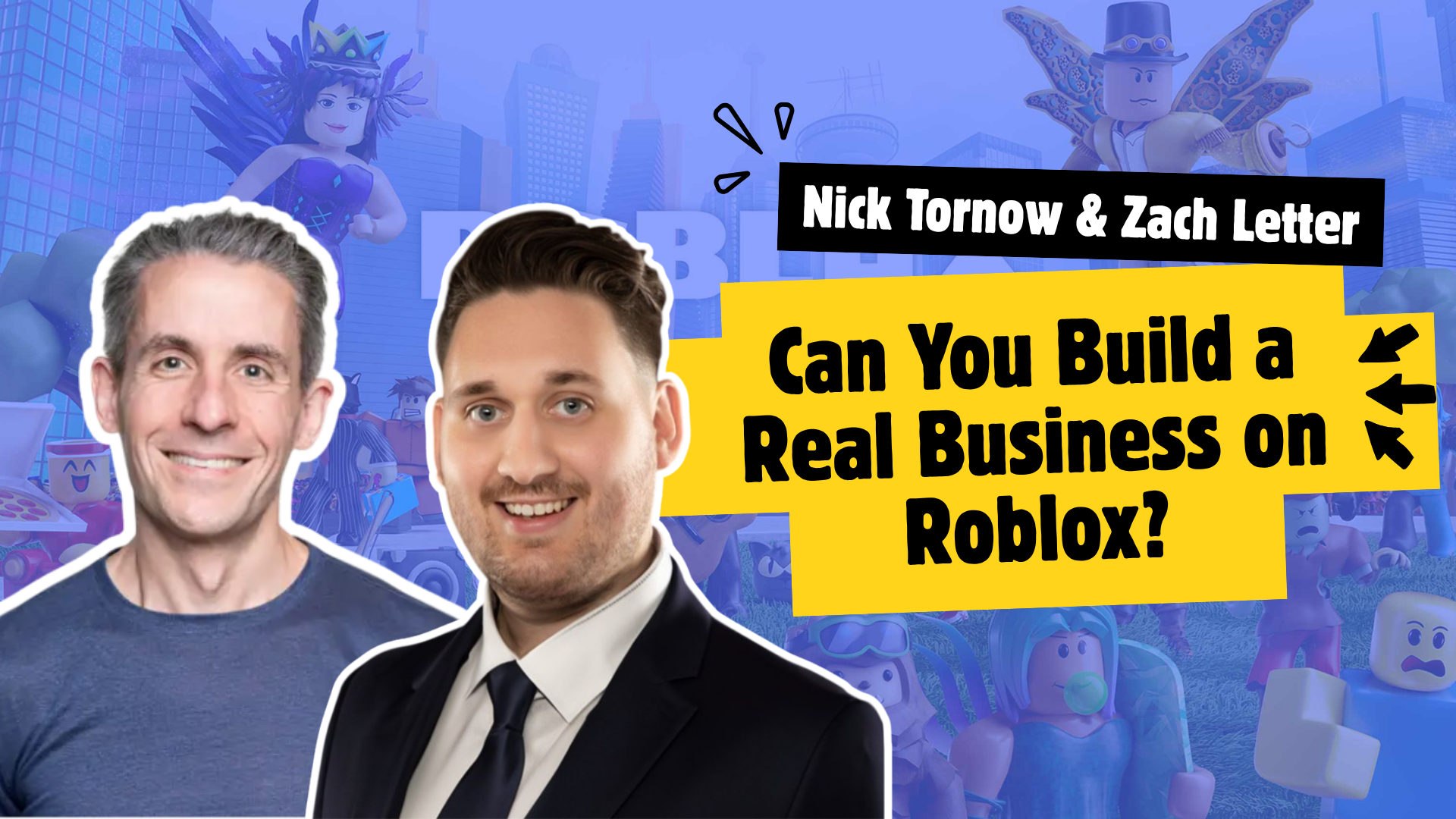
How to Build a Real Business on Roblox in 2026
6 Apr 20261 pages~10 min full read
Building a sustainable business on Roblox in 2026 requires a fundamental shift in strategy, moving away from traditional game development paradigms toward a model defined by extreme agility and platform-native optimization. The core thesis is that Roblox is not merely a distribution channel but a unique ecosystem where success is driven by algorithmic discovery rather than traditional user acquisition. Studios must prioritize rapid iteration, community engagement, and deep integration with the platform’s specific performance metrics to thrive.
Key findings emphasize that speed is the primary business model. Successful studios, often operating with lean teams of 10 to 15 people, leverage the platform’s infrastructure to bypass traditional production bottlenecks like multi-platform deployment and backend scaling. Development cycles have compressed significantly, with top-tier studios now launching core loops in five to eight weeks and maintaining momentum through weekly updates. This cadence is essential because the platform’s discovery algorithm rewards specific engagement signals, including qualified playthroughs, retention rates, and session value, rather than infinite playtime.
Methodologically, these insights are derived from expert consultations with Roblox leadership and high-performing studios, such as the team behind SpongeBob Tower Defense. The analysis highlights that Roblox is no longer a platform exclusively for children, as evidenced by titles with significant 18+ demographics. Consequently, developers must abandon "professional" instincts that prioritize polish over speed and control over community feedback. Instead, operators are encouraged to adopt a "white belt" mindset, respecting the platform’s unique social fabric and SEO-like discovery mechanics. Ultimately, the most successful studios are those that treat content as a compounding asset, allowing the algorithm to drive organic growth while utilizing paid advertising only as a secondary tool for bootstrapping.
Deconstructor of Fun · 2026
Deconstructor of Fun · 2026
Deconstructor of Fun · 2026

Deconstructor of Fun · 2026
Deconstructor of Fun · 2026
Deconstructor of Fun · 2026
Deconstructor of Fun · 2026
Deconstructor of Fun · 2026
Deconstructor of Fun · 2026
Deconstructor of Fun · 2026

Deconstructor of Fun · 2026
Deconstructor of Fun · 2026
Boston Consulting Group · 2025
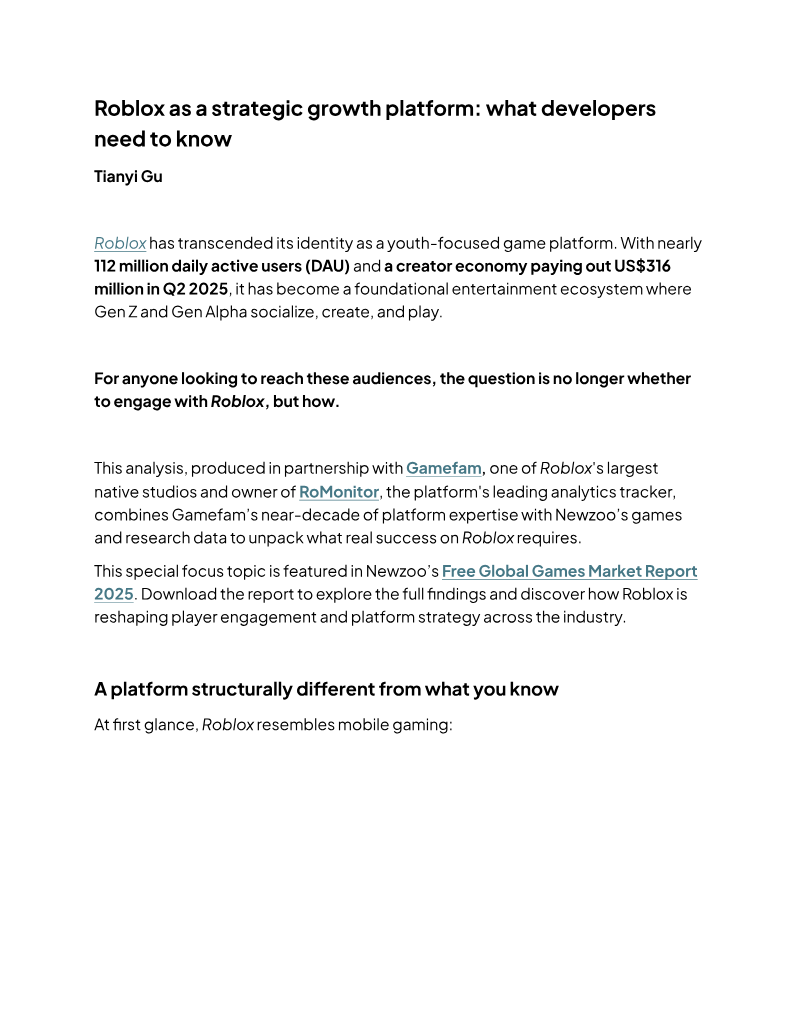
Newzoo · 2025
Unity · 2023
GREE
InvestGame
Roblox

Almedia · 2026
Poki · 2026
Gamesight · 2026
Sensor Tower · 2026

Sensor Tower · 2026

AppLovin · 2026