1 free read left. Create a free account for unlimited reading + AI research.
Create free account
How Space Ape makes 30% to 50% of its revenue from in-game events
Key insights
6 takeaways- 01Space Ape Games generates 30% to 50% of its total revenue from in-game events across titles like Transformers: Earth Wars, Rival Kingdoms, and Samurai Siege.
- 02To prevent economic inflation and content bloat, the studio relies on temporary items and monitors resource balances across player cohorts.
- 03Operational efficiency is maintained through small, cross-functional teams that share knowledge across projects while keeping technical stacks isolated for agility.
- 04A proprietary content management system allows non-technical staff to schedule and adjust events in real-time, bypassing the need for app store updates.
- 05The studio utilizes a 1-3-2-4 intensity cadence for events, alternating between high-stakes alliance tournaments and lower-intensity personal engagement activities.
- 06The primary objective of the event strategy is long-term player retention rather than hitting specific monthly revenue targets.
Ask AI about this video
Transcript
[Music] cool uh thank you for the kind introduction and I appreciate you all coming out to listen to what I've got to say so uh for the next 20 minutes I'm going to talk a little bit about uh uh some of the learnings we've had running uh live Ops and events what happened here should have gone to the next slide yeah there we go look at that um some of the lessons we've we've learned from operating these three build and battle titles uh that Chris mentioned uh and and particularly what we've learned around uh running good in-game events uh relevance to this track uh when we started uh out with Samurai Siege which is the game on the right uh we were the first to follow uh Clash of Clans and and in many ways uh the game's very similar as as a lot of the games in the genre are but we chose to do is to place
our bets on uh really catering for the core players of the genre so the people that are most engaged spending most money uh and an audience that we felt were being underserved uh in the genre and we looked to um some features that they really wanted uh such as making the clans Clash uh early um but also looking at a lot of inspiration from games in the East and and uh how they kept the games fresh and retained uh communities uh for a long time through uh through in-game events that strategy worked pretty well for us um with Samurai um there's a bit of a delay in can you press the green button you're pressing the ah yeah look at that um so so we we had some success with Samurai seeds that strategy worked um but we made the game very quickly um and so a lot of the tech we made a lot of the learnings we we uh uh we had on the Fly running events uh didn't were hard to translate to other games other genres and so with rival kingdoms the game in the middle we really doubled down on that strategy uh
build a platform and productized a lot of the things that we learned running events in uh Samurai Siege that game launched about a year ago and uh we built a very nice platform that that uh extends to other genres and extends to other games and the first um sort of application was that was the Transformers game that launched a couple of months ago so um very different in terms of um the the take on the genre with Transformers it's much more collection and garta focused um but the the building blocks of what makes a good event what makes a community engage uh very common across the uh the three games and so that's what I'll talk about uh today when I talk about in-game events I'm really talking about events in the context of a community-driven game our games are very uh uh very Community focused very uh Alliance orientated and um you'll you'll see that that uh a lot of the things that I talk about here I I don't think really apply to single player games it's more uh if you've got a game that that is engaging a community um when I talk about events uh I talk about something that the way it appears in the the game uh is
something like this this is a personal tournament um It's A system that sits on top of the core game um so it doesn't change the operation of the game but it provides different objectives and and different tweaks on the game play so in this case uh we're inviting the player to to battle uh to earn event currency and that event currency is added up in a totalizer on the right and when you get to a certain threshold you get uh prize and uh that content is only available for a limited time in this case one day um and uh we run these events every day uh every week rather uh in each of the games uh we heavily merchandise the events so we make it very clear that this game is about engaging the events after a certain point um and this is an example of how an alliance uh type event might appear it's a similar format uh you battle to get a vent currency uh that vent currency goes against your alliance's total uh there are prizes that everyone in the alliance enjoys um and it creates this peer pressure uh to perform because if you if you don't participate in the event you still get the prize if your alliance meets the
objective so that creates opportunities for uh social drama and politics to unfold that really help with with uh retention um some stats uh over the last 12 months uh half of our revenue and summarize has come from events uh that orange line down the bottom uh is what we we uh uh expect our Baseline Revenue to have been in the game just from the core systems of the game but for events and the blue spiky line there is the actual Revenue daily from uh for sumai Siege over 12 months each of those spikes uh corresponds to a weekend event uh in rival kingdoms uh around a third of our revenue is coming from events over the last 6 months um that's not a reflection of rival kingdoms it's not a uh it's not to say rival kingdoms is worse at running events um but rather uh what we did with rival kingdoms was productize a lot of the things that worked so for example that personal tournament uh that I showed earlier this was something that we ran in Samurai Siege and noticed that the cohort of users who in who installed the game
seven days prior to us running a personal uh tournament uh they retained better uh their longer lifetime value and the reason was that if you if you present a personal uh uh tournament in this format to players at the right time it it promise it it is a perfect explanation of why you should keep playing the game and uh it it it sells the the lake game really well and so found that people who installed the game before those events retained uh retained better so we productize that and so in rival kingdoms on any given day there's an event running for a particular cohort of users so so uh as a result the Baseline is much stronger and the percentage contribution from events is is therefore lower I think around 30% is is pretty standed from uh swapping notes with other midcore developers who run events um but the real value in events is in the long-term retention so uh we have something like 98 99% month-to-month retention uh of people who start engaging with events
uh reason being there's just so much more uh excitement around the game every week it's different and there's a reason to play uh even though you have you might have all the content or feel like you've got uh enough of the content to keep you happy there's always something new and uh a new reason to play and so we see that uh really pay off and really solid foundation of of core players uh who retain very well when you zoom in on that graph you see there that the uh the Baseline Revenue uh in Orange that's what the game should make if we weren't running events uh this become very predictable after 3 years uh the blue uh area above the curve is the revenue that we attribute to events but after every event there's a little bit of a hangover uh so for a few days after we run an event we make less money than we would have if we hadn't run the event um and so understanding the cannibalization effect and the sales conditioning uh effect of your events is really important um one of the reasons for that is people have a limited budget uh and so you're going to spend a certain
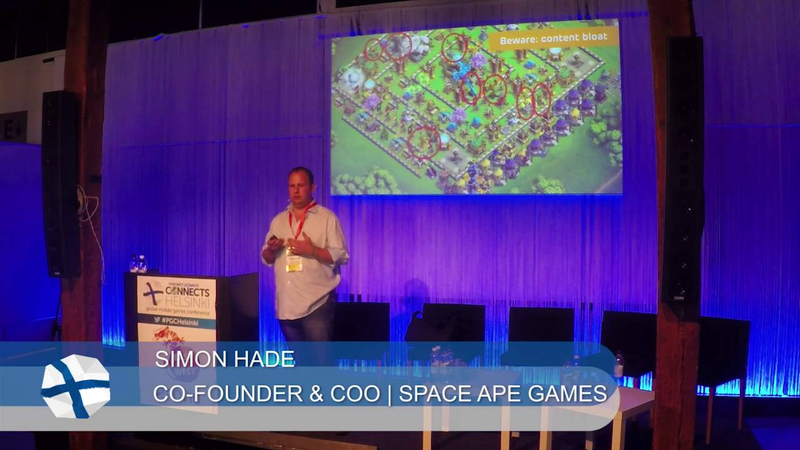
amount each each week and if the game's more exciting during an event as it should be uh on weekends then the share of wallet's going to move there but also you see impacts on the economy when when we run events we inflate certain aspects of the economy uh and that removes some of the pinch points for example if you if you play all weekend because it's a really compelling event you'll stockpile a lot of gold uh which means you're then less likely to buy gold during the week so cannibalization is nothing to be scared of uh a good event system will have cannibalization it's just important to understand what it is and not get too carried away when you run an event and you double or quadruple uh Revenue you got to understand the longo impacts over a week and a month uh another trap that we fell into was uh content bloat uh you'll see here this is a high level base in samuro Siege and a big part of that canvas is taken up with with items that we have rewarded uh as part of an event permanent content that's always going to be in the game there's a permanent tax that we pay every time we put out one of these prizes um and and that hits your
file size footprint on the device uh and and performance ultimately so uh they're very highly sought after these trophies in Samurai Siege but uh we pay they we pay a steep price uh whenever we give them away one of the ways we comat we we combed that uh when we realized we were digging a hole for ourselves giving away a lot of this permanent content was give away temporary items um so there's some tech and somec allows us to give away 7day offensive troops 14-day camps uh on defense that kind of thing players loved it and we were able to organize a Content Cadence that involved us giving away content that disappeared uh 714 30 days uh later so we didn't have this permanent tax that we were paying the problem was players loved it so much uh that we got we started selling them and we built a store around them and we gave lots and lots away and before we realized it um our play our core players were Min maxing event participation uh because they realized that if they played the events correctly they could stockpile these temporary it items uh
and therefore didn't need to spend on troop training or upgrading and so we without realizing it changed the core gameplay of Samurai Siege and that was a real problem because it it it lowered the Baseline economy of the game and made us uh it created an addiction on these kinds of for these this kind of content now we were able to build systems around that it was very very easy to trip over uh um your event design uh in a way that that destroys your game uh if you're not paying attention so we did lots of things like look at average balances uh per castle level in this case the Blue Line represents the average gold balance of castle level 17 players and we given away too much gold so we introduce new sinks to to manage it so it's a constant game of cat and mouse and watching these uh resource balances by different player cohorts to see how your events are are affecting the economy of the game I want to talk a little bit I won't talk too much about the team uh just for for um in the interest of time but we run very very lean um live Ops team Samurai Siege
is four people uh rival kingdoms is 12 half of them are in traditional product feature development and five or six of them are in uh in live Ops so we can do a lot with with a small number of people generally they tend to be generalists um and it's a great training ground for CS or marketing or Community people to move into product um but only if we invest in the right tools and and figure out the right content Cadence um for them uh which is what I'll talk about so we toy box is a term that we use for the common set of tools that we use for live Ops across all our games and the treadmill is the concept of what type of content uh we produce um to to run the Live Events the design the pillars that we we settle on when designing these live op systems is when every event to have some bespoke graphics to look distinctive we can't get players to invest in these things if we don't pour the love in ourselves so each event looks different has custom art uh there's a lot of time pressure around the events both in terms of merchandising uh the the sales uh and
designing the events we also wanted every event to feel fresh now doesn't mean we fundamentally change the gameplay of the game the core gameplay uh small tweaks go a really long way and I'll show you an example shortly but we make sure that every event has some sort of social pressure to perform uh we have some flexibility with different types and ultimately there needs to be a very strong competitive element to the events it's not that the leaderboards are particularly attainable for most people but there's an aspirational element to knowing that there's some content that you can only get by being in a great Alliance and competing hard in the event so people need to care about winning so when we started our um event system our toolbox looked a bit like this uh there was a series of features that we needed to stream content into the game uh you you cannot have your you cannot run a good event system if the content relies on a new update uh uh being pushed through the app store or the Play Store so it was very important that we stream the content in and then
stream it out when it's no longer needed we needed to abstract uh all as many elements of the gameplay as possible into a Content management system that could be tweaked by non-technical people so the the AI of the troops the stats as much as possible you abstract that from the game so we can make changes on the Fly uh without a release it's also very important to have scheduling Tools in so that we could seond people in for a week and say crunch out four to 6 weeks of event design schedule it go on at certain times and then build a marketing plan around those uh it's very it's also important to have live authoring tools as well so you can react to mistakes or uh that you've made in the event design or or respond to something's happening in the community um but scheduling was very important very difficult to get right and we we had a few event formats but really the alliance totalizer and the personal totalizer that I mentioned earlier uh were a were a main ones these days the toolbox looks much more complicated we've got a lot of event types A lot of different different competition elements and much a greater
variety of content uh different garta boxes permanent items temporary items um Early Access to content that's coming in the game we give that away as prizes one thing I will talk about briefly is the monetization vectors that events drive so when we first started doing events uh the monetization was really layer on top of the the core systems of the game so we just gave a reason to play more um and so that meant people played more uh continuously on the weekend which meant they ski the trip training they they bought energy that kind of thing um one element that's now very important for us is selling event accelerance is what I call them so this idea that during the event you're battling you're getting currency that counts towards your alliance total um but we make sure we sell items at the start of the event uh that people will buy that will give a better better Roi on their time so you might buy a boost for a particular ancient or hero character that gives you twice as much event currency for that week so you get better investment uh players really like those sorts of sales um and it it also
helps Drive the the basic um uh monetization from event from from Troop skipping and the like our best performing events in Samurai Siege is when we give out permanent items uh as I said earlier that's a trap uh you can't give away too many of them but it is still part of the mix um the events that people talk about the most the ones where we change the game play uh so on the left there uh on the right there you see our Standard wall busting unit the Ram uh deploy them they bust through the walls uh our most popular event ever was the Grand Ram slam where we just changed uh the the power of those trips made them faster made them more explosive obviously this isn't sustainable as a regular unit but for a weekend it was great fun and people still talked about it uh for years afterwards so we bring this these kinds of variations out pretty regularly and we can do that because we invested whenever we put content in the game or a new feature in the game uh we make what we call Frankenstein troops so you might make the Ram uh but you put in the the content layer uh all of the stats of
that troop so it's really easy to make a version of that that Ram uh which is faster or more powerful we also make it uh in the content management system possible for product managers or game Masters to associate different spells and uh different powers and also change the context of the troop so it might be a uh uh an offensive unit but you can make it available for a weekend on defense so attach it with a or make it a hero Troop that kind of thing um and also some very rudimentary tools uh for non-technical people to change the way the troops look uh so associating different VFX changing the colors that kind of thing um the event that makes the most money is when we give away permanent functional items uh this is like the first hit of crack the first time you give away an exclusive content that makes your gameplay more powerful it's very difficult to keep up that momentum um but every four to 6 months we run an event like this um it's not sustainable to give away the most powerful troop on the leaderboard though every week um uh um you need to do it
sparingly uh it creates a lot of churn and burnout for people as they chase this contact because they feel like they need that high level Dragon um to be competitive in the game if they miss out it's a real problem so um we don't run these all the all the time um but it's an important part of the mix um just to show how it all comes together uh this is our Prismatic Mage Saga this represented about a one man week's worth of work to deliver four weeks worth of content um you see there on the left this is our uh our Reg Essence Master he's a high level troop it's got some chain lightning effect uh in the content management system the the game master was able to change the color of that troop uh to Red uh give him the uh fire uh Fireball uh Power that uh was in the game from the dragon um and make him and create a new trip called the Prismatic Mage uh where they make a level two uh version of him who explodes using the earthquake spell when he dies and then the highest level version was uh an applic of burner of a um of a freeze spell and
a rain of fire spell so this is a very overpowered troop that's the highest which represented the highest level Mage all of this was done with with uh just content changes um we then spread that uh content out over four weeks uh in the first week you could win a token to unlock the Prismatic Mage at the end of the 4-we cycle uh in the second week you can win another token to allow you to upgrade it that token was only available on uh an iance totalizer so you need to work together as a team to get that and you could also unlock temporary content such as this Jade Dragon who is a a green recolor of the blue dragon who's in the game uh and who we made more powerful the event The Saga culminates in the third week uh when the that really overpowered high level version of the Mage is only available to the top 50 alliances and so you you create this cycle where the alliances who who want to chase this high level content organize themselves in the first two weeks uh to bank up the temporary cont content that will make them more powerful in that third week and then the
fourth week uh we have an engagement event usually this is a personal tournament um uh something that is not designed to make much money uh but is designed to give players a break uh and to enjoy the content that they've worked for the previous few weeks so this represents a typical cycle which also correlates to uh our Revenue graph so became over over a couple of years uh these intensity levels that we associate with with the events uh start to correlate to revenue in a way that becomes pretty pred able um and we use that format the [Music] 1324 uh um uh uh sort of cadence intensity Cadence in all our games now so this is an example of the most recent event in in rival kingdoms five reskins of different elements in the game to unlock a a limited edition ancient on the right so that's 19 minutes down uh um apologies for just sort of zipping through it um but but hopefully that's useful um I'll just skip through my
summaries um but hopefully slow enough that uh Chris can take down all the notes um and share them with you afterwards um and maybe open up uh for questions the last 42 seconds of my 20 minute talk sorry I thought you were just getting to yeah you completely threw me there thank you very much um so um now it's brilliant there's loads of insight there um so do we have a question for for Simon we do look there straight way out there there a gentleman in a I assume that's an Angry Bird's employee or maybe not or a big fan or big just a big fan uh so uh both both oh very good look at that that's your bonus coming this year yeah my boss is right over there you get uh do you plan your monetization or your actually your target revenues based on uh you events let's say I want to make this amount of money this water and it's coming from this and this and that event we resist the temptation to do that every single month so it's it's a natural especially in sumurai Siege
where we have 3 years of data now and it's very predictable uh we we try to resist the temptation to set Revenue targets for these events because ultimately that that skews the incentives of the game Masters and the game team what we want is for the game fundamentally what we want is long-term retention uh we want a degree of predictability which is good um and so we try not to set these these targets inevitably it happens um so for example you know these games are fueling the the R&D for the rest of the studio so it is important uh that we can predict and Bank on the revenue um but we try not to set targets what we do is set the burnout Cadence so we don't want it to affect retention we don't want it to disrupt the economy and so it's more important that um that the events are predictable than that they hit certain targets um having said that Samurai Siege has been flat for the last 12 months because the team sort of imposes that on themselves um so it's not something that we mandate but it just naturally happens uh over time but yeah
it can be difficult to uh as a as a game master to balance that up right because you if you if you have a Target to hit a million dollars this month um it will encourage you to make more short-term decisions and we really want people especially in Samurai Siege to to play a long game because we've got a cool group of players that are that are really retentive one final last question quickly uh do you uh use the same CMS uh across the board or the tools are specific for it game they they are branched for each game I spent seven years at uh Skype and then several years at playfish unbundling shared tech services because it's really the antithesis of of uh of Rapid Innovation and and and testing so so we want each game team to be have an isolated Tex deck um but we encourage the teams to talk uh and so generally we don't set things like game specific bonuses for teams anything like that so so if you're making a feature on rival kingdoms uh as a general rule you will consult with the
other game teams and if taking another 30% uh of of development time and that feature allows that feature to be easily ported to other games then then generally people will do it but we don't mandate mandate it because uh we want each game team to own their their p&l and own their game rather than be dependent on other teams to to deliver Tech but gener it's pretty consistent though okay I'm going to have to close it down there but I'm sure Simon's available for chat sa he's amazing guy Shar a lot of information which I always like to say thank you very much to Simon [Applause] [Music] for
Summary
Space Ape Games utilizes a sophisticated live operations strategy to drive significant revenue and player retention across its build-and-battle titles, including Samurai Siege, Rival Kingdoms, and Transformers: Earth Wars. By integrating in-game events into the core gameplay loop, the studio generates between 30% and 50% of its total revenue from these activities. The primary thesis is that events serve as a critical tool for community engagement and long-term retention, provided they are managed through a robust, productized platform that avoids negative impacts on the game’s long-term economy.
The studio’s methodology relies on a "toolbox" of content management systems that allow non-technical staff to schedule and tweak events without requiring app store updates. These events typically follow a 1-3-2-4 intensity cadence, alternating between high-stakes competitive alliance tournaments and lower-intensity personal engagement events. Key findings indicate that while events drive substantial revenue spikes, they also introduce risks such as cannibalization of baseline spending and potential "content bloat" from permanent rewards. To mitigate these issues, the team employs temporary items and carefully monitors resource balances across player cohorts to prevent economic inflation.
The scope of this approach covers midcore, community-driven mobile games. The studio emphasizes that while events are highly effective at boosting short-term metrics, the ultimate goal is long-term retention rather than hitting specific monthly revenue targets. By productizing successful event formats—such as personal tournaments—the studio has achieved high month-to-month retention rates. The operational model remains lean, utilizing small, cross-functional teams that prioritize rapid iteration and shared knowledge across different game projects while maintaining isolated technical stacks to ensure agility and independent ownership of each game’s performance.












Comments