1 free read left. Create a free account for unlimited reading + AI research.
Create free account
How indies can thrive in the free-to-play mobile games market
Key insights
6 takeaways- 01The most effective strategy for indie studios is to combine proven, established free-to-play meta-game loops with unique thematic differentiation to attract high-value user bases.
- 02The mid-tier mobile market, specifically games ranked between 200 and 1,000 in grossing, has shown significant growth, offering a more viable path for success than competing directly with top-tier titles.
- 03Independent developers should avoid saturated, broad-appeal genres and instead target specific, underserved niches to lower user acquisition costs and improve long-term retention.
- 04Niche-focused games benefit from pre-existing, passionate audiences that drive higher organic engagement and virality, effectively mitigating the high costs of competing in generic categories like medieval fantasy or match-three puzzles.
- 05Developers can optimize marketing spend and increase the likelihood of platform featuring by identifying and targeting geographic regions where a game's specific theme is culturally prominent.
- 06Aligning game updates with real-world events relevant to a niche audience can significantly boost revenue, as demonstrated by the success of specialized titles like horse-racing games.
Ask AI about this video
Transcript
[Music] right hello everyone thanks a lot for sticking around for find your niche how Indies can thrive in the free-to-play mobile market I know it's lunchtime so I'll try to make it fun interesting and hope you're not starving but before before I start I'd like to get a little bit of sense of who is who in the audience get a sense of who is a while see some of you guys that I know but who is a mobile game developer in the audience all right okay great now who is a mobile game independent developer okay perfect almost the same number great okay well this representation is is focused for you guys and I hope you'll find some interesting stuff there so start talking a little bit about me so I my name is Tamara Jilly I've been in the
mobile game industry for over 12 years I sure yeah I think it's 13 at this point I decided to wear exactly the same shirt in this picture that I have now on and so I started I worked for 12 years at a company called Gameloft which is now called Vivendi and that was running all studios and US and South America which represent around nine studios among that's time I build around 50 games with these very talented folks that were hired and some of them were great games some of them were average some of them were pretty bad and obviously as we all know we learned essentially from the mistakes we make especially in a free play space it's funny because I love to say 50 games but if you look back over the period of time obviously in 2004 making a mobile game was one person and a half over three months and in 2014 if you look at games like Spider Man limited or
ice age village you're talking about teams of 100 people over a period of two years or gigantic budgets so obviously things have greatly changed since then and for a year now I've been the chief product officer at tilting points and tilting point is a mobile publishing partner we like the word partner to differentiate us a little bit from from the rest because what we do is we really try to build a long-term partnership with with you guys independent developers try to work on games not just for soft launch and launch but realize that free-to-play is about a three year four year five years partnership and if you want to make it successful games have to be worked on for that long and live operations and this is what we aim to do we have built a team of 30 guys which are really experts in free-to-play guys that come from you know the big companies that worked on big games ran
live off for three years Kabam Gameloft Electronic Arts et cetera and we have not always actually done free-to-play our biggest success the game called Leo's fortune which is a fantastic game from fantastic independent developer but it's pay-to-play although as we know today it's difficult to make a game very big a successful game that in that market that's why we shifted more towards the free-to-play market Leo's fortune is on multiple platforms we work on multiple platforms as well all the games have always been featured on the App Store and the US fortune is a game God that is his choice and was featured on stage alright enough about us let's talk about the real point of this presentation which is about niche games so I'll start with a very of your statement which is good for all of us which is the mobile game industry is
still growing very fast and that's great news but you're looking a little bit more at how it's been growing over the years this is a pretty staggering chart that we've all seen multiple presentation but the interesting point that I want to show here is that if you look at 2013 the top 10 it was the market for that was three billion dollars if you looked at 2015 it's four point seven billion dollars so that obviously hit driven business is the big chunk on the revenue but if you look at the top 200 top 1000 and you look at 2013 it was 1.5 billion and now it's a three billion market so actually what this is saying is that the top 200 to 1000 grossing has grown faster than the top ten so there's a lot of room for that that segment of top 200 top 1000 grossing games all these games make at least a million dollars so another statement that we've heard
multiple times that we all know success barriers are rising for the pen developers they're extremely high at this point we like to say the barriers to entry are still very low but the success barriers are very very high and this is an example showing that 2012 there were 42 games in the top 100 grossing games that were forming a pen developers in 2015 that were only 13 and probably 2016 a little bit less another point which is that actually was you know finished that two days ago I was pretty staggered by the acceleration of this curve number of games releasing every month on iOS worldwide and if you look what's surprising to me is is still growing I think we're probably reaching a peak at this point and in next year should be dropping a little bit because I mean 25 over 25 thousand games releasing a month seems a
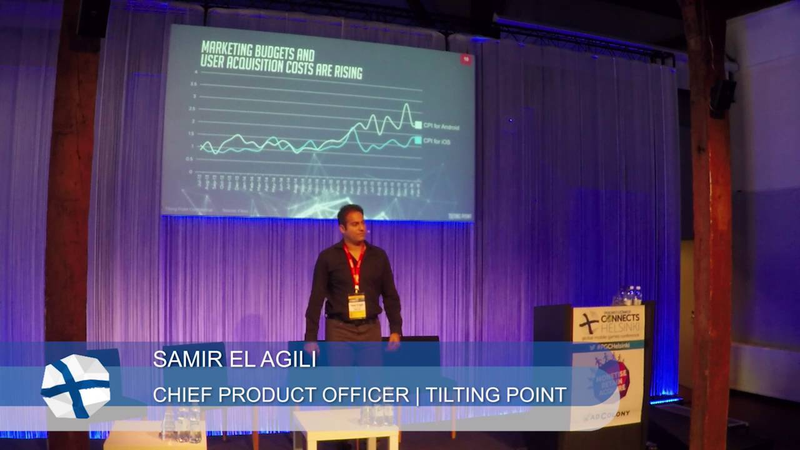
little bit crazy so we're probably going to see a lot of independent developers moving to other platforms or be acquired by bigger guys and this curve should drop but that makes obviously our lives very difficult because how do you get visible in a market that's so saturated of course what happens when the market gets higher saturated and this is again something that's pretty I'm sure everybody knows this is that you only Yuri virtual marketing a marketing budget goes up go up go up user acquisition costs have been rising and rising and rising and this is showing CPI's in the US for ios and android which are on average at 1.4 on iOS and one point almost $2 on Android so that's extremely high and very difficult for new players to come in so these are all things we all know and this is where it gets a little bit
more interesting and the point of this presentation is to highlight a little bit focus a little bit on jour and themes which you know some of them are extremely saturated and I separated on themes here because we see a lot of charts in comparing CPI's which is looking at strategy cost per installs or action cost per install which I think don't really make sense a lot of games are different but we rarely see the compression of themes where you see medial fantasy space you know candies and it should be it would be interesting to see a compression of these themes and how saturate each themes each theme is on on the store I love this chart because you could do this for multiple drawers this is obviously a match-three sugary things based on a very well-known game the icons all look the same it's all
saturated colors it's essentially the same gameplay but let's remember that in user acquisition people only see videos carousel pictures this is why Game Awards showing arnold schwarzenegger running around doing some crazy stuff which has nothing to do it for the game hope nobody's for machines on here but in reality what matters is in user acquisition visibility initially at least is how your game looks and feel and how you can advertise it so what does all this mean should we all just give up never I could never do his accent but I like the guy so one solution that I'd like to propose today that we have guide we have reached quite a lot of a little bit of success here at tilting point is focusing on a niche and focusing on each from the ground up when you build the game you have really a vision of who your customer is going to be and really
differentiate yourself from the competition this sounds pretty obvious but it it's not always done so what what are the advantages of niche games and what do we mean by that obviously one of them is more targeted user acquisition so let's say you're working on a match 3 game it's going to be your audience is going to be pretty wide pretty open pretty casual it's going to be very hard when you design the game to focus on a niche or you could you know figure out I'm gonna do a match 3 on for example a boxing match 3 for male but it's a little bit difficult if you're working on a horse game for example horse racing game you're going to be from the ground up when you're building your game knowing that your audience is going to be males between the age of 18 and 35 but that really are fan of horses and horse racing so your your user acquisition from the soft launch at the start of your
before your global launch is already really targeted you don't need to look for it you already know who these people are on top of that they can also be specific to certain Geographics you know that horse racing is doesn't work in Germany but works really well in Qatar and Hong Kong for example so that really helps identifying early on and knowing who your audience is going to be and you're defining your marketing strategy another really useful point is that with finish games you have a high percentage of engaged users obviously this is what we're all looking for in free-to-play is how to keep and retain those paying users for the longest possible time so if by design and by theme you're gay is attracting people who are already interested in what you're doing you have a higher chance of retaining them let's say you're making a curling game well I probably the only people who are gonna dial your game or people who like curling initially and they're gonna be naturally more retain than the other
guys what comes with that too I believe is that you're going to also get their community around them which are very naturally more engaged we all talk about how important community is and free to play getting the community excited and the guy who likes curling games is probably very close to somebody else who likes curling and they're probably both are they're gonna join your game so it's gonna be they're gonna be also more viral as well so that's it's a big piece very related but the interesting point is that what we found out is that there's going to be less user acquisition competition resulting in lower CPI and that could be a little counterintuitive because normally the more targeted you go the more your CPI goes up right I mean if you're doing if you're looking on Facebook and you do user acquisition campaign for males between the age of 1835 it should cause something that if you're looking for male between usually 1835 like horses it should be higher but in reality it's not really because
the competition is so aggressive the big players which we needed to the last point are so aggressive that you know machine zone and and and supercell are spending so much in certain categories they up the CPI is are going really really high up so probably if you go for curling your CPI is gonna be low lower than if you go for just medieval fantasy and that's that's an important piece so you end up finding pockets or opportunities and user acquisition in each games so here are some examples of Indies that we think have found success in niches some of them are pretty success is defined in different ways obviously what we look at here is games that have had positive user acquisition campaign very low CPI and this guy these guys are profitable so virtual regatta is a game
for boating fans specialized for for these guys and they're very successful but form of farmville for stoners very specific audience from the ground up episode which very successful obviously a lot of competition that fields now I think it but it used to be a little bit Nisha choose-your-own-adventure 14 girls covered fashion dress up for all the girls vainglory is a little bit tricky I had a big discussion with my team if we should put this in or not it's the medial fantasy Shore I think they had another mover advantage but obviously it's you know mobile for mobile and it's probably not something we should somebody should start right now but when they released they had this ability to be pretty unique and more I'm a puzzle King we just talked about match three boxing surprising that it works and fencing swordplay yes they made money and they're pretty successful and so earlier in May this this year
2016 tilting point partner up with a very talented of the pen developer based in Florida called third time they the CEO is Ian Cummings a great creative director who worked at Zynga and worked at EA as in creative director position and he had released a game two month prior called photo finish and this game is basically a mix between going with a proven free-to-play coop they really made this exactly same for Lucas GSR where two proven meta game as well very similar to CSR but going for a niche theme horse racing which brings with it a avid what I called an avid local fanbase and it's a little bit of all the things we talked about its local because again there's only certain Gio's that are in true horse-racing so you know right away
which do is to focus on in user acquisition and also when you're improving your game metrics as well on your game monetization for those specific Gio's [Applause] [Music] the game was initially released third time tried to do some basic user acquisition but it didn't do targeted ones and sophisticated ones we partner up and we were able to make developer marketing planets also very in line with all the events the advantage of supports is that there are so many specific moments where everybody's watching their sports at least the fans so summer is a great time for a horse racing I had no idea or it's the best time and we were able to link that up with a link or user acquisition campaign initially with the Kentucky Derby amongst all the races we were able to go to Google and Apple and get the game featured and even though game that game was released for almost three months prior and was not really generating
great revenue we multiplied its its revenue and download tremendously and the result is something that we're very happy with that there are variables as well we reach the top 1-1 grossing in 16 countries we were 50 a top grossing the UK the game had increased its revenue by 32x all that with getting 150 percent return on investment now it's user acquisition within 48 hours it's still running right now we're getting a one-week return on investment we of course where the fairies were we're trying to scale this growth and we're working with a third time now on improving a lot of other things that tilting point provides helping the LTV improving the game per geo but it's pretty impressive considering the game had already launched and didn't have a great launch you didn't get great featuring etc oh I'm past it 20 minutes looks like okay so I'll just go very quick on the
last things these are just some examples of nice ideas that could be fun to do some are obvious BMX fishing hunting it's been done but I think there's still room for it obviously call Thai peas now we're gonna go little crazier music jahres bullfighting I'd love to show the game famous artists we can recognize this one and of course this is our secret next plan we're photo-finish I shouldn't show that and this is I have no idea what this is this is this is fun right so I think I'll stop here essentially use proven free-to-play Metta and go with new themes that's the best way in my opinion to start a game right now and be successful in free-to-play [Music]
Summary
The mobile gaming industry is currently characterized by high barriers to success, intense market saturation, and rising user acquisition costs. While the industry continues to grow, the competitive landscape has shifted, making it increasingly difficult for independent developers to achieve visibility against major players with massive marketing budgets. To thrive in this environment, independent developers should pivot away from saturated, broad-appeal genres and instead focus on niche themes that allow for highly targeted user acquisition and deeper community engagement.
The core thesis is that by combining proven free-to-play mechanics with specific, underserved themes, developers can lower their cost-per-install and improve long-term retention. Data indicates that while top-tier games dominate revenue, the mid-tier market—specifically games ranking between 200 and 1,000 in grossing—has experienced significant growth. Niche games benefit from a pre-existing, passionate audience that is naturally more engaged and viral, which helps mitigate the high costs associated with competing in generic categories like medieval fantasy or standard match-three puzzles.
Strategic partnerships and data-driven marketing are essential to this approach. By identifying specific geographic regions where a niche interest is culturally prominent, developers can optimize their marketing spend and secure platform featuring. A case study involving a horse-racing game demonstrates that applying these principles—aligning game updates with real-world sporting events and utilizing targeted user acquisition—can result in substantial revenue growth, even for titles that initially underperformed. Ultimately, the most viable path for independent studios is to leverage established, successful meta-game loops while differentiating their product through unique, thematic niches that attract dedicated, high-value user bases.


















Comments