Transcript
I wish we would buy. You know, Rollic acquired couple of companies, but then it was sold. Okay. I mean, if you are the VC, but you have to eventually be sold, but I don't know, maybe on IPO, not to another publisher.
Right.
And I hope Dream Games will be like that.
Okay.
I think yeah, they will be maybe I don't know. entertainment company, not just gaming.
Hi, everyone. I'm Tabarak, the account executive at Tenjin, and today we are discussing a very important topic, which is Turkey's app market. As you all know, Turkey has been one of the most exciting mobile gaming ecosystems in the world for a while now, producing major successes. It started with Peak Games. I'm joined by Batuhan today to discuss what has driven
Turkey's success, what studios like Peak Games, Rollic, Ruby Games, and Dream Games have in common, and what's next for the market. Batuhan, it's great to have you here. Could you start by telling our audience a bit about yourself?
Yes, of course. Thanks for having me. Tenjin is a long-term uh long-time partner. So, I'm very glad to join this uh uh podcast now. So, I'm Batuhan, founder and managing director of Mobile Ictum. Uh now I pivoted the company after 10 years. We are a business uh network connecting the games industry. But, essentially, a very large games industry network um connecting it companies, people across four regions now, an organizer of the biggest uh games industry conference in the region, in Istanbul that region's uh territories
depending on the various people. But uh Middle East included right now. Essentially I always help I always like to help people with the connections um with the media events and the what we do now is uh basically fostering the whole ecosystem.
Yes, I can echo that. So I believe your um upcoming uh conference is in September in Istanbul, right?
Now it's in October, 7th and 8th October in Istanbul. Yeah, uh so the entire games industry is invited. Definitely it's an event. Uh it's a big it's becoming a must event. I'm not saying because I am the organizer. This is what the market says because well Istanbul is a great hub. Turkish ecosystem is one of the key industries which is growing like new talents uh coming up uh pretty much every month. There's a lot of investments
uh still coming and a lot of them are not announced. So we'll talk about that later. And I think Mobidictum is doing a good job putting putting the event. So 7th and 8th October in Istanbul everyone is expected.
Yes, definitely one of my favorite uh conferences and I will be there for sure Batuhan.
Awesome.
Great. Um so like to start off I just wanted to uh say that uh most of the data that we will be using in the slides today come from uh the state of Turkish gaming ecosystem by SW and Invest in Türkiye.
Mhm.
And also the quotes that we will be using come from uh this article by GQ Middle East.
Mhm.
So my first question today to you Batuhan is what has helped contribute to Türkiye's success?
Well uh
obviously, we have a company called Peak Games, right? So,
I mean, when you look at it, the success of Peak Games was not just in gaming ecosystem, but it was the entire startup ecosystem. Because it is the first unicorn, after all, right? So, when the first unicorn of a comp- of a country is from gaming, you expect, you know, like more will follow, right? But, I mean, maybe some people would keep going and continuing in in Peak Games, but then there was this Peak Mafia. So many companies founded after that. I know we'll talk about that later.
[gasps]
So, that's one thing. The second thing is uh like Turkish nation, like as we like Turks as a whole, we are very good at replicating success. Much less on the innovation, but more on the on the replicating some some might say copying even, right?
Mhm.
But, when you look at other industries,
even if you replicate or copy something, you stay in the boundaries of your country. The gaming apps, in general, is uh even like gaming versus apps is also one debate, but gaming has no border. If you reach to US players, you pretty much can dominate the market, right? So, when you take the replication of the success, and then a you know, borderless business model, and very fast, right? Like you can see the success immediately. Un- like compared to PC games, for example, that might take 2 years of development, and you don't know the outcome.
Right.
Well, and again, we we are not so patient entrepreneur as well. So, like very fast results, iteration, replicating, uh copying, whatever. Borderless business.
And a a star, a northern star that people can see, "Okay, this was this was made by Turkish teams. This was made in Istanbul." Right? And then other companies like the other founders are like, "Okay, I can do the same." And then the rest is what we are experiencing right now.
So, it's like if they can do it, they're they were also from Istanbul, so we can do it as well, uh cuz we have
Yeah, we Exactly. We like we we definitely have that mindset. Like um we don't have this thing, "Okay, they did it. I shouldn't do it." It's a this It's a competitive nation, right? Uh and when we see that someone has made it, it encourages people to take and then do the same thing. And when you look at Dream Games, for example, whatever Peak Games did, with the experience and a different execution, they are they outgrow their success, right? So, that is what I call second
generation. Like the people who left Peak and then founded the new companies. And that is a very clear example, right? We'll see what comes on the third wave as an example.
Mhm.
Um But yeah, like when you see something is done, you know, you can imagine things better, right? So, that's that's what's happening.
Yeah, right. That makes a lot of sense. Thank you for the explanation. Um I I found this snippet from the GQ um Middle East article that I found very interesting. So, um the article goes on to call Turkey the perfect laboratory uh uh because um at the time like 45% of Turkey's uh or Turkey's 85 million population was under 30. So, that was one thing that led the country to become like this natural laboratory for mobile gaming
behavior. Mhm. And also that um high import taxes made PlayStation and Xbox consoles very expensive. So, you know, the natural uh outcome then was that people were buying more smartphones or playing games on smartphones. So, that is why it was like this perfect laboratory or massive testing market as the article calls it. Mhm. Did you have anything to add to that?
Well, I know the author because I gave quotes to to this in in this article specifically, he comes with a different approach uh because like there are a couple of points here. So, most of the Turks don't maybe all. Uh they don't test the games in Turkey and then see how it goes and then test in US, right?
Mhm.
Unlike maybe other business models of for the B2C, they can do that but uh they usually go and then try to get users in US and that's the test market.
If US plays pretty much the entire nations can play, right? Maybe Asia is a little bit different when it comes to the the genre but um uh that's pretty much that's pretty much it. And the other part is uh yes, PlayStation and Xbox like the hardware in general is expensive in Turkey, right?
Mhm.
That makes uh difficult for the entry. Like when you when you grow up playing a mobile game, you can say, "Okay, like I want to make a something similar." But from that from that ex- um from that ex- extent I'm not sure how many founders actually played one of the peak games, you know, portfolio apps and then they said, "Okay, I want to do the same." Because when you look at the indie games, I mean, I wanted to make a game. Like the entire movie experience is still I supposed to make a game now I make a very big event, you know. Uh and the reason for that because I was a player. I I liked games. I liked RPG
specifically and I I wanted to make it.
Right.
I'm not sure how many founders are actually like mobile games so deep and they're like, "Okay, I will find a mobile game company." Because like the mobile game and the PC game is so different that I call mobile game actually is not a game making. It is actually uh a mathematics, right? It's It's very different.
Equations.
Yeah, equations, mathematics is rate better conversion rate, whatever, you know. Like you don't have this on Steam. But when you when you look at it also, I think So, we have a company called TaleWorlds, okay? It's in the Ankara in capital and they are they are the biggest PC game company from Turkey. Mhm. I always say this, what if they were they were sold for whatever 1.8 billion?
Mhm.
If the nation would follow PC games or we will still try to make mobile
games, you know? That is one one question. If they will ever be sold, we'll see. Until then, it's a difficult. Now we have a we see a surge of uh PC games. I know that the audience is mobile, but I'll just break down here. Uh but we have a we see a surge of the in the in the in the scene as well. But of course when when you don't have the entry of anything like access technology, hardware, whatever, it makes it very difficult to develop something on it, right?
Right.
So, yeah, having mobile games like I sorry having mobile phones um testing out to testing easily okay I I like this game. I want to make something like this is much better compared to having an Xbox and liking a game and okay I will build a console game right now. Try to reach out to Xbox. Yeah. Right? So, this is this is that's why this that part is um uh open for little bit of debate from a
different perspective because yeah mobile games don't test in Turkey and then go maybe if it's if it's a word game. Mhm. Yeah. Or maybe 10 years ago it was like that because I had I had mobile games as well and I did that. But um I mean everyone is trying to get US users, right?
Yeah. I think yeah so this part talks about what was going on in 2017 like with the rise of peak games for example. But I think that um yeah that makes a lot of sense. So, um yeah I I think that yeah your insights also make a lot of sense there. Um yeah so um also of course everyone is aware that the Turkish government reimburses reimburses up to 50% of not only MMP costs like Tangent was recently also admitted into this program. Um but also like uh for ad spend, right? So, would you uh do you think that any
of this would have been possible with like any of this success for Turkey would have been possible without the government reimbursement?
I mean this definitely gives competitive advantage advantage to Turkish companies. But I think yes because I don't know how much help Peak got from the government. Maybe some tax incentives that I personally don't know so I don't want to say something wrong.
Mhm.
But it's not like so we have the this cashback, right? Like first ins- The reason why it's called incentive is because, okay, if you use this tool, whatever amount you pay, we give that back.
Mhm.
So I think it should be called like cashback instead of incentive. So no one incentivizes to use this program. Okay, I think incentive as a word is a little bit different.
Mhm.
But uh when you look at the marketing cost and the tool cost, right? It it helps. It helps.
If your government gives you free money,
Yeah.
you take it, right? And there is no attachment on that because maybe like sometimes I don't know.
Yeah.
They want their logo somewhere, whatever. We we don't have that that kind of case. But um it's not like you spend a million and then you get it in
[clears throat]
three months, even six months, because I know a lot of companies are waiting that money for a long time. And uh the entire world knows that Turkish Lira is on the devaluation, so even that you spent a million, you get I don't know, maybe 20%, 30% less or something. But you still get something, right?
Yeah.
But I know that when you look at the
[clears throat]
balance and P&L of the companies, there are some companies who take this into consideration and then plan their marketing. But uh I'm not sure how successful they are.
Mhm.
And most of them are like, "Okay, if this money comes back, we'll put back
into acquisition." And then that creates pretty much a long way of, you know, uh marketing spend.
Exactly.
So I think Turks would be still successful because we have the VC money and the capital, right? It's coming. But it definitely definitely definitely gives a competitive advantage
Mhm.
compared to I don't know, someone who doesn't have this. But then in 2-3 years time we might ask same thing about the Vietnam, which is not the same like the topic here.
Right. Yeah, I guess how I see it is that um you know, there are a lot of players in the market in Turkey and that, you know, for an indie developer with the lack of resources, it could incentivize them that okay, like yes, however long it takes, it might take up to a year to get that money back, but you know, there is still that option, which which might be very interesting for them.
Yeah. One thing I will add, so for example, there's Business Finland,
right? They give grants. If Turkish ecosystem was built based on grants, then I would say yes, without the grants we wouldn't it wouldn't be possible. But most of them uh were getting the money whatever amount of time anyway. But of course, uh not just these government incentives, but the tax breaks on the technoparks, that is also like reducing the cost. Mhm. You know, so there is a lot of elements which gives the competitive advantage.
Right.
But the success is on the growth side. So which is the growth means the initial capital, not you know, a return of capital, I think. So definitely some at some extent, uh maybe less success, whatever, I don't know if the company was sold for 100 million not but 80. Mhm. But we would be still successful. But of course, these government incentives uh
for the cash backs, tax breaks, and definitely definitely helps. And it is also part of success.
Right. Got it. Um so moving on to the next topic, uh or not next topic, but just adding to this. Uh, we all know that Peak Games was the first unicorn as you've mentioned already, Batuhan. Um, I saw this quote from you by, uh, in the GQ Middle East article that I wanted to read out. Um, so you say, uh, "When Zynga announced Peak Games' acquisition in June 2020 for 1.8 billion dollars, the deal represented more than Turkey's first unicorn. It was validation of Sahin's ecosystem strategy. The deal created something unprecedented in Turkish tech history. A generation of entrepreneurs with billion-dollar exit experience and the confidence to build even bigger companies."
So yeah, I learned that like I learned something here, but I I'll let you talk about, um, about this. So, um, do you want to add anything here?
Unfortunately, I never met, uh, Sidar Sahin personally, but we have one of email exchange when I applied to Peak as an intern, so I could be also ex-Peak. But probably I would build a mobile game company and not any event. But, uh, there is somewhere some quote or something that he says about this this ecosystem that he knows that it was [clears throat] hard, you know, in, uh, during his time, but then the ecosystem will grow, uh, afterwards. So this is the part of Peak Mafia, right? Because
Mhm.
People had stock options, people stayed there, and there was this a joke even. Even if you were, I don't know, doing catering in Peak Games, you would still get some VC money. Like you didn't have to build a game. You just needed to work in
Peak Games at some extent. And this was this was right. Because, uh, you know, let's say like ex-Peak, And um you take one of the big games uh portfolio and when you ask, "Okay, which part did you make?" Like, which part did you take the responsibility of building this game, right? Because the guy who made the first part, the the product, and the one who joined, I don't know, when the game was already making 100 million, is quite different.
Yeah.
Okay? But this was uh this was the case on this We saw that a lot on the second wave of uh founders. Most of the Most of them are still uh alive and kicking. Dream Games is the is the leading company, right?
Right.
Spike is still doing [clears throat] very good. Ace Games. Uh yeah, this is uh this is something.
So, for example, the Cartoons
Mhm.
were shut down, Rebel shut down. Uh couple of companies are sold here, right? Um But yeah, so people got the investment. We knew that not all the investments would work. Some of the founders moved to other companies. They left the industry and and so on. But um I mean, this is a this is a case what happens when you have um a very big success. Because Now I'm looking at emerging markets, like I was in Uzbekistan. And of course Turkey is the latest developed industry when you look at it. So, everyone is trying to replicate that that success. But what I'm saying is especially like these governments or institutions, Okay. There are two ways. S- Randomly, there's one company who's a huge success, and people will leave that company and then start their
own companies.
Mhm.
That's That's based on the luck or I don't know, 10,000 other factors. Or you build a You build an environment that you increase the chances of Mhm. Like these kind of companies popping up, you know? And that is one thing that they can actually focus and build in. Turkey didn't have that kind of system. It's just Peak happened. Found it, other people left, they started company. They also raised a lot of money because they could say, "Look, I worked in this company, I'll do something similar."
Mhm.
Which we'll come to Akın Arabacı is uh quote. And then they got the investment. And then it is actually still the case. Now it's just now there are so many of them. Now I see that VCs are trying to look at some Okay, guys, we've seen enough puzzle. Like, can you do something else? Type of thing. But uh
we see a third generation of the founders right now. Uh yeah, on this chart. I mean, not just games as well, right? These are technology companies as well. It's just that that culture in that company just created so many um good founders, right?
Mhm.
And yeah, we're glad that I mean, even Mobile Ictum. Like I started in 2015. If I didn't have any content, right? What What would I do?
Yeah.
Like I didn't work there, but yeah, if there was no content, it What conference I would I would make, right?
Mhm.
So yeah.
Summarize then, like it's It was a lot about like having that stamp of I have worked at Peak Games before, and then VCs, you know, when you when they moved on to new companies, VCs were just more willing to give them the money to grow. And then they just replicated a lot of the things that they knew um or they
learned from Peak Games, right?
Definitely. I mean, we have cases which is not Xpeak and then got sold. We'll come to that, but yes, that was the case.
Got it.
Mhm.
Right. Yeah, so like just echoing on that, um, I also got this quote, uh, by Akin Babayigit, um, also from GQ Middle East, uh, the article I talked about earlier. "If a team comes to me and tells me that, uh, they have this new game mechanic that's going to be very different, I get very nervous. Big Games understood that gaming is not an innovation game, it's an iteration game. The formula was deceptively simple. Execute proven mechanics marginally better in hundreds of ways." So, I I I really found this really interesting because it's not about like disruptive innovation then, right? It's like just build on what you already know is
successful, what you already know works. Just build a bit on that. Don't come up with completely new ideas because that's a bit scary, right? So, this is the mindset. What do you think about that?
Well, it's definitely hard to like put any word on on the King Games world, right? He's also the co-founder of triple dot, now Arcadia. He invested in, uh, very good companies. Uh, they exited on Loom Games, you know, but, uh, from his Facebook times as well, I think he knew, uh,
[snorts]
the market is so big, you don't have to disrupt anything.
Right.
have to make something a little bit better, a little bit different, right? Now, the market is a little bit changing. Maybe if you ask him now, I don't know if he will say the same thing. Um I will
[laughter]
next next time I see him. But I mean the the the market is still big, but the the content-wise because back then we also didn't have that much game companies, right?
Right.
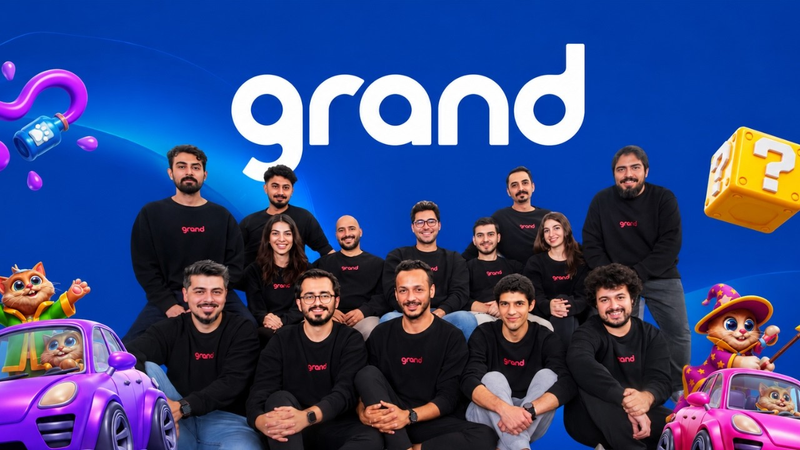
Now uh AI is helping on the level design. Execution is uh faster than ever. Now the Vietnamese is also on the play. They can copy things faster than Turks. So the I mean like we we on that level we we still come up with new ways and the you know, new mechanics and so on. Like even look at Grand Games. They Like it's just the games which are known, but with better iteration and execution. They're doing a good job at portfolio strategy. So definitely knows better and I think he's right on so many ways. It's just uh But then
my question is, but I mean we are losing the game to the app mobile app ecosystem, right? Like is it the time that we actually come up with something new?
Mhm.
You know. So that is my question. Uh but the game makers of course know better.
Mhm.
Uh and definitely he he knows better. But uh
[clears throat]
Uh yeah. So Turks are doing this very good. Just a little bit better iteration.
Mhm.
Um more implementation live ops. And of course a lot of funding with the VC money, right? So like
Right.
It's just this VC game, seed pre-seed seed series A, even series B now Grand Games got Like you can ask someone, right? How did you get series B? Okay. So there's a playbook that people can access to this kind of know-how. And then a good execution and we are very hard working people that I see like
I sometimes I tell founders that okay, let's go I don't know, do something whatever and they're like I leave the office at 10 10:00 p.m.
Wow.
Well, good luck good luck out racing that, you know.
[snorts]
You've got my point.
Right.
Uh so, yeah. So, definitely Mhm.
Mhm. Mhm. Right. Um and then this there's this uh diagram also from the same report that um you know, like shows a good overview of all of these unicorns that you know, when they were founded. Um did you have anything to say about what you think all of these studios have in common apart from you know, what we've already discussed?
Well, they're all Turks. So, let's start with that. I mean like people are asking like what's the secret and so on. Like I would say res- resilience. You know, like we we don't have any room to cry. We don't have any room to
uh blame anyone. You know, we don't care if the market sucks. We don't care if there was no money. Whatever, you know.
Mhm.
That that kind of mindset actually gives a different pressure to the founder. Long games. I know the founder for like founders for 5 6 years already.
Mhm.
Okay? They are not X anything. The you know, and actually when you look at the Ruby, Alictus, um those are also very interesting companies because they bootstrapped for a long time. And then they they just went to exit. I think it's very difficult right now.
Mhm.
But Long Games they struggled. They they did struggle a lot. And I think there was at least 10,000 times that Kubra and Emre could say, "Okay, like let's just call it off."
Right.
They didn't. They attended all all Mobilewick events.
I don't know if they will attend from now on, but uh I know the conversations that they did, they listened, and so on. They They They They hustled. They hustled a lot, and they they earned in the end, you know. And I see on LinkedIn that people people cry a lot. Like, what
Yeah.
What is this? No one owes you anything. The market owes you nothing, you know. You just have to get There is I don't know whatever 8 billion people and infinite amount of money in the world. If you can't get it, who's who's
The reason So, that's why the common all common thing is the Turks. If you remove Loom here,
Mhm.
and then if you remove the Ruby Aliktus, I would say, "Okay, still X peak, right?" But the Rollic is also a not X peak.
Mhm.
You You can't just, you know, categorize them uh that easy. Rollic is another case. Masomo is a different than another case. Gram is the different than another case. And the Loom is definitely definitely
completely different case. Completely different case, you know. It's just the only common thing is that they're Turks and they're very resilient.
Mhm. I like that word, resilient. Um yeah, cool. All right. So, Batuhan, you spoke a bit about like how, you know, mobile apps, like non-gaming apps, are now coming up, you know, globally growing. Um and I We saw this uh we see this uh diagram from the same report that shows us that the number of new mobile gaming startups in Turkey have been steadily decreasing since uh 2022. So, can you comment on like which industries you think Turkey's startups are targeting in 2026? I mean, this is a something I always told. So, like historically I mean, maybe not So, the the ones who wanted to make games,
actually the guys who want to make PC games, okay?
Okay.
who want to be super rich, whatever. They go for the mobile games. So, that's Of course, PC guys also want to be rich, but like there's a I think there's a If they no one bashes me out after this, but
So, they were passionate about games, the ones who wanted
Yeah.
PC games, okay.
And I of course, like the entry entry to mobile games is not not it's not easy right now. So, it's not like randomly you can say, "Hmm, I know a little bit of programming, let me do mobile games." That's not the case. It was the case in 2021. Okay.
Right.
When the money was free and then hyper-casual publishers were giving 4 5K per prototype. And then suddenly a studio hires 80 people, and imagine how many prototypes they So, it wasn't just a trade business. Now, you have to be very serious with a game plan.
right.
Exactly. You need a game plan. You need some initial metrics and so on. And that's not easy. So, I think that that is one part of the decline. Uh I don't know which data point this is, but I know that there are a lot of companies who got an investment, but they didn't announce. Because um I mean, everyone got series A now, so no one wants to announce the seed. And I understand like people want to show something real. Uh and then they okay, like guys, we are here.
Mhm.
For On sake of Mobidictum, please send your investment news, but
[laughter]
That's That's another case. And the other part is going to mobile apps.
Right.
I mean, mobile app trend is here, obviously. We And on mobile apps, we are also very good. Like, there's Codeway, there's Peak, there's Teknasyon, there's Appnation, there's WePlay Media, right? There's also a lot of successful guys. Plus, they also didn't have VC money.
So, like, whatever happened in gaming in 5 years ago with bootstrap, we see on the mobile apps. But, anyone who's I mean, if you have a little bit of money, maybe you can scale on mobile apps as well, because now we have the UA financing, too. So, there's so many capital ways. So, I think the decline is the market has changed, entry barrier is increased, and now there are actually other areas, like PC gaming and mobile apps, which diverted the the founders. So, makes sense. Maybe the the number is a little bit higher on 2025, I don't know. But, definitely it's not like 2022.
Right. Got it. Um right. And so, can you comment a bit on where you see the Turkish tech 10 years from now?
I mean, our tech industry also depends on how the country
goes, right? The world is not stable. But, um I mean, the fourth unicorn most [snorts] likely it's Grand Games, if we don't have any other loom case, which is Yeah, I mean, it can happen, right? It's mobile gaming.
Mhm.
But, Grand is just announced uh what, a 700 70 million on Series B. So, that puts them on a very like close to billion dollar valuation. Um So, the fourth is coming maybe next year. Funny, every year one unicorn.
[laughter]
And uh we we still have very good studios, right? So, I think it more will come. Um we have a great VC funds, right? Um so, that those are coming. I will What What I want to see is some consolidation maybe because we have a lot of studios who never got any
investment. They are somewhere in middle, okay? So, I don't know what will happen with that. If they will get the VC money, grow, and then be sold. But uh I think most like uh Anyone who will have a VC money has to be eventually sold, right? So, there will be more exits coming up. Uh I want to see success on the PC side, but anyway, that's not the case. On apps, we will see a lot of cases, but everyone says like, "Okay, apps is a good business, but it's difficult for an exit." Right? That's one because you can copy the app faster than the game. And if you have enough money, you can scale and then beat the other one very fast. So, game is not like that. So, there's a commitment and the time. But then app is pretty much doing the same function, you know? Um But more app companies, more mobile
studios on the fourth wave, right? So, the fourth wave will be that X grand games. Mhm. But I think on that time, the market will be very different. So, I don't know even what kind of games they will build. Um
Right.
Market is still playing puzzle games. I think they will play forever. But this year I I I was making this joke years ago. There will be so much meta added on hyper-casual games, it will become a casual game.
[laughter]
So, what happened is that the hybrid casual is pretty much what my joke was saying, right? So, now there's like more meta to be added on a hybrid casual and now it will be casual. Maybe in 1 2 year time uh everyone will try to make casual games where you need even more capital.
Mhm.
So, I don't know. I cannot see that much uh further ahead. Definitely, we will have more unicorns,
um more companies coming in. It's just what what I can't anticipate is that Loom could wait. And sold for
suddenly. Like, you can't, of course, anticipate that.
You you know, [snorts] like the game's grow so fast. So, maybe founders said, "Okay, like let's just car is moving too fast, right?"
Right.
Voodoo is more controlled because there's like layers of funding and, you know, 85 people are already. Loom was 20 people, I think when it was sold. Uh maybe even less, actually. Um So, yeah, we'll definitely see more, uh but I wish we would buy. You know, Rollic acquired couple of companies, but then it was sold, okay?
Mhm.
I mean, if you have to be sold, you have to eventually be sold, but I don't know. Maybe on IPO, not to another publisher.
Right.
And I hope Dream Games will be like that.
Okay.
I think yeah, they will be maybe I don't know. Entertainment company, not just gaming. Movies,
Mhm.
I don't know. Some uh theme park in US, whatever.
Wow. [laughter]
I mean, that would be my
prediction.
Uh not even prediction, my hope for them, you know?
Makes sense.
Uh because that is very visionary and that is something never be true. Because when you look at the entire business ecosystem, not just AppStarter.
Mhm.
I think Turks lack on one thing which is vision. And the country also doesn't allow that much thinking further ahead because, you know,
Yeah.
things happen sometimes.
[laughter]
But uh I hope one company will be like, "Okay, we made
it so far ahead.
Mhm.
Whatever, 10 years later you can try to replicate, you know? Let's try to replicate I don't know what I imagine for Dream Games, you know?
Right. Right.
But which is very long and patience and the country uh they're like, you know, so yeah, that would be my hope for the ecosystem, but definitely more exists, more funding will come. Mobidictum's event will grow even further. Uh our goal is to make
[snorts and sighs]
the fifth biggest gaming conference in the world. Uh so we'll see how that goes. So we need the country to be developed even further.
Right. Um I mean, we're rooting for you, Batuhan, you know that.
Thank you. Thank you.
Um yeah. Very interesting predictions. I would be interested in having you on the show like a couple of years from now and talking about what came true.
Um right. So that's all from from us today. Um you know, those were all the questions I had prepared for you, Batuhan. Thank you so much for coming uh to our podcast. We look forward to having you again. Um and for for the audience, if you have any questions, please feel free to leave them in the comments. Thank you.
Thank you so much for having me. Take care.
Auto-generated captions from YouTube — names and numbers may be misheard.
Key insights
7 takeaways · ~3 min read- 01The Turkish mobile gaming ecosystem was catalyzed by the success of Peak Games, which created a 'Peak Mafia' effect where experienced talent left to found new studios, leveraging their track record to easily secure venture capital.
- 02Turkish mobile studios prioritize a borderless business model by targeting US players directly rather than testing in the domestic market, allowing for rapid iteration and global scaling without the long development cycles associated with PC gaming.
- 03Government support acts as a significant competitive advantage, with the Turkish state reimbursing up to 50% of marketing and user acquisition costs for mobile game developers.
- 04High import taxes on consoles like PlayStation and Xbox historically pushed the Turkish market toward smartphone gaming, effectively turning the country into a massive testing laboratory for mobile-first development.
- 05The industry is shifting from a focus on hyper-casual prototypes toward more sustainable, long-term game plans, as the era of 'free money' and easy funding from 2021 has ended.
- 06The Turkish ecosystem has demonstrated a consistent trend of producing roughly one unicorn per year, with Dream Games currently approaching a billion-dollar valuation following a $70 million Series B round.
- 07While the market has been dominated by puzzle and casual games, there is a growing trend toward industry consolidation and a strategic shift among new startups from pure gaming toward the broader app economy.
Ask AI about this video
Cite this video
Citation
Generating citation…













Comments