1 free read left. Create a free account for unlimited reading + AI research.
Create free account
How developers can succeed in the mobile esports space
Key insights
7 takeaways- 01Success in mobile esports is driven by short, three-minute competitive sessions across diverse genres like puzzle, trivia, and sports, rather than focusing exclusively on complex, synchronous titles.
- 02Mobile gaming has surpassed PC and console revenue combined, with projections indicating that mobile will account for over 60% of all competitive gaming by 2021.
- 03Developers should target the 99% of casual players by creating accessible, competitive experiences that bridge the gap between amateur users and the top 1% of professional esports athletes.
- 04High player engagement is fueled by the desire for recognition and fair, skill-based competition, with dedicated users spending five to six hours daily on these platforms.
- 05Mobile esports games should adopt an evergreen model that prioritizes consistent design and iterative improvements over constant content updates, functioning more like traditional sports.
- 06Long-term retention and higher lifetime value depend on robust infrastructure, specifically implementing strict anti-cheat measures, fraud protection, and fair matchmaking systems.
- 07By integrating competitive multiplayer systems, developers can monetize a massive, underserved market of casual competitors to justify higher customer acquisition costs.
Ask AI about this video
Transcript
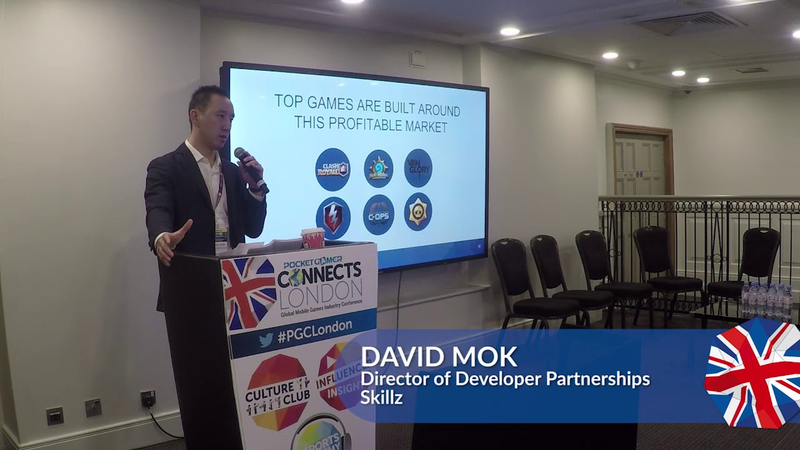
[Music] okay let's get started hi everyone my name is David mark on the director of developer partnerships at skills skills if you've never heard about it before we are a leader in delivering mobile eSports as well as powering millions of tournaments every day for game developers and we hand out player matching account maintenance and cheating fraud some of the top games in the App Store right now are powered by skills games like solitaire cube or strike bowling or bubble sugar league I'm gonna give a pretty more general general overview of kind of mobile eSports and where we're seeing the industry evolve how we believe it's a multi-billion dollar industry and then
we can kind of drill down into specifics and talk about best practices as well as lessons learned last year we're also honored to be named the number one fastest growing company in the US on the Inc 5000 in terms of revenue and it's very exciting to see an eSports company and a company doing competitive multiplayer in that arena with other companies in the US and globally so I've been to skills when we were 5 people back in the day this was about 6 years ago but the company's about 200 we have headquarters in San Francisco and as I mentioned earlier we work with over 13,000 developers and we also have about 18 million players on the network right now so yeah let's dive into it in terms of eSports we all know it's getting bigger and bigger there's just a sheer numbers that you're seeing on the market it's pretty incredible with on 2016 alone I was about 160 million viewers with 121 enthusiasts I would define
enthusiasts really as like players or people who play occasionally or they might play every single day or be pros as well I can't you know escape now on whether it's on Twitch or ESPN or on youtube or on Facebook eSports is quickly becoming one of the hottest serena's for investment in digital media as well as entertainment in general eSports has an audience right now is just going to continue to grow and grow so let's talk about why mobile is going to be at the center of the action as well as also going to you know people dominant platform for eSports and at least in our minds so in 2018 Mobile is now the most dominant gaming platform you have about 2.6 billion mobile gamers worldwide and in 2021 this is you know the numbers are going to keep getting bigger and bigger here but it's going to
comprise over 60% of players competing games are going to be on mobile these are pretty substantial increases from when we first started this company I remember back in the day and when people are thinking of competitive games they said hey you know it's all about PC and console but as I'll show in a quick second here you have many leading titles now that are starting to gain a lot of momentum on mobile and we can talk about some of the successes they've had as well also what we really like to think about in terms of eSports is this entire pyramid of competition so you have when you close your eyes and think of you sports a lot of people think about you're playing League of Legends or overwatch or dota 2 or counter-strike csgo but what we see is really that's kind of like the like the Premier League or the NFL of eSports these are the upper echelon the point one percent of players I can travel to Madison Square Garden and compete in this tournament we truly believe though that 99 percent of
players can also compete in eSports in the comfort of their own home or also maybe in their daily commute there's a very underserved audience in terms of casual competitors that can compete in eSports in different genres whether it's a match 3 or bubble shooter or sports game or a trivia game or RTS tower defense the list goes on and on and it doesn't have to just be you know a synchronous racing or fighting game and so in terms of the pyramid of competition we see a massive market opportunity for casual competition as well as amateurs semi professionals and from our platform eventually will appeal to you know brand sponsors and also the 1% of players that can you know when a car or when like hundreds of thousands of dollars of prizes by competing eSports that's not to say that you know the players on skills or other systems aren't doing that right now We certainly have players are banking home hundreds of thousands of dollars in prizes but what we're seeing is that even from the base of a pyramid you can
have a massive audience of highly retained highly engaged and also highly profitable players that from a developer standpoint means larger and larger LTVs and also what that means is that you can spend more on customer acquisition as well I'll dive into that in a second so historically I mentioned this earlier but eSports you're really thinking of like the top 1% of eSports athletes where the industry also can evolve is making eSports accessible to the 99 percent of players and so that's really the opportunity which is making it accessible and also bringing competition to everyone and not just top professionals there's some big fancy numbers and also growth metrics on mobile and eSports in general but you know the market opportunities massive consumers now our players they spend about 33 minutes a day playing games and
also what we found the data is that the most highly engaged players are typically the ones playing competitive multiplayer as well as the ones that are highly invested in the games and also trying to gain recognition and be the best whether it's in their city in the country or potentially even in the world so what have we learned in the past six years about running competitive games and also had to head into bracketed tournaments in terms of eSports it's really about number one understanding market trends so there's a lot of perception versus reality here there's a lot of myths and also stereotypes are floating around in terms of or dumb eSports players and also where the market is heading I'd like to dispel a few of those myths the first is that PC is the biggest target I've explained a little bit earlier but we found that mobile is now a dominant platform and only going to
continue to increase one of the main reasons is because of accessibility you can you know about your phone and play your favorite game get better at it and then compete for whether it's recognition or real world prizes it's pretty compelling the other males are the dominant target for eSports our platform right now running 80 million players it's about 55 percent women which is wonderful in terms of bringing new categories to light - and also having different genres of games that are highly successful on the platform and we're seeing this happen across different genres and also different games as well the last point here is that only really hardcore synchronous games like dota 2 or csgo can succeed in eSports when I mentioned kind of the base I noticed when I mentioned like the pyramid of competition earlier I mentioned that there's a ton of market opportunity in terms of building games
that people can compete in in three minute sessions so it doesn't have to be sitting in it doesn't have to be sitting in like a sports arena and playing for multiple hours it can be highly digestible and also just as compelling right now certainly has a few dominant titles for eSports and what we found is that whether it's on our platform or in the entire games industry you have titles like hearthstone vainglory clash royale as well as the critical ops and the list goes on in terms of currently successful eSports games I'm sure we're kind of familiar with the numbers here but in general like clash Royale just last year alone brashley in this first month it grossed eighty million dollars and in July 2018 it two billion dollars in revenue hearthstone is now the leader in digital
card games in terms of that market it's 1.5 billion dollars in revenue and it's found massive success by creating an easy to learn card game that's accessible for everyone the next game is like World of Tanks blitz 100 million downloads in 2018 and also it's a compact experience of their PC version for skills a little shameless plug IRA's i you know some of our titles you have consumers and players they're playing for five to six hours a day whether it's a simple bowling game or it's a golf game these players they have different sleep habits and they also have different ways of trying to master the game and you know let's be the best whether it's among the friends so they can challenge their friends privately or they can compete in a $50,000 leaderboard which we have running right now and some of our games it's just highly accessible and it's not really about just winning a Ferrari or
winning like a huge prize it's knowing that the person on the other side is trying and trying their best I think a lot of free-to-play games sometimes when you're competing in multiplayer you just don't have that context or you don't even know if it's a bot on the other side but on our platform you know that hey you're playing with someone around the world you can actually friend them chat with them challenge them see how they rank in a certain game and try out different games so we believe that this is going to only continue to grow as more and more players adopt competitive games as well as connectivity improvements also happen on mobile phones the second thing we've learned about eSports and operating the space is the key to understanding player needs so on the platform right now we're running at a pretty massive scale about 2 million tournaments a day and many like in basically every country in the world right now players want competition and they want all the
different formats of tournaments that you can imagine whether it's head-to-head bracketed tournaments live events could be geo-targeted or time-based events so we could actually you know run a Pocket Gamer tournament in a game that you like so really centralize it to a specific location we think there's a lot of opportunity there and then the second thing is really rewards so when you offer a player the ability the aspirational nature of being able to make a living by playing that game it's kind of like watching you know your tap football player or your top basketball player you know that someone out there is has so much skill that they can make a living by doing that and this is we're also live streaming as the speaker before was talking about batch those types of consumer experiences would be very powerful in terms of recognizing the skill and providing the commentary of how these players performing so even if it's a simple kind of bubble shooter game or it's a simple mastery again there's players in like
the top point zero zero one percentile that I can do better than everyone else and that's pretty compelling in terms of in terms of highlights that you can show to four other people that are just playing the tube or the subway in their community the last reason in terms of what players want is that when you make it accessible and also evergreen it's much easier to build for this type of game than something while you're building an IEP driven game where you have to consistently deliver more and more consumables for people to discover and pay for what we found is when you're building a mobile game that is based on competitive multiplayer you sports you're basically building something akin to an Olympic sport when we've discovered like the key to a bubble shooter game it's basically a three-minute session your sport doubles when you clear the board we believe that that format will be the same maybe for decades and beyond so you know whether
developers aren't innovating on that form that's no different then if when you have different sports so you have in the offline world there certainly innovations to well-known sports such as whether it's basketball or football or baseball there's certainly different variants of those games people play pick up or one on one or five on five but what we found is that there will be dominant variants of those sports and card games puzzle games mastery sports games it's up to the developers and their innovation to really figure out what consumers enjoy in terms of the last learning and key to the success and mobile eSports and competitive multiplayer is understanding future challenges so one of the things that we talk to thousands of developers that we've learned is that genre identification is really difficult whether they're product teams are used to building more traditional free-to-play games or a drip from hyper
casual games finding the right type of genre for something to lend itself well to competition is not something that isn't always intuitive and so it takes a lot of just like deep experimentation and consistently testing the types of games that will work well for example you might think like hey an endless-runner is something that would work well for a competitive multiplayer experience but what we've seen is that as I should have bit difficult because at some point if you built an endless runner to be played highly competitively for prizes the player might actually blame their can like their phone if things are happening so quickly that they can't actually control the environment and so delivering experience where there's certain levels of player mastery and agency where they feel like they have control and they feel like their skill is progressing over time is really important so that you're you know D 365 and your D 720 like that retention is there's still going strong after all that time and it's not something that just appeals to someone that downloads
it for one day they play it they say hey I can actually get better at this and then they delete the up the second thing is providing an evergreen experience so I mentioned you know building an Olympic sport it takes a lot of experimentation and also a lot of just like great design and great QA in order to build something special in the space we're talking about a player that on our network they play for five to six hours a day trying to get better and better whether it's winning prizes or just winning recognition if you have things like crashes or bugs key things that are prohibiting a player to say like hey I want to spend a thousand dollars every single day in this game to become the best it's going to be difficult to deliver on that experience the third thing in terms of common challenges we found for game developers is anti cheating fraud and also building experience that isn't very difficult to maintain I know for companies of all
sizes one of the key challenges to multiplayer is just fair player matching and so having a system that is fast fair and also fun is something that currently our system provides but also for any game developers something to really invest in because if you're talking about an ecosystem where players are challenging each other you want to have that sense of fairness which is something that's very important so to recap on talked about this now but some of the things that are monumental to being a leader in competitive multiplayer and also building the next great game or understanding where the markets headed we mentioned briefly about certain perceptions and demographics that I think developers can also appeal to the second thing is understanding player trends that it's really about recognition and having that thrill having that sense of just competing against someone that has a has skin in the game is really important and
then the third is understanding future challenges is that when you're talking about building a multiplayer infrastructure it's not something that it just forms overnight you have to build community and you also have to have a place where people know where they stack up against the competition and so that's certainly something that we try to hone in on day one but you know it's just the beginning and we think that there's a lot of room for the market to grow any questions and thank you by the way two questions a short one so one is basically how long do you find it takes our average user to become a real money spender okay that's the first question right if questions when asked both first which I just a second question I've know if I've been following skills from the beginning from over here and I've noticed that you haven't gone into the Play Store and I
wanted to know the reason for that sure so first one is converging to swiping your credit card and becoming a pro player so 80% of the competition on our network right now they play for virtual currency which is just like recognition there's no form of feel like there's no value to that besides just you know that sense of like reward and recognition but what we found is typically players convert within the first week to being like hey my skills good enough that I want to compete certainly it's a function of the system being highly optimized in - and so you sense when a player has played like thirty five matches you can do things like that for them a dollar to try out the system that's one thing we've certainly done that's it we see the conversion happen really quickly mainly because there's a sense of player expectation there if you're entering a game that's powered by skills we do a lot of onboarding to make sure that the player knows what the expectation is how we play a match and
so on and so forth so that happens really quickly the second thing Google Play right now is that yeah we're ILS heavy where you can distribute on android vs samsung as well as privately on Gamescom but at this moment I'm we're currently not on Google Play there are certainly apps that deliver a real money experience on Google Play right now most notably fantasy sports so FanDuel and draftkings we do think that in the future the Google Play Store be unlocked for this type of pricing because it's it's no different than like playing a game and winning something a physical value so you if you're playing banglore you could win a t-shirt for instance right so I just think Google Play historically has just been they've been building up the review team and it's just a matter of matter of educating them more about the space so I think there's certainly a lot of room to continue grow their design answer your question here he thinks any other
questions circuits in theory maybe some games too it could skills essentially replace the games need to have its own much making yes that's our core value proposition actually so thanks for hitting on that it's just the we deliver the player matching for a lot of our developer partners and the reason we do that is just because of all the data we have on the players on the network certainly developers you can build your own matchmaking system but that might be separate from the skills experience because we're the ones kind of doing the geolocation anti cheating and fraud and so we want to make sure that from a player matching perspective that we can do things like true customer service so if players says something like hey I don't think I was matched fairly or my game crashed mid-session we do a lot of things like we offer refunds to players we really find out we really try to find out what happened in that experience for the player in terms of cost for customer service and so yeah for most mobile game
developers we recommend that they rely on our multiplayer system that being said from a product perspective one thing we're looking into is building more of an API so you can kind of pick and choose different services that you want to have that you want to use relative to our whole entire service right now and right now the skills as a service is completely free to use right now it's just it's a revenue share system based on players competing in the pro tournaments [Music]
Summary
The mobile gaming industry has evolved into a multi-billion-dollar sector, with mobile platforms now generating more revenue than PC and console gaming combined. As of 2018, the mobile gaming market reached 2.6 billion users, with projections indicating that mobile will account for over 60% of all competitive gaming by 2021. Despite this growth, a significant disconnect remains between the top 1% of professional eSports athletes and the remaining 99% of casual players. The primary opportunity for developers lies in bridging this gap by creating accessible, competitive mobile experiences that cater to a broader, non-professional audience.
Success in mobile eSports requires a fundamental shift in how developers approach game design and player engagement. Rather than focusing solely on complex, synchronous titles, developers should leverage diverse genres—including puzzle, trivia, and sports games—that allow for short, three-minute competitive sessions. Data shows that highly engaged players often spend five to six hours daily on these platforms, driven by the desire for recognition and the thrill of fair, skill-based competition. Key operational pillars for developers include implementing robust anti-cheat and fraud protection, ensuring fair player matching, and maintaining high-quality, bug-free experiences to support long-term retention.
The industry is moving toward an evergreen model where games function like traditional sports, requiring consistent design and iterative improvements rather than constant content updates. By focusing on player agency and skill progression, developers can increase lifetime value and justify higher customer acquisition costs. While challenges such as genre identification and infrastructure maintenance persist, the integration of competitive multiplayer systems allows developers to tap into a massive, underserved market of casual competitors, ultimately transforming mobile gaming into a sustainable, global eSports ecosystem.