1 free read left. Create a free account for unlimited reading + AI research.
Create free accountArticle DiGRA
1 free read left. Create a free account for unlimited reading + AI research.
Create free accountArticleDiGRA
The authors argue that games act as systems of accumulation that mirror late-capitalist consumption. They attribute digital hoarding to monetisation, looting mechanics, and surveillance.
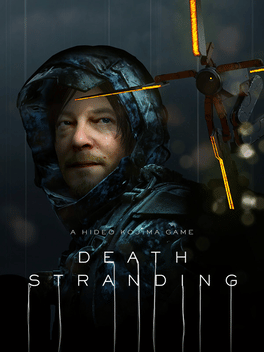
"Hoarding, Looting, Consuming: Toward an Ecology of Care" argues that contemporary video games function as systems of accumulation that mirror late-capitalist consumption, naturalising ideological logics of acquisition and labour. Drawing on Barthes' theory of myth and on examples ranging from Pac-Man to Death Stranding, the authors contend that games teach players to value collecting, looting, and spending, and they propose an ecological model of play as an alternative. The central claim is that digital hoarding is not a fringe behaviour but a systemic outcome of monetisation, looting mechanics, and surveillance, and that video games can serve as laboratories for rethinking ecology beyond both capitalist and conventional environmentalist frameworks.
The empirical core rests on a year-long ethnographic study of twenty PUBG Mobile players organised into five squads, with players based in Iran, Afghanistan, India, Pakistan, Germany, and the UK. Combining observation, recorded gameplay, interviews, and creative outputs, the study finds that the game's lobby and social spaces socialise players into accumulation. Seasonal resets, randomised loot crates, and monetised scarcity convert cosmetic acquisition into debt, deskilling, and sustained pressure to keep up, such that a platform's retention economy increasingly governs players' time, affect, and spending rather than tactical skill. One illustrative case involves a player who accumulated over 220 outfits and hundreds of other items.
Players respond to these pressures through improvised protective and community practices, including shared accounts, mute and block lists, gifting, and clan support, which the authors characterise as individualised care labour unsupported by the platform. The essay also examines "sustainability" branding, arguing that such features can operate as green consumerism that provides a moral alibi for continued consumption. Its conclusions are largely theoretical and prescriptive, drawing on qualitative observation rather than quantitative data on the industry's environmental footprint. The authors propose a "post-loot" design horizon that replaces acquisition with gifting, relational and shareable identity, and reflective feedback on the emotional, social, and ecological costs of play, illustrated through a reading of Playdead's Inside via Timothy Morton's object-oriented ontology.
DiGRA · 2026
DiGRA · 2026