1 free read left. Create a free account for unlimited reading + AI research.
Create free account
Hashbang Games’ Robert Burnett On Equipping Indies With AAA Strength With A Cross-Platform Approach
Key insights
6 takeaways- 01Independent studios can achieve AAA-level backend and analytics capabilities by utilizing off-the-shelf infrastructure providers such as PlayFab, Beamable, and GameSparks.
- 02Adopting a cross-platform, games-as-a-service model is essential for indie developers to maintain long-term player engagement through iterative updates beyond the initial launch.
- 03Integrating backend services early in the development cycle is critical for proactively addressing technical challenges and ensuring product scalability across PC, console, and mobile platforms.
- 04Indie developers should leverage their organizational agility to target specific niches with focused, high-quality experiences rather than attempting to compete directly with massive AAA titles.
- 05Success in the modern global market requires a data-driven approach that includes effective localization and the implementation of diverse monetization strategies.
- 06To ensure commercial viability, studios must avoid over-complicating game design by merging incompatible genres and instead maintain a singular, clear creative vision.
Ask AI about this video
Transcript
[Music] thank you hello world welcome back to the pg.biz podcast with your hosts me Brian baglow and the ever wonderful piggy insults hello Peggy back from your travels once again I see yes it has been a couple in a row hasn't it people are like when do you ever work uh um I do I do I work in between trips but it's just been a great string of shows you know um I was at games Forum recently and before that I was at Mao and these are great shows to pick up guests because that's exactly what I do you know those long eclectic talks late into the night and then my radar goes on and it just sort of does this it's like yes the guest the guest radar is on this is this is it this is it you haven't put a foot wrong so far everybody that has come onto the show after you've been out there doing your International glamorous jet setting reconnaissance and it's so his work um has been fantastic but but no
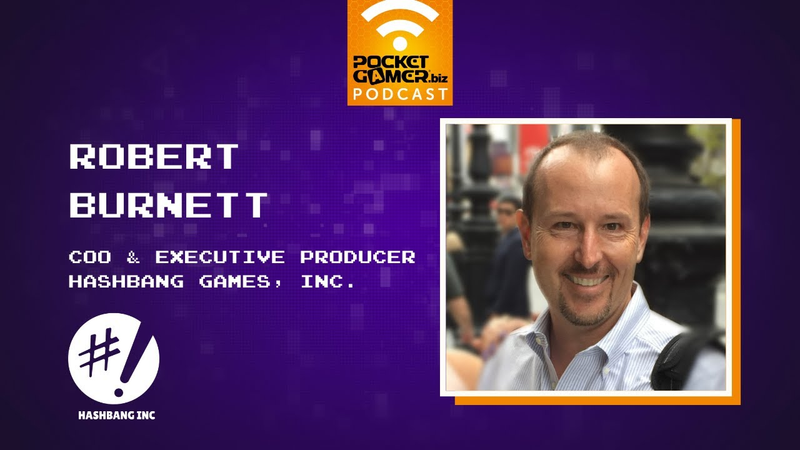
pressure Robert no pressure at all because this week we're joined by Mr Robert Burnett the CEO of hashbang games so welcome on board Rover a pleasure to meet you nice to meet you Brian nice to see you again Peggy great to see you I mean that's the result we did have truly and you'll you'll do it now as well Brian it will be like a mind meld um I really enjoyed this because Robert lives at the intersection of games entertainment he has a lot of experience in the genres in the platforms he's all about convergence in fact I nicknamed him Mr Medici a Medici man because it's all at the intersection you know that's where we everything happens at the intersection On The Fringe all the creativity and that's what it is it's a cross-platform approach that is creative but also lucrative and we're going to find out how devs need to approach that because Robert knows it firsthand right Decades of experience a stint at EA as an executive producer a senior producer
at Zinga and a couple more stops along the way before taking the helm as CEO of hashbang where you've been only since 2022 Robert right yeah it's I've been full-time since 2022 I actually mentored the team for a few years before that but what an exciting time it is in the industry right now you're dead on Peggy there's so much opportunity there's a lot of decisions people have to make and I think spending the time to gather information and talk to people been there is really valuable to anybody that wants to be ex you know successful in this space we've been talking to a lot of people in various roles and various sort of organizations across not just the mobile games worlds but the sort of the games world full stop and so many of the the most interesting conversations are happening at those points of convergence you know where where games stop being you know play things and and really start to sort of rub shoulders with some of the other areas of our creative world so I'm thrilled and delighted to have you here so where did
you get started you know we mentioned the EA up front where where did you get into the games industry I guess would be my first question I was so incredibly lucky I grew up in San Jose in the heart of what was to become Silicon Valley game industry um my mom actually went to school with Steve Wozniak and Steve Jobs and Homestead High wow she was not friends of theirs she was taking night classes while they were there finishing up their High School uh my dad knew Executives that joined Apple when it first started um you know I had friends that were doing QA and internships at Atari uh on weekends and the very first company I got to work at was Accolade which was absolutely amazing because it was founded by some of the guys that founded the industry you know guys like Alan Miller who had started Atari left Atari to form Activision left Activision found Accolade just an incredible dedication of the space and so many great stories and they were so eager to share their wisdom and help people grow up in the space so what was you really yeah what
what were you working on so uh when I was at Accolade originally I got an opportunity to move to San Diego and work for an emerging platforms team it was called GTE interactive media and it was a telecom this is what is now known as Verizon and now we're making investments into entertainment technology so they were working with Hollywood they were working with video games and when they shut down there was an opportunity for a few of us to take some of the technology form another business and we started working with the A on the Tiger Woods franchise uh really doing Esports so there was a product or a feature back then called play with the pros that allowed people who bought the retail product on the PC to go home and play Tiger Woods golf in real time against Tiger Woods when he was at the major tournaments and it was sponsored by Buick and and the people that were working on that it wasn't a a huge mass Market millions of people participating kind of a thing but it was people who were interested in pushing the envelope
and and working in that space and working with that team was just such a blessing it was just a great place to go really from the outset you were there at the at the point of convergence where where it was a game but not a game building communities figuring out ways to get people to socialize around interactive entertainment fantastic so you're very much ahead of its time yes yeah bleeding edge is what we referred to it for a good decade we were doing projects that were difficult to monetize but we knew would eventually become a Cornerstone of the market like doing mobile development back in the early 2000s let's fast forward to to now and the opportunities for gaming developers and emerging platforms you know a games as a service and take our language delivering you know this whole notion of Live Oaks um is this where Indies need to be do you think this is this is where more and more games are going to end up I I don't think you could ignore it you know if you were in the market 15 years ago you couldn't get to retail without having the word multiplayer on the box and then
back then less than 15 of the total Market was even taking advantage of those features today that's not the case I would say closer to 100 of the products that go out across PC Mobile and console have some form of online connectivity uh whether it's for saving progress or connecting you to other players or as deep as real-time Cooperative or competitive real-time gaming yeah when we were at ea uh you know there's this term roll your own and every time we wanted to add multiplayer features to a product we were developing the tech stack we were putting servers into server racks we were worrying about what's the latency in Europe on the East Coast on the west coast and so one of the things that hashband got really good at about five years ago is we moved away from just looking at indie games but looking at developing Integrations into platforms as a service where any in developer didn't have to worry about having a 10-man dedicated team to multiplayer technology they would connect to game Sparks or playfab or
beamable and then use those servers to provide some of the features that are only available in bigger Studios clearly you know pretty Advanced for the time so you can say you knew it you anticipated it you saw this coming I have to give a lot of credit to Tom Casey who was kind of Mentor partner boss uh when we're reforming all the small studios in Carlsbad he's currently at Warner Brothers doing some exciting work one of the things that we were talking about we weren't just talking about how people were going to play against or with each other but how the different platforms were going to contribute to this convergence and at the time you know there was no mobile platform yet we had console we had PC and people were playing differently on those two platforms but one of the things that we did when we looked ahead is we said look you know when mobile first comes to Market we're not going to be playing the exact same way on mobile that we play on PC or console you know what about puzzle games what about game shows and so Tom Casey chased that and actually got a meeting with Dick Clark and this was
again another opportunity for convergence between the video game industry and the entertainment industry Hollywood was very eager at figuring out how to do interactive right because at that point in the early 90s there have been some missteps and not everybody understood how movies and video games were going to come together and we went down and met with dick in Burbank and he introduced us to reality TV and we talked about game shows and we talked about the shows that were coming over from Europe like Bachelor and Survivor and that set us off on another adventure of developing a different type of more game showy experience casual entertainment that would appeal to a new group of people that wanted to play video games I think it has taken quite some time for companies to really get to grips with the reality rather than just you know license IP back and forth and so it sounds like you guys were really very much at the Forefront if you if you were exploring reality TV game shows Etc all the way back then yeah absolutely and I
think you know one of the things that's different about today is when I was coming up in the game industry we would eagerly await the the next generation of hardware and every four years we'd see a cycle and when the new hardware would come out it would enable new genres of gameplay and interactive entertainment it went from 2D to you know arcade at home to 3D games to 3D games with texture maps and and these amazing materials and physically based rendering uh and then we've got 3D acceleration um but back then the the platforms all played very differently you play different games on the PC than you played on the console and then when mobile emerged mobile was puzzle games and that was it and then you fast forward to today and your average next-gen phone that's coming out really any high-end phone that's released in the last two years has got the same rendering power as an Xbox 360 or a PS3 and so we now have the ability if it's appropriate to introduce the exact same experience on a PC on a console on mobile and this is one of the things
that the Indie Studios have to struggle with it does open up a little of new opportunities for developers but at the same time as you just said it challenges you to think so what's appropriate what is the experience I want to create here what is it that we can do you know um meaningfully on each of these devices absolutely and then you start introducing new technologies that independent Gamers have to get themselves comfortable with like analytics and Telemetry and user acquisition uh I think another one of the important bridges that occurred within the industry is you know 20 years ago product was retail so everything was fire and forget it was development team working for two years putting a product in the box and it went to the shelf and then the game would launch and the customers would come in and play it and they'd have opinions and great ideas and feedback but very few teams had an opportunity to take that feedback and contribute that back into the product the majority of the games did not see a version 2 or version three now you fast
forward to today where games as a service is the rule you don't release a product without thinking about how you're going to live up or operate that game once it releases and so for a developer especially independent developers That's so exciting because you're now bringing your baby to Market and sharing it with the world and you have to be ready to listen to what your Gamers say look at the data fix things before they complain about it in the form of an Apple Store review or a Google Store review and really stay on top of that curve and so I think you know another one of those off-the-shelf Technologies independent Studios need to pay attention to are the analytic platforms that allow them to to see in real time what feature releases are working or not working so they can correct issues or take advantage of opportunities before they turn into complaints from the community you make the point you know it's really about getting those components that are off the shelf and still innovating with them you start with analytics I mean I'd like to hear maybe a few more because the whole idea is Indies need to be here but
again it's about putting these components together in a way that they make business sense as well as being really creative and standing out so it's much easier to get something out there but you still have to have a plan and a vision for who your customer is going to be and you have to figure out technically how is it that you're going to deploy this and then pay attention to what's going on in real time once you hit the market so you know platforms like playfab and beamable and bite group all give game development Studios an opportunity to get Advantage get the advantage of technology that would have taken a larger Studio a team of 10 to 20 people to put together and maintain well Indie Studios can now get this in some cases for free on small projects and get started with it so I would absolutely encourage anybody out there listening who's interested in bringing a game to Market whether it be on any of the platforms if you're an indie Studio get familiar with these platforms and figure out which one's going to be right for you let's look at hashbang um specifically because this is very
clearly based on experience it's tell us motivate the studio and how you guys have applied this yeah so hashbang was founded by Marco Williams who's my partner there and he had this little studio uh he was working for me at a game company down in Carlsbad and they were scaling down and so he took a job with a company called playfab and playfab got acquired by Microsoft so play fabulous forward from a bunch of guys who had experience creating Tech stack for the Xbox and so he was able to go from the perspective of running a small Indie Studio into running a back-end service into working for one of the largest Publishers in the world developing that service to other titles and so seeing the difference in scale from working within Indie to then integrating that technology into Minecraft and Gears of War and and Halo uh he was able to get a much bigger picture of what the market was going to need and he was super excited again about getting back to his route so he left Microsoft came back to ashbang full
time and we really started at that time focusing on platform integration for other Studios so we worked with size companies that wanted platform integration even some of the aaa's were moving away from having internal teams that created all those services to using services like life ab and beamables to provide scale to their products because they had you know very targeted solutions that scaled very nicely they'd solved that issue and they provided some additional uh enhancements to the form of features like leaderboards and matchup and multiplayer real-time analytics um database access stat tracking uh and so the industry started moving to being more comfortable with some of those back-end Services uh and then we got to the point where we like look you know one of the big problems you have in the game industry if you're creating technology independent of an actual experience you can start developing technology for Technology's sake and not really solving real problems and so what I've seen is that when you force a team to also integrate that technical
solution into an experience you start solving for a real world use case and you become that much better on both sides of the fence you're better at making the games you're better at creating the technology and so we decided to make an investment about 16 months ago in creating the game like violence that uh hopefully we've got some video to share with we do indeed Robert because you gave it to us and that's a great segue because exactly that walk us through that because it's not just the game itself it's what you've put into practice in your game you know it is about applying the advice you've been giving us throughout the show so tell us about how this is reflected in the gameplay yeah so what there were a couple things this actually started as a technical demo for beamable where they wanted to go to GDC and they wanted to show off some technology and the team fell in love with the project and we went back and said look we'd really like to own this and turn this into a real game and they were very supportive we've got a great relationship with them and so what started as a technical proof of concept
turned into a passion project for the team so light violence is a social game it's got a very strong collaborative element uh it's meant to be short duration so you don't need to sit down and commit to one to two hours to play this it plays like a game show it feels a little bit more open world uh and we have the ability to do combat and so we've got a very kind of light-hearted Ratchet Clank style combat system but it starts with 50 people and it whittles down to 32 and then you get the final 16 and it's been a real challenge to figure out how to make that work for PC console on mobile but we're really happy with what we've got to share today and in prep you talked to me about a little bit of a scoop as well related to this game what's that about yeah now it comes out okay so I mean the if you look at those products you know one of the things that's really strong about all of them is the fact that they have kind of this you can jump in anytime and leave anytime uh aspect and and there isn't a necessity really follow the storyline so
a lot of them haven't worried about investing in any real storyline and we've taken a slightly different approach and so not only do we have the traditional multiplayer game where you can collect skins and upgrade your weapons but we've actually bled in a little bit of a story element so one of the things that we've done that's a little bit unique um you kind of look at the human race as being this planet that is composed of multiple tribes and people come into an experience with a slightly different perspective and I think we all work hard to kind of figure out how to communicate with each other well we kind of developed a universe that has the same approach where the universe is composed of a bunch of different tribes and it turns out that the back story includes Earth as being kind of one of the first places where those tribes coexisted and so we've got some hidden elements kind of very similar to Ready Player one where as you're playing the game you'll have these little unlocks and those unlocks will make doors that were previously unopenable unopenable and you can tease out some of the story uh as you're playing the game I do love a bit
of lore I I have to be honest but Tim yeah so tell me you've worked in the publishing and development side of things and that covers a huge amount of ground more so now than ever how is that reflected in the game and your approach to making games for for your audience well I'll tell you that creates a bit of a challenge you know we're a development Studio we're relatively small um there are plenty of small Studios that are launching products but one of the things to keep in mind as an indie Studio you really have to understand whether or not you want to be responsible for self-publishing on top of ongoing development so as an indie Studio even hashbank is struggling with this a bit you know we we've got a product that is mobile and it's PC and it's console and a lot of the Publishers are targeted a lot of Publishers that only want to be in the console space they do not want to be in Mobile there are mobile Publishers that understand the mobile space and they're comfortable with that they do not want to go in the console because consoles perceived as
being very high dollar Target very marketing heavy uh expensive to penetrate I think it's a little bit easier for an indie Studio to develop something and move through a digital store and I would encourage all of you guys to look into that um because developing and Publishing your own product does give you the ability to talk directly to the customers and gather that information and embed that back into the product so that's one of the things that we're kind of working through right now trying to figure out publishing strategy um a lot of opportunity out there and uh you you just have to talk to people and figure out what's going to be the right mix for your product be brave be bold but also to that point you know it's exciting at the intersection that's how we got into our conversations like everything happens at that connection at that intersection cool things happen but also yes you can be a category Creator or bring things together like you have mobile console PC but also there's the danger of being too unique too much a
little bit too Fringe how is that possible that Indies can best do this but then avoid being too Niche at the same time I think one of the advantages that Indies have over the big AAA Studios is that the big AAA studios are going to make big bold bets they're going to spend 50 to 100 million dollars on IP plus development plus marketing but there is an encumbrance that comes with that there's a level of effort there's a minimum level of effort that's required there's a tremendous amount of synchronization that is required for getting product to Market and timing when you're going to go out um there's a huge amount of competition for the primary launch Windows like Christmas and I think as an indie Studio you can be much more Nimble it's important not to over commit uh pick something small that you want to be really really good at create a tone and a a sound and an audience for your product um also what I just talked about you know when you're doing development
understand the pain points of the publishing organizations understand what it means to do user acquisition and to have a relationship with the press and figure out how you're going to present yourself on your web page and get information on the game out there but as a smaller Studio you've got a lot more flexibility you know you don't have to wait for Christmas to release your title you can release your title at the beginning of Summer the middle of summer or in October as opposed to waiting for November and Black Friday um and I think that's where the Indie space needs to be comfortable living you know you you don't want to go heads up against the big whales in the industry you want to figure out a way to swim around them you said it yourself it's about looking at all the Alternatives so I was thinking about what I just came back with from the shows I attended right and there was so much Buzz about the opportunities and alternative app stores we're not there yet but I'm gonna make a guess Robert that you're gonna say yes be bold be brave do it guys or are you not I would say absolutely take a look at it remember um your goal in creating a product is
finding a market for that product uh one of the things that you will learn is an independent studio is the industry is global today when I came into the history 95 of the revenue was being generated in North America it's now 50 50. so roughly 50 percent of the entertainment dollars come from North America the other 50 come from the rest of the globe but they don't monetize the exact same way you may get a very sizable dedicated player base in Brazil but they're not buying the exact same items that they're buying in North America you also have to pay attention the way you localize your product you can absolutely launch an english-only product globally and you'll see some success but you'll see more success if you can figure out how to communicate natively to people in these large markets so there's plenty of data out there available through Google searches to find out what are the major gaming markets to find out which ones are monetizing well and which ones are not monetizing well and then understanding
on the day that you want to bring your product to Market who is it that you want to reach do you want to focus exclusively on North America because you're a smaller team and localization scares you or do you want to find a localization partner or research how to do it yourself and then figure out how to introduce your product to some of these markets in native language what I like about you you're edgy and your educational so I want you to do that give us tough love for our audience right I'm thinking brutal advice that they have to hear based on what you're talking about about understanding the platforms using the platforms even some shortcuts around the platforms and how to use them how to integrate them because that's what you're doing so yes tough love let's hear it the toughest thing for an independent development team to do is to stay focused you need to have a very clear vision of what it is that you want to create and who you want to create it for uh it's and it's very easy to get into a product and realize that the market is Shifting and that you have to make some adjustments
about those adjustments should get smaller and smaller the closer you get to your delivery date and you want to focus on that Target date is so important to create games and create experiences and get them in the hands of the people that are going to play them and appreciate them as quickly as possible because that's when you know whether or not you've got something that's really going to stick with your audience so one of the other things that I've seen has been the challenge is a lot of times what we try and do is we split two genres so we'll say oh I really love fighting games no I really love poker I'm going to create a poker fighting game and you have to pay attention to whether or not the intersection of those two genres creates a union which will make create appeal to poker players and to fighting game players or if you're fine you're going to create an intersection and and if there isn't much overlap and the only people who care about your game is this very small intersection you may have a trouble monetizing and finding an audience big enough to justify the development that you put into the product I think you know when you look at things that that feel very experimental cuphead comes to
mind which is an absolutely beautiful product and and it shows a tremendous amount of passion and focus they knew what they wanted to create they worked incredibly hard on it brought it to Market and really did something different from what everybody else was doing at the time and created a unique nd-esque experience uh and I think that's a great model for other Indie Studios to follow but yeah understanding enough about your Market to really believe that the union of the different ideas you're creating is is going to be large enough to justify the the passion you want to put into it is is probably the one thing you have to pay attention to throughout the project so we have two questions that we ask everyone who comes onto the podcasts uh Robert okay first is favorite game of all time and second what are you playing right now okay the easy one is what I'm playing right now uh I am still playing fortnite um the thing I think is interesting about fortnite I was playing since the very beginning uh of the Battle Royale game and so seeing how that game has
changed and reinvented itself to stay relevant to the people that still want to play it uh obviously there's been a lot of competition you've seen people pulled off into Apex Call of Duty obviously that's been a big player in that space um so seeing what they do to kind of morph their Market how they interact with entertainment Brands you know a lot of collaboration between epic and Hollywood on different movie franchises game franches John Wick Avengers Etc so I think that's exciting and seeing what works and what doesn't work relative to the community it's a great little petri dish uh to kind of observe and and learn from game that I've loved more than anything I will go back a few years and say the game that I was really really passionate about was the RTS genres of Starcraft and Command and Conquer and great choices passionate favorites those games were amazing the thing that became a struggle is I became a parent in the middle of that uh Market upheaval and being a dad to a
two-year-old uh is not conducive with being able to allocate two year two hours to play a video game and so you know I gravitated to things that offered you know competition collaboration but didn't require me to sit down and commit 120 Minutes to game play so I kind of missed that that genre because I don't see any great players in that space right now um but I'm really hoping that uh somebody appears soon and and we can all take advantage of that and enjoy it Robert thank you so much for joining us it's been a real pleasure um we'll have to get you back on again find out more about the new game and how it's it's been performing yes Robert just again thank you so much and I know we will be continuing our conversation because that's what we said when we met we said this is ongoing and absolutely it's a date to bring you back once you tell us a little bit more about your game so thanks for the advice and and thanks for the inspiration as well great to have you absolutely nice to see you again Peggy nice to meet you Brian and we'll have some videos up on YouTube for
the people that didn't get to see what we had to share today this show is all about how to do your job better how to make an amazing game how to Market it and you have a say so if you have a story or know someone we need to shine a light on then we would love to hear from you we want to hear from you we want to reflect the reality of the mobile games market and all its wonderful complexity and strangeness so if you have any suggestions for us if you have any feedback for us you can always get in touch you can email us at podcast pocketgamer.biz you can find us on Twitter at PG Biz and you can reach out to us through thepocketgamer.biz website if you're interested in listening to all of our podcasts you can find them at pocketgamer.biz forward slash podcast and we would love to hear your thoughts on future shows and we've got you covered on all the major platforms so subscribe to the audio podcast as Brian said look for us on YouTube if you want
to read it hey you can do that too because we have a companion post for you as well on thepocketgamer.biz website tune in again for the next edition of the puppygamer.biz podcast and we look forward to speaking to you in the near future until then I'm Brian baglo I'm Peggy Ann saltz and that's a wrap until next week foreign
Summary
Independent studios must adopt a cross-platform, games-as-a-service model to remain competitive in an increasingly connected global market. By utilizing off-the-shelf backend and analytics infrastructure such as PlayFab, Beamable, and GameSparks, smaller teams can now access the same sophisticated engineering capabilities that were once exclusive to large AAA developers. This technological shift allows indie studios to monitor player behavior in real-time, facilitating the iterative updates necessary to maintain long-term engagement and relevance beyond the initial launch window.
The modern gaming landscape, characterized by the high rendering power of mobile devices, necessitates a cohesive, data-driven approach that bridges the gap between PC, console, and mobile platforms. Rather than attempting to compete directly with massive AAA titles, independent developers should leverage their inherent agility to target specific niches with high-quality, focused experiences. Success hinges on maintaining a singular, clear vision and avoiding the pitfalls of over-complicating game design by merging incompatible genres, which often undermines commercial viability.
Strategic planning must also account for global market realities, including the necessity of effective localization and the implementation of diverse monetization strategies. By integrating backend services early in the development cycle, studios can proactively address technical challenges and ensure their products are scalable. Ultimately, the transition toward a service-oriented, cross-platform architecture empowers smaller teams to deliver professional-grade experiences while retaining the creative focus required to thrive in a crowded and evolving industry.















Comments