1 free read left. Create a free account for unlimited reading + AI research.
Create free accountArticle G|A|M|E – The Italian Journal of Game Studies
1 free read left. Create a free account for unlimited reading + AI research.
Create free accountArticleG|A|M|E – The Italian Journal of Game Studies
Gordon Calleja's book shifts analysis of digital game involvement away from aesthetic and humanistic framings.
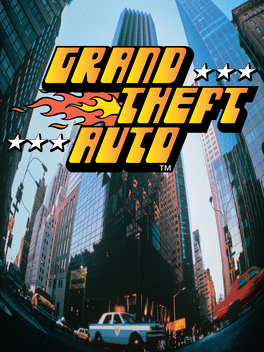
Gordon Calleja's In-Game: From Immersion to Incorporation (MIT Press, 2011) is presented here through a critical review in Italian, and the review's central interest lies in Calleja's effort to move discussion of immersion in digital games away from aesthetic and humanistic framings toward the specific characteristics of the medium. Calleja proposes a model of player involvement built on a stringent taxonomy in which immersion emerges from the interplay of kinesthetic, spatial, and ludic elements. His most distinctive move is replacing "immersion" with "incorporation," a term describing a double axis in which the player internalizes the game environment while simultaneously being incorporated into it through the avatar. The reviewers argue that this framework gains operational force because Calleja narrows his scope from the outset, recognizing that titles as different as Grand Theft Auto IV and Tetris cannot be treated as equivalent media objects without undermining analytical rigor.
The review identifies a deeper methodological tension in the work. Studying incorporation requires attention both to formal design features and to the cognitive dispositions of players, and the reviewers note that theories of immersion often see one side while missing the other. Calleja's solution, the notion of a designed experience built around a model player, is presented as promising but is judged to be undermined by his own reasoning. Having set aside the model player, he later reintroduces it, and his reliance on interviews with players appears more rhetorical than theoretically integrated. The reviewers also question the need for new terminology, suggesting that parallels exist with Umberto Eco's model reader.
Overall, the reviewers find Calleja's synthesis of aesthetic criticism of games with analysis of extra-ludic involvement effective and coherent, especially in its critique of cyberpunk-inflected romanticism about virtual reality. They regard the proposed terminological shift as stylistically awkward but strategically understandable within a field whose vocabulary, in their words, resembles a game of Risk, with concepts constantly contested for territory.
G|A|M|E – The Italian Journal of Game Studies · 2026
European Conference on Games Based Learning (ECGBL) · 2026