1 free read left. Create a free account for unlimited reading + AI research.
Create free account
Global Pricing in an Inflationary World
Key insights
6 takeaways- 01Static, U.S. dollar-anchored pricing models are insufficient for volatile global markets, necessitating a shift toward dynamic, localized pricing strategies.
- 02Developers should integrate machine learning with macroeconomic indicators like GDP, inflation rates, and household purchasing power to determine regional price elasticity.
- 03Data from the first half of 2022 shows a clear correlation between rising Consumer Price Index (CPI) figures and declining mobile game revenue.
- 04In high-inflation regions like Germany, France, Italy, and the Netherlands, lowering IAP prices by 5% resulted in revenue increases, while raising prices caused revenue loss.
- 05Markets with minimal inflation, specifically Australia, Switzerland, and Japan, demonstrated revenue growth when IAP prices were increased by 5%.
- 06Pricing adjustments require a disciplined, data-driven approach involving monthly evaluations and a mandatory three-month stabilization period after any implementation.
Ask AI about this video
Transcript
[Music] thank you [Music] up next uh we have uh Ted varani from uh wapia who is going to be talking about uh Global price pricing in an inflationary world of course that's something that we uh all need to look at in general really but uh without further Ado uh take it away Ted okay thank you Charlie can you all hear me now okay good let me just do this thing here settled up here got my little oh Clipper excellent
all right hello my name is Ted Ronnie I'm head of Business Development for WAP here uh we're going to talk about global pricing in an inflationary World um topic pricing just in general is something I love people have maybe seen some of my presentations have done a few pocket gamers in the past to know that um you often talk about pricing and monetization that's what our company WAP year does the other reason that you know I like it because it's you know kind of core part of the marketing mix pricing but yet maybe it doesn't quite get the attention or respect to deserves within the gaming community so which I guess is kind of good for us that's that's what we do a little quick background on the company WAP your um fundamentally we're an AI company we have some pretty robust machine learning technology that allows us to predict understand player Behavior with that information one of the core Solutions is around pricing optimization where we help companies like those that you can see on the board right now but let's get in unless it's about WAP
your um maybe set the stage a little bit in terms of uh pricing kind of the opportunity so you know this is not just about inflation but in general with pricing you know most Developers you have to kind of just kind of take a one-size-fits-all approach when it comes to pricing and that approach is really pricing for the United States and then letting the App Store do currency conversion for other countries so simply put Miss price from enjoy the world you know and that's and by the way that currency adjustments that just happened you first upload your game so if you've you know I think that we're on parity now between dollar and the Euro so you know now you're very mispriced if you upload your game you know a while ago because people respond differently to different prices yeah around the world and this gets you know magnified different person power and that's really what we do and then going forward and now really what we want to talk about today is that you know inflation is worldwide we're all experiencing it but different countries are experiencing it differently you know so setting the state Foundation is just a question like
it's early morning by the way thank you for coming it's a horrible storm out there um you know we keep people in day two on a popular party so I do appreciate you guys showing up um question is do you localize your game you know that's a stretch okay so different languages right so that's kind of intuitive right obviously think oh of course I'm a global player baser should look less so then the question I ask is then why aren't you localizing pricing you know I mean that's a changing a number like you in effect and then maybe I don't mean to criticize you know everyone but you know if you are just treating everyone like an American around the world you know it's not right you know there's no one-size-fits all when it comes to pricing and currency conversions I mentioned you know is not sufficient you know for different players because people respond differently to different prices but to do this taking it takes deep insights into local economies you know purchasing power at a household level and game information for local markets you're going to need to be prepared to create hundreds or pension even thousands of price queues you know for
your game but if you do that right it's really kind of the fastest most effective way to boost the bottom line when you think about it you know making the games hard you know live Ops ongoing very expensive small change to a number that someone sees make all the difference between whether some converts into a pair and whether they'll continue paying within your game because Global pricing it's localizing pricing right that is localized pricing in a nutshell you know and what we want to encourage first people is and just saying stage is to move Beyond thinking in terms of just local currency rates think in terms of optimizing IEPs according to local purchasing power on a per country basis so that starts with understanding price elasticities you know for the different game but if you do this you know this is borne out with the data what kind of game you know case studies that we've done it's pretty reasonable to expect to see 20 to 40 percent increase their revenue across the target countries across the different countries that you're optimizing so think of it as outside of the U.S you know that's a whole thesis
of global pricing is you know figuring you've done a good job already pricing your game for the US the core economy there but then now start thinking about outside the U.S and localizing it what do we look at or what you do look at you know when you consider it to get to this point a lot of information this slide so um feel free to reach out to me later I can also send you this deck I think it'll be published also but when you're finding optimal price it's you know it's looking at macroeconomic data and all this data is publicly available right yeah so we look at GDP you know country level and we look at you know and now we're monitoring inflation which I'm going to get to that share some insights you know shortly but it's also microeconomic data you know it's also trying to get an idea of household purchasing power within you know group of countries like we just Incorporated you know internet internet penetration buying rates just within our Industries right now but also it's game and statistics you know so it's not just about the GDP in a per country level but trying to Overlay that try to understand what is the GDP or the the purchasing power of the gamer population on a per
country level right and that's really kind of Again The Sweet Spot understanding of getting the optimal price point our case what you want to do is run a series of sequential price evaluations you know I can talk later are more deeply about that QA what that means because what I want to get into that because this question's been coming up to us so as we already do this or mentioned to a lot of people out there really do Global pricing it's one of our core products um as a company but you guys quite Nick you know we live in inflationary world how do you price for inflation became the question that we started getting and just to you know first sort of uh you know set the stage you know here too what we want to um think about here is that you know you know first of all the game Market you know it's booming you know can't talk about you know go to convert talking about the statistics so over half of the video game Market you know it's 100 million dollars so you know Mobile gaming is huge right you know we already know that and it's actually you know depend pick your favorite analysts some people say declining some people have to still say growing so I'm going to highlight the growing maybe five percent annually so it's been slowing down
versus in recent years but when you think about how large is massive Market the fact that still growing is pretty good top Publishers you know out there you know they are they're investing you know they absolutely hit facing headwinds you know with ATT we're seeing the news you know even the top Publishers have been laying off you know people organization but they're also investing you know in the core game title so if they have a profitable game franchise they're still doing live Ops in it they're adding to the game maybe they're not green lighting as much you know projects going forward but they're absolutely still investing in their titles they're looking to you know grow the margins more within the games but that's the market in general but what we've also announced talk about what's happening you know in the broader Market with is you know largely first with the global pandemic what we saw is that it sparked a period of free economic uncertainty first with because of the pandemic what we weren't buying through anything manufacturers stopped you know producing Goods you know people started laying off employees suddenly opening up the world opens up you know we have all pent up demand so
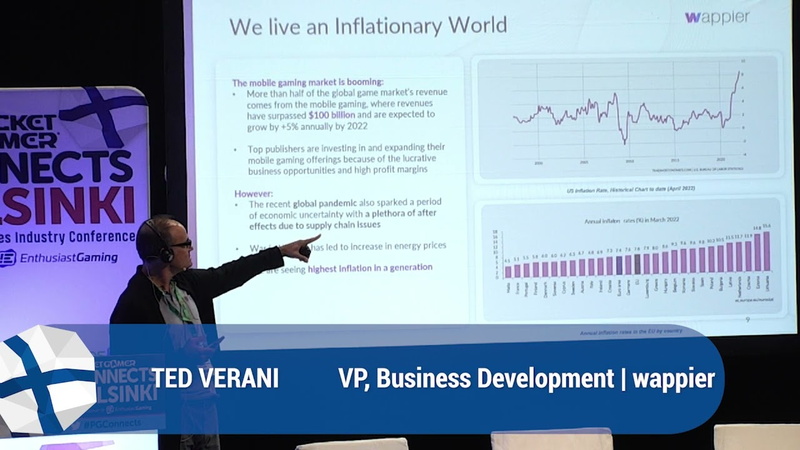
two things happened pent up demand everyone would start buying some stuff combined with production not being there and then exacerbated by supply chain issues you know as we became much more of a global economy supply chain issues constricted the the supply prices started going up you know we started seeing a massive increase of prices you know and that's some of the data I'll show you and then this was exacerbated you know in the more recent months you know unfortunately you know with the the war you know in Ukraine is seeing a spike at Energy prices so already Transportation costs going up as a supply chain issues suddenly the cost to move goods from you know place a to place B you know has has gone up it was increased you know for that so the result being you know any of Just Energy in general right you know it's just a guests on your car most most Goods energy is a component of that so that itself has risen has caused inflation and that's what we're saying so you know top chart there is you know you can see the spike there in the
recent months in the last year as a U.S you know is there just you know up we're right just above eight percent biggest inflation we've seen in generation you know in the US bottom is the snapshot of March earlier this year EU averaged you know 7.8 percent impressions are also quite High so I'm doing better you know in the lower ends some doing you know far worse but across the board you know here in the EU you know High you know and if I mean you see the countries on the right you can't probably read them but you know a lot of them are just you know whoops bordering um boarding the you know the Russia so that energy prices hitting them particularly hard um in the Netherlands there too so then um so a living inflationary world you know but you know and what's that mean in terms of the entertainment in the games Market in general across the board you know what we're seeing you know you're just you know available the analysts saying what they're saying is that you know
consumers are taking their belts you know introducing entertainment budgets if you think of an entertainment budget as being a finite pie you know amount of your resourcer you're gonna you're gonna divvy up that pie different slices and across your different entertainment options and then a lot of people just you know even if you have your job you're just I don't know what the future holds right you know that kind of sort of uncertainty has led to people so to be a little more cautious in how they're spending things that said and however you know for the people in this room you know in the industry that you know we enjoy being part of I'm here to say mobile games you know it's a pretty good alternative you know versus a lot of other forms entertainment yeah I know I mean you think about going out to a movie movies have gone up you know you maybe want to go out get a bite bite to eat first you know or like myself big fan of live music you know I mean we didn't go to music during concerts during the pandemic opened up Suddenly I don't know what you know concerts are a lot more expensive now than they were before and I think there's a lot of good reasons you know for that um but still it's a lot of your forms of entertainment you know are very very
expensive so you think about a game even if you've lost your job um you're you spend a few bucks in a week you know that's not going to change your circumstances too much even if you you know it's just a few bucks bottom line is if you know the game is bringing you Joy you know it can make sense financially you know for you because your circumstances won't really change so but going back to the thing earlier you know games with the right pricing model Global pricing can model is going to gain sort of a competitive Advantage versus other uniforms when they attract kind of more payers you know into the game so so how does inflation really now directly impact with games okay so don't expect anyone to read that and those are just really sort of you know beatification elements of the slides anyway so it's the point is you know we did a Pearson's correlation coefficient model analyze it so at a very high level you look at that okay what we're seeing is game Revenue that's those top charts that's young you know me a country
that's you know representative you know North America us you know we're seeing kind of Revenue sort of going down across kpis right in the bottom you overlay that okay CPI the Consumer Price Index you know measure for inflation going up and going up more dramatically so you know if you stare that for a bit you go all right inflation goes up key kpis your arpu everything revenue for games going down okay not a good story so maybe perhaps there's a you know adverse impact of inflation on games so worthy of some further study so we did announce what we did because we do work with a lot of games in a lot of different countries because the gold pricing projects to have that sort of you know benefit we did an analysis of the first half of 2022 we just you know we're getting kind of being announced here on Pocket Gamer stage you know some of the first results we're going to publish the study we analyze Revenue fluctuations over large number of games first part of the year you know correlation but sad to say inconclusive you know and we we did see sort of decrease in Revenue the hard part here
is that we weren't really able to parse out sort of the differences so so was it inflation you know because that is absolutely what's happening during time or was it that we're comparing ourselves to the coveted bump right you know because as we all know we you know while a lot of other people unfortunately were hurting you know during covid you know we as an industry saw like the biggest gains ever right you know we just like people like I was saying earlier about an entertainment pie all those other entertainment options you know went to zero and then suddenly more people are playing video games and of course we benefited that now we're comparing ourselves to those lofty levels so you know in fact I guess and I guess it's a remind ourselves that think even if they feel bad they're not so bad they're not like before you know the pandemic level so we should remind ourselves that even if they're going down you know versus the requirements we going down compared to sort of just massive you know growth so it's hard to separate that out but we aren't really satisfied with that too you know because we work with customers they're asking us questions so where's McConnell shouldn't data
scientists you know what we did we started we decided we're going to run an experiment right you know in our experiment what we did is we selected a bunch of games where we applied and we waited first we looked at Country we grabbed all legendary countries we looked at European countries we looked at Asian countries we looked at North South America you know some Africa and we don't touch a lot of African countries took all these different countries within those we took you know a bunch of within each individual country we took a bunch of games where we applied a uniform price reduction of five percent on all prices here across there just to to measure small change you know in price measure in fact we also took comparable bunch of games same country and we did an increase you know five percent you know we did this in the summer months we'll see what you know what would be the impact what'd we find now we're getting some like you know findings and certain outcomes the outcome showed that actually High inflation you know EU countries you know most notably you know Germany France Italy Netherlands you know we respond
they you know they respond with the spike in Revenue you know where prices dropped so that you know what we were able to so some of these high you know if you had more inflation in your country actually lowering of price so it's about everything else is going up you know maybe lowering a little bit of price you know IPS had a positive impact on on Revenue whereas if you raise price you know during this inflationary time or for the country that had higher inflation you know than than some other countries you lost revenue on that and then this sort of uh overall sort of observation was further borne out by when we looked at because then because we saw other we observed is countries with minimal inflation actually performed better with the higher prices you know and that's a notably Australia you know we saw that it's also in Switzerland we often see race price in Switzerland's positive um the Hong Kong Japan right so if these these countries had relatively low inflation you know compared to other parts of the world small increase in price actually led to
an increase you know in Revenue you know for them maybe just lots of money and they just You're Expecting all prices to go up didn't really bother them I'm not sure exactly why and then we did what we did and then just with some customers so we really we presented it presents an opportunity here and then we saw then Revenue growth of between 11 and 33 compared to high inflation so specifically some EU countries you know and control group from last you know three months so it worked you know I mean just doesn't now when I say it worked you know I'm I'm a marketing guy a business guy you know if you're too I'm going to add that little asterisk notes or ahead of data analytics and our economists insisted to put a note that this really was based on a small number of games and countries sampled so to be fair I want to we want to say this is scientifically conclusive you know with it we did do a lot of parsing our data we had a hard time so this is more observational this is you know outcomes we say so um but that's kind of what we're saying but you know again it just would be clear you know it is uh you know more
steady analysis you know is warranted on that but these these are some of the things we did observe from and part of the reason not just for the library why we had a harder time as a company and for our customers you know we don't normally have large EU countries in the control group which you could probably appreciate we're trying to make money for our customers so you know we don't put France and you know Germany and other big countries in the control group we put them in the pricing group right you know when we have a control group we take a country that's large enough to be statistically valid stable Revenue over the last you know 12 months too but you know not massive overall Revenue because our goal is just to boost the bottom line and we want to apply that to a larger Revenue base so sadly from a scientific sort of you know economic study it wasn't as conclusive however I study economics as an undergrad so but I'm not an economist but I do you know observations that you know I think are worth sort of uh you know sharing you know it's in it while it is truly hard to parse out the exact amount that
caused by inflation you know because of the covid you know comparing stuff to the the covet bump it is also reasonable I think in Fair good to sort of think about you know lowering price in high inflation countries you know for you know you give give them a break you know everything around you know gas are more expensive you know milk you know Goods that they need to survive you know maybe you're well better off to kind of give a price break to them you know don't go like everyone else who's raising price during that time you may see positive results but test it you know and I'd say test test you know that's what we do for everything so you can do that yourself but just to you know comment on how to test is that we do we were measuring performance on a per country basis you're gonna have a small number of pairs monthly Revenue so you need some time to flow you need transactions of throw through system you need more payers to come in and out of your game so when we do price adjustments it's once a month right you know so I know like you know in our world game we'd like to make a change and tomorrow look at the results and see what you know the impact don't sorry resist that Temptation you know you have
to be patient make a change wait a month see how it bores out make another adjustment you know and typically in our programs we launch with people you know it takes like three months to get to a point of stability the other point and this is really kind of more you know my comment observation I think is more important is rather than just looking at inflation look at the combination of inflation with high unemployment rate you know because in the U.S for instance right now yes inflation's high around eight percent but also unemployment you know there's everyone has a job like it's we're having a hard time and it's really the lower end service level jobs like those people are all getting pricing which thankfully right is good they're getting actually raises to get to hire people they're paying more for salaries and wages end result is that actually their wages are going up higher then the cost of things they're purchasing so while they are experiencing inflation they actually have more disposable income to to buy stuff with too and then if you think about people in the upper end there's whales in your game right anyone who's spending hundreds or thousands of dollars in your game they're probably not impacted by the price of gas okay so they're going to
still you know continue spending in the game so that just that you know a comment with that you know too and then running out of time here um so just that some you know one thanks um closing thoughts is here too you know think about global optimization program and Beyond just thinking don't just oh I'm inflation I gotta figure out what to do because of inflation you know you need to be thinking about the world is a very diverse place with a lot of different players in your games around the world so you've got to think about you know that's what we do we optimize prices and that's the best way to protect your income you know is you know so when during times of sort of economic stress or whatever you've already done the work to sort of price appropriate for different countries and that that's like that's what we do something you can do you know an ongoing basis monthly we're doing regression analysis we're looking at the indices we're managing making adjustments to prices and simply put you know we think a lot about the economy what's going on so that you know game developers they can spend their time making a fun game that people want to play and think about the in-game economy and we can help with pricing
but it's also something you do yourself ran out of time we have these on our website you know in case studies you know on there too so wrapper.com we have a very Stark looking table out there I'm right actually our table is right there so myself Carlos we're out there um if you have any questions about what we're doing or just in general questions about what I shared today thank you very much brilliant thank you so much Ted and uh as Ted said you can catch him uh at his at his table over there or you can connect with him on LinkedIn or meet to match if you have any other questions
Summary
This presentation explores the impact of global inflation on mobile game revenue and advocates for localized pricing strategies as a primary defense against economic uncertainty. The core thesis posits that a one-size-fits-all pricing model—typically anchored to the U.S. dollar—is insufficient in a volatile global economy. Instead, developers should leverage machine learning and macroeconomic data to adjust in-app purchase (IAP) pricing based on local purchasing power, inflation rates, and regional price elasticity.
The analysis highlights that while the mobile gaming market remains resilient, it is not immune to inflationary pressures. Data from the first half of 2022 indicates a correlation between rising Consumer Price Index (CPI) figures and declining revenue metrics. To test potential mitigation strategies, the study conducted experiments across various international markets, applying five-percent price adjustments to IAPs. Findings suggest that in high-inflation regions—specifically Germany, France, Italy, and the Netherlands—lowering prices yielded a revenue increase, whereas raising prices in these markets resulted in revenue loss. Conversely, countries with minimal inflation, such as Australia, Switzerland, and Japan, demonstrated revenue growth when prices were slightly increased.
The scope of this research covers global mobile game markets, with a specific focus on the economic shifts observed throughout 2022. The methodology involved analyzing macroeconomic indicators, such as GDP and inflation, alongside microeconomic data like household purchasing power and game-specific statistics. The speaker emphasizes that these pricing adjustments require a patient, data-driven approach, recommending monthly evaluations and a three-month stabilization period for any implemented changes. Ultimately, the presentation concludes that by moving beyond static currency conversion and adopting dynamic, localized pricing, developers can protect their revenue streams and maintain player engagement despite broader economic headwinds.

























Comments