
The global games market is entering a period of recovery in 2023, characterized by a projected revenue of $187.7 billion and a total player base of 3.38 billion. This 2.6% year-on-year growth signals a stabilization following the post-pandemic market correction of 2022. While mobile gaming remains the largest revenue segment, console gaming serves as the primary catalyst for this year’s expansion, rebounding significantly from previous development delays. Looking toward 2026, the industry is expected to maintain this upward trajectory, with total revenues forecasted to reach $212.4 billion.
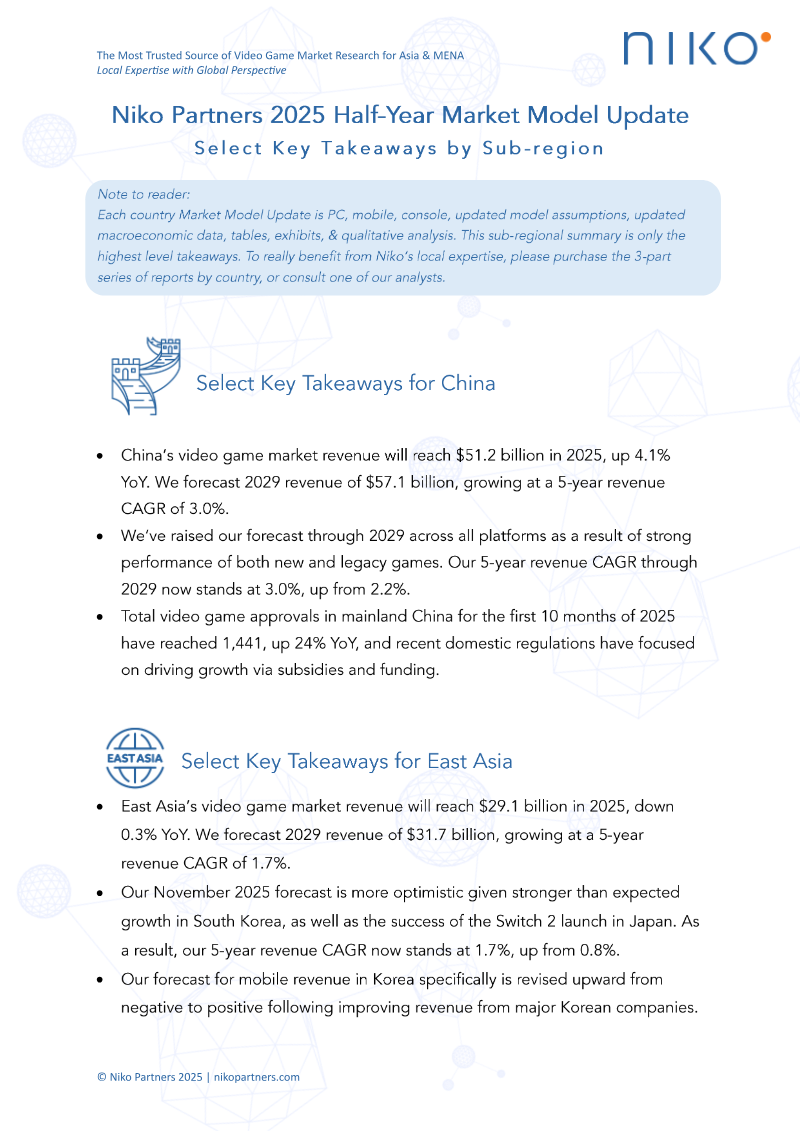
Regional performance remains uneven, as strong console demand in Western markets contrasts with slower growth in the Asia-Pacific region, where regulatory challenges in China continue to dampen momentum. To mitigate rising production costs and extended development cycles, studios are increasingly prioritizing live-service monetization models and integrating generative AI into their workflows. While these technologies offer potential for streamlined asset creation and prototyping, their long-term viability is complicated by unresolved legal and ethical concerns regarding copyright and intellectual property.
The industry is undergoing a structural shift toward digital-first engagement, evidenced by the continued decline of physical media and the rise of transmedia strategies and influencer-led development. Hardware diversification is also accelerating, with the emergence of complementary handheld devices expanding the reach of traditional platforms. Despite these advancements, specific genres are experiencing shifting player preferences; while adventure and shooter titles remain dominant, the battle royale genre is losing traction. Furthermore, the mobile sector faces persistent headwinds in monetization and user acquisition, largely driven by evolving privacy policies that have impacted the performance of previously lucrative genres like RPGs.
Newzoo · 2026

Newzoo · 2026
Newzoo · 2026

Deconstructor of Fun · 2026
Newzoo · 2026

Newzoo · 2026
Newzoo · 2026
Newzoo · 2026

Newzoo · 2026
Newzoo · 2026
Newzoo · 2025
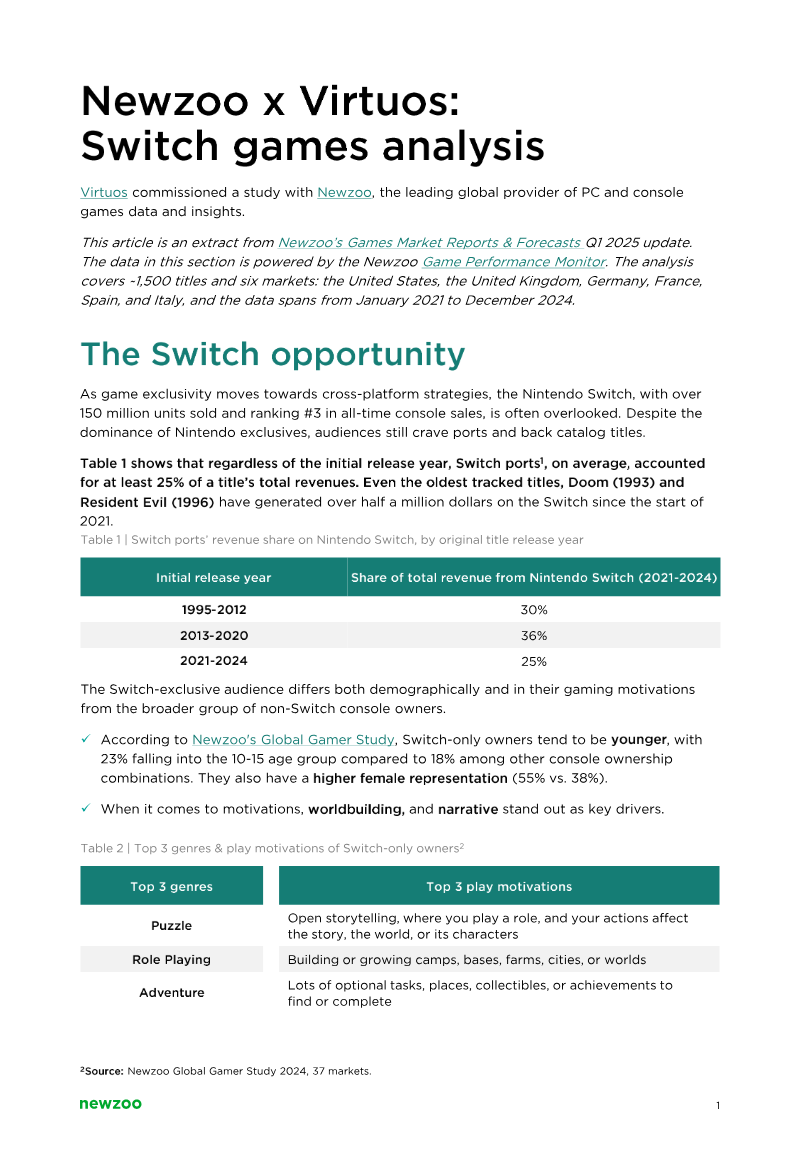
Newzoo · 2025
Aream & Co · 2026
Epyllion · 2026

Aldora · 2024

Aream & Co · 2025
Epyllion · 2025

Aldora · 2025
Niko Partners · 2025

Meridian Play · 2025
Konvoy · 2024
Konvoy · 2023
Newzoo · 2023
Newzoo · 2022